What is an API? Your Essential Guide to Its Purpose
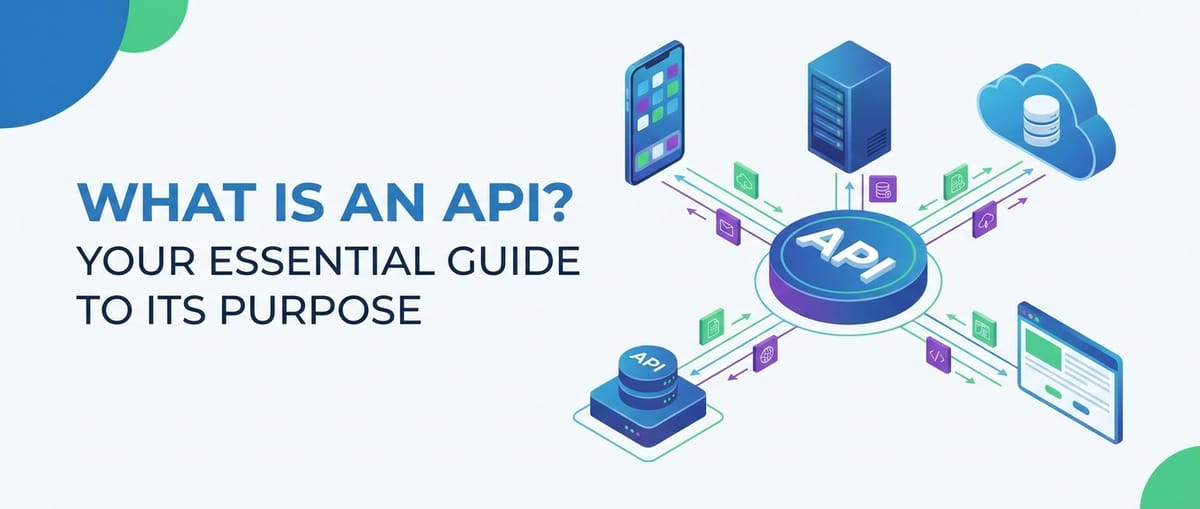


In the intricate, interconnected tapestry of the digital age, a silent yet ubiquitous force orchestrates the seamless exchange of information and functionality between countless applications, services, and devices. This invisible architect of modern software interactions is known as an Application Programming Interface, or API. Far from being a mere technical acronym, APIs are the very bedrock upon which the internet's most dynamic and user-friendly experiences are built, powering everything from your morning weather update to complex financial transactions and cutting-edge artificial intelligence integrations. Understanding the fundamental nature and multifaceted purpose of an API is not just for developers; it is increasingly crucial for business strategists, product managers, and anyone seeking to grasp the mechanics of our hyper-connected world.
This comprehensive guide will meticulously unravel the concept of an API, exploring its core components, its indispensable roles in contemporary computing, the diverse types that exist, the critical importance of specifications like OpenAPI, the essential security considerations, and the architectural significance of an API gateway. We will delve into best practices for designing and developing robust APIs, peer into their exciting future, and equip you with a profound understanding of these digital connectors that serve as the unsung heroes of innovation. Prepare to embark on a journey that demystifies the digital connective tissue, illuminating how APIs empower applications to "talk" to each other, creating a richer, more efficient, and endlessly innovative digital landscape.
I. Introduction: Demystifying the Digital Connectors
The modern digital ecosystem is characterized by an astonishing degree of interconnectedness. Think about the simple act of ordering food online: you might log in using your social media account, pay with a digital wallet, and track your delivery on a map, all within a single application. Each of these seemingly effortless interactions is made possible by APIs working diligently behind the scenes. Without them, every application would exist in its own isolated silo, unable to share data or functionality, rendering our digital lives immeasurably more complex and less intuitive.
At its core, an API acts as an intermediary that allows two separate software applications to communicate with each other. It defines the methods and data formats that applications can use to request and exchange information, outlining a clear "contract" for interaction. Imagine walking into a restaurant; you don't go into the kitchen to prepare your meal, nor do you need to understand the intricate cooking processes. Instead, you interact with a waiter who takes your order, relays it to the kitchen, and brings your food back. The waiter, in this analogy, is the API. They know what the kitchen (the server or service) can offer, how to request it, and how to present the result back to you (the client application). This analogy, while simplified, captures the essence of an API: it provides a standardized, secure, and efficient way for systems to interact without needing to understand the internal complexities of each other.
The purpose of APIs extends far beyond simple communication. They are the engines of innovation, enabling developers to build new applications by leveraging existing services, fostering vast ecosystems of interconnected software, and driving efficiencies that accelerate development cycles. They democratize access to powerful functionalities, allowing even small startups to integrate sophisticated capabilities that would otherwise be prohibitively expensive or time-consuming to build from scratch. From banking to healthcare, transportation to entertainment, APIs are the invisible threads that weave together the digital fabric, making our world more integrated, automated, and responsive. Understanding APIs is not merely a technical pursuit; it is fundamental to comprehending the infrastructure of the digital economy and predicting its future trajectory.
II. Unpacking the "API": A Deeper Dive into Its Core Components
To truly grasp the power and utility of an API, it's essential to break down its constituent parts: "Application," "Programming," and "Interface." Each term contributes significantly to the overall function and architectural role of this crucial technological concept.
The "Application" Part: Defining the Participants
The "Application" in API refers to any software system with a distinct function. This can be a web server, a mobile app, a database, an operating system, a microservice, or even a hardware device. Essentially, it's any piece of code that provides or consumes a service. When we talk about an API, we're discussing how one such "application" can expose specific functionalities or data to another "application."
For instance, a weather application on your phone (Application A) doesn't generate weather data itself. Instead, it makes a request to a weather service's server (Application B) to fetch the current temperature, humidity, and forecast for your location. The weather service's application provides the data, and your phone application consumes it. Similarly, when you use a "Log in with Google" button, your application is interacting with Google's authentication application. This interconnectedness allows specialized applications to focus on what they do best, offering their unique capabilities as services to a wider ecosystem. This modularity is a cornerstone of modern software development, fostering reusability and efficiency across diverse platforms and systems.
The "Programming" Part: The Language of Interaction
The "Programming" aspect of an API signifies that it is primarily designed for programmatic access, meaning it's intended to be used by developers writing code. Unlike a graphical user interface (GUI) which is designed for human interaction (clicking buttons, typing text), an API is designed for machine-to-machine interaction. It provides a set of defined rules, specifications, and tools that software developers can use to build software applications.
These rules dictate how a developer must formulate a request, what parameters can be included, what data formats are expected (e.g., JSON, XML), and what kind of response can be anticipated. For example, if an API allows you to retrieve a user's profile, the programming aspect dictates that you might need to send a GET request to a specific URL (an endpoint) and include an authentication token. The API will then return the user's data in a structured format that the requesting program can easily parse and utilize. This programmatic contract ensures that both the client (the requesting application) and the server (the providing application) understand each other perfectly, preventing errors and ensuring smooth data exchange. It shifts the burden from a human interpreting a visual interface to a machine executing a predefined set of instructions.
The "Interface" Part: The Contract and the Gateway
The "Interface" is perhaps the most critical part of an API. It represents the specific set of functions, procedures, methods, and protocols that one application can use to interact with another. It acts as a clear, well-defined contract between the two systems. This contract specifies:
- Endpoints: The specific URLs or addresses where resources can be accessed. For example,
/users,/products/{id},/weather?location=London. - Request Methods: The actions that can be performed on those resources (e.g.,
GETto retrieve data,POSTto create data,PUTto update data,DELETEto remove data). - Parameters: The specific pieces of information that need to be sent with a request (e.g., a user ID, a search query, a payment amount).
- Data Formats: How the data should be structured in both requests and responses (commonly JSON or XML).
- Authentication and Authorization Mechanisms: How the client application proves its identity and what permissions it has to access certain functionalities or data.
- Error Codes and Messages: How the API communicates when something goes wrong, providing clear indications for troubleshooting.
Consider the analogy of an electrical socket. The socket is an interface. It has a defined shape (the contract) that specifies how an appliance's plug should be designed. As long as the plug adheres to this interface, the appliance can draw power without needing to understand the complex electrical grid behind the wall. Similarly, an API provides a stable, predictable interface. Developers using the API don't need to know how the underlying service is implemented, what programming language it uses, or how its internal database is structured. They only need to know how to interact with the interface according to its defined rules. This abstraction is incredibly powerful, allowing independent development, scaling, and maintenance of different software components, accelerating development cycles, and fostering a robust ecosystem of interoperable services.
III. The Multifaceted Purpose of APIs: Driving Innovation and Interoperability
The intrinsic value of APIs lies in their multifaceted purpose, which extends far beyond mere communication. They are fundamental drivers of modern software architecture, business innovation, and enhanced user experiences. Understanding these core purposes illuminates why APIs have become indispensable in virtually every sector of the digital economy.
Enabling Software Integration: Bridging Disparate Systems
One of the primary purposes of APIs is to facilitate the seamless integration of different software systems. In today's complex enterprise environments, organizations often rely on a patchwork of legacy systems, commercial off-the-shelf software, and custom applications. APIs act as the crucial connectors, allowing these disparate systems to "talk" to each other, share data, and invoke functionalities in a controlled and standardized manner.
Consider an e-commerce platform. When a customer places an order, the e-commerce application might use an API to communicate with a payment gateway (like PayPal or Stripe) to process the transaction. Another API might then be used to send order details to a warehouse management system for fulfillment, and yet another to notify a shipping carrier's system to arrange delivery. Without APIs, these integrations would require complex, custom-built point-to-point connections that are difficult to maintain, scale, and secure. APIs simplify this by providing a common language and interface, drastically reducing the effort and cost associated with integrating diverse software components. This capability is vital for creating cohesive operational workflows and ensuring data consistency across an organization's technological stack.
Facilitating Data Exchange: The Flow of Information
Beyond just integrating systems, APIs are the primary conduits for exchanging data between applications. They define how data should be requested, formatted, and transmitted, ensuring that information flows accurately and efficiently. This is critical for applications that rely on external data sources to provide real-time information or enrich their own datasets.
For instance, a travel booking website doesn't host all flight, hotel, and car rental information on its own servers. Instead, it uses APIs to query various airline, hotel chain, and car rental company databases in real-time. When you search for flights, the website makes API calls to multiple airlines, aggregates the results, and presents them to you. Similarly, financial applications use APIs to access real-time stock prices, currency exchange rates, or bank account balances. Mapping services like Google Maps provide APIs that allow other applications to embed maps, search for locations, and calculate routes. This programmatic access to data sources allows applications to offer richer, more up-to-date, and dynamic content without having to own or manage all the underlying information, democratizing data access and enabling data-driven innovation across industries.
Promoting Reusability and Efficiency: Building Blocks for Development
APIs embody the principle of modularity and reusability in software development. Instead of reinventing the wheel for every new application, developers can leverage existing, battle-tested functionalities exposed through APIs. This significantly accelerates the development process, reduces costs, and improves the quality of software.
Imagine a scenario where every application needed to build its own authentication system, payment processing module, or mapping functionality from scratch. This would be an enormous duplication of effort, prone to errors, and incredibly time-consuming. APIs allow developers to treat complex functionalities as readily available building blocks. A developer building a new mobile app can simply integrate a third-party authentication API (e.g., OAuth providers), a payment API, and a mapping API, rather than spending months developing these features internally. This paradigm shift enables developers to focus their efforts on core business logic and unique features that differentiate their product, rather than on common infrastructure. The result is faster time-to-market, lower development expenses, and more robust applications because they rely on specialized, highly optimized services.
Extending Functionality and Ecosystems: Creating Platforms
APIs are the cornerstone of platform strategies, allowing companies to open up their core services to third-party developers, thereby fostering vibrant ecosystems around their products. By exposing a well-documented API, a company can enable external developers to build new applications and services that extend the platform's functionality in unforeseen ways.
Think of app stores for smartphones. Apple and Google provide extensive APIs that allow developers worldwide to create millions of applications that run on their operating systems. Similarly, social media platforms offer APIs that let third-party applications post content, retrieve user data (with consent), and integrate social features. E-commerce giants like Amazon or eBay offer APIs that enable sellers to manage inventory, process orders, and list products from their own systems. This API-driven ecosystem approach not only expands the utility and reach of the core platform but also creates new revenue streams, fosters innovation, and strengthens the platform's position in the market. It shifts the burden of innovation from a single company to a global community of developers, leading to a much richer and more diverse range of offerings for end-users.
Empowering New Business Models: API-First Companies
The strategic importance of APIs has led to the emergence of "API-first" companies, where the API is not just a technical afterthought but the core product itself. These businesses monetize access to their specialized functionalities or data through well-designed and robust APIs.
Stripe, for example, is primarily an API company. While it offers a user interface for managing payments, its core value proposition is a highly developer-friendly API that simplifies payment processing for businesses of all sizes. Twilio provides communication APIs, allowing developers to integrate SMS, voice, and video capabilities into their applications without needing to manage telecommunications infrastructure. Companies offering AI services, like natural language processing or image recognition, often expose their models through APIs, allowing other businesses to integrate advanced AI capabilities into their products without building complex machine learning models themselves. This business model allows for extreme scalability and reaches a vast number of potential customers through their developers, fundamentally transforming how services are delivered and consumed in the digital economy.
Enhancing User Experience: Seamless and Intuitive Interactions
Ultimately, the power of APIs often translates into a smoother, more intuitive, and feature-rich experience for the end-user. The seamless integrations and real-time data exchange powered by APIs contribute directly to the perceived quality and functionality of an application.
Consider a mobile banking app. Through APIs, it can display your current balance, transaction history, and even allow you to transfer funds or pay bills, all while remaining connected to the bank's core systems. A single sign-on (SSO) feature, where you can use your Google or Facebook account to log into various websites, is another prime example. This convenience, powered by APIs, eliminates the need to remember multiple passwords and streamlines the onboarding process. Personalized content recommendations on streaming services or e-commerce sites are often generated by algorithms that leverage APIs to pull user behavior data and content metadata. By abstracting complexity and facilitating sophisticated integrations, APIs allow applications to deliver highly functional, personalized, and effortless user experiences that are now expected in the modern digital landscape.
IV. Types of APIs: A Diverse Landscape
The world of APIs is not monolithic; various types cater to different access needs, architectural styles, and communication protocols. Understanding this diversity is crucial for designing, consuming, and managing APIs effectively. We can broadly categorize APIs based on their accessibility and the underlying architectural styles they employ.
Based on Accessibility: Who Can Use Them?
The scope of access for an API dictates its target audience and the level of security and documentation it requires.
- Public (Open) APIs:
- Definition: These APIs are openly available for any external developer or business to use, often requiring only a registration and an API key for access. They are designed to foster broad adoption, innovation, and ecosystem development.
- Purpose: To build partnerships, expand market reach, create new revenue streams (through monetization), and enable third-party developers to extend the functionality of a core product or service.
- Examples: Google Maps API, Twitter API, OpenWeatherMap API, Stripe API. These APIs typically come with extensive public documentation, developer portals, and support resources. Security and rate limiting are paramount to prevent abuse and ensure fair usage.
- Partner APIs:
- Definition: Partner APIs are exposed only to specific business partners with whom an organization has a direct relationship. Access is often restricted through mutual agreements and tailored authentication mechanisms.
- Purpose: To facilitate B2B (business-to-business) integrations, streamline supply chains, enable data sharing between collaborators, or integrate services in a more controlled environment than public APIs. They enable closer, more specific integrations that are vital for strategic alliances.
- Examples: An airline's API provided to specific travel agencies, a logistics company's API integrated with its key shipping partners, or a financial institution's API shared with fintech startups for specific product collaborations. These APIs often involve stricter security protocols and service level agreements (SLAs).
- Private (Internal) APIs:
- Definition: Also known as internal APIs, these are designed solely for use within an organization's internal systems, applications, and teams. They are not exposed to external developers or partners.
- Purpose: To enable communication between different internal services (especially in a microservices architecture), integrate legacy systems, streamline internal workflows, and improve modularity and reusability of components within a company. They are crucial for breaking down monolithic applications into manageable, independently deployable services.
- Examples: An internal API used by a company's mobile app to fetch data from its backend services, an API connecting a CRM system to an ERP system within the same company, or APIs used for inter-service communication in a microservices deployment. While not exposed to the public internet, internal APIs still require robust design, documentation, and security practices to ensure maintainability and prevent internal misuse.
- Composite APIs:
- Definition: These APIs combine two or more existing APIs to perform a sequence of operations or retrieve data from multiple sources in a single call. They often act as a facade, simplifying complex interactions for the client.
- Purpose: To reduce the number of round trips between a client application and the backend, improve performance, and abstract away the complexity of interacting with multiple underlying services. They are particularly useful for mobile applications that need to display data from various sources with minimal latency.
- Examples: An API that takes a user ID and returns their profile information, recent orders, and wish list in one go by calling three separate internal APIs. Or an API that processes an order by first checking inventory, then processing payment, and finally initiating shipping.
Based on Protocols and Architectures: How They Work
The underlying protocol and architectural style significantly influence an API's design, performance, and ease of use.
- RESTful APIs (Representational State Transfer): The Dominant Standard
- Definition: REST (Representational State Transfer) is an architectural style, not a protocol, that dictates how networked systems should be designed. APIs that adhere to REST principles are called RESTful APIs. They are stateless, client-server, cacheable, and utilize a uniform interface.
- Key Principles:
- Stateless: Each request from client to server must contain all the information necessary to understand the request. The server doesn't store client context between requests.
- Client-Server: Clear separation of concerns between client (user interface) and server (data storage and business logic).
- Cacheable: Responses should be explicitly or implicitly defined as cacheable or non-cacheable to improve performance.
- Layered System: A client cannot ordinarily tell whether it is connected directly to the end server or to an intermediary along the way.
- Uniform Interface: This is the most crucial constraint, simplifying the overall system architecture. It includes:
- Identification of resources: Using URIs (Uniform Resource Identifiers) to identify individual resources (e.g.,
/users/123,/products). - Manipulation of resources through representations: Clients interact with resources by exchanging representations (e.g., JSON or XML documents) that describe the current state of the resource.
- Self-descriptive messages: Each message includes enough information to describe how to process the message.
- Hypermedia as the Engine of Application State (HATEOAS): Resources should contain links to related resources, guiding the client on how to interact further with the API. This principle is often partially or entirely ignored in many "RESTful" APIs but is a core tenet of true REST.
- Identification of resources: Using URIs (Uniform Resource Identifiers) to identify individual resources (e.g.,
- HTTP Methods: RESTful APIs primarily leverage standard HTTP methods (verbs) to perform operations on resources:
GET: Retrieve a resource or a collection of resources.POST: Create a new resource.PUT: Update an existing resource (replace the entire resource).PATCH: Partially update an existing resource.DELETE: Remove a resource.
- Data Formats: JSON (JavaScript Object Notation) is the most common data format due to its lightweight nature and ease of parsing by various programming languages, though XML is also used.
- Advantages: Simplicity, scalability, flexibility, widespread adoption, good performance due to caching and statelessness.
- Disadvantages: Can lead to "over-fetching" (getting more data than needed) or "under-fetching" (needing multiple requests to get all required data) if not designed carefully.
- SOAP APIs (Simple Object Access Protocol): Enterprise-Level Rigor
- Definition: SOAP is a protocol for exchanging structured information in the implementation of web services. It is an XML-based messaging protocol for exchanging information between computers.
- Characteristics:
- Protocol-driven: SOAP has a strict messaging format defined by XML.
- WSDL (Web Services Description Language): SOAP APIs are typically described by a WSDL file, which acts as a machine-readable contract defining all operations, parameters, and data types. This provides strong typing and strict validation.
- Transport Independence: Can run over various protocols like HTTP, SMTP, TCP, etc., though HTTP is the most common.
- Stateful or Stateless: Can be designed to be either, though often used in stateful enterprise contexts.
- Extensibility: Offers built-in support for security (WS-Security) and reliability (WS-ReliableMessaging).
- Advantages: Highly standardized, robust security features, strong ACID compliance (Atomicity, Consistency, Isolation, Durability) for transactions, excellent for enterprise-level applications requiring strict contracts and high reliability. WSDL provides a formal, machine-readable contract that aids in client code generation.
- Disadvantages: More complex, verbose (due to XML overhead), heavier bandwidth consumption, steeper learning curve, less flexible than REST. It has largely been superseded by REST for public web APIs but remains prevalent in legacy enterprise systems, particularly in finance and government.
- GraphQL APIs: Client-Driven Data Fetching
- Definition: GraphQL is a query language for APIs and a runtime for fulfilling those queries with your existing data. It was developed by Facebook and open-sourced in 2015.
- Key Features:
- Client-driven data fetching: Clients specify exactly what data they need, and the server returns only that data. This solves the "over-fetching" and "under-fetching" problems common with REST.
- Single Endpoint: Typically, a GraphQL API exposes a single endpoint (e.g.,
/graphql) that clients send queries to. - Type System: GraphQL has a strong type system that defines the schema of the API, describing all possible data and operations.
- Queries, Mutations, Subscriptions:
- Queries: For retrieving data.
- Mutations: For modifying data (creating, updating, deleting).
- Subscriptions: For real-time data updates (e.g., via WebSockets).
- Advantages: Efficient data loading (solves over/under-fetching), improved developer experience, strong typing system, reduced number of requests for complex data graphs, powerful for mobile and single-page applications.
- Disadvantages: Can be more complex to implement on the server-side, potential for complex query performance issues if not carefully managed, less mature caching ecosystem compared to REST, file uploads can be more cumbersome.
- RPC APIs (Remote Procedure Call): Direct Function Calls
- Definition: RPC is an architectural style where a client executes a function or procedure in a different address space (typically on a remote server) as if it were a local function call.
- Characteristics:
- Function-oriented: Focuses on invoking specific functions or methods rather than manipulating resources.
- Simplicity: Conceptually straightforward: call a function, get a result.
- Protocols: Can use various underlying protocols; examples include XML-RPC, JSON-RPC, gRPC (Google's modern, high-performance RPC framework using Protocol Buffers and HTTP/2).
- Advantages: Often simple to understand and implement for specific, well-defined operations; gRPC offers high performance for internal microservices communication due to efficient serialization and HTTP/2.
- Disadvantages: Can lead to tightly coupled systems, harder to discover available functions without good documentation, less standardized than REST or SOAP, not suitable for complex resource modeling.
- WebSockets APIs: Real-Time Communication
- Definition: WebSockets provide a full-duplex communication channel over a single TCP connection, allowing for real-time, bi-directional communication between a client and a server. Unlike traditional HTTP, where requests are stateless and initiated by the client, WebSockets establish a persistent connection.
- Purpose: Ideal for applications requiring real-time updates and low-latency communication.
- Examples: Chat applications, live sports tickers, online gaming, collaborative editing tools, IoT device communication.
- Advantages: Lower latency, reduced overhead compared to repeated HTTP polling, efficient for continuous data streams.
- Disadvantages: More complex to implement and manage than simple REST APIs, requires persistent server resources, not suitable for simple request-response scenarios.
Each type of API serves distinct purposes and excels in particular scenarios. The choice of API type depends heavily on factors such as the nature of the application, performance requirements, security needs, development team expertise, and the broader architectural vision. RESTful APIs remain the most popular choice for general web services due to their simplicity and ubiquity, but GraphQL offers compelling advantages for complex data retrieval, and gRPC and WebSockets cater to specific high-performance and real-time communication needs.
V. The Crucial Role of API Specifications: Clarity and Consistency
In the realm of software development, where precise communication and clear contracts are paramount, API specifications play an indispensable role. They are the blueprints, the rulebooks, and the universal translators that ensure consistency, foster discoverability, and enable automation across the API lifecycle. Without well-defined specifications, APIs would be prone to misinterpretation, difficult to integrate, and nearly impossible to manage at scale.
Why Specifications Matter: The Foundation of Interoperability
Imagine trying to connect two pieces of machinery without any design schematics, hoping they would fit and function correctly. The result would likely be chaos and failure. API specifications serve the exact same purpose in the digital world. They provide a precise, machine-readable description of an API, detailing its capabilities, how to interact with it, and what to expect in return. This formal documentation offers several critical advantages:
- Clarity and Consistency: Specifications ensure that everyone involved – API providers, consumers, testers, and documentation writers – has a shared understanding of how the API works. This consistency reduces ambiguity, minimizes integration errors, and streamlines the development process.
- Discoverability: A well-specified API is much easier for developers to find, understand, and integrate. It acts as a catalog, allowing potential consumers to quickly determine if an API meets their needs.
- Automation: Machine-readable specifications unlock a wealth of automation possibilities. Tools can automatically generate client SDKs (Software Development Kits) in various programming languages, create server stubs, generate interactive documentation portals, facilitate automated testing, and even configure API gateways. This dramatically reduces manual effort and potential for human error.
- Onboarding: New developers can get up to speed much faster with a clear specification, as it serves as a comprehensive guide to the API's endpoints, parameters, data models, and authentication requirements.
- Design-First Approach: Adopting a specification often encourages a "design-first" approach to API development, where the API's contract is defined and agreed upon before any code is written. This proactive design can prevent costly rework later in the development cycle.
- Governance and Compliance: For organizations managing a large portfolio of APIs, specifications provide a common framework for governance, ensuring that all APIs adhere to certain standards, security policies, and architectural guidelines.
Introducing OpenAPI (formerly Swagger): The De Facto Standard
Among the various API specifications, OpenAPI has emerged as the undisputed leader for describing RESTful APIs. Originally known as Swagger, the specification was donated to the Linux Foundation in 2015 and rebranded as the OpenAPI Specification (OAS), managed by the OpenAPI Initiative. It is now the most widely adopted standard for describing, producing, consuming, and visualizing RESTful web services.
What is OpenAPI?
OpenAPI is a language-agnostic, human-readable, and machine-readable interface description for RESTful APIs. It allows you to describe an API's entire surface area, including:
- Endpoints (Paths): The specific URLs (e.g.,
/users,/products/{id}) and the HTTP methods (GET, POST, PUT, DELETE) associated with them. - Operations: The specific actions that can be performed at each endpoint for each HTTP method.
- Parameters: The inputs required for each operation, including their names, types, locations (path, query, header, body), and whether they are required.
- Request Bodies: The structure and schema of the data that clients send in POST/PUT/PATCH requests.
- Responses: The various HTTP status codes an operation can return (e.g., 200 OK, 404 Not Found, 500 Internal Server Error) and the structure/schema of the data returned for each.
- Authentication Schemes: How clients authenticate with the API (e.g., API keys, OAuth2, Bearer tokens).
- Data Models (Schemas): Reusable definitions for complex data structures (e.g., a "User" object with properties like
id,name,email). - Metadata: Information about the API itself, such as its title, version, description, and contact information.
OpenAPI documents are typically written in YAML or JSON format, making them both easily parsable by machines and relatively straightforward for humans to read and write.
Its Purpose: Standardizing API Descriptions
The primary purpose of OpenAPI is to provide a standardized, universally understood way to describe APIs. Before OpenAPI, API documentation varied wildly, making it challenging for developers to quickly understand and integrate new APIs. OpenAPI solves this by creating a common language for API contracts.
Benefits of Adopting OpenAPI:
- Enhanced Developer Experience:
- Clear Contracts: Developers consuming an OpenAPI-defined API have a precise contract to work with, detailing exactly what requests to send and what responses to expect. This clarity reduces guesswork and errors.
- Faster Onboarding: New team members or external developers can quickly understand an API's capabilities by consulting its OpenAPI document, significantly shortening the learning curve.
- Interactive Documentation: Tools like Swagger UI can take an OpenAPI document and automatically generate beautiful, interactive, browser-based documentation that allows developers to explore endpoints, understand parameters, and even make test calls directly from the browser.
- Robust Tooling Generation:
- Client SDK Generation: Many tools can consume an OpenAPI document and automatically generate client-side code (SDKs) in various programming languages (e.g., Java, Python, JavaScript, C#). This means developers don't have to manually write code to interact with the API; they can use generated libraries.
- Server Stub Generation: Similarly, OpenAPI can generate server-side code stubs, providing a starting point for API implementation that adheres to the defined contract.
- Mock Servers: Tools can create mock servers based on an OpenAPI definition, allowing front-end developers to start building against the API even before the backend is fully implemented.
- Advanced Automation:
- Automated Testing: OpenAPI documents can be used to generate test cases and validate API responses against the defined schemas, making API testing more robust and efficient.
- API Gateway Configuration: API gateways, which we will discuss in detail, can often consume OpenAPI documents to automatically configure routing, validation, and policy enforcement for API endpoints, streamlining deployment and management.
- Policy Enforcement: Security and governance policies can be automatically checked against the API definition.
OpenAPI Specification vs. Swagger Tools: A Clarification
It's important to differentiate between the OpenAPI Specification and the suite of Swagger tools. * OpenAPI Specification (OAS): This is the actual specification document itself – the JSON or YAML format that defines how to describe an API. It's the language. * Swagger Tools: This refers to a set of open-source tools that implement and leverage the OpenAPI Specification. Key tools include: * Swagger UI: Generates interactive API documentation from an OpenAPI document. * Swagger Editor: A browser-based editor for writing and validating OpenAPI documents. * Swagger Codegen: Generates client SDKs, server stubs, and documentation from an OpenAPI definition.
Together, the OpenAPI Specification and the Swagger toolset form a powerful ecosystem that revolutionizes how APIs are designed, documented, developed, and managed.
Other Specifications and Their Niche
While OpenAPI dominates the REST API landscape, other specifications exist for different API styles:
- AsyncAPI: This specification is similar to OpenAPI but is designed for event-driven APIs. It allows developers to define message formats, channels, and operations for asynchronous communication patterns like Kafka, AMQP, or WebSockets. As event-driven architectures become more prevalent, AsyncAPI is gaining significant traction.
- RAML (RESTful API Modeling Language): An older specification that also aimed to describe RESTful APIs in a human-friendly and machine-readable way. While still used, it has largely been overshadowed by OpenAPI.
- API Blueprint: Another specification for describing web APIs, focusing on simplicity and markdown-like syntax. Like RAML, its adoption is less widespread than OpenAPI.
In summary, API specifications, particularly OpenAPI, are not just documentation; they are foundational tools that streamline the entire API lifecycle, from design and development to testing, deployment, and consumption. They are the key to unlocking true interoperability, automation, and efficiency in the API-driven digital economy.
APIPark is a high-performance AI gateway that allows you to securely access the most comprehensive LLM APIs globally on the APIPark platform, including OpenAI, Anthropic, Mistral, Llama2, Google Gemini, and more.Try APIPark now! 👇👇👇
VI. Securing Your Digital Gateways: API Security Best Practices
As APIs become the primary conduits for data exchange and functionality across systems, they also become prime targets for malicious attacks. A compromised API can lead to data breaches, service disruptions, financial losses, and significant reputational damage. Therefore, robust API security is not merely an option but an absolute imperative for any organization operating in the digital space. It requires a multi-layered approach, encompassing design principles, implementation safeguards, and continuous monitoring.
The Critical Importance of API Security
Consider the sheer volume and sensitivity of data transacted through APIs: personal identifiable information (PII), financial records, healthcare data, intellectual property, and critical business logic. If any of these channels are exposed, the consequences can be catastrophic. Unlike traditional web application security, where the primary interface is a browser, APIs expose direct programmatic access, often bypassing human interaction and making them vulnerable to automated attacks. A single misconfiguration or vulnerability can expose an entire backend system. Therefore, adopting a security-first mindset throughout the API lifecycle is paramount.
Common API Vulnerabilities
Before diving into best practices, it's helpful to understand the common pitfalls that attackers exploit:
- Broken Object Level Authorization (BOLA / IDOR): This is often cited as the most critical API vulnerability. Attackers manipulate the ID of an object in the API request (e.g., changing
user/123touser/124) to access resources they are not authorized to view or modify. - Broken User Authentication: Flaws in authentication mechanisms that allow attackers to bypass authentication, impersonate users, or gain unauthorized access (e.g., weak password policies, brute-force attacks, insecure token generation/management).
- Excessive Data Exposure: APIs often return more data than genuinely needed by the client. An attacker can intercept these responses and extract sensitive information that was not explicitly requested or displayed to the legitimate user.
- Lack of Resource & Rate Limiting: Without limits on how often a client can call an API or how many resources it can request, attackers can launch denial-of-service (DoS) attacks, brute-force credentials, or scrape data at scale.
- Broken Function Level Authorization: Similar to BOLA, but at the function level. Attackers can gain access to administrative functions or other restricted operations by exploiting flaws in authorization checks.
- Mass Assignment: Attackers can send additional, unauthorized parameters in an API request (e.g., trying to set an
isAdmin=trueflag during user registration) to gain elevated privileges. - Security Misconfiguration: Default configurations, unpatched systems, open storage, or improperly configured HTTP headers can expose vulnerabilities.
- Injection Flaws: SQL Injection, Command Injection, etc., where untrusted data is sent as part of a command or query, tricking the API into executing malicious code.
- Improper Assets Management: Outdated or deprecated API versions running without security patches, or exposing sensitive endpoints that are no longer used but still active.
- Insufficient Logging & Monitoring: Lack of visibility into API traffic, errors, and security events means that breaches can go undetected for extended periods.
API Security Best Practices
To counter these threats, a comprehensive security strategy must be implemented:
- Authentication: Proving Identity Authentication verifies the identity of the client (user or application) making the API request.
- API Keys: Simple tokens used to identify the calling application. While easy to implement, they offer limited security as they typically don't identify a user and are often embedded directly in code. Best for simple public APIs with rate limiting.
- OAuth 2.0: The industry standard for delegated authorization. It allows a third-party application to get limited access to an HTTP service on behalf of a resource owner (e.g., a user). It doesn't provide authentication itself but enables secure authorization flows (e.g., "Log in with Google"). Requires careful implementation.
- JWT (JSON Web Tokens): Self-contained, digitally signed tokens that securely transmit information between parties. Often used with OAuth 2.0 or as a session token after initial authentication. They contain claims (e.g., user ID, roles) that can be verified by the API without needing to query a database for every request.
- Basic Authentication: Uses Base64-encoded username and password in the HTTP header. Simple but insecure without HTTPS and suitable only for very low-security internal APIs.
- Mutual TLS (mTLS): For high-security environments, mTLS ensures that both the client and server verify each other's certificates, establishing a highly secure, encrypted channel.
- Authorization: Defining Permissions Once authenticated, authorization determines what an authenticated client is allowed to do.
- Role-Based Access Control (RBAC): Assigns permissions based on the user's role (e.g., administrator, editor, guest).
- Attribute-Based Access Control (ABAC): More granular, granting permissions based on attributes of the user, resource, or environment (e.g., "users in department X can access documents tagged Y if they are managers").
- Always implement authorization checks at the server-side for every API request, not just at the UI level. This directly addresses BOLA and broken function-level authorization.
- Input Validation and Sanitization:
- Never trust user input. All incoming data from API requests (path parameters, query parameters, request bodies, headers) must be rigorously validated against expected formats, types, lengths, and allowed values.
- Sanitize input to remove or escape potentially malicious characters that could lead to injection attacks (SQL injection, XSS, command injection). Use allow-lists (whitelists) over block-lists (blacklists) whenever possible.
- Rate Limiting and Throttling:
- Implement mechanisms to limit the number of API requests a user or application can make within a given time frame.
- Rate Limiting: Prevents abuse, brute-force attacks, and denial-of-service (DoS) attacks by blocking requests once a threshold is exceeded.
- Throttling: Controls the rate of incoming requests to protect the backend from being overwhelmed, often by delaying or queuing requests.
- Communicate rate limits clearly in API documentation and response headers.
- Encryption (HTTPS/TLS): Data in Transit
- All API communication MUST use HTTPS (HTTP Secure) with strong TLS (Transport Layer Security) protocols. This encrypts data in transit, protecting against eavesdropping, tampering, and man-in-the-middle attacks.
- Ensure proper certificate management and use up-to-date TLS versions.
- Auditing and Logging:
- Implement comprehensive logging for all API requests, including client IP, timestamp, requested endpoint, parameters, authentication details, and response status.
- Log security-relevant events, such as failed authentication attempts, authorization failures, and suspicious request patterns.
- Centralize logs for easier analysis, alerting, and forensics. Regular review of logs is essential for detecting potential breaches or attacks.
- Error Handling and Information Disclosure:
- Design API error messages carefully to provide sufficient information for clients to resolve issues without revealing sensitive internal details (e.g., stack traces, database schemas, internal IP addresses) to potential attackers.
- Use standard HTTP status codes (e.g., 400 Bad Request, 401 Unauthorized, 403 Forbidden, 404 Not Found, 500 Internal Server Error) to convey error types.
- API Versioning and Lifecycle Management:
- Actively manage the lifecycle of your APIs. Deprecate and retire old, unpatched versions.
- Ensure that older API versions do not expose known vulnerabilities. Proper asset management is crucial.
- Security Headers:
- Implement appropriate HTTP security headers (e.g., Content-Security-Policy, X-Content-Type-Options, Strict-Transport-Security, X-Frame-Options) to mitigate common web vulnerabilities like XSS and clickjacking for APIs consumed by web browsers.
- Regular Security Audits and Penetration Testing:
- Continuously assess API security through automated vulnerability scanning, manual code reviews, and regular penetration testing by independent security experts. This helps identify new vulnerabilities as the API evolves.
Implementing these best practices requires a commitment to security throughout the entire API development lifecycle. From initial design to ongoing maintenance, security must be an integral consideration, not an afterthought. The investment in robust API security safeguards not only data and systems but also builds trust with users and partners, which is invaluable in the digital economy.
VII. Managing the Digital Traffic Controller: The API Gateway
As the number of APIs an organization deploys grows, along with the complexity of microservices architectures and the need for robust security and traffic management, a critical component emerges: the API gateway. An API gateway acts as a single entry point for all client requests, abstracting the complexity of the backend services, enforcing policies, and providing a centralized management layer for all API traffic. It's an indispensable component for modern API infrastructures, particularly in environments with numerous distributed services.
What is an API Gateway?
Conceptually, an API gateway is a reverse proxy that sits in front of one or more backend services. Instead of client applications making direct calls to individual microservices or legacy systems, all requests are first routed through the API gateway. The gateway then intelligently processes these requests, applies various policies, and forwards them to the appropriate backend service. It acts as a traffic cop, a bouncer, and a translator, all rolled into one.
Why is an API Gateway Essential?
The necessity of an API gateway becomes evident when scaling API operations and managing the intricacies of distributed systems. Its benefits are numerous and far-reaching:
- Centralized Management and Abstraction:
- Single Entry Point: The gateway provides a unified interface for all client applications, regardless of how many backend services are involved. Clients only need to know the gateway's address.
- Abstraction of Backend Complexity: It hides the internal architecture, service discovery, and individual endpoint details of backend microservices. If a backend service's URL or port changes, only the gateway's configuration needs updating, not every client application. This promotes loose coupling and simplifies client development.
- Unified API Experience: It can aggregate responses from multiple backend services into a single, cohesive response for the client, reducing the number of requests a client needs to make.
- Security Enforcement:
- Centralized Authentication and Authorization: The API gateway can offload authentication and authorization from individual backend services. It verifies API keys, JWTs, or OAuth tokens for incoming requests, ensuring only authenticated and authorized requests reach the backend. This prevents each microservice from needing to implement its own security logic, reducing duplication and potential vulnerabilities.
- Threat Protection: Many gateways offer features like SQL injection prevention, XML bomb detection, and other security measures to protect backend services from common web attacks.
- SSL/TLS Termination: The gateway can handle SSL/TLS termination, decrypting incoming HTTPS requests and encrypting outgoing responses. This simplifies certificate management and reduces the cryptographic burden on backend services.
- Traffic Management and Optimization:
- Rate Limiting and Throttling: Crucial for protecting backend services from overload and abuse. The gateway can enforce granular rate limits per API, per user, or per application, ensuring fair usage and preventing DoS attacks.
- Load Balancing: Distributes incoming traffic across multiple instances of backend services, ensuring high availability and optimal resource utilization.
- Caching: Caches responses from backend services for frequently accessed data, reducing the load on the backend and improving response times for clients.
- Circuit Breaking: Implements patterns like circuit breakers to prevent cascading failures in a microservices architecture. If a backend service is unresponsive, the gateway can temporarily stop sending requests to it, preventing further strain and allowing the service to recover.
- Routing and Composition:
- Intelligent Routing: Routes incoming requests to the correct backend service based on the URL path, HTTP method, headers, or other criteria. This is essential in microservices environments where different services handle different functionalities.
- Request/Response Transformation: Can modify incoming request headers/bodies or outgoing response headers/bodies to ensure compatibility between clients and backend services. This is useful for adapting legacy systems or standardizing data formats.
- API Composition: For complex operations, the gateway can orchestrate calls to multiple backend services, aggregate their responses, and return a single, tailored response to the client.
- Monitoring and Analytics:
- Centralized Logging: All API calls passing through the gateway can be logged, providing a comprehensive audit trail of who called what API, when, and with what result.
- Metrics and Analytics: Collects valuable metrics on API usage, performance, errors, and latency. This data is critical for understanding API adoption, identifying bottlenecks, troubleshooting issues, and making informed business decisions.
- Alerting: Can trigger alerts based on predefined thresholds for errors, latency spikes, or unusual traffic patterns.
- Protocol Translation and Versioning:
- Protocol Bridging: The API gateway can translate between different protocols. For example, a client using HTTP/1.1 could communicate with a backend service using gRPC or a message queue, with the gateway handling the translation.
- API Versioning: Manages multiple versions of an API concurrently, allowing clients to continue using older versions while new versions are rolled out. The gateway can route requests based on version headers or path segments.
The API Gateway's Role in a Microservices Architecture
In a microservices architecture, the API gateway is often considered a critical component. Microservices promote independent deployment and scaling of small, specialized services. However, without a gateway, clients would need to manage connections to potentially dozens or hundreds of individual services, each with its own URL, authentication requirements, and data formats. The API gateway simplifies this by:
- Providing a stable, single public interface.
- Handling cross-cutting concerns like security, monitoring, and rate limiting uniformly.
- Allowing backend services to evolve independently without impacting client applications.
- Facilitating service discovery and routing, enabling flexible deployment topologies.
This centralization of common concerns allows individual microservices to remain lean, focused on their core business logic, and more rapidly developed and deployed.
APIPark: A Comprehensive Solution for API Management and Gateway Needs
For organizations seeking to implement a robust API gateway and comprehensive API management, platforms like APIPark offer compelling solutions. APIPark stands out as an open-source AI gateway and API management platform that not only provides the essential functionalities of a traditional API gateway but also extends its capabilities significantly, particularly in the burgeoning field of artificial intelligence.
APIPark integrates critical features that address the full spectrum of API lifecycle management, many of which directly align with the core purposes of an API gateway:
- Security and Access Control: APIPark allows for API resource access to require approval, ensuring that callers must subscribe to an API and await administrator approval, preventing unauthorized calls and potential data breaches. This is a crucial security layer offered by a robust gateway. It also enables independent API and access permissions for each tenant, providing fine-grained control necessary for multi-team or multi-departmental API usage within an enterprise.
- Traffic Management and Performance: Boasting performance rivaling Nginx, APIPark can achieve over 20,000 TPS with modest hardware, supporting cluster deployment for large-scale traffic. This high performance is a hallmark of an effective API gateway, ensuring that the gateway itself doesn't become a bottleneck.
- Monitoring and Analytics: APIPark offers detailed API call logging, recording every detail for quick tracing and troubleshooting. Furthermore, its powerful data analysis capabilities provide insights into long-term trends and performance changes, enabling proactive maintenance. These monitoring and analytics features are essential for understanding API health and usage, typically managed by a gateway.
- Unified API Management: Beyond gateway functions, APIPark provides end-to-end API lifecycle management, from design and publication to invocation and decommissioning. It helps regulate API management processes, manage traffic forwarding, load balancing, and versioning of published APIs. This holistic approach combines gateway capabilities with broader API governance.
- AI Model Integration: A unique and powerful feature of APIPark is its ability to facilitate quick integration of 100+ AI models with a unified management system for authentication and cost tracking. It offers a unified API format for AI invocation, standardizing request data across various AI models. This capability turns the API gateway into an intelligent layer that simplifies the consumption and management of complex AI services, effectively "gatewaying" AI functionalities to developers. Users can even encapsulate prompts into REST API calls, combining AI models with custom prompts to create new, specialized AI APIs.
- Developer Portal and Sharing: The platform supports API service sharing within teams, centralizing the display of all API services, making it easy for different departments and teams to find and use required API services – a key function for a developer portal, often integrated with an API gateway.
In essence, APIPark exemplifies how a modern API gateway and management platform can provide a comprehensive solution for security, performance, monitoring, and even advanced AI integration, consolidating the complex requirements of API infrastructure into a single, efficient, and scalable system. Its open-source nature further fosters transparency and community-driven development, making it an attractive option for developers and enterprises navigating the complexities of their API landscapes.
VIII. Designing and Developing Robust APIs: Best Practices
Crafting an effective API is an art and a science. A well-designed API is intuitive, consistent, performant, and secure, leading to rapid adoption and a positive developer experience. Conversely, a poorly designed API can be a source of frustration, errors, and security vulnerabilities. Adhering to established best practices throughout the design and development lifecycle is critical to creating robust, maintainable, and scalable APIs.
API Design Principles: The Blueprint for Success
The journey to a robust API begins with a meticulous design phase, ideally following a "design-first" approach, where the API's contract is defined using a specification like OpenAPI before a single line of code is written.
- Consistency:
- Naming Conventions: Use consistent, logical, and self-descriptive naming for endpoints, parameters, and data fields (e.g.,
camelCase,snake_case). Avoid ambiguous abbreviations. - URL Structure: Design predictable, hierarchical URLs that represent resources (e.g.,
/users/{id}/orders). Avoid using verbs in URLs (e.g.,/getAllUsersshould be/users). - Data Formats: Stick to a single data format (e.g., JSON) for requests and responses, or clearly define supported alternatives.
- Error Handling: Use consistent error response structures and standard HTTP status codes across all endpoints.
- Naming Conventions: Use consistent, logical, and self-descriptive naming for endpoints, parameters, and data fields (e.g.,
- Simplicity and Intuitiveness:
- Ease of Use: An API should be easy for developers to understand and use, minimizing the cognitive load. Each endpoint should ideally perform a single, well-defined task.
- Minimalism: Expose only the necessary functionality and data. Avoid unnecessary complexity or exposing internal implementation details.
- Predictability: API behavior should be predictable. Given the same inputs, the API should consistently produce the same outputs or errors.
- Predictability and Discoverability (HATEOAS):
- While often overlooked in practical "RESTful" APIs, the HATEOAS (Hypermedia as the Engine of Application State) principle is fundamental to true REST. It suggests that API responses should include links to related resources or subsequent actions. This makes the API self-discoverable, allowing clients to navigate the API without hardcoding URLs. For example, a
/usersresponse might include a link to/users/{id}for each user. - Even without strict HATEOAS, ensuring that API endpoints and parameters are intuitive and well-documented enhances predictability.
- While often overlooked in practical "RESTful" APIs, the HATEOAS (Hypermedia as the Engine of Application State) principle is fundamental to true REST. It suggests that API responses should include links to related resources or subsequent actions. This makes the API self-discoverable, allowing clients to navigate the API without hardcoding URLs. For example, a
- Comprehensive Documentation (OpenAPI):
- The API specification (e.g., OpenAPI) is the primary documentation. It should be accurate, up-to-date, and cover all aspects of the API.
- Supplement the specification with human-readable guides, tutorials, and examples to illustrate usage scenarios and best practices.
- Provide clear examples of requests and responses for each endpoint.
- Versioning:
- APIs evolve, and changes can break existing client applications. Implement a robust versioning strategy to manage backward incompatibility gracefully.
- Common Versioning Strategies:
- URL Versioning: Include the version number in the URL (e.g.,
/v1/users). This is simple but means changing URLs for new versions. - Header Versioning: Include the version in a custom HTTP header (e.g.,
X-Api-Version: 1). More flexible but less visible. - Media Type Versioning: Use the
Acceptheader to specify the desired version (e.g.,Accept: application/vnd.myapi.v1+json). Considered more RESTful but can be complex.
- URL Versioning: Include the version number in the URL (e.g.,
- Always communicate deprecation policies and provide ample notice before retiring older versions.
- Robust Error Handling:
- Provide meaningful and consistent error messages that help developers understand what went wrong and how to fix it.
- Use standard HTTP status codes:
2xx: Success (e.g., 200 OK, 201 Created, 204 No Content)3xx: Redirection4xx: Client Error (e.g., 400 Bad Request, 401 Unauthorized, 403 Forbidden, 404 Not Found, 429 Too Many Requests)5xx: Server Error (e.g., 500 Internal Server Error, 503 Service Unavailable)
- Avoid exposing sensitive internal server details in error responses (e.g., stack traces).
- Idempotency for PUT and DELETE:
- An idempotent operation means that making the same request multiple times will have the same effect as making it once.
PUT(full update) andDELETEoperations should generally be idempotent. CallingDELETE /users/123multiple times should result in the user being deleted once, and subsequent calls should indicate the resource is no longer there, rather than causing an error or changing state further.POSToperations are typically not idempotent.
Development Workflow: From Concept to Production
A structured development workflow ensures that API design principles are translated into high-quality, functional, and maintainable code.
- Planning and Specification (API-First Design):
- Define Business Requirements: What problems will the API solve? What value will it deliver?
- Identify Resources and Operations: Model the domain entities as resources and define the operations (CRUD) that can be performed on them.
- Design the API Contract: Using tools like Swagger Editor or equivalent, define the API's endpoints, methods, parameters, request/response schemas, and authentication methods. Leverage OpenAPI for this.
- Get Feedback: Share the API specification with potential consumers (internal or external) to gather feedback and iterate on the design before implementation begins. This ensures the API meets real-world needs.
- Implementation:
- Choose Appropriate Technologies: Select the programming language, framework, and database that best fit the API's requirements and the team's expertise.
- Adhere to Best Practices: Follow secure coding guidelines, implement input validation, authorization checks, and proper error handling as defined in the design phase.
- Modular Code: Build the API in a modular fashion, separating concerns (e.g., data access layer, business logic layer, API presentation layer).
- Leverage Frameworks: Use API development frameworks (e.g., Express.js for Node.js, Spring Boot for Java, Flask/Django REST Framework for Python) that provide built-in features for routing, serialization, and middleware.
- Testing:
- Unit Tests: Verify individual components and functions of the API in isolation.
- Integration Tests: Ensure that different API components (e.g., API endpoint, service layer, database) interact correctly with each other.
- End-to-End Tests: Simulate real-world scenarios, testing the entire API flow from client request to backend response, including authentication and authorization.
- Performance Tests: Assess the API's response time, throughput, and scalability under various load conditions.
- Security Tests: Conduct vulnerability scanning, penetration testing, and fuzz testing to identify and remediate security flaws. Tools can often generate tests directly from OpenAPI specifications.
- Deployment:
- Containerization (Docker): Package the API and its dependencies into isolated containers for consistent deployment across different environments.
- Orchestration (Kubernetes): Use container orchestration platforms to manage, scale, and deploy API containers.
- CI/CD Pipelines: Automate the build, test, and deployment processes using Continuous Integration/Continuous Delivery pipelines to ensure rapid and reliable releases.
- API Gateway Integration: Deploy the API behind an API gateway (as discussed in the previous section) to centralize security, traffic management, monitoring, and other cross-cutting concerns.
- Monitoring and Maintenance:
- Continuous Monitoring: Implement robust monitoring tools to track API performance (latency, error rates, throughput), uptime, and resource utilization.
- Alerting: Set up alerts for critical issues (e.g., high error rates, service downtime) to enable rapid response.
- Log Analysis: Regularly review API access logs and error logs to identify operational issues, security incidents, and usage patterns.
- Feedback Loop: Establish channels for gathering feedback from API consumers to inform future improvements and iterations.
- Patching and Updates: Regularly apply security patches and updates to underlying operating systems, libraries, and frameworks to mitigate known vulnerabilities.
- Version Management: Continuously manage API versions, providing clear upgrade paths and deprecation schedules.
By meticulously following these design principles and adopting a disciplined development workflow, organizations can build APIs that are not only functional but also delightful for developers to use, secure, scalable, and capable of driving innovation for years to come. The initial investment in careful design and robust processes pays dividends many times over in reduced maintenance costs, increased developer productivity, and enhanced system reliability.
IX. The Future of APIs: AI, Event-Driven, and Beyond
The landscape of APIs is dynamic, constantly evolving to meet the demands of emerging technologies and architectural paradigms. As the digital world becomes increasingly intelligent, real-time, and distributed, so too do the APIs that power it. The future of APIs is being shaped by advancements in artificial intelligence, the rise of event-driven architectures, the prevalence of serverless computing, and the continuous refinement of existing protocols.
AI and Machine Learning APIs: Integrating Intelligence
One of the most transformative trends is the rapid growth of APIs that expose artificial intelligence and machine learning capabilities. Instead of building complex AI models from scratch, developers can leverage pre-trained models and sophisticated AI services through simple API calls.
- Pre-trained Model APIs: Cloud providers (AWS, Google Cloud, Azure) and specialized AI companies offer APIs for common AI tasks such as natural language processing (sentiment analysis, text translation, speech-to-text), computer vision (object detection, facial recognition, image moderation), and recommendation engines. These APIs democratize access to powerful AI, allowing any application to become "smart" without requiring deep AI expertise.
- Generative AI and Large Language Model (LLM) APIs: The advent of generative AI has created a new class of APIs, allowing developers to integrate sophisticated text generation, code creation, content summarization, and conversational AI into their applications. These APIs are driving innovation across industries, from enhanced customer service chatbots to automated content creation tools.
- MLOps and Model Management APIs: As organizations develop their own custom AI models, APIs are also crucial for MLOps (Machine Learning Operations) – managing the lifecycle of machine learning models, from training and deployment to monitoring and versioning. APIs enable automated pipelines for continuous integration and delivery of ML models.
Platforms like APIPark are at the forefront of this evolution, specifically designed as an AI gateway and API management platform. Its capability for quick integration of 100+ AI models and providing a unified API format for AI invocation is a testament to the future direction of APIs. By allowing users to encapsulate prompts into REST API calls, APIPark simplifies the creation of new, specialized AI-powered services, bridging the gap between complex AI models and easy-to-consume APIs, thereby accelerating the adoption of AI in mainstream applications.
Event-Driven APIs (AsyncAPI): Real-Time Data Streams
While traditional REST APIs are excellent for request-response interactions, many modern applications require real-time, asynchronous communication. Event-driven architectures, where services communicate by emitting and reacting to events, are becoming increasingly popular for building scalable and responsive systems.
- AsyncAPI Specification: Just as OpenAPI defines contracts for REST APIs, AsyncAPI is emerging as the standard for describing event-driven APIs. It allows developers to define message formats, channels, and operations for asynchronous communication patterns over messaging queues (Kafka, RabbitMQ, AMQP) or WebSockets.
- Real-time Applications: Event-driven APIs are foundational for applications that require instant updates, such as chat applications, IoT device monitoring, live dashboards, fraud detection systems, and collaborative editing tools. They enable loose coupling between services, improving resilience and scalability.
- Microservices Communication: Within microservices architectures, event-driven APIs often facilitate inter-service communication, allowing services to react to changes in state without tight dependencies.
Serverless APIs: Function-as-a-Service (FaaS)
Serverless computing, where developers write and deploy small, single-purpose functions without managing the underlying infrastructure, is profoundly impacting API development.
- Function-as-a-Service (FaaS): Cloud providers (AWS Lambda, Azure Functions, Google Cloud Functions) allow developers to expose these serverless functions as APIs. An API gateway often sits in front of these functions, handling routing, authentication, and other gateway concerns.
- Event-Driven Execution: Serverless functions are inherently event-driven, triggered by HTTP requests, database changes, file uploads, or messages from queues. This aligns perfectly with the need for flexible, scalable API backends.
- Cost Efficiency and Scalability: Serverless APIs offer significant cost advantages (pay-per-execution) and automatic scaling, making them ideal for APIs with fluctuating traffic or specific, isolated functionalities.
GraphQL's Continued Rise: Client-Centric API Development
GraphQL continues to gain traction, especially for complex applications with diverse client needs (e.g., mobile, web, smart devices). Its ability to allow clients to specify exactly what data they need, reducing over-fetching and under-fetching, remains a powerful draw. As its ecosystem matures, GraphQL is likely to become an even more dominant force in API design, particularly for consumer-facing APIs.
API Ecosystems and Marketplaces: Monetization and Discoverability
The trend of building API-first businesses and fostering API ecosystems will only accelerate. API marketplaces (e.g., RapidAPI) serve as discovery platforms, allowing developers to find, test, and subscribe to thousands of APIs from various providers. This commercialization and aggregation of APIs will drive further specialization and innovation, creating a richer tapestry of interconnected services.
Hypermedia APIs (HATEOAS): Enhanced Discoverability
While full HATEOAS adoption has been slow in mainstream REST APIs, the principles of discoverability and self-descriptive messages through hypermedia links remain a guiding light for truly robust and adaptable API designs. As APIs become more complex and dynamic, the ability for clients to navigate and interact with an API without prior knowledge of its URLs will become increasingly valuable.
The future of APIs is characterized by intelligence, real-time capabilities, agility, and increasing specialization. They will continue to be the essential glue connecting an ever-growing array of services, from traditional business applications to sophisticated AI models and distributed IoT devices. Mastering the principles of API design and embracing these emerging trends will be paramount for developers and businesses looking to thrive in the hyper-connected digital future.
X. Conclusion: APIs - The Unsung Heroes of the Digital Age
From the simple act of logging into an application with your social media credentials to the intricate dance of financial transactions and the real-time insights delivered by artificial intelligence, APIs are the foundational infrastructure powering our modern digital world. They are the invisible yet indispensable connectors that enable disparate software systems to communicate, share data, and invoke functionalities seamlessly, transcending the boundaries of individual applications and fostering an unparalleled ecosystem of interoperability and innovation.
Throughout this comprehensive guide, we have meticulously explored the multifaceted nature of APIs. We began by demystifying the core components of an Application Programming Interface, revealing how "Application," "Programming," and "Interface" collectively define a structured contract for machine-to-machine interaction. We then delved into the profound purpose of APIs, illustrating their critical roles in enabling software integration, facilitating efficient data exchange, promoting code reusability, extending functionality to build vibrant ecosystems, empowering new business models, and ultimately, enhancing the user experience through seamless digital interactions.
The diverse landscape of APIs, from the widely adopted RESTful style with its emphasis on resources and statelessness, to the rigorous, contract-driven SOAP, the client-centric GraphQL, the function-oriented RPC, and the real-time capabilities of WebSockets, underscores their adaptability to varied architectural needs. Crucially, we highlighted the pivotal role of API specifications, particularly OpenAPI, which serves as the de facto standard for describing RESTful APIs. These specifications are not mere documentation; they are machine-readable blueprints that foster consistency, enable discoverability, and unlock powerful automation across the entire API lifecycle, from design to deployment.
The paramount importance of API security was thoroughly examined, outlining common vulnerabilities and detailing best practices for authentication, authorization, input validation, rate limiting, encryption, and comprehensive logging. We underscored that in a world where APIs are prime targets for cyberattacks, a security-first mindset is non-negotiable. This led us to the architectural significance of the API gateway, a central traffic controller that provides a unified entry point for all API requests, offloading critical concerns like security enforcement, traffic management, routing, and monitoring from individual backend services. We specifically recognized how platforms like APIPark exemplify a modern approach, acting as a powerful AI gateway and API management platform that centralizes these functions while extending capabilities to seamlessly integrate artificial intelligence models, thereby streamlining the complexities of contemporary API infrastructures.
Finally, we explored the exciting future of APIs, envisioning a landscape increasingly shaped by the integration of AI and machine learning, the rise of event-driven architectures with specifications like AsyncAPI, the agility of serverless functions, the continued evolution of GraphQL, and the expansion of vibrant API marketplaces. These trends promise an even more intelligent, responsive, and interconnected digital future, driven by the continuous innovation in how applications communicate.
In essence, APIs are the unsung heroes of the digital age. They are the invisible orchestrators behind every click, every data exchange, and every intelligent interaction that defines our modern technological experience. For developers, they are the building blocks of innovation. For businesses, they are strategic assets that unlock new revenue streams and operational efficiencies. For end-users, they are the enablers of seamless, intuitive, and powerful digital services. Mastering the principles of API design, development, and management is no longer a niche skill but a fundamental requirement for anyone seeking to build, understand, or lead in the ever-evolving digital frontier. The journey to a truly connected world is, and will continue to be, paved by APIs.
XI. Frequently Asked Questions (FAQs) About APIs
Here are 5 common questions about APIs, answered to provide quick clarity and reinforce key concepts:
1. What exactly does "API" stand for and what is its most basic function?
API stands for Application Programming Interface. Its most basic function is to act as an intermediary that allows two separate software applications to communicate with each other. It defines a set of rules and protocols that one application can use to request data or functionality from another application, receiving a structured response in return. Think of it as a waiter in a restaurant: you (the client application) tell the waiter (the API) what you want from the kitchen (the server application), and the waiter brings it back to you.
2. What is the difference between an API and a web service?
While often used interchangeably, especially with RESTful APIs, there's a nuanced difference. An API is a broad concept: any interface that allows one software component to interact with another. This could be a local library API, an operating system API, or a web API. A web service, on the other hand, is a specific type of API that is accessed over a network (typically the internet) using standard web protocols like HTTP. All web services are APIs, but not all APIs are web services. Most discussions about APIs today, especially concerning public and partner APIs, refer to web services.
3. Why is API security so important, and what are common threats?
API security is paramount because APIs are direct programmatic gateways to your data and functionalities, making them prime targets for cyberattacks. A compromised API can lead to data breaches, service disruptions, and financial losses. Common threats include Broken Object Level Authorization (BOLA) where attackers access unauthorized data by manipulating IDs, Broken User Authentication allowing account takeovers, Excessive Data Exposure where APIs inadvertently reveal sensitive information, and Lack of Rate Limiting enabling brute-force or Denial-of-Service attacks. Implementing strong authentication, authorization, input validation, and rate limiting is crucial.
4. How does OpenAPI (formerly Swagger) help in API development and management?
OpenAPI (OpenAPI Specification) is a language-agnostic, machine-readable format (typically YAML or JSON) for describing RESTful APIs. It standardizes the API's contract, detailing its endpoints, methods, parameters, data models, and authentication. Its benefits are immense: it enables automatic generation of interactive documentation (like Swagger UI), client SDKs (Software Development Kits) in various programming languages, and server stubs. This clarity and automation reduce development time, improve developer experience, ensure consistency, and facilitate automated testing and API gateway configuration.
5. What is an API gateway, and why is it essential for modern architectures?
An API gateway is a single entry point for all client requests to your APIs, acting as a reverse proxy sitting in front of your backend services (especially in microservices architectures). It's essential because it centralizes critical cross-cutting concerns: * Security: Enforces authentication, authorization, and threat protection. * Traffic Management: Handles rate limiting, throttling, load balancing, and caching. * Routing: Directs requests to the correct backend services. * Monitoring: Collects logs and metrics for performance and usage analytics. By centralizing these functions, an API gateway simplifies client development, abstracts backend complexity, protects services, and enhances overall system resilience and scalability. Platforms like APIPark extend this functionality, offering an AI gateway that also manages and integrates various AI models seamlessly.
🚀You can securely and efficiently call the OpenAI API on APIPark in just two steps:
Step 1: Deploy the APIPark AI gateway in 5 minutes.
APIPark is developed based on Golang, offering strong product performance and low development and maintenance costs. You can deploy APIPark with a single command line.
curl -sSO https://download.apipark.com/install/quick-start.sh; bash quick-start.sh

In my experience, you can see the successful deployment interface within 5 to 10 minutes. Then, you can log in to APIPark using your account.

Step 2: Call the OpenAI API.