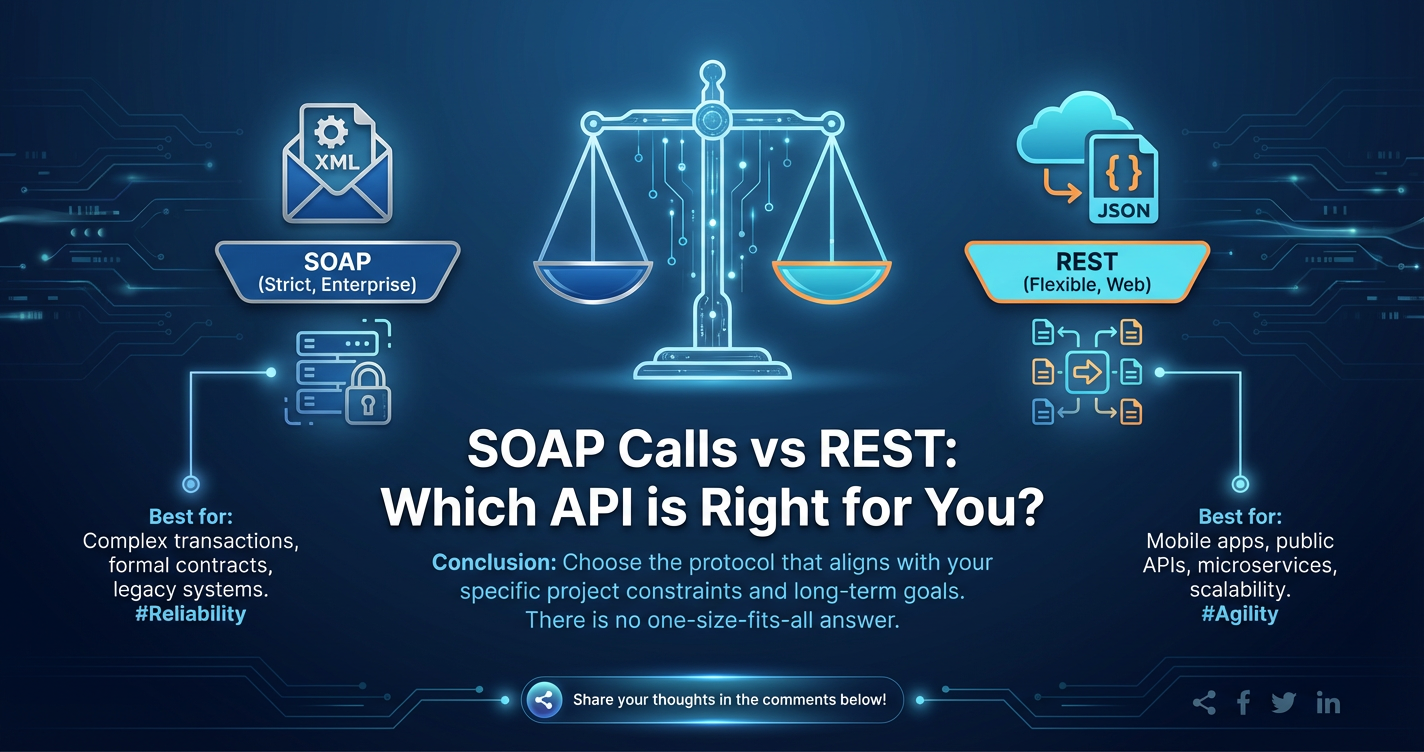
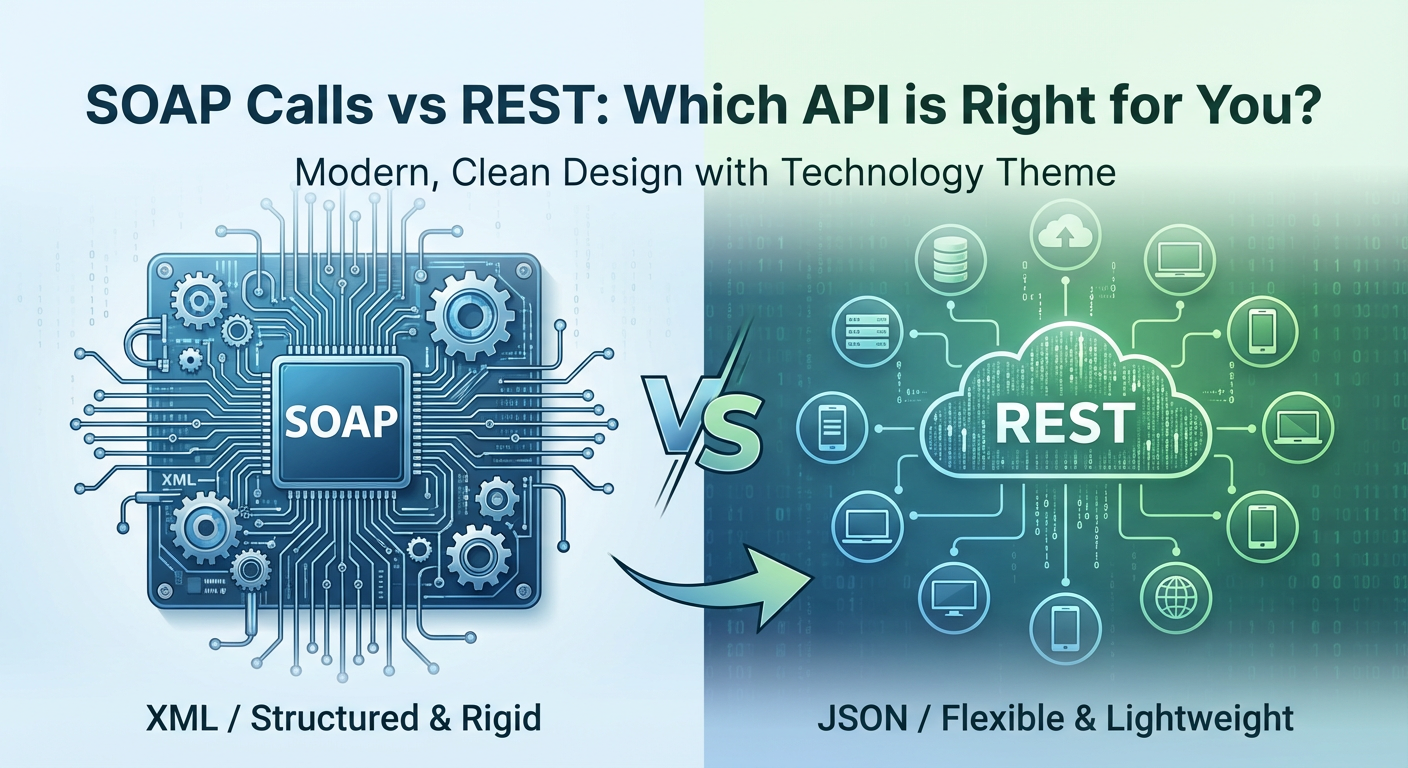
SOAP Calls vs REST: Which API is Right for You?


APIPark is a high-performance AI gateway that allows you to securely access the most comprehensive LLM APIs globally on the APIPark platform, including OpenAI, Anthropic, Mistral, Llama2, Google Gemini, and more.Try APIPark now! 👇👇👇
SOAP Calls vs REST: Which API is Right for You?
In the intricate tapestry of modern software development, Application Programming Interfaces (APIs) serve as the indispensable threads that weave together disparate systems, applications, and services. They are the conduits through which data flows, functionalities are exposed, and digital ecosystems flourish. From the smallest mobile application requesting data from a cloud server to massive enterprise systems exchanging complex business transactions, the underlying API architecture dictates much about the system's performance, scalability, security, and developer experience. As the digital landscape continues its relentless evolution, driven by burgeoning cloud technologies, microservices, and artificial intelligence, the choice of an appropriate API architectural style has never been more critical.
For decades, two dominant paradigms have stood at the forefront of API design: SOAP (Simple Object Access Protocol) and REST (Representational State Transfer). Each boasts a distinct philosophy, set of principles, and operational characteristics that render them suitable for different use cases and technological environments. While REST has undeniably surged in popularity in recent years, particularly with the proliferation of web and mobile applications, SOAP continues to hold its ground in enterprise environments where stringent security, transactional integrity, and formal contracts are paramount. Understanding the fundamental differences, strengths, and weaknesses of each is not merely an academic exercise; it is a strategic imperative for architects, developers, and business stakeholders alike. This comprehensive exploration will delve deep into the technical nuances of SOAP and REST, scrutinizing their core principles, operational mechanisms, advantages, and disadvantages. By the end, you will be equipped with the knowledge to make an informed decision on which api architecture aligns best with your specific project requirements, ensuring that your api strategy is robust, scalable, and future-proof. We will also explore the critical role of tools like api gateway solutions and the OpenAPI Specification in modern api management, irrespective of the chosen style.
Part 1: Understanding APIs – The Foundation of Interconnected Systems
Before we embark on a detailed comparison of SOAP and REST, it's essential to solidify our understanding of what an api truly is and why its design choices carry such significant weight. An api can be thought of as a set of definitions and protocols that allows two software components to communicate and interact with each other. It’s a contract for communication, specifying how software components should request and exchange information. Imagine a restaurant: the menu is the api. It lists what you can order (the services available) and how to order it (the request format). The kitchen is the server, fulfilling your order. You, as the customer, don't need to know how the kitchen prepares the food, just what to ask for and how to ask for it. This abstraction is the power of an api.
The evolution of integration methods has been a journey from tightly coupled, proprietary systems to loosely coupled, standardized, and interoperable architectures. Early integration often involved direct database access, custom file formats, or proprietary remote procedure calls (RPCs), leading to brittle systems that were difficult to maintain and scale. The rise of the internet and distributed computing paradigms necessitated more open and standardized ways for systems to communicate across networks, regardless of their underlying technologies or programming languages. This gave birth to web services and, subsequently, the architectural styles we now examine.
Choosing the right api style is far more than a technical preference; it's a foundational decision that impacts every facet of a software project. It dictates:
- Development Speed: How quickly developers can build and integrate with the
api. - Performance: The speed at which requests are processed and responses are delivered.
- Scalability: The ability of the system to handle increasing loads and user demands.
- Security: The mechanisms available to protect data and control access.
- Maintainability: The ease with which the
apican be updated, debugged, and evolved over time. - Interoperability: How easily different systems, built with varying technologies, can communicate.
- Cost: The resources required for development, deployment, and ongoing operation.
A suboptimal api choice can lead to significant technical debt, hinder future growth, and ultimately impact business objectives. Therefore, a deep, analytical approach is warranted when weighing the merits of SOAP versus REST.
Part 2: Deep Dive into SOAP (Simple Object Access Protocol)
SOAP, an XML-based messaging protocol, emerged in the late 1990s as a robust standard for exchanging structured information in the implementation of web services. Developed initially by Microsoft, it quickly gained traction as a formal, extensible, and transport-agnostic framework designed for enterprise-level communication. Its primary objective was to facilitate complex, distributed computing interactions across heterogeneous environments, ensuring reliability, security, and transactionality—qualities often demanded by mission-critical business applications.
2.1 Origins and Philosophy: The Quest for Enterprise-Grade Web Services
The internet's burgeoning influence in the late 1990s highlighted a critical need for standardized mechanisms to allow applications to communicate across diverse platforms and programming languages. Traditional distributed computing paradigms, such as CORBA and DCOM, were often language-specific or suffered from complex configuration and interoperability issues. SOAP was conceived to overcome these limitations by providing a protocol-agnostic, XML-based envelope for message exchange. Its design philosophy centered on bringing the robustness and formality of traditional enterprise integration patterns to the web. It prioritized strong typing, strict message contracts, and extensive support for advanced web service features, making it particularly appealing for large organizations with complex integration requirements. The emphasis was on reliability, transactional integrity (often achieved through extensions), and a "contract-first" approach to ensure predictable interactions.
2.2 Key Characteristics of SOAP
SOAP's design is characterized by several defining features that set it apart:
- XML-based Messaging Format: At its core, SOAP messages are formatted in XML. This provides a structured, platform-independent way to describe data and operations. Every SOAP message is encapsulated within a
<SOAP-ENV:Envelope>, which contains an optional<SOAP-ENV:Header>(for metadata like security tokens or transaction IDs) and a mandatory<SOAP-ENV:Body>(containing the actual message payload, such as method calls and parameters). This verbose, self-describing nature ensures high interoperability and machine readability. - WSDL (Web Services Description Language): A cornerstone of SOAP is WSDL, an XML-based language used to describe the functionality offered by a web service. WSDL acts as a formal, machine-readable contract, detailing what operations the service performs, what input parameters they expect, what data types they return, and where the service can be accessed. This contract-first approach is highly advantageous:
- Automated Code Generation: Development tools can read a WSDL document and automatically generate client-side code (stubs) in various programming languages, simplifying
apiconsumption. - Clear Interface Definitions: It provides an unambiguous definition of the service, crucial for ensuring interoperability between disparate systems.
- Documentation: WSDL serves as comprehensive documentation for the service's interface.
- Automated Code Generation: Development tools can read a WSDL document and automatically generate client-side code (stubs) in various programming languages, simplifying
- Security (WS-Security): SOAP offers a rich set of extensions, collectively known as WS-*, to address enterprise-grade requirements. WS-Security is a prominent example, providing mechanisms for message integrity, confidentiality, and authentication through XML encryption, XML digital signatures, and security tokens. This makes SOAP highly suitable for environments demanding the highest levels of data protection and secure
apicalls. - Reliability (WS-ReliableMessaging): For critical business transactions where message delivery must be guaranteed, SOAP offers WS-ReliReliableMessaging. This standard ensures reliable message delivery between distributed
apiendpoints, even in the presence of network failures, ensuring that messages are delivered exactly once and in the correct order. - Transport Independence: Unlike REST, which is tightly coupled with HTTP, SOAP can operate over virtually any transport protocol. While HTTP is the most common choice, SOAP messages can also be transmitted over SMTP (email), JMS (Java Message Service), TCP, and more. This flexibility allows SOAP services to be integrated into diverse messaging infrastructures, catering to specific enterprise requirements for queuing, guaranteed delivery, or asynchronous communication.
2.3 How SOAP Works (A Simplified Call Flow)
To understand SOAP's operational mechanics, let's consider a typical interaction:
- Client Discovers Service: A client application needs to interact with a SOAP service. It first obtains the service's WSDL document, either through a registry (like UDDI, though less common now) or directly from the service provider.
- Client Generates Request: Using the WSDL, the client's SOAP toolkit (or auto-generated stub) constructs an XML-formatted SOAP request. This request typically includes the operation name, parameters, and any necessary security or transaction headers. For example, a request to
GetCustomerDetailsmight look like:xml <SOAP-ENV:Envelope xmlns:SOAP-ENV="http://schemas.xmlsoap.org/soap/envelope/" xmlns:ns1="http://example.com/customerService"> <SOAP-ENV:Header> <!-- Security or transaction headers can go here --> <ns1:AuthToken>XYZ123</ns1:AuthToken> </SOAP-ENV:Header> <SOAP-ENV:Body> <ns1:GetCustomerDetails> <ns1:CustomerId>12345</ns1:CustomerId> </ns1:GetCustomerDetails> </SOAP-ENV:Body> </SOAP-ENV:Envelope> - Request Transmission: The client sends this SOAP message to the server's
apiendpoint using the chosen transport protocol (most commonly HTTP POST). - Server Processes Request: The SOAP service on the server receives the message. It parses the XML, extracts the operation and parameters, performs the requested business logic (e.g., querying a database for customer information), and constructs an XML-formatted SOAP response.
- Server Sends Response: The server sends the SOAP response back to the client.
xml <SOAP-ENV:Envelope xmlns:SOAP-ENV="http://schemas.xmlsoap.org/soap/envelope/" xmlns:ns1="http://example.com/customerService"> <SOAP-ENV:Body> <ns1:GetCustomerDetailsResponse> <ns1:Customer> <ns1:Id>12345</ns1:Id> <ns1:Name>John Doe</ns1:Name> <ns1:Email>john.doe@example.com</ns1:Email> </ns1:Customer> </ns1:GetCustomerDetailsResponse> </SOAP-ENV:Body> </SOAP-ENV:Envelope> - Client Parses Response: The client receives the response, parses the XML, and extracts the relevant data.
This structured, contract-driven interaction ensures a high degree of predictability and reduces the chances of misinterpretation between client and server.
2.4 Advantages of SOAP
SOAP's inherent design principles bestow it with several compelling advantages, especially in specific enterprise contexts:
- Robustness and Standardization: SOAP is a highly standardized protocol with a rich ecosystem of extensions (WS-*) that address complex enterprise requirements such as ACID transactions, advanced security (WS-Security), and reliable messaging (WS-ReliableMessaging). These built-in capabilities often simplify the implementation of high-assurance services that require strong guarantees. The maturity of these standards means that a broad range of tools and platforms support them, fostering interoperability.
- Formal Contracts (WSDL): The presence of WSDL provides an ironclad contract between the service provider and consumer. This formal definition ensures that both parties adhere to the precise message structure and operations, eliminating ambiguity. It facilitates automated client code generation (stubs and proxies), significantly reducing boilerplate code for developers and accelerating
apiconsumption in complex applications. This contract-first approach is invaluable for large-scale, distributed teams where consistency and clear interfaces are paramount. - Built-in Error Handling: SOAP specifies a standard fault element within its messages for reporting errors. This allows for structured error messages, making it easier for clients to parse and handle exceptions consistently across different services. This contrasts with REST, where error handling often relies on HTTP status codes and custom response bodies, which can vary across APIs.
- Transport Flexibility: SOAP's transport independence is a significant advantage in environments where HTTP might not be the most suitable or sole communication channel. The ability to use JMS for asynchronous messaging, for example, is critical for event-driven architectures or scenarios requiring guaranteed message delivery outside of a synchronous request-response cycle. This adaptability makes SOAP well-suited for integrating with diverse legacy systems and message brokers.
- ACID Compliance: While not inherent to SOAP itself, the WS-AtomicTransaction extension enables distributed transactions, allowing multiple web services to participate in a single, all-or-nothing transaction. This is crucial for financial applications, inventory management, and other systems where data consistency across multiple operations is non-negotiable.
2.5 Disadvantages of SOAP
Despite its strengths, SOAP carries a burden of complexity and overhead that has contributed to its decline in popularity for certain modern applications:
- Complexity and Verbosity: The XML-based nature of SOAP messages, combined with the extensive layering of WS- extensions, results in highly verbose and often complex messages. This verbosity leads to larger message sizes compared to lighter formats like JSON. Furthermore, the steep learning curve associated with WSDL, XML schemas, and various WS- specifications can deter developers, making SOAP development and debugging more challenging and time-consuming.
- Performance Overhead: The parsing and processing of large XML messages, along with the additional layers imposed by WS-* specifications, introduce significant performance overhead. This can be a critical bottleneck for applications requiring high throughput or low latency, such as mobile
apis or high-frequency data streams. The heavy parsing demands on both client and server can also consume more CPU and memory resources. - Tight Coupling: WSDL, while providing a strict contract, can also lead to tight coupling between client and server. Any change to the WSDL (e.g., adding or removing a parameter, changing a data type) can necessitate client-side code regeneration and redeployment. This rigidity can hinder agile development processes and make
apievolution more cumbersome. - Lack of Browser Support: SOAP is not directly consumable by web browsers. Modern web applications built with JavaScript cannot natively make SOAP calls without intermediate proxy servers, adding another layer of complexity. This makes it unsuitable for direct client-side web
apiinteractions, a major factor in its decline for front-end development. - Tooling Dependency: While robust tools exist for SOAP, their necessity for generating code, parsing WSDL, and managing complex configurations often ties developers to specific IDEs or frameworks. This dependency can limit flexibility and increase the effort required for setup and maintenance compared to the more agnostic nature of REST.
Part 3: Deep Dive into REST (Representational State Transfer)
REST, an architectural style rather than a protocol, was formally introduced by Roy Fielding in his 2000 doctoral dissertation, "Architectural Styles and the Design of Network-based Software Architectures." It emerged from the principles and practices that underpinned the success and scalability of the World Wide Web itself. Unlike SOAP's focus on formal messages and complex extensions, REST champions simplicity, leveraging existing web standards and protocols, most notably HTTP. Its philosophy is rooted in viewing web interactions as stateless operations on resources, making it inherently scalable and flexible.
3.1 Origins and Philosophy: Embracing the Web's Strengths
Fielding observed that the fundamental mechanisms of the web—URLs for resource identification, HTTP verbs for actions, and hypermedia for navigation—were powerful yet often underutilized in distributed computing. He distilled these successful patterns into REST, advocating for an architectural style that would allow systems to communicate in a manner consistent with how web browsers interact with websites. The core idea is to treat every piece of information or functionality as a "resource," identifiable by a unique URI (Uniform Resource Identifier). Clients then interact with these resources by sending standard HTTP requests, manipulating their "representations" (e.g., JSON, XML) to change the "state" of the server application. The guiding principles behind REST are simplicity, scalability, statelessness, and the efficient use of the web's existing infrastructure. It aims to minimize coupling between client and server, allowing independent evolution of both.
3.2 Key Architectural Constraints of REST
REST is defined by a set of architectural constraints, adherence to which imbues an api with RESTful properties:
- Client-Server: This constraint enforces a clear separation of concerns. Clients are responsible for the user interface and user experience, while servers manage data storage and business logic. This separation improves portability of the user interface across multiple platforms and enhances scalability by simplifying server components.
- Stateless: Each request from client to server must contain all the information necessary to understand the request. The server must not store any client context between requests. This statelessness makes
apis inherently more scalable, as any server can handle any request, simplifying load balancing and failure recovery. It also improves reliability by reducing the impact of server failures. - Cacheable: Responses from REST APIs should be explicitly or implicitly labeled as cacheable or non-cacheable. This allows clients and intermediate proxies (like an
api gateway) to cache responses, reducing server load and improving network efficiency and user perceived performance. - Uniform Interface: This is arguably the most critical constraint. It simplifies the overall system architecture, improves visibility, and promotes independence of components. It consists of four sub-constraints:
- Identification of Resources: Individual resources are identified in requests, for example, by URIs. The resource is conceptually separate from the representations that are returned to the client.
- Manipulation of Resources Through Representations: Clients receive representations of resources (e.g., JSON or XML documents). These representations contain enough information to modify or delete the resource on the server, provided the client has the necessary permissions.
- Self-Descriptive Messages: Each message includes enough information to describe how to process the message. For instance, HTTP methods (GET, POST, PUT, DELETE) indicate the intended action, and media types (e.g.,
application/json) describe the format of the payload. - Hypermedia As The Engine Of Application State (HATEOAS): This constraint means that clients should be able to discover the available actions and transitions by following links provided in the resource representations. A client enters a REST application through a simple fixed URL and then uses the links provided in the response to dynamically navigate and interact with the
api. While conceptually powerful, HATEOAS is often overlooked or minimally implemented in practice, leading to "REST-like" APIs rather than truly RESTful ones.
- Layered System: The architecture allows for intermediate servers (proxies, load balancers,
api gateways) to be placed between the client and the resource server. These intermediaries can perform functions like caching, security enforcement, or load balancing without affecting the client-server interaction. - Code-On-Demand (Optional): This constraint allows servers to temporarily extend or customize client functionality by transferring executable code (e.g., JavaScript applets). This constraint is optional and less commonly used in typical REST
apiscenarios.
3.3 How REST Works (A Simplified Call Flow)
RESTful apis leverage the HTTP protocol's built-in verbs and status codes for communication:
- Client Identifies Resource: A client application wishes to interact with a resource (e.g., a list of products, a specific user profile). It constructs a URI to uniquely identify this resource.
- Client Sends HTTP Request: The client sends an HTTP request to the resource's URI, using one of the standard HTTP methods to indicate the desired action:For example, to retrieve customer details with ID
12345:http GET /customers/12345 HTTP/1.1 Host: api.example.com Accept: application/json Authorization: Bearer <token>- GET: Retrieve a resource or a collection of resources. (Idempotent and safe)
- POST: Create a new resource or submit data. (Not idempotent)
- PUT: Update an existing resource (replace the entire resource). (Idempotent)
- PATCH: Partially update an existing resource. (Not idempotent)
- DELETE: Remove a resource. (Idempotent)
- Server Processes Request: The REST
apiserver receives the HTTP request. Based on the URI and HTTP method, it performs the requested operation (e.g., fetches data from a database, creates a new entry). - Server Sends HTTP Response: The server constructs an HTTP response, including:Example successful response:```http HTTP/1.1 200 OK Content-Type: application/json Cache-Control: public, max-age=3600{ "id": "12345", "name": "John Doe", "email": "john.doe@example.com", "address": { "street": "123 Main St", "city": "Anytown" }, "links": [ { "rel": "self", "href": "/techblog/en/customers/12345" }, { "rel": "orders", "href": "/techblog/en/customers/12345/orders" } ] } ```
- An HTTP status code (e.g., 200 OK for success, 201 Created for resource creation, 404 Not Found, 500 Internal Server Error).
- Headers (e.g.,
Content-Type: application/jsonto indicate the data format,Cache-Controlfor caching directives). - A representation of the resource in the response body (commonly JSON, but could also be XML, HTML, plain text, etc.).
- Client Processes Response: The client receives the response, interprets the status code, parses the data representation, and uses the information to update its UI or perform further actions.
This simple, standardized, and resource-centric approach makes REST highly intuitive for developers familiar with web concepts.
3.4 Advantages of REST
REST's adherence to web principles translates into numerous benefits, making it the preferred choice for a vast array of modern applications:
- Simplicity and Lightweight: REST is significantly simpler to understand and implement compared to SOAP. It leverages existing HTTP methods and concepts, reducing the learning curve for developers. Its messages are typically lighter, especially when using JSON, leading to less network bandwidth consumption. This lightweight nature is particularly beneficial for
apis consumed by mobile devices or web browsers. - Scalability and Performance: The stateless nature of RESTful APIs, combined with its emphasis on caching, makes it highly scalable. Any request can be handled by any server in a cluster, simplifying load balancing and increasing system resilience. Caching reduces the need for repeated server requests, further enhancing performance and reducing server load. The small message sizes also contribute to faster data transfer.
- Flexibility in Data Formats: While SOAP is strictly XML, REST is agnostic to the data format. Developers can choose JSON, XML, plain text, YAML, or any other suitable format. JSON has become the de facto standard due to its lightweight nature, ease of parsing in JavaScript, and human readability, making REST APIs particularly well-suited for web and mobile development.
- Browser Compatibility: REST APIs can be directly consumed by web browsers using standard JavaScript (e.g.,
fetchapi,XMLHttpRequest). This direct integration simplifies the development of dynamic web applications and eliminates the need for intermediate proxies, which is a major convenience for front-end developers. - Statelessness: This constraint simplifies server design and improves fault tolerance. Servers don't need to maintain session state for each client, making it easier to scale horizontally and recover from server failures without disrupting ongoing client interactions.
- Good for Mobile and Web Applications: The combination of simplicity, performance, lightweight messages, and browser compatibility makes REST an ideal choice for
apis powering mobile applications, single-page web applications (SPAs), and publicapis that need to be easily consumable by a wide range of developers.
3.5 Disadvantages of REST
Despite its widespread adoption, REST is not without its limitations:
- Lack of Formal Contract: Unlike SOAP with its WSDL, REST historically lacked a standardized, machine-readable
apicontract. This can lead to ambiguity regarding available operations, expected parameters, and response structures, requiring extensive external documentation. However, the emergence of theOpenAPISpecification has largely mitigated this disadvantage by providing a robust framework for defining and describing RESTful APIs. - Less Built-in Security/Reliability Features: REST relies on underlying protocols and external mechanisms for security and reliability. While HTTPs (TLS/SSL) provides transport-level security, and authentication/authorization often leverage standards like OAuth2 or JWT, REST does not have built-in equivalents to WS-Security or WS-ReliableMessaging. Implementing these enterprise-grade features requires careful integration of separate components, which can add complexity.
- Over-fetching/Under-fetching: For clients needing only a subset of data from a large resource, REST's "get everything" approach can lead to over-fetching unnecessary data. Conversely, for complex UI components requiring data from multiple resources, clients might need to make several
apicalls (under-fetching), leading to performance issues (N+1 problem). This inefficiency has led to the development of alternativeapiquery languages like GraphQL. - HATEOAS Often Overlooked: While HATEOAS is a core constraint of true REST, it is frequently poorly implemented or ignored in practice. Without HATEOAS, REST APIs become mere RPC-style services over HTTP, losing some of the architectural benefits of discoverability and decoupled evolution. This can make clients more brittle to
apichanges if they rely on hardcoded URLs rather than dynamically discovered links. - Versioning Challenges: Evolving a REST
apican be challenging. Changing resource structures orapibehavior requires careful versioning strategies (e.g., URI versioning, header versioning) to ensure backward compatibility with existing clients. This is an area where clearapigovernance is essential.
Part 4: Head-to-Head Comparison: SOAP vs. REST
Having explored the individual characteristics of SOAP and REST, it's time to juxtapose them directly. The choice between these two architectural styles is rarely clear-cut and depends heavily on the specific context, requirements, and constraints of a project.
4.1 Key Differences Table
The following table summarizes the primary distinctions between SOAP and REST:
| Aspect | SOAP (Simple Object Access Protocol) | REST (Representational State Transfer) |
|---|---|---|
| Protocol/Style | Protocol (with strict standards) | Architectural style (based on HTTP principles) |
| Messaging Format | XML only (verbose, structured) | JSON (most common), XML, HTML, plain text (flexible, lightweight) |
| Contract | WSDL (formal, machine-readable, contract-first) | Usually external documentation; OpenAPI Specification provides formal contract |
| Security | Built-in WS-Security (robust, comprehensive) | Relies on transport (HTTPS), OAuth2, JWT (external mechanisms) |
| Reliability | WS-ReliableMessaging, WS-AtomicTransaction (built-in, enterprise-grade) | Relies on transport, retry mechanisms (external mechanisms, less built-in) |
| Performance | Slower due to XML parsing, larger message size, more overhead | Faster due to lighter messages (JSON), caching, less overhead |
| Complexity | High (steep learning curve, verbose, complex tooling) | Low (simpler to learn, implement, less tooling dependency) |
| Caching | Not natively supported; must be implemented separately | Natively supported by HTTP, highly encouraged and effective |
| Transport | Protocol-agnostic (HTTP, SMTP, JMS, TCP, etc.) | Primarily HTTP/HTTPS |
| Statefulness | Can be stateful or stateless (though generally stateless practices are preferred) | Stateless (each request independent) |
| Error Handling | Standardized SOAP Fault element | Relies on HTTP status codes and custom response bodies |
| Browser Support | No direct browser support (requires proxies) | Direct browser support (JavaScript) |
| Tooling | Often requires specialized tools for WSDL parsing, code generation | Often simpler, can be implemented with standard HTTP client libraries |
| Use Cases | Enterprise, legacy systems, high security/transactional needs | Web, mobile, public apis, microservices, lightweight integrations |
4.2 When to Choose SOAP
Despite the pervasive influence of REST, there are compelling scenarios where SOAP remains the more appropriate choice:
- Enterprise-level services requiring strict contracts: In large organizations with complex business processes, the formal contract provided by WSDL is invaluable. It ensures that disparate systems, often developed by different teams or vendors, can interoperate predictably and reliably. Industries like finance, healthcare, and government often mandate such strictness for compliance and data integrity.
- High security requirements: When
apicalls involve highly sensitive data or critical operations, the advanced security features offered by WS-Security are a significant advantage. This includes granular control over message integrity, confidentiality, and robust authentication mechanisms that are often built directly into the protocol's extensions. Implementing equivalent levels of security in REST often requires integrating multiple third-party libraries and standards, which can introduce its own complexities. - Transactional reliability and ACID properties: For scenarios demanding distributed transactions where atomicity, consistency, isolation, and durability (ACID) are non-negotiable (e.g., multi-step financial transactions across different services), WS-AtomicTransaction provides a standardized solution. REST, by its stateless nature, makes distributed transactions more challenging to implement consistently, typically relying on sagas or other eventual consistency patterns.
- Formal contracts and interoperability across heterogeneous systems are paramount: In environments where systems are built on diverse technology stacks (e.g., Java, .NET, mainframe applications) and strong typing is preferred, SOAP's language-agnostic, WSDL-driven approach can simplify integration by generating robust client proxies.
- Legacy system integration: Many older enterprise systems expose their functionalities via SOAP web services. When integrating with such existing infrastructure, adopting SOAP for new
apis that interact with them can streamline the overall architecture and avoid unnecessary translation layers.
4.3 When to Choose REST
For the vast majority of modern api development, particularly for public-facing services, REST has become the de facto standard:
- Web and mobile applications: The simplicity, performance, and lightweight nature of REST APIs (especially with JSON payloads) make them ideal for powering web and mobile frontends. They reduce bandwidth consumption, improve load times, and are directly consumable by client-side JavaScript, accelerating development.
- Public APIs: Companies offering APIs to third-party developers (e.g., social media platforms, payment gateways) typically opt for REST. Its ease of use, clear resource-based URLs, and standard HTTP methods lower the barrier to entry for developers, fostering broader adoption and ecosystem growth.
- Need for simplicity, flexibility, and high performance: If the primary drivers are rapid development, easy integration, and optimal performance for general data exchange, REST is the superior choice. Its statelessness and caching capabilities inherently support high-throughput, low-latency scenarios.
- Integration with lightweight clients: Devices with limited processing power or network bandwidth (IoT devices, smaller mobile clients) benefit significantly from REST's minimal overhead and efficient data formats.
- Microservices architectures: REST's statelessness, resource-centric approach, and emphasis on loosely coupled components align perfectly with the principles of microservices. It allows individual services to evolve independently, facilitating agile development and deployment cycles.
4.4 The Role of API Gateways in Modern API Management
Regardless of whether you opt for SOAP, REST, or a hybrid approach, the complexity of managing a growing portfolio of apis often necessitates a robust api gateway. An api gateway acts as a single entry point for all api calls, sitting between clients and backend services. It serves as a powerful abstraction layer, offloading common concerns from individual services and centralizing api management functions.
Key functionalities of an api gateway include:
- Traffic Management: Routing requests to appropriate backend services, load balancing, and traffic throttling.
- Security: Authentication, authorization,
apikey management, and sometimes even basic threat protection. It can enforce access policies, validate credentials, and secure communication channels. - Rate Limiting: Protecting backend services from overload by controlling the number of requests a client can make within a given time frame.
- Caching: Storing frequently accessed
apiresponses to reduce latency and backend load. - Request/Response Transformation: Modifying
apirequests or responses to match backend service expectations or client requirements. This is particularly useful in environments integrating both SOAP and REST, where anapi gatewaycan translate between formats or protocols. - Monitoring and Analytics: Collecting detailed logs and metrics on
apiusage, performance, and errors, providing valuable insights forapigovernance and business intelligence. - Versioning: Helping manage different versions of
apis, allowing clients to continue using older versions while newer ones are rolled out.
An api gateway can effectively manage both SOAP and REST APIs. For SOAP, it can enforce WS-Security policies, route messages based on SOAP actions, and provide logging. For REST, it handles HTTP routing, authentication, rate limiting, and caching. In a hybrid environment, the gateway can even bridge protocols, acting as a facade that exposes a consistent api interface to consumers while communicating with various backend services using their native protocols.
For organizations looking to streamline their api landscape, especially in an era increasingly dominated by AI services, a comprehensive api gateway solution is indispensable. For instance, APIPark stands out as an open-source AI gateway and api management platform. It is designed not only to manage, integrate, and deploy traditional REST services with ease but also to quickly integrate over 100 AI models. What makes APIPark particularly compelling in the context of API management is its ability to offer a unified API format for AI invocation, ensuring that changes in underlying AI models don't ripple through applications. Furthermore, it allows users to encapsulate custom prompts with AI models into new, specialized REST APIs, such as a sentiment analysis API, simplifying AI usage and significantly reducing maintenance costs. An api gateway like APIPark can centralize the display of all api services, facilitate api service sharing within teams, and implement robust access permission workflows requiring approval, thereby preventing unauthorized api calls and potential data breaches, which is crucial for both SOAP and REST-based integrations. Its impressive performance, rivaling Nginx, and comprehensive api call logging and data analysis capabilities further underscore the value of a well-chosen api gateway in managing the full api lifecycle, ensuring efficiency, security, and optimal performance across your api ecosystem.
4.5 The Importance of API Documentation and Specification: OpenAPI
One of the historical criticisms leveled against REST APIs was the lack of a formal, machine-readable contract comparable to WSDL for SOAP. This often led to fragmented documentation, inconsistent api designs, and a steeper learning curve for api consumers. However, the advent of the OpenAPI Specification (formerly known as Swagger Specification) has largely addressed this challenge, becoming the de facto standard for describing, producing, consuming, and visualizing RESTful web services.
The OpenAPI Specification provides a language-agnostic interface description for REST APIs. It allows developers to define:
- Available Endpoints (Paths): All the URIs your
apiexposes. - HTTP Methods: Which methods (GET, POST, PUT, DELETE) are supported for each path.
- Operations: A detailed description of each
apioperation. - Parameters: Inputs to operations, including type, format, and whether they are required.
- Request Bodies: The structure and schema of data sent to the
api. - Response Messages: The structure and schema of successful and error responses, including HTTP status codes.
- Authentication Methods: How clients can authenticate with the
api. - Data Models (Schemas): Reusable definitions for the data structures exchanged.
The benefits of adopting OpenAPI are profound:
- Automated Documentation: Tools can generate interactive, human-readable documentation directly from the
OpenAPIdefinition, ensuring it's always up-to-date with theapiimplementation. - Code Generation: Similar to WSDL,
OpenAPIdefinitions can be used to automatically generate client SDKs, server stubs, and test cases in various programming languages, significantly accelerating integration. - Improved Developer Experience: A clear and consistent
OpenAPIdefinition makes it much easier for developers to understand and consume anapi, reducing guesswork and integration time. - Enhanced API Governance: It provides a formal blueprint for
apidesign, promoting consistency and adherence to best practices across an organization'sapiportfolio. - Testing and Validation: The specification can be used to validate
apirequests and responses, ensuring they conform to the defined contract, which is invaluable for automated testing.
An api gateway often integrates seamlessly with OpenAPI definitions. The gateway can leverage the OpenAPI specification to validate incoming requests, enforce security policies based on defined api paths and methods, and even dynamically route requests. This synergy between OpenAPI for api definition and an api gateway for api enforcement and management creates a robust, well-governed api ecosystem, addressing many of the historical limitations of REST APIs regarding discoverability and contract enforcement.
Part 5: Modern API Trends and Beyond
While SOAP and REST have dominated the api landscape for years, the relentless pace of technological innovation continues to introduce new architectural styles and protocols designed to address evolving challenges and specific use cases. The "right" api choice is increasingly becoming a nuanced decision, often incorporating elements from these newer trends.
GraphQL: Addressing REST's Fetching Inefficiencies
One of the most significant challenges with REST is its fixed data structures for resources. Clients often face either "over-fetching" (receiving more data than needed) or "under-fetching" (needing to make multiple requests to gather all necessary data for a single view). GraphQL, developed by Facebook, emerges as a powerful alternative that shifts control to the client. With GraphQL, clients send a single query describing precisely the data they need, and the server responds with exactly that data.
Key characteristics of GraphQL:
- Single Endpoint: Unlike REST's multiple endpoints for different resources, GraphQL typically exposes a single
apiendpoint. - Client-Driven Queries: Clients define the structure of the data they want, allowing them to fetch multiple resources in a single request and retrieve only the necessary fields.
- Strongly Typed Schema: GraphQL APIs are defined by a strongly typed schema, which specifies all possible data types and operations (queries, mutations, subscriptions). This provides a strong contract, much like WSDL for SOAP, and enables powerful tooling.
- Real-time Capabilities: Subscriptions in GraphQL allow clients to receive real-time updates when data changes on the server, making it suitable for live dashboards or chat applications.
GraphQL excels in environments where clients have diverse and evolving data requirements, such as complex mobile applications or highly interactive web frontends. It reduces chattiness between client and server, improves network efficiency, and accelerates client-side development by eliminating over- or under-fetching.
gRPC: High-Performance, Language-Agnostic RPC Framework
Google's gRPC (Google Remote Procedure Call) offers another paradigm, focusing on high performance and efficiency, particularly for inter-service communication in microservices architectures. Unlike REST's reliance on HTTP 1.1 with text-based payloads (JSON), gRPC leverages HTTP/2 for transport and Protocol Buffers (Protobuf) for defining service interfaces and message structures.
Key characteristics of gRPC:
- HTTP/2 Based: Utilizes HTTP/2's features like multiplexing (multiple concurrent requests over a single connection) and header compression, leading to significant performance improvements.
- Protocol Buffers: A language-neutral, platform-neutral, extensible mechanism for serializing structured data. Protobuf messages are binary, making them much smaller and faster to serialize/deserialize than XML or JSON.
- Strongly Typed Contracts: Service definitions are created using
.protofiles, which are then compiled into client and server code in various languages. This provides strong type checking and ensures clear contracts. - Bidirectional Streaming: Supports various communication patterns, including unary (single request/response), server streaming, client streaming, and bidirectional streaming, making it highly versatile for real-time applications.
- Language Agnostic: Generates code for numerous languages, enabling seamless integration across diverse technology stacks.
gRPC is particularly well-suited for high-performance internal microservices communication, mobile apis requiring extreme efficiency, and polyglot environments where services are built with different programming languages. Its binary serialization and HTTP/2 transport provide a speed advantage over typical REST/JSON over HTTP 1.1.
Asynchronous APIs: Webhooks, Kafka, RabbitMQ for Event-Driven Architectures
Beyond synchronous request-response patterns (typical of both SOAP and REST), asynchronous apis are gaining prominence, especially in event-driven architectures. These apis facilitate decoupled communication where systems react to events rather than making direct calls.
- Webhooks: Allow one system to notify another system of an event by making an HTTP POST request to a pre-registered URL. The receiving system (the webhook listener) then processes the event. This is a simple, push-based mechanism for real-time notifications.
- Message Queues (e.g., Kafka, RabbitMQ): These provide robust, durable, and scalable platforms for asynchronous messaging. Systems publish events to queues or topics, and other systems subscribe to these to consume events. This pattern decouples producers from consumers, enhances fault tolerance, and enables highly scalable, event-driven microservices.
Asynchronous APIs are crucial for scenarios requiring real-time updates, long-running processes, large-scale data ingestion, and building resilient systems that can gracefully handle intermittent failures.
The Evolving Landscape: Context is King
The proliferation of these diverse api styles and protocols underscores a fundamental truth: there is no universal "best" api solution. The "right choice" is always context-dependent. Factors to consider include:
- Performance Requirements: Is raw speed and efficiency paramount (gRPC)?
- Client Diversity: Do clients have varied and evolving data needs (GraphQL)?
- Integration Complexity: Are you integrating with legacy enterprise systems (SOAP)?
- Developer Experience & Ecosystem: Is ease of use and broad tooling support crucial for public
apis (REST)? - Real-time Needs: Do you require instant notifications or continuous data streams (GraphQL subscriptions, webhooks, message queues)?
- Team Expertise: What technologies are your development teams most proficient with?
A modern api strategy might involve a hybrid approach, using REST for public-facing web/mobile apis, gRPC for internal microservices communication, and webhooks for event notifications. A robust api gateway, like APIPark, becomes even more critical in such a multi-protocol environment, providing a unified management layer and abstracting the underlying complexity from api consumers. The landscape is dynamic, and staying abreast of these trends is essential for building adaptable and high-performing systems.
Conclusion
The decision between SOAP and REST, while seemingly a technical one, profoundly impacts the entire lifecycle of a software project, from initial development to long-term maintenance and scalability. SOAP, with its robust standardization, stringent security, and transactional reliability features, remains a viable and often preferred choice for complex enterprise applications, legacy system integration, and scenarios demanding the highest levels of data integrity and formal contracts. Its verbosity and performance overhead, however, make it less suitable for lightweight, high-performance web and mobile apis.
REST, conversely, has become the undisputed champion for modern web and mobile development, public apis, and microservices architectures. Its simplicity, lightweight messages, scalability, and adherence to established web principles offer unparalleled flexibility and developer friendliness. While it initially lacked the formal contract mechanisms of SOAP, the widespread adoption of the OpenAPI Specification has largely bridged this gap, providing a robust framework for defining and documenting RESTful apis.
Ultimately, there is no single "best" api style. The optimal choice is a strategic decision guided by a comprehensive understanding of your project's specific requirements, constraints, and the ecosystem in which the api will operate. Factors such as security mandates, performance targets, developer expertise, existing infrastructure, and the nature of client applications must all be carefully weighed.
Beyond the core architectural styles, the modern api landscape is further enriched by innovations like GraphQL and gRPC, which address specific challenges that REST or SOAP might not fully optimize. GraphQL empowers clients with unparalleled data fetching flexibility, while gRPC offers extreme performance for inter-service communication.
In this increasingly diverse api ecosystem, the role of effective api management becomes paramount. Tools like an api gateway are no longer optional but essential. An api gateway acts as a crucial control plane, offering centralized capabilities for security, traffic management, rate limiting, caching, and monitoring across all your apis—be they SOAP, REST, or even AI-driven services managed by platforms like APIPark. Coupled with meticulous api design and clear documentation facilitated by standards like OpenAPI, organizations can construct a resilient, high-performing, and secure api infrastructure that not only meets current demands but is also poised for future growth and technological shifts. The future of api development is not about choosing one technology over all others, but rather intelligently combining the right tools and architectural styles to build truly interconnected, efficient, and innovative digital experiences.
Frequently Asked Questions (FAQs)
1. What is the fundamental difference between SOAP and REST? The fundamental difference lies in their nature and approach. SOAP is a protocol with strict standards, relying heavily on XML for message formatting and WSDL for formal contracts, making it highly structured and robust for enterprise-grade applications. REST is an architectural style that leverages existing web standards (primarily HTTP), focuses on resources, and offers greater flexibility in data formats (like JSON), leading to simpler, lightweight, and highly scalable apis for web and mobile.
2. Which API style offers better security, SOAP or REST? SOAP offers more comprehensive, built-in security features through its WS-Security extensions, which provide advanced mechanisms for message integrity, confidentiality (encryption), and authentication directly within the protocol. REST relies on transport-level security (HTTPS/TLS) and external standards like OAuth2 and JWT for authentication and authorization. While REST can be secured effectively, it requires careful implementation of these separate components, whereas SOAP provides a more integrated, standardized security framework out-of-the-box.
3. When should I choose REST over SOAP? You should generally choose REST for public-facing APIs, web and mobile application backends, microservices architectures, and any scenario where simplicity, high performance, scalability, and developer-friendliness are key priorities. REST's lightweight nature and use of standard HTTP methods make it ideal for consuming services directly from web browsers and mobile devices.
4. Can an API Gateway manage both SOAP and REST APIs? Yes, absolutely. A robust api gateway is designed to be protocol-agnostic and can effectively manage both SOAP and REST APIs. It acts as a unified entry point, providing centralized features like authentication, authorization, rate limiting, traffic routing, monitoring, and even request/response transformation, regardless of the underlying api style. Products like APIPark further extend this capability to integrate and manage AI services alongside traditional REST and potentially SOAP APIs.
5. How does OpenAPI relate to REST APIs and API management? OpenAPI Specification (formerly Swagger) provides a standardized, machine-readable format for describing RESTful APIs. It defines api endpoints, operations, parameters, request/response structures, and authentication methods. This acts as a formal contract, similar to WSDL for SOAP, addressing REST's historical lack of a native contract. In api management, OpenAPI definitions are invaluable for generating interactive documentation, client SDKs, server stubs, and for enabling api gateways to validate requests and enforce policies against the defined api contract, significantly improving developer experience and api governance.
🚀You can securely and efficiently call the OpenAI API on APIPark in just two steps:
Step 1: Deploy the APIPark AI gateway in 5 minutes.
APIPark is developed based on Golang, offering strong product performance and low development and maintenance costs. You can deploy APIPark with a single command line.
curl -sSO https://download.apipark.com/install/quick-start.sh; bash quick-start.sh

In my experience, you can see the successful deployment interface within 5 to 10 minutes. Then, you can log in to APIPark using your account.

Step 2: Call the OpenAI API.