The Importance of JWT Access Token Encryption
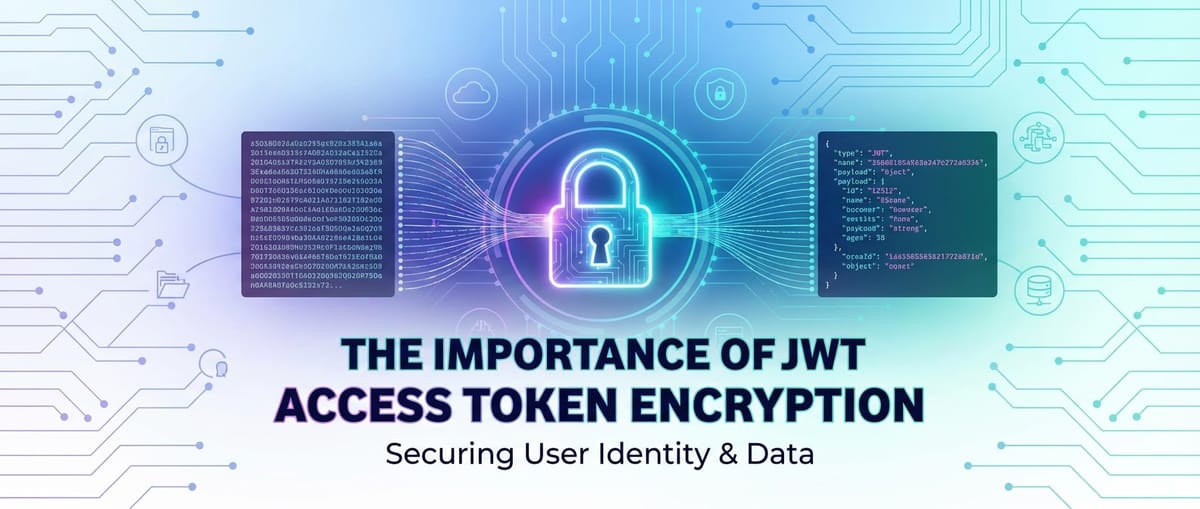


The digital arteries of our modern world are increasingly powered by Application Programming Interfaces (APIs). These programmatic interfaces facilitate communication between disparate software systems, enabling everything from mobile app functionalities to complex microservice architectures. At the heart of securing these interactions, especially for stateless operations, lies the JSON Web Token (JWT). While immensely popular for its compact, URL-safe nature and its ability to carry trusted claims, the inherent transparency of a standard JWT’s payload presents a significant security challenge: confidentiality. The very utility that makes JWTs so attractive – their readability – becomes a liability when sensitive information needs to be transmitted. This article delves into the critical importance of JWT Access Token Encryption, moving beyond mere signing to ensure data confidentiality, a paradigm shift that elevates the security posture of modern APIs and the sophisticated api gateway systems that orchestrate their interactions. We will explore the architectural implications, the cryptographic underpinnings, practical implementation strategies, and the indispensable role of a robust api gateway in enforcing these advanced security measures, ensuring that an api ecosystem remains resilient against an ever-evolving threat landscape.
The Foundation: Understanding JSON Web Tokens (JWTs)
Before we dissect the necessity of encryption, it's fundamental to grasp what a JWT is and how it functions in its most common form. A JSON Web Token is a compact, URL-safe means of representing claims to be transferred between two parties. These claims are statements about an entity (typically, the user) and additional metadata.
Anatomy of a JWT: Header, Payload, and Signature
A JWT is composed of three parts, separated by dots (.), and Base64Url-encoded:
- Header: This typically consists of two parts: the type of the token, which is JWT, and the signing algorithm used, such as HMAC SHA256 or RSA. For instance:
json { "alg": "HS256", "typ": "JWT" }This header is then Base64Url encoded to form the first part of the JWT. - Payload: This section contains the "claims." Claims are statements about an entity (typically, the user) and additional data. There are three types of claims:
- Registered claims: These are predefined claims that are not mandatory but are recommended to provide a set of useful, interoperable claims. Examples include
iss(issuer),exp(expiration time),sub(subject),aud(audience),nbf(not before time),iat(issued at time), andjti(JWT ID). - Public claims: These can be defined by anyone using IANA JSON Web Token Registry or by defining them as a URI that contains a collision-resistant name.
- Private claims: These are custom claims created to share information between parties that agree on their use. They are not registered or public and should be used with caution as they might collide with other claims. For example:
json { "sub": "user123", "name": "John Doe", "admin": true, "email": "john.doe@example.com" }This payload is also Base64Url encoded to form the second part of the JWT.
- Registered claims: These are predefined claims that are not mandatory but are recommended to provide a set of useful, interoperable claims. Examples include
- Signature: To create the signature, the encoded header, the encoded payload, a secret key, and the algorithm specified in the header are taken. For example, if you want to use the HMAC SHA256 algorithm, the signature is created by taking the Base64Url encoded header, the Base64Url encoded payload, a secret key, and hashing them using the SHA256 algorithm. The purpose of the signature is to verify that the sender of the JWT is who it claims to be and to ensure that the message hasn't been altered along the way. Without a valid signature, the token's integrity cannot be guaranteed.
The combination of these three Base64Url-encoded parts, separated by dots, forms the complete JWT string: xxxxx.yyyyy.zzzzz.
How JWTs Work in Practice
The operational flow of a JWT typically involves these steps:
- Authentication: A client (e.g., a web browser or mobile app) sends credentials (username/password) to an authentication server.
- Token Issuance: Upon successful authentication, the server generates a JWT. This token contains claims about the user (e.g., user ID, roles, permissions) and is signed with a secret key known only to the server.
- Token Transmission: The server sends the JWT back to the client. The client stores this token (e.g., in local storage, session storage, or as a cookie).
- API Requests: For subsequent requests to protected api endpoints, the client includes the JWT, typically in the
Authorizationheader as a Bearer token (Authorization: Bearer <token>). - Token Verification: The resource server (or an api gateway in front of it) receives the request, extracts the JWT, and verifies its signature using the same secret key (or public key, if asymmetric encryption is used) used during issuance. If the signature is valid, the server trusts the claims within the payload.
- Authorization: Based on the verified claims (e.g., user roles), the server decides whether the client is authorized to access the requested resource.
- Statelessness: A key advantage of JWTs is their stateless nature. Once issued, the server doesn't need to store session information. Each request contains all necessary authorization details, reducing server load and simplifying horizontal scaling.
The Power and Peril of Transparency
The inherent transparency of the JWT payload, while facilitating debugging and interoperability, introduces a significant security vulnerability: anyone intercepting the token can read its contents. While the signature guarantees integrity (that the payload hasn't been tampered with) and authenticity (that it comes from a trusted issuer), it offers no guarantee of confidentiality. This distinction between integrity/authenticity and confidentiality is paramount and forms the core argument for encrypting JWT access tokens. If sensitive information, even seemingly innocuous data that could be correlated, resides within the plaintext payload, it is exposed to anyone who gains access to the token, either legitimately or maliciously.
The Inherent Vulnerabilities of Unencrypted JWTs
The common misapprehension that a signed JWT is "secure" often stems from a conflation of integrity and confidentiality. While signing effectively prevents tampering and verifies the sender, it does absolutely nothing to hide the content of the token. This section will elaborate on the specific vulnerabilities that arise from transmitting JWTs with an unencrypted payload.
Payload Visibility: A Clear Text Exposure
The most direct and obvious vulnerability is the plain visibility of the payload. Because JWTs are Base64Url encoded, not encrypted, anyone who intercepts a JWT can easily decode its header and payload. Consider a JWT carrying claims like: * user_id: 12345 * email: alice@example.com * role: admin * department_id: 789 * internal_flags: [ "beta_tester", "privileged_access" ]
If this token is intercepted, perhaps through a compromised client-side application, an insecure network, or a logging system, all this information becomes immediately accessible. While individually these pieces of data might seem harmless, in aggregate, or when combined with other data points, they can paint a detailed picture of a user, revealing sensitive operational details or even personal identifiable information (PII).
For instance, an attacker might learn: * A user's administrative status, which could be used in social engineering attacks or to identify high-value targets. * Internal identifiers or flags that reveal system architecture or specific feature access, potentially aiding in further exploitation. * Email addresses that could be used for phishing campaigns.
The signature only confirms that "this readable data came from a trusted source and hasn't changed." It doesn't say "this readable data is hidden from prying eyes."
Man-in-the-Middle (MITM) Attacks and the Role of HTTPS
It's a foundational principle of web security that all communication, especially involving authentication tokens, should occur over HTTPS (HTTP Secure). HTTPS encrypts the entire communication channel using TLS/SSL, protecting data in transit from being read or modified by attackers performing MITM attacks.
However, relying solely on HTTPS to protect JWT content is a common pitfall. While HTTPS prevents external observers on the network path from seeing the plain text, it doesn't protect the data once it reaches an endpoint or if the endpoint itself is compromised.
Consider these scenarios: 1. Compromised Server/Load Balancer: If an attacker gains access to the server or a load balancer where TLS termination occurs, they can read the unencrypted JWT before it reaches the application logic. 2. Internal Network Threats: Within a trusted internal network, where microservices communicate, TLS might not always be enforced strictly, or an attacker with internal network access could still intercept and decode JWTs flowing between services. While this might seem less likely, insider threats are a significant concern. 3. Logging and Monitoring Systems: Many systems log incoming API requests, including headers and sometimes even request bodies. If a JWT is logged, its plaintext payload will be stored in logs, which might have different access controls and retention policies than the core application, creating a new attack surface. 4. Client-Side Vulnerabilities: Cross-Site Scripting (XSS) attacks can lead to an attacker injecting malicious scripts into a legitimate webpage. These scripts can then steal JWTs stored in the browser's local storage or even intercept them from network requests before they are sent over HTTPS. Once stolen, an unencrypted JWT's payload is immediately legible to the attacker.
In these situations, HTTPS provides no protection for the confidentiality of the JWT's claims.
Token Replay Attacks (and their nuances)
A replay attack involves an attacker intercepting a valid token and using it again to impersonate the legitimate user. While JWT signing doesn't directly prevent replay attacks, well-designed systems use other mechanisms (like short expiry times, jti claims with blacklisting/whitelisting, or one-time tokens) to mitigate them.
However, the visibility of the payload in an unencrypted JWT can indirectly facilitate replay attacks or more sophisticated attacks. If an attacker knows the specific claims within a token, they might craft more targeted attacks, or use the information gleaned to understand the system's authorization logic better. For instance, knowing the specific scope claims could help an attacker understand which api endpoints the user is authorized for, making subsequent replay attempts more efficient.
Weak Signing Secrets or Compromised Signing Keys
The security of a signed JWT fundamentally relies on the secrecy and strength of the signing key. * Weak Secrets: If a weak, easily guessable secret key is used (e.g., supersecretpassword), an attacker can potentially brute-force or guess the key. Once the key is known, the attacker can forge valid JWTs, impersonating any user. They can also alter claims in intercepted tokens and re-sign them, making them appear legitimate. * Compromised Signing Keys: A more severe scenario is when the signing key, strong or not, is compromised (e.g., stolen from a server, leaked in a data breach). With the signing key, an attacker can mint valid JWTs at will, granting themselves arbitrary permissions and effectively compromising the entire api security infrastructure.
While encryption doesn't solve the problem of a compromised signing key for signing purposes, it introduces an additional layer of defense. If a JWT is both signed and encrypted, even if the signing key is compromised, the content of the payload might still remain confidential if the encryption key is separate and remains secure. This highlights the concept of defense in depth.
Conclusion on Vulnerabilities
The takeaway is clear: a standard, signed-only JWT guarantees integrity and authenticity, but it offers zero confidentiality. Any data placed in its payload should be considered public information, accessible to anyone who can intercept or obtain the token. This stark reality underscores the imperative for encryption when any sensitive, private, or confidential data resides within the token's claims. Modern api ecosystems, particularly those handling regulated data, cannot afford to overlook this critical distinction.
Why Encryption is Crucial for JWTs: Beyond Integrity
Having established that a standard JWT, though signed, exposes its payload, we now pivot to the indispensable role of encryption. Encryption transforms readable data into an unreadable format, ensuring confidentiality. When applied to JWTs, it adds a vital layer of protection, particularly for sensitive data.
Confidentiality: The Primary Goal of Encryption
The paramount reason for encrypting a JWT's payload is to achieve confidentiality. Unlike signing, which merely confirms the origin and integrity of data, encryption actively obfuscates the data, making it indecipherable to unauthorized parties. If a JWT is intercepted, an attacker will only see a scrambled mess of characters, rendering the claims within the payload meaningless without the appropriate decryption key.
Consider scenarios where confidentiality is not just a best practice but a legal or ethical requirement:
- Personal Identifiable Information (PII): Usernames, email addresses, phone numbers, birth dates, national identification numbers, and even internal user IDs that can be mapped back to PII should never travel in plaintext. Regulations like GDPR (General Data Protection Regulation) and CCPA (California Consumer Privacy Act) mandate strong protection for PII, making encryption a necessity.
- Healthcare Data (PHI): Protected Health Information (PHI) is subject to strict regulations like HIPAA in the United States. Transmitting patient IDs, medical conditions, treatment plans, or appointment details in an unencrypted JWT would be a severe compliance violation and a major security breach.
- Financial Data: Account numbers, transaction IDs, credit card details (even if tokenized, the token itself might be sensitive in context), or any financial activity indicators require robust encryption to prevent fraud and comply with standards like PCI DSS (Payment Card Industry Data Security Standard).
- Proprietary Business Information: Internal system IDs, project names, access levels to confidential resources, pricing models, or supply chain details are examples of proprietary data that, if exposed, could lead to competitive disadvantage or operational compromise.
- Sensitive Authorization Claims: Beyond basic roles, claims that denote highly privileged access, specific resource ownership, or fine-grained permissions that should not be public knowledge need encryption. For instance, a claim like
"clearance_level": "top_secret"should not be visible to an unauthorized interceptor.
By encrypting the payload, even if a token is stolen or logged inappropriately, the sensitive information it contains remains protected, significantly reducing the impact of a data breach.
Integrity vs. Confidentiality: A Crucial Distinction
It's critical to re-emphasize the difference between signing and encryption:
- Signing (Integrity and Authenticity): When you sign a JWT (JSON Web Signature - JWS), you are affixing a digital signature derived from the header, payload, and a secret key. This signature serves two purposes:
- Integrity: It proves that the payload has not been altered since it was signed. Any change to the header or payload would invalidate the signature.
- Authenticity: It verifies the identity of the issuer, as only the holder of the secret key (or corresponding private key in asymmetric cryptography) could have produced that valid signature. However, the payload remains readable by anyone.
- Encryption (Confidentiality): When you encrypt a JWT (JSON Web Encryption - JWE), you are transforming the payload (and optionally the header) into an unreadable ciphertext using an encryption algorithm and an encryption key.
- Confidentiality: Only someone with the correct decryption key can revert the ciphertext back to its original plaintext, thereby protecting the information from unauthorized disclosure. However, encryption alone does not guarantee that the data hasn't been tampered with or that it came from a trusted source. For that, signing is needed.
This is why, for maximum security, JWTs often undergo a dual process: they are first signed (to ensure integrity and authenticity), and then encrypted (to ensure confidentiality). This "Encrypt-then-Sign" or "Sign-then-Encrypt" approach offers comprehensive protection. While the JWT specification allows for signing or encryption independently, the most secure pattern for sensitive data combines both.
Compliance Requirements Driving Encryption
In today's regulatory landscape, data protection is not merely a best practice but a legal mandate. Various regulations explicitly or implicitly require the encryption of sensitive data, especially when it is transmitted or stored.
- GDPR (General Data Protection Regulation): This EU regulation places stringent requirements on the processing and movement of personal data. Article 32, which deals with security of processing, mandates "appropriate technical and organisational measures to ensure a level of security appropriate to the risk, including… the pseudonymisation and encryption of personal data." Transmitting PII in plaintext JWTs would almost certainly be considered a failure to meet these requirements, leading to severe penalties.
- HIPAA (Health Insurance Portability and Accountability Act): In the US, HIPAA mandates the protection of Protected Health Information (PHI). The HIPAA Security Rule requires covered entities to "implement technical safeguards to protect electronic protected health information (ePHI) from unauthorized access, alteration, deletion, and transmission." Encryption of ePHI in transit is a common and often necessary measure to comply with this rule.
- PCI DSS (Payment Card Industry Data Security Standard): This standard applies to all entities that store, process, or transmit cardholder data. Requirement 4.1 states: "Use strong cryptography and security protocols to protect sensitive cardholder data during transmission over open, public networks." While JWTs might not directly contain raw credit card numbers, they could carry identifiers or claims related to financial transactions that, if exposed, could facilitate fraud. Encrypting such claims contributes to PCI DSS compliance.
- Other Industry-Specific Regulations: Many other sectors, from government to defense to finance, have their own specific data protection regulations that often necessitate encryption for data in transit and at rest.
Failing to encrypt sensitive claims within JWTs can not only lead to data breaches but also result in hefty fines, reputational damage, and legal liabilities. Thus, for any api handling regulated or highly sensitive information, JWT encryption moves from a "nice-to-have" to a "must-have" security control.
How JWT Encryption Works: Introducing JWE
To address the confidentiality gap of standard JWTs, the JSON Web Encryption (JWE) specification was introduced. JWE defines a standardized, compact, and URL-safe way of encrypting content using JSON-based data structures. It's designed to be used with JSON Web Signature (JWS) and JSON Web Key (JWK) specifications, forming a comprehensive suite for secure data exchange.
JWE Structure: An Encrypted Package
Unlike the three parts of a JWS, a JWE is composed of five Base64Url-encoded parts, separated by dots (.):
- JWE Header: Contains cryptographic parameters used for encryption, such as the encryption algorithm (
alg) and the content encryption algorithm (enc). This header is authenticated but not encrypted directly. Example:json { "alg": "RSA-OAEP", "enc": "A128CBC-HS256" }alg: Algorithm used to encrypt the Content Encryption Key (CEK).enc: Algorithm used to encrypt the plaintext (the actual payload). - Encrypted Key: This is the Content Encryption Key (CEK), which is used to encrypt the actual payload, encrypted with the recipient's public key (if using asymmetric encryption) or a shared symmetric key. This part is empty if the
algalgorithm implies a direct shared key. - Initialization Vector (IV): A random value used with the content encryption algorithm (e.g., CBC mode) to ensure that identical plaintext blocks produce different ciphertext blocks. This is crucial for security.
- Ciphertext: This is the actual encrypted payload of the JWT. This is the confidential data.
- Authentication Tag: Used in Authenticated Encryption with Associated Data (AEAD) algorithms (like AES-GCM) to ensure the integrity and authenticity of the ciphertext and the JWE header. It prevents tampering with the encrypted content.
The combination of these five Base64Url-encoded parts forms the complete JWE string: xxxxx.yyyyy.zzzzz.aaaaa.bbbbb.
JWE Encryption Process: A Step-by-Step Walkthrough
The process of generating and decrypting a JWE is more involved than a simple JWS but provides the necessary cryptographic guarantees for confidentiality.
1. JWE Generation (Encryption)
The sender performs the following steps:
- Generate Content Encryption Key (CEK): A random symmetric key (the CEK) is generated. This key will be used to encrypt the actual JWT payload. The length of the CEK depends on the
encalgorithm chosen. - Encrypt the Payload (Plaintext): The actual JWT payload (the claims, potentially already signed by a JWS) is encrypted using the CEK, the chosen
encalgorithm (e.g.,A128CBC-HS256,A256GCM), and a randomly generated Initialization Vector (IV). This produces the Ciphertext and an Authentication Tag. - Encrypt the CEK: The generated CEK itself needs to be transmitted securely. It is encrypted using the recipient's public key (for asymmetric
alglikeRSA-OAEP) or a shared symmetric key (for symmetricalglikeA128KW- AES Key Wrap). This produces the Encrypted Key. - Construct JWE Header: A JWE Header is created, specifying the key encryption algorithm (
alg), the content encryption algorithm (enc), and any other relevant parameters (e.g.,kidfor key ID). - Base64Url Encode: All five parts (JWE Header, Encrypted Key, IV, Ciphertext, Authentication Tag) are Base64Url encoded and concatenated with dots to form the final JWE string.
2. JWE Decryption
The recipient performs the inverse steps:
- Parse JWE: The recipient receives the JWE string and splits it into its five Base64Url-encoded parts.
- Decode JWE Header: The JWE Header is decoded to determine the
algandencalgorithms used. - Decrypt the CEK: Using their private key (if
RSA-OAEPwas used foralg) or a shared symmetric key (ifA128KWwas used), the recipient decrypts the Encrypted Key to retrieve the original Content Encryption Key (CEK). - Decrypt the Payload: Using the recovered CEK, the Initialization Vector (IV), and the
encalgorithm, the recipient decrypts the Ciphertext. - Verify Authentication Tag: The Authentication Tag is verified to ensure that the encrypted content (Ciphertext) and the JWE Header have not been tampered with during transmission. If verification fails, the decryption process should abort, as the data's integrity cannot be guaranteed.
- Retrieve Plaintext: If all steps are successful, the original plaintext JWT payload is recovered. This payload might then be subject to JWS verification if it was signed before encryption.
Algorithms and Key Management
JWE supports a variety of cryptographic algorithms, categorized into:
- Key Management Algorithms (
alg): These define how the CEK is encrypted or agreed upon.- RSA-OAEP, RSA-OAEP-256: Asymmetric encryption using RSA for key encryption. Requires the sender to have the recipient's public key and the recipient to have the corresponding private key.
- A128KW, A192KW, A256KW: Symmetric encryption (AES Key Wrap) for key encryption. Requires a shared symmetric key between sender and recipient.
- dir (Direct): Uses a pre-shared symmetric key directly as the CEK, implying no separate CEK encryption step.
- Content Encryption Algorithms (
enc): These define how the actual plaintext is encrypted.- A128CBC-HS256, A192CBC-HS384, A256CBC-HS512: AES in CBC mode with HMAC SHA-2 for authentication (Combined Mode).
- A128GCM, A192GCM, A256GCM: AES in Galois/Counter Mode (GCM) for authenticated encryption (AEAD). GCM is generally preferred for its efficiency and strong security properties.
Key Management: The security of JWE, like any cryptographic system, heavily depends on secure key management. * Asymmetric Keys (RSA): Public keys can be freely distributed, while private keys must be kept strictly confidential and secure. Key pairs should be regularly rotated. * Symmetric Keys (AES): Shared symmetric keys must be securely exchanged and maintained by all parties involved. Compromise of a symmetric key means compromise of all data encrypted with it. * Hardware Security Modules (HSMs) or Key Management Services (KMS): For production environments, keys should ideally be stored and managed within specialized hardware (HSMs) or cloud-based KMS solutions (e.g., AWS KMS, Azure Key Vault, Google Cloud KMS). These provide FIPS-compliant, tamper-resistant environments for key generation, storage, and cryptographic operations, significantly reducing the risk of key compromise.
Implementing JWE correctly adds complexity but provides an essential layer of confidentiality that JWS alone cannot offer. This complexity, however, is often mitigated by using robust libraries and, crucially, by centralizing the handling of encrypted JWTs at an api gateway, which can abstract away much of the cryptographic detail from individual microservices.
Comparison: JWS vs. JWE
To clarify the distinct purposes and functions, here's a table comparing JWS and JWE:
| Feature/Aspect | JSON Web Signature (JWS) | JSON Web Encryption (JWE) |
|---|---|---|
| Primary Goal | Integrity, Authenticity | Confidentiality |
| Data Protection | Prevents tampering, verifies sender | Hides content from unauthorized parties |
| Payload Visibility | Plaintext (Base64Url encoded) | Ciphertext (encrypted, unreadable) |
| Key Type | Symmetric (HMAC) or Asymmetric (RSA, ECDSA) | Symmetric (AES) or Asymmetric (RSA) |
| Parts | 3 (Header, Payload, Signature) | 5 (Header, Encrypted Key, IV, Ciphertext, Tag) |
| Processing | Signing/Verification | Encryption/Decryption |
| Use Cases | API authentication, authorization, data integrity | Protecting sensitive data in tokens or messages |
| Example Algorithms | HS256, RS256, ES256 | A128GCM, RSA-OAEP, A128CBC-HS256 |
| Typical Role | Ensures the token is trusted and unaltered | Ensures the token's contents are secret |
| Performance | Generally faster | Slower due to cryptographic overhead |
| Combination | Often combined with JWE (Signed then Encrypted) | Often combined with JWS (Encrypted then Signed) |
This comparison underscores that JWS and JWE serve complementary security objectives. For truly comprehensive protection of sensitive information within JWTs, both should often be employed.
APIPark is a high-performance AI gateway that allows you to securely access the most comprehensive LLM APIs globally on the APIPark platform, including OpenAI, Anthropic, Mistral, Llama2, Google Gemini, and more.Try APIPark now! 👇👇👇
Implementing JWT Encryption in Practice
The theoretical understanding of JWE is a prerequisite, but the real challenge and critical success factor lie in its practical implementation. This involves careful consideration of algorithms, robust key management, seamless integration with existing identity providers, and most importantly, the strategic role of the api gateway in orchestrating these complex security operations.
Choosing the Right Algorithms and Key Lengths
The selection of cryptographic algorithms and appropriate key lengths is foundational to the security strength of your JWE implementation.
- Key Management Algorithm (
alg):- Asymmetric (RSA-OAEP, RSA-OAEP-256): Ideal when the sender and receiver do not share a pre-established symmetric key, or when there are multiple recipients. The sender encrypts the CEK with the recipient's public key, and only the recipient with the corresponding private key can decrypt it. This is typically used in scenarios where a central Identity Provider (IdP) issues tokens to various api consumers, each having their own public key for token decryption.
- Symmetric (A128KW, A256KW): Suitable when the sender and receiver share a common secret key. This is more efficient than asymmetric encryption but requires secure pre-distribution of the shared key. Often used in microservice architectures where services within a trust boundary share a symmetric key for internal token encryption.
- Direct (
dir): Simplest, where a pre-shared symmetric key is the CEK. Least flexible but most performant for very specific shared-secret scenarios.
- Content Encryption Algorithm (
enc):- AES-GCM (A128GCM, A192GCM, A256GCM): Authenticated Encryption with Associated Data (AEAD) algorithms like GCM are highly recommended. They provide both confidentiality and integrity/authenticity in a single pass, making them more secure and often more performant than older modes. Use
A256GCMfor strong, modern encryption. - AES-CBC-HMAC (A128CBC-HS256, A256CBC-HS512): These algorithms combine AES-CBC for encryption and HMAC for integrity. While technically secure when implemented correctly (Encrypt-then-MAC), they are more susceptible to implementation errors and generally less efficient than GCM. They are typically considered legacy for new implementations.
- AES-GCM (A128GCM, A192GCM, A256GCM): Authenticated Encryption with Associated Data (AEAD) algorithms like GCM are highly recommended. They provide both confidentiality and integrity/authenticity in a single pass, making them more secure and often more performant than older modes. Use
Key Lengths: Always use strong key lengths. For RSA, 2048 bits is a minimum, with 3072 or 4096 bits being preferable for long-term security. For AES, use 256 bits (A256GCM, A256CBC-HS512). Avoid 128-bit keys for new implementations if stronger options are available, though 128-bit AES is still considered secure for many applications.
Key Management Strategies: The Achilles' Heel
Cryptographic keys are the bedrock of encryption. Their secure generation, storage, rotation, and revocation are paramount. A robust Key Management Strategy (KMS) is indispensable.
- Hardware Security Modules (HSMs): For high-security environments, HSMs are the gold standard. These are physical computing devices that safeguard and manage digital keys, perform encryption/decryption, and authenticate. They are tamper-resistant and compliant with FIPS 140-2 standards. Cloud providers offer virtual HSM services.
- Cloud Key Management Services (KMS): Cloud-based KMS solutions (e.g., AWS KMS, Azure Key Vault, Google Cloud KMS) provide a managed service for generating, storing, and controlling cryptographic keys. They offer robust access controls, auditing, and often integrate seamlessly with other cloud services. This is typically the most practical and secure option for most cloud-native deployments.
- Secret Management Systems: For smaller deployments or specific use cases, general secret management systems (e.g., HashiCorp Vault, Kubernetes Secrets with encryption at rest) can store encryption keys. However, these require careful configuration and strong access controls to prevent key exposure.
- Key Rotation: Regularly rotating keys is a critical security practice. If a key is compromised, rotating it limits the exposure window. A common strategy is to keep an old key active for decryption of older tokens while issuing new tokens with a new key.
- Key Revocation: In the event of a known or suspected key compromise, immediate revocation of the key and re-issuance of tokens using new keys is essential.
Never hardcode keys in application code, commit them to version control, or store them in plain text files. Environment variables are a step up but still not ideal for long-term production use.
Integration with Identity Providers (IdPs) and OAuth 2.0
In modern api ecosystems, JWTs are typically issued by an IdP within an OAuth 2.0 or OpenID Connect (OIDC) flow. Integrating JWT encryption into this flow requires coordination.
- IdP Responsibility: The IdP is generally responsible for signing and, if required, encrypting the access tokens. The IdP needs access to the public keys of the consuming api services (for asymmetric encryption) or shared symmetric keys (for symmetric encryption).
- Key Exchange: Public keys of the consuming apis can be published via JWKS (JSON Web Key Set) endpoints. The IdP can then fetch these keys dynamically to encrypt tokens for specific audiences.
- Client-Side Decryption (Caution): While technically possible, decrypting access tokens on the client-side (e.g., in a browser or mobile app) is generally discouraged. It means the client must hold the decryption key, which significantly increases the risk of key compromise. Access tokens should ideally be opaque to the client and only decrypted by trusted backend services or the api gateway.
Server-Side Enforcement: The API Gateway's Crucial Role
This is where the api gateway truly shines as an indispensable component in a secure api architecture. An api gateway acts as a single entry point for all API calls, sitting in front of your backend services. It is perfectly positioned to handle the complexities of JWT encryption and decryption, offloading this burden from individual microservices.
Here’s how an api gateway contributes:
- Centralized Decryption and Verification: Instead of each microservice needing to manage decryption keys and perform cryptographic operations, the api gateway can handle this centrally. It receives the encrypted JWT, decrypts it, verifies its signature (if it was also signed), and then passes the plaintext, verified claims (or a new, simplified internal token) to the downstream microservice.
- Policy Enforcement: The api gateway can enforce strict policies regarding JWT encryption:
- Rejecting tokens that are not encrypted when required.
- Validating the encryption algorithms used.
- Enforcing specific key IDs (
kid) for decryption.
- Key Management Integration: The api gateway can integrate directly with KMS or HSMs to securely retrieve and use decryption keys, ensuring that private keys are never exposed to the application layer.
- Performance Optimization: While encryption/decryption has overhead, a high-performance api gateway can optimize these operations. It might cache decrypted claims or re-issue simpler, short-lived internal tokens for downstream services, reducing repetitive decryption.
- Audit and Logging: The gateway provides a single point for comprehensive logging of token validation and decryption attempts, aiding in security monitoring and troubleshooting.
For robust API management and security, including the sophisticated handling of encrypted JWTs, platforms like APIPark offer comprehensive solutions. As an open-source AI gateway and API management platform, APIPark helps developers and enterprises manage, integrate, and deploy AI and REST services. With features like end-to-end API lifecycle management, independent API and access permissions for each tenant, and detailed API call logging, APIPark can act as a critical control point for enforcing JWT encryption policies, ensuring that only decrypted and validated tokens reach your backend services. Its ability to handle high-performance traffic (over 20,000 TPS) means it can manage the overhead of cryptographic operations efficiently, securing your api endpoints without compromising performance.
By delegating these cryptographic tasks to the api gateway, individual microservices can remain focused on their core business logic, simplifying their codebase and reducing the attack surface. This architectural pattern promotes a layered security approach, making the overall api ecosystem more resilient.
The Indispensable Role of API Gateways
The concept of an api gateway has evolved from a simple reverse proxy to a sophisticated traffic management and security enforcement point. When dealing with advanced security mechanisms like JWT encryption, the api gateway becomes not just beneficial, but an absolutely critical component of a secure api architecture. Its strategic position at the edge of your network, facing external consumers and shielding internal services, makes it the ideal place to centralize security operations.
Centralized Security Enforcement
One of the primary advantages of an api gateway is its ability to centralize security concerns. Instead of replicating security logic (like authentication, authorization, rate limiting, and JWT validation/decryption) across every single microservice, the gateway handles it once for all incoming requests.
- Unified Policy Application: The gateway can apply a consistent set of security policies across all APIs. This prevents individual developers from accidentally omitting critical security checks or implementing them inconsistently.
- Single Point of Update: When security requirements change or vulnerabilities are discovered, updates can be applied at the gateway level, instantly securing all downstream services without requiring code changes or redeployments in each microservice.
- Offloading Security Tasks: By offloading CPU-intensive cryptographic operations like JWT decryption and signature verification to the gateway, microservices can dedicate their resources to their core business logic, improving overall system performance and scalability. This is particularly relevant for operations like
A256GCMdecryption, which, while secure, introduce measurable overhead.
Token Validation: Beyond Basic Signature Checks
A sophisticated api gateway doesn't just check if a JWT's signature is valid. It performs a battery of checks to ensure the token is trustworthy and correctly formed.
- Signature Verification: This is the baseline: ensuring the token hasn't been tampered with and comes from a trusted issuer.
- Decryption (JWE): If the JWT is encrypted, the gateway is the ideal place to decrypt it. It holds the necessary private keys or symmetric keys (often integrated with KMS) to transform the JWE into a plaintext JWS or pure claims. This ensures that sensitive data is only revealed at the network boundary, within a trusted component.
- Claim Validation: The gateway validates critical claims:
exp(expiration time): Ensures the token is still valid.nbf(not before time): Ensures the token is not used prematurely.iss(issuer): Verifies the token was issued by a trusted entity.aud(audience): Ensures the token is intended for this specific api or set of apis.jti(JWT ID): Can be used for token replay protection, by maintaining a blacklist of usedjtis for short-lived tokens or ensuring it’s a valid one-time use token.
- Schema Validation: Ensures the JWT contains all expected claims and that they conform to predefined types and formats.
- Scope/Permission Checks: Based on the claims (e.g.,
scope,roles), the gateway can perform coarse-grained authorization checks, determining if the token grants access to the requested api endpoint at all. This prevents unauthorized requests from even reaching the backend.
Policy Application and Threat Prevention
The api gateway acts as a powerful policy enforcement point for a wide range of security and operational policies.
- Rate Limiting: Protects backend services from abuse and denial-of-service (DoS) attacks by limiting the number of requests a client can make within a given timeframe.
- Access Control: Beyond basic authentication, the gateway can implement fine-grained access control lists (ACLs) or role-based access control (RBAC) rules based on token claims.
- IP Whitelisting/Blacklisting: Blocks requests from suspicious IP addresses.
- Traffic Management: Handles load balancing, routing, and circuit breaking, ensuring the reliability and availability of your apis.
- Threat Detection and Prevention: Modern gateways often include features for detecting and mitigating common web attacks (e.g., SQL injection, XSS attempts in headers/parameters), even before requests reach the application layer.
How APIPark Enhances Gateway Capabilities for JWT Security
As highlighted previously, platforms like APIPark exemplify how a sophisticated api gateway and API management platform can elevate JWT security.
- Unified API Management: APIPark provides end-to-end API lifecycle management, meaning it can govern the API from design to deprecation. This includes defining security policies (like JWT encryption requirements) at the design stage and enforcing them throughout the API's life.
- Centralized Authentication & Cost Tracking: While primarily an AI gateway, APIPark’s unified management system for authentication extends naturally to handling various token types, including encrypted JWTs for REST services. This centralization allows for consistent security application.
- Tenant Isolation and Access Control: With independent API and access permissions for each tenant, APIPark supports multi-tenancy securely. This means that JWTs issued for one tenant's applications are strictly governed, and access to specific API resources can require approval, preventing unauthorized calls even if a token is valid.
- Performance: APIPark's high-performance capabilities (over 20,000 TPS) are crucial. Cryptographic operations add latency, but a performant gateway minimizes this impact, ensuring that the benefits of robust security don't come at the cost of responsiveness.
- Detailed Logging and Data Analysis: Comprehensive logging of API calls, including details about token validation and decryption outcomes, is vital for auditing, security incident response, and compliance. APIPark’s logging features enable businesses to trace and troubleshoot issues quickly, ensuring system stability and data security. The powerful data analysis can spot anomalies that might indicate attempted compromises.
By centralizing and automating the enforcement of security policies, including the complex process of JWT decryption and validation, an api gateway significantly strengthens the security posture of an api ecosystem. It simplifies development for microservice teams, reduces the likelihood of security misconfigurations, and provides a robust first line of defense against an increasingly sophisticated array of cyber threats.
Advanced Security Considerations and Best Practices
While JWT encryption and a robust api gateway form a strong foundation, a comprehensive security strategy for APIs requires attention to several advanced considerations and adherence to industry best practices. Layered security, defense in depth, and continuous vigilance are key.
Token Revocation
A fundamental challenge with stateless tokens like JWTs is immediate revocation. Once issued, a JWT is typically valid until its expiration time. If a user's permissions change, their account is compromised, or they log out, the token might still be usable.
- Short-Lived Tokens with Refresh Tokens: This is the most common and recommended strategy. Access tokens are kept very short-lived (e.g., 5-15 minutes). When an access token expires, the client uses a longer-lived refresh token to obtain a new access token. If a refresh token is compromised or needs to be revoked, it can be blacklisted on the server, effectively cutting off access. The api gateway can enforce the short lifetime of access tokens.
- Blacklisting (JTI Claim): For critical actions or for complete user logout, an explicit revocation mechanism is needed. This involves adding a
jti(JWT ID) claim to the token and storing blacklistedjtis in a high-performance, distributed cache (e.g., Redis). When a token is presented, the api gateway checks if itsjtiis in the blacklist. While effective, this introduces state and can impact performance and scalability if the blacklist grows very large. - Session Management (for critical flows): For highly sensitive actions, traditional server-side session management might be preferred over purely stateless JWTs, or a combination where JWTs authenticate to an endpoint that then establishes a server-side session.
Audience and Issuer Validation
Beyond signature verification, validating the aud (audience) and iss (issuer) claims is crucial for preventing certain types of attacks.
iss(Issuer) Validation: The api gateway must verify that theissclaim in the JWT matches the expected issuer (e.g., your identity provider's URL). This prevents tokens issued by malicious or unintended parties from being accepted.aud(Audience) Validation: The api gateway must verify that theaudclaim in the JWT contains an identifier for the current api service or resource server. This ensures that a token intended for, say, a "profile service" cannot be used to access a "payment service" unless explicitly authorized. This helps contain the blast radius of a compromised token.
Nonce and JTI Claims for Replay Protection
- Nonce (Number Used Once): While not a standard JWT claim, nonces are often used in conjunction with OIDC authentication flows to mitigate replay attacks. A nonce is a cryptographically strong random value unique to a request, sent by the client, and returned in the ID Token. The client verifies it matches the original value.
jti(JWT ID): As mentioned under token revocation, thejticlaim provides a unique identifier for the JWT. If ajtiis present and unique per token, it can be used by the api gateway to detect and prevent token replay attacks by tracking usedjtis, especially for single-use tokens or for immediate revocation.
Rate Limiting at the API Gateway Level
Effective rate limiting is a critical defense mechanism against various types of attacks, including brute-force attempts, denial-of-service (DoS), and abusive behavior.
- User-Based Rate Limiting: Limits requests per user (identified by a token claim or other identifier).
- IP-Based Rate Limiting: Limits requests per source IP address.
- Endpoint-Specific Rate Limiting: Applies different limits to different api endpoints based on their sensitivity or resource intensity.
- Throttling: Imposes a delay on requests after a certain threshold is exceeded, rather than outright blocking.
The api gateway is the ideal place to implement and enforce these rate limits, protecting backend services from being overwhelmed.
Secure Logging and Monitoring
Even with JWT encryption, tokens can still be exposed in logs if not handled carefully.
- Avoid Logging Raw JWTs: Never log raw JWT strings in production environments. If you must log token-related information, log only non-sensitive, already-verified claims (e.g., user ID, issuer, expiration time) after decryption, ensuring no PII or sensitive data is included.
- Secure Log Storage: Ensure logs are stored securely, encrypted at rest, and subject to strict access controls and retention policies.
- Centralized Monitoring and Alerting: Implement robust monitoring of your api gateway and backend services. Look for unusual access patterns, excessive error rates, rapid increases in traffic, or repeated authentication failures. Alerts should be triggered for suspicious activities, allowing for rapid response to potential security incidents.
- Audit Trails: Maintain comprehensive audit trails of all security-relevant events, including token issuance, decryption, validation failures, and access control decisions.
Performance Overhead Considerations
Encryption and decryption operations introduce computational overhead, which can impact API latency and throughput.
- Benchmark and Optimize: Thoroughly benchmark the performance impact of JWE in your environment.
- Hardware Acceleration: Utilize hardware-accelerated cryptographic operations where available (e.g., AES-NI instructions on modern CPUs).
- Efficient Algorithms: Choose efficient content encryption algorithms like
A256GCM. - Gateway Optimization: Leverage the performance capabilities of your api gateway. Many gateways are highly optimized for these tasks and can parallelize operations.
- Strategic Encryption: Encrypt only what is strictly necessary. If a token contains both sensitive and non-sensitive claims, consider splitting them or only encrypting the sensitive parts if your JWE library supports partial encryption, though full payload encryption is generally simpler and safer.
Regular Security Audits and Penetration Testing
No security system is foolproof. Regular, independent security audits and penetration tests are crucial for identifying weaknesses in your JWT implementation, api gateway configuration, and overall api security posture. These assessments can uncover misconfigurations, logical flaws, and potential vulnerabilities that automated tools might miss.
By diligently addressing these advanced security considerations and adopting these best practices, organizations can build a resilient api ecosystem that not only leverages the benefits of JWTs but also protects sensitive information with robust, multi-layered security controls.
Case Studies and Scenarios: Where Encryption is Paramount
To fully appreciate the critical role of JWT Access Token Encryption, it's beneficial to examine specific scenarios where the exposure of unencrypted JWT payloads could lead to catastrophic consequences. These examples highlight why moving beyond mere signing to embrace confidentiality is non-negotiable in certain industries and use cases.
1. Financial Transactions and Fintech APIs
Scenario: A fintech company offers an api that allows third-party applications to initiate bank transfers, view account balances, and manage payment methods. An access token for this api might contain claims such as user_bank_account_id, transaction_limit_per_day, financial_profile_score, or specific payment_method_references.
Vulnerability without Encryption: If these claims are transmitted in a signed but unencrypted JWT, and the token is intercepted (e.g., via a compromised mobile app, an internal network breach, or a misconfigured logging system): * An attacker could immediately discern the user's bank account identifier. * They could learn the user's daily transaction limits, providing valuable information for planning fraudulent transactions. * The financial_profile_score could be used for identity theft or for crafting targeted social engineering attacks. * payment_method_references (even if not full credit card numbers) could potentially be reverse-engineered or used in conjunction with other leaked data.
Importance of Encryption: Encrypting these claims within the JWT ensures that even if the token is stolen, the sensitive financial identifiers and transaction capabilities remain confidential. Only the authorized api gateway or backend service with the correct decryption key can access this information. This directly supports compliance with standards like PCI DSS and other financial regulatory requirements for data in transit.
2. Healthcare Data Exchange (EHR/EMR APIs)
Scenario: A healthcare provider offers an api that allows authorized clinical applications to retrieve patient electronic health records (EHR), update medication lists, or schedule appointments. A JWT for such an api might contain claims like patient_id, diagnosis_code, medication_allergies_flag, last_visit_date, or physician_id.
Vulnerability without Encryption: An unencrypted JWT containing such claims, if compromised, would immediately expose Protected Health Information (PHI): * patient_id could be linked to a real patient, compromising their medical privacy. * diagnosis_code and medication_allergies_flag reveal highly sensitive health information. * last_visit_date and physician_id could be used to infer ongoing treatments or sensitive patient-doctor relationships.
Importance of Encryption: For healthcare apis, HIPAA compliance is mandatory. Encrypting the JWT payload is a fundamental technical safeguard to protect ePHI. It ensures that sensitive patient data and medical details within the access token are unintelligible to anyone without authorization, preventing severe privacy breaches, legal repercussions, and reputational damage. The api gateway can be configured to strictly enforce JWE for all healthcare api access tokens.
3. Government and Classified Systems
Scenario: A government agency uses microservices to manage sensitive citizen data, classified documents, or critical infrastructure controls. Access tokens might carry claims such as security_clearance_level, department_code, classified_project_id, access_to_critical_infrastructure_system_X, or employee_security_badge_ID.
Vulnerability without Encryption: If an unencrypted JWT from such a system falls into the wrong hands: * An adversary could immediately identify individuals with high security_clearance_level. * They could learn about ongoing classified_project_ids or internal departmental structures. * Direct claims like access_to_critical_infrastructure_system_X would be a treasure trove for nation-state actors or cyberterrorists, revealing vulnerabilities and potential entry points. * employee_security_badge_ID could be used for physical and cyber infiltration.
Importance of Encryption: For national security and critical infrastructure, data confidentiality is paramount. Encrypting JWTs in such environments provides an essential layer of protection, making it significantly harder for adversaries to glean intelligence even if they manage to compromise an access token. The api gateway would be the highly secured bastion responsible for managing these encrypted tokens, possibly within a highly controlled, air-gapped environment.
4. Internal Microservice Communication with Sensitive Data
Scenario: Even within a supposedly "trusted" internal network, microservices often exchange sensitive information. For example, a User Profile service might issue an internal JWT to a Recommendation Engine service, containing claims like user_browsing_history_preferences, user_demographic_data, or internal_segment_id.
Vulnerability without Encryption: While internal networks are generally considered more secure than external ones, insider threats or lateral movement by external attackers are real risks. If an internal JWT is unencrypted: * A malicious insider or an attacker who has breached one non-critical service could intercept and read sensitive user behavior data or demographic information, which could be exploited for various purposes (e.g., targeted advertising, identity profiling, or selling data). * internal_segment_id could reveal proprietary business logic or segmentation strategies.
Importance of Encryption: Encrypting internal JWTs implements a "zero-trust" principle, ensuring that even within the organizational perimeter, data confidentiality is maintained. It limits the impact of a compromised internal service by making intercepted tokens useless to the attacker. This is particularly important in large microservice architectures where hundreds or thousands of services interact, and the attack surface is vast. The api gateway can manage encryption and decryption between these internal services, enforcing trust boundaries.
These case studies underscore that the choice to encrypt JWT access tokens is not merely a technical decision but a strategic business imperative driven by regulatory compliance, ethical obligations, and the imperative to protect valuable and sensitive information from increasingly sophisticated threats. For any api handling data that, if exposed, could cause significant harm, JWT encryption is an absolute necessity.
Conclusion: Securing the Digital Frontier with Encrypted JWTs
The evolution of API-driven architectures has brought unprecedented flexibility and power to modern software development. At the core of securing these interactions, JSON Web Tokens have emerged as a dominant force due to their stateless nature and compact structure. However, the inherent transparency of a standard, signed-only JWT payload presents a critical confidentiality gap – a vulnerability that, if unaddressed, can lead to severe data breaches, compliance failures, and irreparable damage to trust and reputation.
The journey through the intricacies of JWTs, their vulnerabilities, and the robust solution offered by JSON Web Encryption (JWE) highlights a fundamental principle of modern cybersecurity: integrity and authenticity are necessary, but confidentiality is indispensable for sensitive data. By moving beyond mere signing to actively encrypt the access token's payload, organizations can ensure that even if a token is intercepted or compromised, its sensitive claims remain unintelligible to unauthorized eyes. This layered security approach is not an optional enhancement but a foundational requirement for any api handling personal identifiable information (PII), protected health information (PHI), financial data, or proprietary business intelligence.
The implementation of JWT encryption, while introducing complexity, is significantly streamlined and strengthened by the strategic deployment of a sophisticated api gateway. Such a gateway acts as the crucial enforcement point, centralizing decryption, validation, and policy application, thereby offloading cryptographic burdens from individual microservices and ensuring consistent security across the entire api ecosystem. Platforms like APIPark exemplify how a high-performance, feature-rich api gateway can become an invaluable asset in this endeavor, providing not only robust security mechanisms for encrypted JWTs but also comprehensive API lifecycle management, performance optimization, and detailed auditing capabilities.
Ultimately, securing the digital frontier demands a proactive and adaptive approach. Adopting JWT access token encryption, coupled with a powerful api gateway and adherence to advanced security best practices (such as short-lived tokens, robust key management, and continuous monitoring), represents a powerful commitment to data protection. In an era where data is the new currency and breaches are an ever-present threat, investing in such comprehensive security measures is not just about compliance; it's about safeguarding trust, protecting innovation, and ensuring the continued integrity of our interconnected digital world.
Frequently Asked Questions (FAQs)
1. What is the main difference between a signed JWT (JWS) and an encrypted JWT (JWE)? A signed JWT (JWS) ensures the integrity (data hasn't been tampered with) and authenticity (data comes from a trusted source) of the token's claims. However, its payload is Base64Url encoded, meaning it's easily readable by anyone who intercepts it. An encrypted JWT (JWE), on the other hand, provides confidentiality by scrambling the token's payload, making it unreadable without the correct decryption key. For maximum security, especially with sensitive data, JWTs are often both signed and then encrypted.
2. Why isn't HTTPS enough to protect sensitive information in JWTs? HTTPS encrypts the communication channel between the client and the server, protecting data in transit from external eavesdropping. However, once the encrypted traffic reaches the server (or an api gateway where TLS is terminated), the JWT becomes visible in its unencrypted form. If the server is compromised, logs are misconfigured, or internal services don't enforce strict encryption, the unencrypted JWT's sensitive payload can still be exposed. JWT encryption adds a layer of protection that persists even after the HTTPS tunnel is terminated.
3. What kind of sensitive data should always be encrypted within a JWT? Any data that, if exposed, could cause harm to individuals or the organization should be encrypted. This includes: * Personal Identifiable Information (PII): Email addresses, phone numbers, national IDs, internal user IDs mapping to PII. * Protected Health Information (PHI): Patient IDs, diagnoses, medical conditions. * Financial Information: Bank account numbers, transaction details, sensitive payment references. * Proprietary Business Information: Internal system identifiers, project names, access levels to confidential resources. * Highly Privileged Authorization Claims: Claims granting elevated access or specific sensitive permissions.
4. How does an API Gateway help with JWT encryption and security? An api gateway plays a crucial role by centralizing the complex tasks of JWT decryption, signature verification, and policy enforcement. It acts as a single point of entry where it can: * Receive encrypted JWTs, decrypt them, and verify signatures before forwarding clear, validated claims to backend services. * Enforce security policies like algorithm usage, key IDs, and claim validation (e.g., expiration, audience, issuer). * Integrate securely with Key Management Services (KMS) for decryption keys. * Offload CPU-intensive cryptographic operations from individual microservices. * Implement additional security layers like rate limiting, access control, and threat prevention. A platform like APIPark can provide these comprehensive capabilities.
5. Are there performance implications for using encrypted JWTs? Yes, encryption and decryption operations consume computational resources, which can introduce a measurable performance overhead and slightly increase API latency. The extent of this impact depends on the chosen cryptographic algorithms, key lengths, the volume of traffic, and the processing power of the system (especially the api gateway). However, for applications handling sensitive data, the security benefits of encryption generally far outweigh these performance costs, which can often be mitigated through efficient algorithm selection, hardware acceleration, and the use of high-performance api gateways.
🚀You can securely and efficiently call the OpenAI API on APIPark in just two steps:
Step 1: Deploy the APIPark AI gateway in 5 minutes.
APIPark is developed based on Golang, offering strong product performance and low development and maintenance costs. You can deploy APIPark with a single command line.
curl -sSO https://download.apipark.com/install/quick-start.sh; bash quick-start.sh

In my experience, you can see the successful deployment interface within 5 to 10 minutes. Then, you can log in to APIPark using your account.

Step 2: Call the OpenAI API.