The Next Gen Smart AI Gateway: Your IoT's Brain
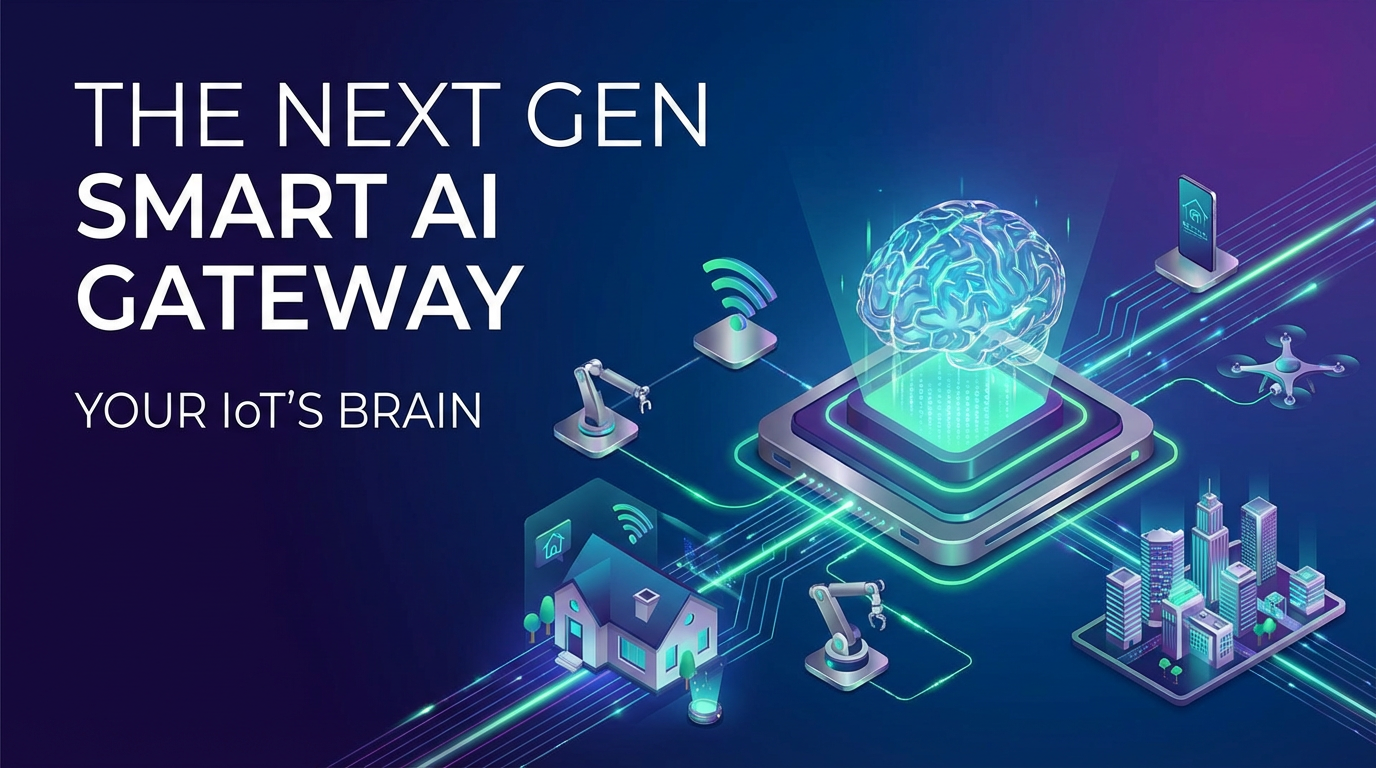


In an era defined by ubiquitous connectivity and the relentless march of intelligent automation, the Internet of Things (IoT) has transcended its initial promise to become a foundational layer of modern society and industry. From smart cities bustling with interconnected sensors to industrial facilities where machines communicate their health in real-time, and from healthcare devices monitoring vital signs remotely to autonomous vehicles navigating complex environments, IoT devices are generating an unprecedented torrent of data. Yet, this explosion of data, while rich with potential, presents a formidable challenge: how do we harness this raw, unfiltered information, process it efficiently, secure it robustly, and extract meaningful, actionable intelligence in real-time? The answer lies not merely in more powerful cloud infrastructure, but in a paradigm shift towards intelligent processing at the edge, embodied by the Next Gen Smart AI Gateway – truly, the brain of your IoT ecosystem.
This article delves deep into the transformative power of these advanced gateways, exploring their evolution from conventional network routers and traditional api gateway solutions to sophisticated hubs of artificial intelligence. We will uncover the intricate architecture that allows them to perform complex computations close to the data source, analyze their core capabilities, and highlight their profound impact across diverse industries. Furthermore, we will differentiate them from specialized solutions like the LLM Gateway, designed to orchestrate large language models, and consider the challenges that must be overcome for their widespread adoption. Ultimately, we aim to illustrate why the Smart AI Gateway is not just another component in the IoT stack, but the indispensable neural center that empowers IoT devices to learn, adapt, and make autonomous decisions, propelling us into a future of truly intelligent environments.
The Dawn of Intelligent Connectivity: Understanding the IoT-AI Convergence
The Internet of Things, at its core, is about connecting physical objects to the internet, enabling them to collect and exchange data. Over the past decade, we've witnessed an extraordinary proliferation of IoT devices, ranging from tiny sensors embedded in everyday objects to complex machinery bristling with monitoring equipment. This expansion has been driven by several factors: the decreasing cost of sensors and microcontrollers, advancements in wireless communication technologies, and the growing demand for real-time data insights across industries. However, the sheer volume, velocity, and variety of data generated by billions of interconnected devices have quickly outstripped the capabilities of traditional data processing architectures. Merely collecting data is no longer sufficient; the imperative now is to make sense of it, to transform raw signals into actionable intelligence with minimal latency.
This is where Artificial Intelligence (AI) enters the picture, not merely as an analytical tool, but as an integral component of the IoT infrastructure. AI's capacity to identify patterns, make predictions, and learn from data is precisely what's needed to unlock the true potential of IoT. Imagine a scenario where a fleet of delivery drones continuously gathers environmental data and navigates dynamic urban landscapes. Without AI, this data would simply be an overwhelming deluge of numbers. With AI, these drones can predict weather changes, optimize routes in real-time to avoid traffic, detect potential mechanical failures before they occur, and even adapt their flight patterns based on subtle shifts in wind currents. This seamless fusion of IoT and AI moves beyond simple data collection and rudimentary control to create truly intelligent, self-optimizing systems.
The convergence of IoT and AI is not just about adding AI capabilities to cloud-based analytics platforms; it's about pushing intelligence closer to the edge, where the data is generated. This strategic shift addresses fundamental limitations of purely cloud-centric models, such as network latency, bandwidth constraints, and privacy concerns. Processing data locally, on an AI Gateway, means that critical decisions can be made almost instantaneously, without the round trip to a distant data center. This "edge intelligence" empowers IoT devices to operate more autonomously, react more quickly to their environment, and minimize the amount of data that needs to be transmitted over networks, thereby reducing operational costs and enhancing data security. This powerful synergy fundamentally redefines how we interact with and benefit from our increasingly connected world, setting the stage for smart environments that are truly responsive and adaptive.
What Exactly is an AI Gateway? Beyond the Traditional API Gateway
To truly appreciate the advancements of an AI Gateway, it's essential to first understand its predecessor: the traditional api gateway. For years, the api gateway has served as the indispensable traffic controller and security guard for modern applications, particularly in microservices architectures. At its core, a traditional api gateway acts as a single entry point for all client requests, routing them to the appropriate backend services. Its primary functions include request routing, load balancing, authentication and authorization, rate limiting, caching, and protocol translation. By centralizing these concerns, it simplifies client-side code, enhances security by shielding backend services, and improves manageability for developers and operators. It ensures that APIs are consumed efficiently and securely, acting as the bedrock of modern digital interactions.
However, as the IoT landscape grew in complexity, characterized by an explosion of diverse device types, protocols, and the urgent need for real-time localized decision-making, the limitations of a purely traditional api gateway became apparent. While it could manage API traffic to and from IoT backend services in the cloud, it lacked the on-device intelligence and processing capabilities required to handle the unique demands of edge computing. This paved the way for the evolution to the AI Gateway.
An AI Gateway is far more than just a data conduit; it is a sophisticated edge device equipped with computational power and AI capabilities to process data right where it's collected. It takes on all the responsibilities of a traditional api gateway, but supercharges them with embedded artificial intelligence. This means it can perform machine learning inference, data filtering, anomaly detection, and even make autonomous decisions locally, reducing the reliance on constant cloud connectivity. Key differentiators include:
- AI Processing at the Edge: Unlike traditional gateways that forward raw data to the cloud for analysis, an
AI Gatewaycan run pre-trained machine learning models locally. This enables real-time inferencing, allowing for immediate actions based on analyzed data, critical for applications like industrial automation or autonomous vehicles where milliseconds matter. - Model Management: It includes mechanisms for deploying, updating, and managing AI models directly on the gateway. This is crucial for keeping models current and adapting them to changing conditions without physically accessing each device.
- Real-time Inferencing: The ability to execute AI models on live data streams to generate predictions, classifications, or actionable insights almost instantaneously, significantly reducing latency compared to cloud-based AI.
- Data Pre-processing and Filtering: Before any data leaves the local network, the
AI Gatewaycan filter out noise, aggregate relevant data points, and identify critical events. This minimizes the amount of data transmitted to the cloud, saving bandwidth and storage costs.
A specialized subset of the AI Gateway that has gained prominence with the rise of generative AI is the LLM Gateway. As Large Language Models (LLMs) like GPT-4, Bard, and Llama become increasingly integrated into applications, managing their invocation, cost, and performance becomes a new challenge. An LLM Gateway is specifically designed to sit between your applications and various LLM providers, offering enhanced control and optimization. Its unique features include:
- Prompt Engineering and Management: It allows for the centralized management, versioning, and optimization of prompts used to interact with LLMs, ensuring consistency and improving response quality.
- Model Routing and Selection: An
LLM Gatewaycan intelligently route requests to different LLM providers based on factors like cost, performance, specific task requirements, or even availability, providing an abstraction layer for developers. - Response Caching: It can cache common LLM responses to reduce latency and API call costs for frequently asked questions or stable prompts.
- Cost Optimization and Quota Management: By monitoring LLM usage and enforcing quotas, an
LLM Gatewayhelps control expenditure on expensive generative AI models. - Observability and Security for LLMs: Providing detailed logs of LLM interactions, enforcing content moderation, and protecting sensitive data passed to and from LLMs.
In essence, while a traditional api gateway manages network traffic, an AI Gateway manages intelligent data streams and local decision-making, and an LLM Gateway specifically orchestrates the sophisticated interactions with large language models. The Smart AI Gateway serves as the crucial bridge, transforming raw IoT data into processed, intelligent insights, acting as the intelligent nervous system that connects diverse IoT devices with complex AI backend services, both traditional ML and advanced LLMs.
The Architecture of an IoT's Brain: Dissecting the Smart AI Gateway
The Smart AI Gateway is a sophisticated piece of technology, embodying a multi-layered architecture designed to handle the complex demands of edge intelligence. Its design philosophy centers around enabling autonomy, security, and efficiency at the periphery of the network. Understanding its internal workings reveals how it orchestrates data, executes intelligence, and maintains connectivity, truly functioning as the brain of an IoT deployment.
1. Connectivity Layer
At the foundation of any AI Gateway is its ability to communicate with a myriad of IoT devices. The connectivity layer is responsible for establishing and maintaining connections, as well as translating various device protocols into a unified format for internal processing. This is a non-trivial task, given the vast ecosystem of IoT standards.
- Protocol Translation: IoT devices communicate using a wide array of protocols, including lightweight options like MQTT (Message Queuing Telemetry Transport) and CoAP (Constrained Application Protocol) for resource-constrained devices, as well as more standard HTTP/S, AMQP, and even industrial protocols like Modbus or OPC UA. The gateway must seamlessly bridge these disparate protocols, converting device-specific messages into a common data structure that can be understood by its internal processing units. This abstraction allows the rest of the gateway and backend systems to interact with devices without needing to understand each individual protocol's nuances.
- Device Management: Beyond mere communication, this layer also handles device onboarding, registration, and status monitoring. It can manage device identities, ensure secure connections through certificates, and report on device health and availability. This is critical for large-scale IoT deployments where hundreds or thousands of devices need to be managed effectively from a central point.
2. Data Ingestion & Pre-processing
Once data arrives from connected devices, it enters the ingestion and pre-processing layer. This is where the raw data, often noisy and redundant, is refined and prepared for analysis, significantly reducing the load on downstream systems and improving the quality of insights.
- Filtering: Not all data generated by IoT devices is equally important. This layer can be configured to filter out irrelevant data points, such as redundant sensor readings or non-critical status updates, ensuring that only meaningful information proceeds.
- Aggregation: For high-frequency data streams, aggregating data over time (e.g., averaging sensor readings every minute instead of every second) reduces volume without losing critical trends. This is vital for bandwidth-constrained environments.
- Normalization: Data from different sensors or devices might come in varying formats or units. Normalization standardizes this data, making it consistent for subsequent processing and analysis by AI models.
- Anomaly Detection at the Edge: Crucially, this layer can run lightweight algorithms to detect immediate anomalies. For instance, a sudden spike in temperature in an industrial motor, or an unexpected change in vibration patterns, can be identified right at the gateway, triggering instant alerts or local corrective actions before the data even reaches the cloud.
3. AI Inference Engine
This is the "brain" part of the AI Gateway. The AI inference engine hosts and executes machine learning models directly on the gateway, enabling real-time decision-making without constant cloud connectivity.
- Embedded ML Models: The gateway is equipped with specialized hardware (e.g., GPUs, TPUs, or optimized NPUs) and software frameworks to efficiently run pre-trained AI models. These models can range from simple classification algorithms to more complex neural networks, tailored for specific tasks like object recognition, predictive maintenance, or natural language understanding for voice interfaces.
- Real-time Prediction & Local Decision-making: The ability to perform inference at the edge means that the gateway can instantly analyze incoming data and make predictions or trigger actions. For example, in a smart factory, an
AI Gatewaymight analyze vibration data from a machine to predict an imminent failure and automatically shut down the machine, or adjust its operating parameters to prevent damage. This autonomy is a cornerstone of true edge intelligence.
4. Security & Authentication Module
Given the distributed nature of IoT and the sensitivity of the data, security is paramount. The AI Gateway acts as a crucial security enforcement point.
- Device Identity & Access Management: It verifies the identity of connected devices and users, ensuring that only authorized entities can send data to or receive commands from the gateway. This typically involves certificate-based authentication and robust identity management systems.
- Data Encryption: All data in transit between devices and the gateway, and between the gateway and the cloud, must be encrypted using industry-standard protocols (e.g., TLS/SSL) to prevent eavesdropping and tampering. Data at rest on the gateway itself may also be encrypted.
- Firewall & Intrusion Detection: The gateway incorporates firewall rules to control network traffic and can host intrusion detection systems (IDS) to monitor for suspicious activities or unauthorized access attempts, acting as the first line of defense for the IoT network.
5. API Management & Orchestration
The AI Gateway doesn't just process data; it also makes the processed data and derived insights available to applications and services, often through well-defined APIs. This is where its api gateway roots become critically important. To effectively manage this complexity, platforms like ApiPark emerge as crucial tools. APIPark, an open-source AI Gateway and API management platform, offers capabilities to quickly integrate over 100+ AI models, standardize API invocation, and encapsulate prompts into REST APIs, thereby simplifying the deployment and governance of both traditional REST services and advanced AI functionalities at scale. Its end-to-end API lifecycle management, team sharing features, and robust performance rivaling Nginx make it an exemplary solution for enterprises seeking to harness the full potential of their AI-driven IoT ecosystems.
- Exposing Processed Data/Insights as APIs: The gateway can expose the results of its edge analytics, predictions, or control functions as APIs. This allows cloud applications, mobile apps, or other edge devices to consume the intelligence generated locally without needing direct access to the raw IoT data or devices.
- Traffic Forwarding & Load Balancing: As a sophisticated
api gateway, it can intelligently route API requests to different backend services (cloud or other edge components) based on traffic load, service availability, or specific business logic. - Version Management: It supports managing different versions of APIs, allowing for seamless updates and deployments without disrupting existing applications.
- Policy Enforcement: This includes applying policies for rate limiting, quotas, and access control to ensure fair usage and prevent abuse of the APIs it exposes.
6. Edge-Cloud Synchronization
While AI Gateways aim for autonomy, they are rarely completely isolated. They form a hybrid edge-cloud architecture, and synchronization is key to this relationship.
- Data Synchronization: Processed data that needs long-term storage, further advanced analytics, or global visibility is securely transmitted to the cloud. The gateway can intelligently decide what data to send, when, and how, often compressing it to minimize bandwidth usage.
- Model Updates & Remote Management: New AI models, model updates, security patches, or configuration changes can be securely pushed from the cloud to the
AI Gateway. This allows for continuous improvement and adaptation of edge intelligence without manual intervention. Remote monitoring tools allow administrators to oversee the gateway's performance, health, and status from a central dashboard.
7. Monitoring & Logging
Robust observability is critical for the stability and security of any complex system. The AI Gateway provides comprehensive monitoring and logging capabilities.
- Performance Metrics: It collects metrics on its own operational performance, such as CPU utilization, memory usage, network throughput, and AI inference latency.
- Security Events: All security-related events, including access attempts, authentication failures, and detected anomalies, are logged for auditing and incident response.
- Data Flow Logging: Detailed logs of data ingestion, processing, and API calls provide an audit trail and aid in troubleshooting any issues in the data pipeline. This information is often crucial for compliance and debugging.
By integrating these sophisticated components, the Smart AI Gateway becomes a dynamic, intelligent hub, capable of transforming the raw potential of IoT into tangible, real-time value, serving as the critical cognitive layer in a distributed, intelligent ecosystem.
Core Capabilities of a Next-Gen Smart AI Gateway
The evolution from a simple api gateway to a sophisticated AI Gateway endows these devices with a remarkable array of capabilities that are foundational to building truly intelligent IoT ecosystems. These capabilities collectively enable the gateway to perform not just data routing, but also intelligent processing, robust security, and efficient management at the edge.
1. Real-time Edge Intelligence
One of the most defining characteristics of a Smart AI Gateway is its ability to perform AI inference directly at the edge, close to the data source. This dramatically reduces latency, making real-time decision-making possible in mission-critical applications where every millisecond counts. Instead of sending raw data to the cloud for processing and waiting for a response, the gateway can analyze data streams instantaneously. For example, in an autonomous vehicle, an AI Gateway can analyze sensor data (cameras, LiDAR, radar) to detect pedestrians or obstacles and initiate braking maneuvers within fractions of a second, a task that would be impossible with cloud-dependent processing due to network delays. This capability also significantly reduces bandwidth requirements, as only processed insights or anomaly alerts, rather than voluminous raw data, need to be transmitted to the cloud, leading to substantial cost savings and greater network efficiency, especially in remote or connectivity-constrained environments.
2. Enhanced Security Posture
IoT devices are often inherently vulnerable due to their limited computational resources and diverse operating environments. The AI Gateway acts as a formidable security bastion for the entire IoT network.
- Protecting Vulnerable IoT Devices: By acting as a secure intermediary, the gateway can isolate individual devices from direct internet exposure, preventing them from being directly targeted by cyberattacks. It can enforce strong authentication mechanisms, ensuring that only trusted devices can connect and communicate.
- Data Privacy and Compliance: With increasing regulatory scrutiny around data privacy (e.g., GDPR, HIPAA), the
AI Gatewaycan perform sensitive data anonymization or aggregation at the edge before data leaves the local network. This minimizes the risk of exposing personal or proprietary information and helps organizations comply with stringent data governance requirements. - Intrusion Detection and Prevention at the Edge: Leveraging its AI capabilities, the gateway can monitor network traffic and device behavior for anomalies that might indicate a security breach or malicious activity. For instance, unusual data transmission patterns from a specific sensor could trigger an alert or even temporarily quarantine the device, acting as a proactive defense mechanism.
3. Scalability & Resilience
Deploying IoT solutions at scale demands infrastructure that can grow and adapt without compromising performance or reliability.
- Handling Massive Data Streams: Modern
AI Gatewaysare designed with high-throughput data ingestion capabilities, capable of processing data from thousands of concurrent device connections. Their architecture often includes mechanisms for parallel processing and efficient memory management. - Fault Tolerance and High Availability: To ensure continuous operation, gateways incorporate redundancy and failover mechanisms. If one component fails, another can seamlessly take over, preventing service interruptions. This is crucial for critical infrastructure monitoring, smart city operations, and industrial control systems where downtime is not an option.
4. Protocol Agnosticism & Interoperability
The fragmented nature of the IoT landscape, with its myriad of communication protocols and device types, poses a significant integration challenge.
- Connecting Diverse Devices: An
AI Gatewayacts as a universal translator, supporting a broad spectrum of IoT communication protocols (MQTT, CoAP, HTTP/S, Zigbee, Bluetooth, Modbus, etc.). This allows enterprises to integrate a wide variety of legacy and modern devices into a unified intelligent ecosystem without needing custom integration for each one. - Seamless Data Flow: By normalizing data from different sources into a consistent format, the gateway ensures that backend analytics platforms and applications can consume data efficiently, regardless of the originating device or protocol.
5. AI Model Lifecycle Management
The intelligence of the AI Gateway relies on its AI models, which need continuous management and updates.
- Deployment and Versioning: Gateways provide mechanisms to securely deploy new AI models or updated versions of existing models to the edge. This includes rollback capabilities in case a new model introduces unforeseen issues.
- Over-the-Air (OTA) Updates: Models can be updated remotely, reducing the need for physical access to each gateway. This is vital for maintaining model accuracy and relevance, as conditions change or new insights emerge.
- Performance Monitoring: The gateway can monitor the performance of its deployed AI models, tracking inference accuracy, latency, and resource utilization, providing data for model retraining and optimization.
6. Cost Optimization
By intelligently processing data at the edge, AI Gateways significantly contribute to reducing operational costs.
- Reduced Cloud Processing: Less raw data means less data transmitted to the cloud, leading to lower data ingress/egress fees, storage costs, and compute costs associated with cloud-based analytics.
- Efficient Data Transfer: Intelligent filtering and aggregation capabilities ensure that only valuable, relevant data is sent upstream, optimizing bandwidth usage and reducing network infrastructure costs, especially for large-scale deployments or in areas with expensive connectivity.
7. Unified api gateway Functionality
Building upon its heritage, the Smart AI Gateway incorporates all the robust features of a traditional api gateway, providing a comprehensive solution.
- Centralized API Management: It acts as a single point of entry for all API calls, both from devices to the cloud and from applications to edge-generated insights. This simplifies API discovery, access, and governance.
- Authentication, Authorization, Rate Limiting: All standard
api gatewaysecurity and traffic management policies are enforced, ensuring that API usage is secure, controlled, and fair, preventing abuse and managing load effectively. - Load Balancing and Routing: Requests can be intelligently distributed across multiple backend services (cloud or edge) to ensure optimal performance and availability.
8. Specialized LLM Gateway Features
With the explosion of large language models, some AI Gateways are evolving to specifically address the unique challenges of integrating LLMs into IoT and enterprise applications. An LLM Gateway provides a critical orchestration layer for these powerful but resource-intensive models.
- Prompt Management and Optimization: It allows developers to define, version, and optimize prompts centrally. This is crucial for ensuring consistent LLM behavior, improving response quality, and experimenting with different prompt engineering strategies without altering application code. For example, a gateway could dynamically inject contextual data from IoT sensors into an LLM prompt to generate more relevant responses for a smart assistant.
- Model Routing and Selection: An
LLM Gatewaycan intelligently direct requests to the most appropriate LLM provider or model instance based on cost, latency requirements, specific task capabilities (e.g., one LLM for creative writing, another for technical summarization), or even geographical data residency rules. This provides an invaluable abstraction layer, making applications resilient to changes or outages in a single LLM provider. - Caching LLM Responses: For common or repeated queries, the gateway can cache LLM responses, significantly reducing latency and API call costs. This is particularly beneficial for high-traffic applications that frequently ask similar questions.
- Rate Limiting and Quota Management for LLM APIs: LLM APIs often come with strict rate limits and can be costly. The
LLM Gatewayenforces these limits and manages quotas across different applications or users, preventing overspending and ensuring fair access to valuable LLM resources. - Observability into LLM Usage: Comprehensive logging and monitoring of all LLM interactions provide insights into usage patterns, costs, and response quality, which is essential for auditing, billing, and performance tuning. This allows organizations to understand how their LLMs are being used and optimize their expenditure.
By integrating these multifaceted capabilities, the Next-Gen Smart AI Gateway transforms from a mere network component into the indispensable cognitive hub of any modern IoT architecture, providing the intelligence, security, and efficiency required to unlock the full potential of connected devices.
APIPark is a high-performance AI gateway that allows you to securely access the most comprehensive LLM APIs globally on the APIPark platform, including OpenAI, Anthropic, Mistral, Llama2, Google Gemini, and more.Try APIPark now! 👇👇👇
Real-World Applications and Transformative Impact
The deployment of Smart AI Gateways is not a theoretical exercise; it is actively reshaping industries and daily life, delivering tangible benefits across a spectrum of applications. By bringing intelligence to the edge, these gateways are enabling unprecedented levels of automation, efficiency, and safety.
1. Smart Cities
In urban environments, Smart AI Gateways are instrumental in turning vast networks of sensors into intelligent systems that improve quality of life. * Traffic Management: Gateways process real-time data from traffic cameras, inductive loops, and vehicle sensors at intersections. By analyzing traffic flow patterns, pedestrian movement, and even predicting congestion, they can dynamically adjust traffic light timings, optimize lane usage, and provide real-time navigation advice to reduce travel times and alleviate bottlenecks. This edge intelligence allows for immediate responses to changing conditions, such as accident detection or emergency vehicle prioritization, far faster than a centralized cloud system could react. * Environmental Monitoring: Sensors deployed across a city collect data on air quality, noise pollution, and water levels. AI Gateways at various city zones can analyze this data locally, identifying pollution hotspots, predicting air quality degradation, or detecting abnormal water usage patterns, triggering alerts for municipal authorities or informing residents about local environmental conditions. * Public Safety: Integrating data from public surveillance cameras with audio sensors, gateways can detect unusual activities, identify potential threats, or even recognize distress signals. In conjunction with local AI models for object detection or sound classification, they can alert law enforcement or emergency services more rapidly and accurately, enhancing overall urban security and responsiveness.
2. Industrial IoT (IIoT)
The industrial sector is one of the most significant beneficiaries of AI Gateways, leveraging edge intelligence for operational excellence and predictive capabilities. * Predictive Maintenance: Machines in factories are equipped with sensors that monitor vibrations, temperature, pressure, and current. AI Gateways analyze this continuous stream of data for subtle anomalies that might indicate impending equipment failure. By predicting maintenance needs before a breakdown occurs, companies can schedule proactive repairs, minimize costly downtime, extend asset lifespans, and significantly reduce operational expenses. This shift from reactive to proactive maintenance is a game-changer for industrial efficiency. * Quality Control: In manufacturing, gateways can integrate with vision systems and other sensors on production lines. Real-time AI inference can inspect products for defects, ensuring high-quality output and immediately flagging any deviations from standards. This allows for instant adjustments to the manufacturing process, preventing the production of large batches of faulty goods. * Operational Optimization: Gateways can monitor and analyze the performance of an entire production line, identifying bottlenecks, optimizing energy consumption, and fine-tuning machine parameters. For example, an AI Gateway could adjust robot arm speeds or furnace temperatures based on raw material properties and desired output quality, leading to increased throughput and reduced waste.
3. Healthcare
The healthcare industry is experiencing a revolution through AI Gateways, enabling more personalized and efficient patient care. * Remote Patient Monitoring: Wearable devices and in-home sensors collect vital signs (heart rate, blood pressure, glucose levels) from patients. An AI Gateway in the patient's home can process this data, detect deviations from baseline, and alert healthcare providers only when critical changes occur. This reduces the need for frequent hospital visits, lowers healthcare costs, and enables continuous monitoring for chronic conditions, improving patient outcomes and quality of life. * Smart Diagnostics: In clinics or hospitals, gateways can integrate with diagnostic equipment, processing medical imagery or patient data to assist clinicians. For example, AI models on the gateway could help in the preliminary analysis of X-rays or ECGs, flagging potential issues for specialists to review, thereby accelerating diagnosis and treatment pathways. * Asset Tracking and Management: Hospitals are complex environments with expensive, critical assets. AI Gateways can track the location and status of medical equipment, ensuring that devices like wheelchairs, IV pumps, or specialized diagnostic tools are readily available when needed, improving operational efficiency and patient care flow.
4. Automotive
The automotive industry, particularly in the realm of autonomous vehicles and smart transportation, relies heavily on AI Gateways for real-time edge processing. * Autonomous Driving (Edge Processing): Self-driving cars are essentially AI Gateways on wheels. They process vast amounts of sensor data (cameras, radar, LiDAR) instantaneously to perceive their environment, predict the behavior of other road users, and make split-second decisions for navigation and collision avoidance. This extreme low-latency processing at the edge is non-negotiable for safety. * Vehicle-to-Infrastructure (V2I) Communication: Gateways embedded in vehicles can communicate with roadside infrastructure (traffic lights, smart signs) and other vehicles (V2V), sharing real-time information about road conditions, hazards, and traffic flow. This enables cooperative driving, further enhancing safety and efficiency across the road network. * In-Vehicle Infotainment and Personalization: AI Gateways can personalize the driving experience by learning driver preferences, optimizing climate control, suggesting routes, or even monitoring driver fatigue through facial recognition and eye-tracking, improving comfort and safety.
5. Smart Homes & Buildings
Smart AI Gateways are transforming residential and commercial spaces into intelligent, responsive environments. * Energy Efficiency: By analyzing data from occupancy sensors, thermostats, and lighting controls, gateways can optimize energy consumption in real-time. They can learn inhabitant patterns, predict energy needs, and adjust HVAC systems or lighting to minimize waste while maintaining comfort, leading to significant utility bill reductions. * Personalized Automation: Beyond simple scheduling, AI Gateways enable personalized automation. They can learn user habits, anticipate needs, and automate tasks like adjusting blinds, playing preferred music, or preheating water, creating a truly responsive and adaptive living or working space. * Security and Safety: Integrating with door/window sensors, motion detectors, and surveillance cameras, gateways can provide advanced security. They can differentiate between pets and intruders, detect unusual activities, and alert homeowners or building managers to potential threats. Furthermore, they can monitor for fire, carbon monoxide, or water leaks, triggering alarms or automatic shut-off systems.
In each of these diverse applications, the Smart AI Gateway serves as the crucial intelligent intermediary, translating raw sensor data into actionable intelligence, enabling autonomous decision-making, and fundamentally enhancing the capabilities and value of IoT deployments. Its impact is truly transformative, driving efficiency, safety, and innovation across every sector touched by connected devices.
Challenges and Considerations in Deploying Smart AI Gateways
While the promise of Smart AI Gateways is immense, their deployment and management come with a unique set of challenges. Addressing these complexities is crucial for successful implementation and for unlocking the full potential of edge intelligence.
1. Computational Power at the Edge
One of the most significant trade-offs in edge computing is balancing the need for powerful AI processing with the practical constraints of edge devices. * Resource Limitations: Gateways, especially those deployed in rugged industrial environments or remote locations, often have limited CPU, memory, and power budgets. Running complex AI models (which can be computationally intensive) on these constrained devices requires highly optimized algorithms and specialized hardware (like AI accelerators or neural processing units - NPUs) that can perform inference efficiently without drawing excessive power or generating too much heat. * Cost vs. Performance: The cost of equipping gateways with advanced processing capabilities can be substantial, especially for large-scale deployments. Organizations must carefully weigh the performance benefits of powerful edge AI against the increased hardware costs and associated operational expenses, ensuring that the chosen solution provides a justifiable return on investment. This also influences the size and form factor of the gateway, which can be critical in space-constrained environments.
2. Data Privacy & Compliance
The increasing volume of data processed at the edge, much of which can be sensitive, introduces complex privacy and regulatory hurdles. * Regulatory Frameworks: Adhering to diverse and evolving data privacy regulations like GDPR (General Data Protection Regulation), HIPAA (Health Insurance Portability and Accountability Act), CCPA (California Consumer Privacy Act), and various national sovereignty laws is a monumental task. An AI Gateway handling personal data, health records, or proprietary industrial information must be designed with "privacy by design" principles, incorporating features for data anonymization, pseudonymization, and secure local storage. * Ethical AI Use: Beyond legal compliance, there are ethical considerations. How is data being used? Are there biases in the AI models that could lead to discriminatory outcomes? Ensuring transparency in data processing and AI decision-making at the edge, and providing audit trails, is crucial for building trust and avoiding unintended consequences.
3. Security Vulnerabilities
The very nature of distributed AI Gateways, operating often in unsecured or physically accessible locations, expands the attack surface for cyber threats. * Physical Tampering: Unlike cloud servers in secure data centers, AI Gateways can be physically accessed in the field, making them susceptible to tampering, data theft, or malware injection. Robust hardware security modules, secure boot processes, and tamper-evident designs are critical. * Software Vulnerabilities: Like any software-driven system, the operating system, firmware, and applications running on the gateway can have vulnerabilities that attackers could exploit. Regular security patching, secure coding practices, and continuous vulnerability scanning are essential. * Network Attacks: Gateways are exposed to the network, making them targets for denial-of-service attacks, man-in-the-middle attacks, and unauthorized access attempts. Implementing strong network segmentation, firewalls, intrusion detection/prevention systems, and multi-factor authentication is paramount. The need for robust API security also cannot be overstated, as the gateway often exposes critical APIs for data access and control.
4. Model Management & Updates
Managing the lifecycle of AI models deployed across a vast fleet of AI Gateways presents its own set of technical and logistical challenges. * Over-the-Air (OTA) Updates: Securely and reliably deploying model updates, patches, and new features to potentially thousands of geographically dispersed gateways without disrupting operations is complex. This requires robust OTA mechanisms that can handle partial updates, ensure data integrity, and provide rollback capabilities in case of deployment failures. * Model Drift: AI models trained on historical data can degrade in performance over time if the underlying data patterns change (e.g., sensor calibration drift, changing environmental conditions, evolving user behavior). Monitoring for model drift at the edge and retraining models with fresh data is crucial for maintaining accuracy, but requires a well-orchestrated MLOps pipeline that extends to the edge. * Version Control & Rollbacks: Managing different versions of AI models across various gateway deployments and being able to roll back to a stable previous version if a new model performs poorly is critical for system stability.
5. Interoperability Standards
The current IoT landscape is characterized by a proliferation of proprietary technologies and a lack of universally adopted standards, creating silos and hindering seamless integration. * Fragmented Ecosystem: Devices from different manufacturers often use different communication protocols, data formats, and management interfaces. While AI Gateways aim to bridge these gaps, building and maintaining support for an ever-expanding array of standards is a continuous challenge. * Integration Complexity: Integrating an AI Gateway into existing enterprise IT and OT (Operational Technology) systems, which often rely on legacy infrastructure, can be complex and require significant customization. The lack of standardized APIs or data models for edge intelligence can further complicate matters.
6. Skill Gap
Deploying and managing sophisticated AI Gateways requires a highly specialized skill set that combines expertise in multiple domains. * Multidisciplinary Expertise: Professionals need to have a deep understanding of IoT hardware and protocols, edge computing architectures, AI/ML model development and deployment, cybersecurity principles, and cloud integration. Finding individuals or teams with this breadth of knowledge is often challenging. * Training and Education: Organizations must invest in continuous training and education for their workforce to keep pace with the rapidly evolving technologies in IoT, AI, and edge computing, ensuring they have the capabilities to design, implement, and maintain these complex systems effectively.
Addressing these challenges requires a holistic approach, encompassing robust technical solutions, strong governance frameworks, and strategic investments in talent and standardized practices. Only then can organizations fully harness the transformative power of Smart AI Gateways and navigate the complexities of the intelligent edge with confidence.
The Future Landscape: Evolution of the IoT's Brain
The journey of the Smart AI Gateway is far from over; it is continuously evolving, pushing the boundaries of what's possible at the intelligent edge. The future landscape promises even more sophisticated capabilities, transforming these gateways into truly autonomous, self-optimizing entities that will profoundly impact every facet of our connected world.
1. Federated Learning at the Edge
One of the most exciting advancements on the horizon is the widespread adoption of federated learning. Currently, AI models are often trained centrally in the cloud using vast datasets, which can raise privacy concerns and incur significant data transfer costs. Federated learning allows AI models to be trained collaboratively across multiple AI Gateways without ever having to centralize the raw data. * Privacy-Preserving AI: Each gateway trains a local model using its own private, localized data. Only the learned model parameters (not the raw data) are then sent to a central server (or another gateway) to be aggregated, creating a more robust global model. This aggregated model is then sent back to the gateways for further local training. This approach is revolutionary for sensitive applications like healthcare, smart cities, and industrial espionage-prone sectors, where data cannot leave its source due to privacy regulations or competitive reasons. * Enhanced Model Performance: By leveraging diverse, real-world data from countless edge locations, federated learning can lead to more generalized and accurate AI models, adapting to local nuances and improving overall system intelligence without compromising individual data privacy.
2. Self-Healing & Autonomous Gateways
Future AI Gateways will move beyond mere automation to exhibit true autonomy, capable of self-diagnosis, self-repair, and self-optimization. * Predictive Maintenance for the Gateway Itself: Just as gateways perform predictive maintenance for connected devices, they will apply AI to monitor their own health, predict component failures (e.g., storage, memory, processing units), and even initiate self-repair actions like rebooting failing modules or reconfiguring network paths to maintain operational integrity. * Adaptive Resource Management: Gateways will dynamically adjust their computational resources (CPU, GPU, memory allocation) based on real-time workload demands, optimizing performance during peak periods and conserving power during low activity. This includes dynamically loading and unloading AI models based on immediate task requirements. * Intelligent Software Updates: Future gateways will intelligently evaluate the impact of software or model updates before applying them, perhaps testing them in a sandbox environment or on a subset of devices, to minimize disruption and ensure compatibility, only rolling out updates when confident in their stability and performance.
3. Quantum-Resistant Security
As quantum computing advances, current encryption standards, which form the bedrock of digital security, could be rendered vulnerable. The future of AI Gateways will involve proactive adoption of quantum-resistant cryptographic algorithms. * Post-Quantum Cryptography: Research and development are actively underway for cryptographic methods that can withstand attacks from future quantum computers. AI Gateways will need to incorporate these new algorithms for secure communication, data encryption, and device authentication to ensure long-term data confidentiality and integrity against future threats. * Hardware-Based Security: Enhanced hardware security modules (HSMs) and trusted platform modules (TPMs) with quantum-resistant capabilities will become standard, providing immutable roots of trust and secure execution environments for critical operations on the gateway.
4. Integration with Digital Twins
Digital twin technology involves creating a virtual replica of a physical asset, process, or system. The fusion of AI Gateways with digital twins will create dynamic, highly intelligent virtual models. * Real-time Data Feeds: AI Gateways will provide continuous, real-time data from physical IoT assets to their corresponding digital twins in the cloud. This data, pre-processed and enriched with edge AI, ensures the digital twin is always an accurate, up-to-date representation of its physical counterpart. * Predictive Modeling & Simulation: The digital twin, fed by AI Gateway data, can run sophisticated simulations to predict future behavior, test different scenarios, and optimize operations in the virtual world before applying changes to the physical system. For example, an AI Gateway monitoring a wind turbine could feed data to its digital twin, which then simulates various wind conditions to predict maintenance needs or optimal power generation settings. * Closed-Loop Control: The AI Gateway can receive optimized commands or insights from the digital twin, allowing for closed-loop control systems where the digital twin continuously optimizes and directs the physical asset via the gateway, leading to unparalleled efficiency and automation.
5. Democratization of AI at the Edge
The complexity of deploying and managing AI models at the edge often requires specialized expertise. The future will see a significant effort towards democratizing AI Gateway technology, making it accessible to a broader range of developers and businesses. * Low-Code/No-Code AI Development Tools: User-friendly platforms will emerge that allow non-AI experts to easily configure, train (or re-train), and deploy AI models to AI Gateways with minimal coding. This will involve drag-and-drop interfaces for model selection, data ingestion, and rule-based decision-making. * Standardized APIs and Ecosystems: The development of more robust open standards and ecosystems will simplify integration, allowing developers to seamlessly connect gateways with various cloud services, data sources, and third-party applications, further easing the deployment burden. * AI Model Marketplaces: Specialized marketplaces for pre-trained, edge-optimized AI models will allow businesses to quickly acquire and deploy models tailored for specific IoT use cases (e.g., a model for specific industrial anomaly detection, or a vision model for a particular retail scenario), significantly accelerating time to value.
The next generation of Smart AI Gateways will therefore be characterized by profound intelligence, robust security, self-managing capabilities, and a seamless integration with advanced digital paradigms. They will not merely be data conduits or even intelligent processing units; they will be highly autonomous, adaptive, and integral components of an increasingly intelligent and interconnected world, truly acting as the indispensable brain for our global IoT infrastructure.
Conclusion
The journey through the intricate world of the Next Gen Smart AI Gateway reveals a pivotal shift in how we conceive and deploy the Internet of Things. From its humble beginnings as a collection of interconnected sensors, IoT has matured into a complex, data-rich ecosystem, but one that demands a central intelligence to truly unlock its transformative potential. The AI Gateway emerges as this indispensable "brain," evolving far beyond the traditional api gateway to become a sophisticated hub capable of real-time processing, intelligent decision-making, and robust security at the very edge of the network.
We have dissected its multi-layered architecture, revealing how it seamlessly integrates diverse devices, pre-processes raw data, performs AI inference locally, and manages the entire API lifecycle. Its core capabilities, encompassing real-time edge intelligence, enhanced security, scalability, protocol agnosticism, and specialized LLM Gateway features for large language models, underscore its multifaceted role. From optimizing traffic in smart cities and predicting machine failures in industrial settings to enabling remote patient monitoring in healthcare and powering autonomous navigation in vehicles, the AI Gateway is already delivering profound, tangible impacts across diverse industries.
However, the path forward is not without its challenges. Addressing concerns around computational power at the edge, navigating complex data privacy regulations, fortifying against evolving security threats, and mastering the intricate lifecycle management of AI models are critical for widespread adoption. Yet, the future holds even greater promise: federated learning, self-healing gateways, quantum-resistant security, and deeper integration with digital twins signal an era where AI Gateways will be not just intelligent, but truly autonomous and self-optimizing.
In essence, the Smart AI Gateway is not merely a technological advancement; it is the cognitive engine that transforms raw data into actionable wisdom, enabling our connected devices to perceive, analyze, and act with unprecedented speed and precision. It is the vital neural center that allows the Internet of Things to move beyond simple connectivity towards true intelligence, shaping a future where environments are more responsive, operations are more efficient, and our interactions with the digital and physical worlds are seamlessly integrated and profoundly smarter. As we continue to build out our intelligent infrastructure, investing in and leveraging these advanced gateways will be paramount to realizing the full, boundless potential of our interconnected future.
5 FAQs about Next Gen Smart AI Gateways
1. What is the fundamental difference between a traditional API Gateway and a Smart AI Gateway? A traditional api gateway primarily acts as a secure traffic manager for APIs, routing requests, handling authentication, and enforcing rate limits. It largely forwards data to backend services. A Smart AI Gateway, however, extends these functions by embedding computational power and AI capabilities directly at the edge of the network. This allows it to process data locally, perform real-time AI inference, filter redundant information, and make autonomous decisions without constant reliance on cloud connectivity. It transforms raw data into actionable intelligence closer to the source, significantly reducing latency and bandwidth usage.
2. How does an AI Gateway enhance security for IoT deployments? AI Gateways significantly bolster IoT security by acting as a strong first line of defense. They protect vulnerable IoT devices by isolating them from direct internet exposure and enforcing robust authentication and authorization mechanisms. They can encrypt data in transit and at rest, ensure compliance with data privacy regulations by anonymizing or aggregating sensitive data locally, and use AI to detect and prevent intrusions or unusual behavior patterns that indicate a cyber threat, thereby mitigating risks and protecting sensitive information.
3. What role does an LLM Gateway play within the broader AI Gateway ecosystem? An LLM Gateway is a specialized type of AI Gateway specifically designed to manage interactions with Large Language Models (LLMs). While a general AI Gateway handles various AI models and data streams at the edge, an LLM Gateway focuses on optimizing the invocation, cost, and performance of LLMs. It offers features like centralized prompt management, intelligent routing to different LLM providers, caching of LLM responses, and detailed observability, making it easier and more efficient to integrate powerful generative AI capabilities into applications.
4. Can a Smart AI Gateway operate completely autonomously without cloud connectivity? While Smart AI Gateways are designed for significant autonomy, especially for critical real-time decision-making, they typically function best in a hybrid edge-cloud model. They can operate independently for extended periods, processing data and executing AI models locally. However, they usually require cloud connectivity for tasks such as receiving model updates, uploading aggregated or high-priority data for deeper analytics, remote management, and initial setup. Complete autonomy is technically possible but might limit the benefits of continuous learning and broader data insights from the cloud.
5. What are the key benefits of deploying a Smart AI Gateway for an enterprise? Enterprises benefit from AI Gateways in several critical ways: * Reduced Latency: Real-time decision-making for mission-critical applications. * Cost Optimization: Lower bandwidth, storage, and cloud computing costs due to intelligent data filtering and processing at the edge. * Enhanced Security: Robust protection for vulnerable IoT devices and sensitive data. * Improved Efficiency: Automation and predictive capabilities leading to optimized operations and resource utilization. * Greater Scalability & Reliability: Ability to manage vast numbers of devices and data streams with high availability. * Data Privacy & Compliance: Easier adherence to stringent data governance regulations. These benefits collectively drive innovation, competitive advantage, and improved operational excellence for businesses leveraging IoT.
🚀You can securely and efficiently call the OpenAI API on APIPark in just two steps:
Step 1: Deploy the APIPark AI gateway in 5 minutes.
APIPark is developed based on Golang, offering strong product performance and low development and maintenance costs. You can deploy APIPark with a single command line.
curl -sSO https://download.apipark.com/install/quick-start.sh; bash quick-start.sh

In my experience, you can see the successful deployment interface within 5 to 10 minutes. Then, you can log in to APIPark using your account.

Step 2: Call the OpenAI API.