Understanding Negative Numbers: What's a Real Life Example Using -3?


The realm of numbers extends far beyond the familiar counting numbers we first encounter as children. While positive integers like 1, 2, 3, and so forth, intuitively represent quantities of things we possess or can count, the concept of negative numbers introduces a profound layer of meaning, allowing us to describe deficits, decreases, reversals, and positions relative to a zero point. These seemingly abstract entities, numbers less than zero, are not mere mathematical curiosities; they are indispensable tools that underpin our understanding of the physical world, financial systems, scientific principles, and even everyday human experiences. From the chill in the air on a winter morning to the ebb and flow of a personal bank account, negative numbers provide a precise language to articulate conditions that fall below a baseline or represent a depletion.
This comprehensive exploration delves deep into the fascinating world of negative numbers, unraveling their historical origins, fundamental properties, and the diverse ways they manifest in real-life scenarios. We will dissect the concept of negativity, illuminate the rules governing operations involving these numbers, and highlight their critical role in various scientific and technological disciplines. Particular emphasis will be placed on understanding the tangible meaning of the number -3 through a multitude of practical examples, demonstrating its pervasive influence in our daily lives. By the end of this journey, the abstract notion of "minus three" will transform into a concrete descriptor, providing a clearer lens through which to perceive the quantitative aspects of our complex world.
The Genesis of Negativity: A Historical Journey
The acceptance and widespread use of negative numbers were far from instantaneous; their journey into the mathematical canon was a long and often contentious one, spanning centuries and civilizations. Early mathematics, driven primarily by practical needs such as counting objects, measuring land, and simple transactions, had little inherent need for numbers below zero. The concept of "nothing" was itself a profound abstraction, and imagining "less than nothing" presented a significant conceptual hurdle.
Ancient Egyptians, while adept at arithmetic and geometry, dealt with deficits implicitly, often framing problems in terms of debts that needed to be repaid rather than negative balances. Similarly, Babylonian mathematicians, pioneers in many numerical systems, primarily worked with positive quantities. The true seeds of negative numbers began to sprout in the East. Chinese mathematicians, particularly during the Han Dynasty (206 BC – 220 AD), are credited with some of the earliest systematic treatments of negative numbers. In their classic text, "Jiuzhang Suanshu" (The Nine Chapters on the Mathematical Art), they used red rods for positive numbers and black rods for negative numbers to solve systems of linear equations. This visual and practical approach allowed them to perform additions and subtractions with these "opposite" numbers, even if they weren't explicitly called "negative" in the modern sense. They understood the concept of cancelling out, where a red rod and a black rod of equal value would nullify each other.
In India, mathematicians made even more significant strides. By the 7th century AD, Brahmagupta, in his seminal work "Brahmasphutasiddhanta," formally defined negative numbers as debts and positive numbers as assets. He laid down explicit rules for operations involving positive and negative numbers, treating them much like we do today. For instance, he stated that "a debt minus zero is a debt," and "zero minus a debt is a credit" (positive). His clear articulation of these rules was revolutionary and demonstrated a profound understanding of their abstract nature. He even tackled concepts like "debt multiplied by debt is wealth," which corresponds to the rule that a negative multiplied by a negative yields a positive. This level of mathematical sophistication was unparalleled in the West at that time.
The introduction of negative numbers to the Western world was a slower process. Medieval European mathematicians, heavily influenced by Greek thought which favored geometric interpretations and tangible quantities, initially viewed negative numbers with suspicion or outright rejection. They were often referred to as "fictitious" or "absurd" numbers, deemed illogical because one could not "have" less than nothing in a physical sense. Fibonacci, in his Liber Abaci (1202), considered negative numbers only in the context of debts, acknowledging their practical utility but still viewing them with a degree of reservation. He would interpret a negative solution to a problem as meaning a loss rather than a quantity.
It was not until the Renaissance that negative numbers began to gain more widespread, though still not universal, acceptance in Europe. Italian mathematicians like Leonardo of Pisa (Fibonacci) and Luca Pacioli wrestled with their practical applications in finance and accounting, particularly concerning debts and losses. However, even prominent figures like René Descartes in the 17th century, while using negative roots in his algebraic solutions, referred to them as "false roots," reflecting a lingering discomfort with their abstract nature. The full integration of negative numbers into the standard mathematical framework, no longer seen as an oddity but as a fundamental component of the number system, largely occurred in the 18th and 19th centuries with the development of more rigorous algebraic structures and the geometric interpretation of numbers on a line by mathematicians like John Wallis and later, William Rowan Hamilton, who saw them as directions. This protracted historical journey underscores the intellectual leap required to move beyond concrete counting and embrace the abstract power of negativity, a concept that now forms an indispensable cornerstone of mathematics and its countless applications.
Defining the Undefined: The Fundamental Concepts of Negative Numbers
At its core, a negative number is a quantity less than zero. This seemingly simple definition belies a rich set of fundamental concepts that are crucial for truly grasping their essence and utility. Understanding these foundational ideas is the gateway to confidently navigating any scenario involving negative numbers.
The most intuitive way to visualize negative numbers is through the number line. Imagine a straight line stretching infinitely in both directions. We designate a central point as zero (0). Numbers to the right of zero are positive numbers (1, 2, 3, ...), increasing in value as you move further right. Numbers to the left of zero are negative numbers (-1, -2, -3, ...), decreasing in value as you move further left. The further a negative number is from zero to the left, the "smaller" its value. For instance, -5 is smaller than -3, because -5 is further to the left on the number line, representing a greater deficit or a lower value. This visual aid immediately clarifies the relationship between positive and negative numbers and their position relative to zero.
Another critical concept is that of opposites. Every positive number has a corresponding negative number that is its opposite, and vice versa. For example, the opposite of 3 is -3, and the opposite of -7 is 7. These numbers are equidistant from zero on the number line but in opposite directions. When you add a number to its opposite, the result is always zero (e.g., 3 + (-3) = 0). This property highlights the cancelling-out nature of negative numbers when paired with their positive counterparts.
Magnitude and Absolute Value are also essential distinctions. The magnitude of a number refers to its size or distance from zero, regardless of its sign. For example, both 3 and -3 have a magnitude of 3. The mathematical notation for magnitude is the absolute value, denoted by two vertical bars around the number (e.g., |3| = 3 and |-3| = 3). The absolute value always results in a non-negative number. While -3 represents a deficit or a position three units below zero, its absolute value, 3, tells us the "amount" of that deficit or distance from zero. In many real-world scenarios, the absolute value is crucial when we care about the "size" of a change or difference, rather than its direction. For instance, a temperature drop of 3 degrees (-3°C) and a rise of 3 degrees (+3°C) both represent a 3-degree change in magnitude.
Negative numbers belong to a broader set of numbers called integers, which include all whole numbers (0, 1, 2, 3, ...) and their negative counterparts (-1, -2, -3, ...). Integers allow us to count whole units in both positive and negative directions. Beyond integers, we have rational numbers, which can be expressed as a fraction of two integers (e.g., -1/2, -3.75), and then real numbers, which encompass all rational and irrational numbers (like -π or -√2). Understanding that negative numbers are an integral part of these larger number systems is key to appreciating their mathematical significance. The conceptual framework of negative numbers thus provides a robust system for quantifying not just what we have, but also what we lack, what has decreased, or what lies beneath a designated starting point, making it an indispensable tool for accurate representation and calculation in a diverse array of contexts.
The Art of Operation: Performing Calculations with Negative Numbers
Once the foundational concepts of negative numbers are clear, the next step is to master the rules for performing arithmetic operations with them. While the basic operations of addition, subtraction, multiplication, and division remain the same in principle, the presence of negative signs introduces specific rules that must be rigorously followed to arrive at correct results. Understanding these rules is not merely about memorization but about comprehending the underlying logic of how deficits and reversals interact.
Addition with Negative Numbers
Addition involving negative numbers can be visualized as movement on the number line. * Adding a Negative to a Positive: When you add a negative number to a positive number, you are essentially moving to the left on the number line. For example, 5 + (-3). Start at 5, move 3 units to the left. The result is 2. This can be thought of as taking away 3 from 5, so 5 - 3 = 2. * Adding a Negative to a Negative: When you add two negative numbers, you are moving further to the left from an already negative position. The result will always be a larger negative number. For example, -2 + (-3). Start at -2, move 3 units further to the left. The result is -5. Think of this as combining two debts: owing $2 and owing $3 means you now owe $5. * Adding a Positive to a Negative: This is similar to the first case, but the order is reversed. -5 + 3. Start at -5, move 3 units to the right. The result is -2. Here, the positive number reduces the negative value.
Subtraction with Negative Numbers
Subtraction of negative numbers often causes initial confusion, but it follows a simple, consistent rule: subtracting a negative number is equivalent to adding its positive counterpart. * Subtracting a Positive from a Negative: This moves you further to the left on the number line. For example, -5 - 3. Start at -5, move 3 units further to the left. The result is -8. You had a debt of $5, and you incurred another debt of $3. * Subtracting a Negative from a Positive: This is where the rule "subtracting a negative is adding a positive" becomes evident. For example, 5 - (-3). This operation is equivalent to 5 + 3, which equals 8. Imagine removing a debt of $3; your financial situation improves by $3. * Subtracting a Negative from a Negative: For example, -5 - (-3). Applying the rule, this becomes -5 + 3. Starting at -5, move 3 units to the right. The result is -2. You had a debt of $5, but then $3 of that debt was cancelled or removed, leaving you with a smaller debt of $2.
Multiplication and Division with Negative Numbers
Multiplication and division follow consistent sign rules that are crucial to remember: * Positive × Positive = Positive: (e.g., 3 × 2 = 6) * Negative × Negative = Positive: (e.g., -3 × -2 = 6). This rule can be intuitively understood as "the opposite of the opposite is the original," or in terms of direction: reversing a reversal brings you back to the original orientation. * Positive × Negative = Negative: (e.g., 3 × -2 = -6). This means taking 3 groups of -2, which results in a total deficit of 6. * Negative × Positive = Negative: (e.g., -3 × 2 = -6). This is the same principle as above.
The same rules apply directly to division: * Positive ÷ Positive = Positive: (e.g., 6 ÷ 2 = 3) * Negative ÷ Negative = Positive: (e.g., -6 ÷ -2 = 3) * Positive ÷ Negative = Negative: (e.g., 6 ÷ -2 = -3) * Negative ÷ Positive = Negative: (e.g., -6 ÷ 2 = -3)
Order of Operations (PEMDAS/BODMAS)
When calculations involve multiple operations and negative numbers, the standard order of operations (Parentheses/Brackets, Exponents/Orders, Multiplication and Division (from left to right), Addition and Subtraction (from left to right)) must be strictly adhered to. The presence of negative signs simply means applying the sign rules at each step. For instance, in an expression like -3 + 2 * (-4), you would first perform the multiplication: 2 * (-4) = -8. Then perform the addition: -3 + (-8) = -11. Mastering these operational rules is foundational for accurate problem-solving across all disciplines that utilize numerical data, ensuring consistency and correctness in all computations involving positive and negative values.
Real-Life Examples: The Ubiquity of -3 in Our World
Negative numbers are not confined to textbooks or abstract mathematical theories; they permeate our daily existence, offering a powerful way to quantify deficits, downward movements, or conditions below a standard reference point. The number -3, in particular, serves as an excellent illustration of how these concepts manifest across a spectrum of real-life scenarios. Let's delve into specific examples where -3 provides a precise and meaningful descriptor.
1. Temperature Readings: Below Freezing Point
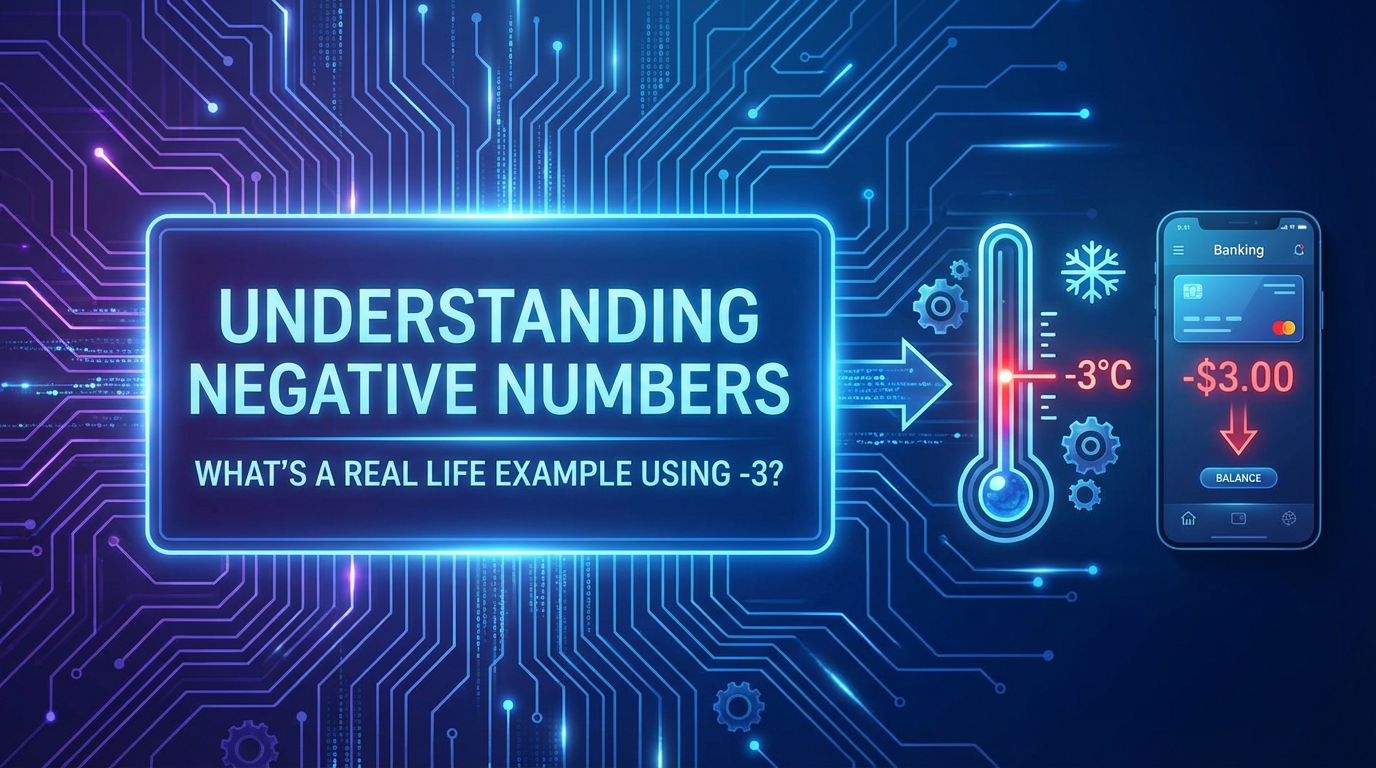
Perhaps the most common and easily relatable real-life example of negative numbers is in the context of temperature. The Celsius and Fahrenheit scales both use zero as a reference point, and temperatures below this point are expressed using negative numbers. Example with -3: On a frigid winter morning, the local weather report might announce a temperature of -3°C (minus three degrees Celsius). This immediately tells us that the air is three degrees colder than the freezing point of water (0°C). Such a temperature signifies that water will be frozen, requiring warm clothing, and indicating potential risks for pipes or plants. Without negative numbers, describing this cold would be cumbersome, perhaps requiring phrases like "three degrees below freezing," which is less concise and mathematically elegant. Similarly, in parts of the world using Fahrenheit, a temperature of -3°F would indicate an even more extreme cold, three degrees below the Fahrenheit zero point.
2. Financial Debt and Bank Balances: The Red Zone
In the world of personal and corporate finance, negative numbers are indispensable for representing debt, losses, or an overdraft. A bank balance, for instance, reflects the net amount of money available. Example with -3: If your bank account balance shows -$3.00 (minus three dollars), it means you have an overdraft of three dollars. You don't have any money; instead, you owe the bank three dollars. This negative balance signifies a deficit, a liability that needs to be settled. In accounting, a company reporting a net profit of -$3,000,000 means they incurred a loss of three million dollars, a critical piece of information for investors and stakeholders.
3. Altitude and Depth: Below Sea Level
When measuring vertical positions, especially in geography or oceanography, negative numbers define locations below a designated reference point, typically sea level. Example with -3: A diver exploring a coral reef might descend -3 meters (minus three meters) relative to the surface of the water. This indicates that the diver is three meters beneath the surface. Similarly, an excavation project might describe digging -3 feet into the ground to reach a certain layer, meaning three feet below the surface level. For geologists mapping underground structures or cartographers denoting land elevation, negative values are standard for areas below mean sea level.
4. Time Before an Event: Countdown
In countdown scenarios, often seen in rocket launches or timed events, negative numbers can represent time before the zero mark (the event itself). Example with -3: In a dramatic space launch sequence, a commentator might exclaim, "T-minus 3 seconds and counting!" While often phrased as "T-minus," the mathematical representation of this is effectively -3 seconds relative to the moment of ignition. It indicates that there are three seconds left until the primary event occurs, moving from -3, to -2, -1, and finally 0 (liftoff).
5. Golf Scores: Under Par
Golf is one of the few sports where negative numbers are actively desirable, indicating excellent performance. The "par" score for a hole or a course is the expected number of strokes an expert golfer should take. Example with -3: If a golfer finishes a round -3 (three under par), it means they completed the course in three fewer strokes than the par score. This is an exceptional achievement, showing that their score was better than the standard benchmark by three strokes. A positive score would indicate more strokes than par, thus worse performance.
6. Electrical Charges: Net Charge
In physics, particularly electrostatics, electric charges are represented as either positive or negative. The net charge of a system is the sum of all individual charges. Example with -3: If a specific region in an electrical circuit or a cloud formation has a net charge of -3 microcoulombs, it means there is an excess of negative charge equivalent to three microcoulombs. This quantitative value helps engineers and physicists understand the electrical potential and behavior of the system.
7. Game Scores and Points: Deductions
Many games, from board games to video games, incorporate point systems where losing points or incurring penalties is common, leading to negative scores. Example with -3: In a board game, a player might land on a penalty square that says, "Lose 3 points." If their current score was 5, it would become 5 + (-3) = 2. If their score was initially 1, losing 3 points would result in a score of -2, meaning they are now in a deficit of two points, indicating a significant setback.
8. Stock Market Fluctuations: Price Drops
The stock market frequently uses negative numbers to represent drops in stock prices or index values. Example with -3: A financial news report might state that a particular stock dropped by -$3.00 today. This signifies that the stock's price decreased by three dollars per share from its opening value. Investors track these negative changes closely, as they directly impact the value of their portfolios. A stock market index falling by -3% indicates a significant overall downturn.
9. Geographic Coordinates: West and South
While latitude and longitude are often given with cardinal directions (e.g., 3° W, 3° S), they can also be numerically represented with positive and negative signs relative to the Prime Meridian and Equator. Example with -3: A coordinate system might represent 3 degrees West longitude as -3° longitude and 3 degrees South latitude as -3° latitude. This allows for simpler mathematical calculations and programming within Geographic Information Systems (GIS), where positions are numerically processed.
10. Measuring Deviations: Error or Variance
In scientific experiments, engineering, or quality control, negative numbers are used to express deviations below a target value or standard. Example with -3: A manufactured component might have a target length of 100mm. If a quality check reveals a component is -3mm from the target length, it means it is 3mm shorter than it should be (97mm). This negative deviation indicates an undersized part, which could be critical for functionality.
11. Physics: Velocity in Opposite Direction
Velocity, a vector quantity, includes both speed and direction. If one direction is defined as positive, the opposite direction is negative. Example with -3: If a car moving east is assigned a positive velocity, then a car moving west at 3 meters per second would have a velocity of -3 m/s. The negative sign here unequivocally indicates the direction of motion relative to the chosen positive direction.
12. Medical and Health Metrics: Change in Weight or Blood Pressure
In health and fitness, tracking changes in various metrics often involves negative numbers to denote decreases. Example with -3: A patient might be informed that their weight change over the last month was -3 kg. This means they lost three kilograms. Similarly, a decrease in blood pressure or a reduction in a tumor size could be quantitatively expressed using negative values, providing a clear and precise measure of the change.
13. Budgeting and Expense Tracking: Budget Deficit
Personal and corporate budgeting heavily relies on negative numbers to represent expenses, deficits, or cash outflows. Example with -3: If a monthly budget category, say "Entertainment," has a balance of -$300, it indicates that the spending in that category has exceeded the allocated budget by three hundred dollars, resulting in a deficit. For a specific transaction, if an expense is logged as -$3, it means three units of currency were spent or deducted from the available funds.
14. Computer Science and Programming: Array Indexing or Error Codes
While less direct, negative numbers appear in programming contexts. Some languages allow negative indexing to access elements from the end of a list. Error codes can also be negative to distinguish them from positive success codes. Example with -3: In Python, my_list[-3] refers to the third element from the end of my_list. This is a direct application of the "three units from the end" concept. In system programming, a function might return an error code of -3 to indicate a specific type of failure, distinguishing it from positive values which might signify success or the number of items processed.
15. Architectural and Engineering Drawings: Dimensional Adjustments
Blueprints and technical drawings often use negative numbers to indicate specific adjustments or deviations from a baseline measurement. Example with -3: An annotation on a blueprint might specify a cut of "-3mm" for a certain component, meaning it needs to be 3 millimeters shorter than the standard dimension to fit correctly in an assembly. This precise instruction ensures that parts are manufactured or installed with the correct adjustments.
16. Oceanography: Salinity or Temperature Anomaly
Scientists studying ocean conditions often look at anomalies, which are deviations from the average or expected values. Example with -3: An ocean buoy might record a temperature anomaly of -0.3°C for a specific depth layer. This signifies that the water temperature at that location and depth is 0.3 degrees Celsius colder than the historical average for that time of year. A reading of -3% could indicate a three percent lower salinity than the norm in a certain region.
17. Geographic Depth of Lakes/Trenches: Below Water Surface
Similar to sea level, the depth of features within bodies of water is measured from the surface downwards, employing negative numbers. Example with -3: A sonar reading might indicate a specific geological feature on the lakebed is located at -3 meters from the surface. This means it is three meters deep, providing critical information for mapping and aquatic research.
18. Historical Timelines: Before Common Era
While not always explicitly written with a minus sign, historical dates preceding the Common Era (CE) or Anno Domini (AD) are conceptually negative relative to year 0/1. Example with -3: The year 3 BC (Before Christ) or 3 BCE (Before Common Era) can be thought of as -3 on a numerical timeline where 1 AD is 1, and the year before 1 AD (often conceptualized as year 0 or 1 BC) transitions into negative values. This helps in calculating spans of time across these historical divides.
19. Magnetic Fields: Relative Strength or Polarity
In physics, magnetic fields have direction and strength. A negative value can indicate an opposite direction or a weaker field relative to a standard. Example with -3: If a baseline magnetic field strength is established as positive, a measurement of -3 Tesla (a unit of magnetic field strength) could represent a field of the same magnitude but pointing in the opposite direction. Alternatively, it could signify a field that is three units weaker than a predefined zero-point or reference field.
20. Net Change in Population or Inventory: Decrease
Any scenario involving a net change where the outflow or decrease exceeds the inflow or increase will result in a negative net change. Example with -3: If a small town experiences a population change of -3 people over a year, it means its population decreased by three individuals (perhaps three more people moved out than moved in, or there were three more deaths than births, or a combination). Similarly, if a store's inventory of a specific item has a net change of -3 units, it means three more units were sold than replenished during a given period, leading to a shortage.
These diverse examples clearly illustrate that -3 is not an abstract mathematical construct but a deeply practical and frequently encountered quantity that helps us make sense of our world, from understanding cold weather to managing finances and navigating the depths of the ocean.
The Broader Impact: Negative Numbers in Advanced Fields
Beyond their everyday applications, negative numbers play a pivotal role in more advanced mathematical, scientific, and technological domains. Their inclusion expands the very language of these fields, enabling the description of phenomena that would otherwise be impossible to quantify.
In algebra, negative numbers are fundamental for solving equations and understanding variables. Equations like x + 5 = 2 necessitate a negative solution (x = -3), revealing a value that, when increased by 5, results in 2. This underpins the entire framework of algebraic manipulation and problem-solving, allowing mathematicians and scientists to isolate unknown quantities that may represent deficits or reversals. Without negative numbers, algebra would be severely limited, unable to address a vast array of real-world problems.
Calculus, the mathematics of change, relies heavily on negative numbers. Derivatives, which measure rates of change, can be negative, indicating a decreasing function or a downward slope. For instance, a negative velocity (like our -3 m/s example) implies movement in the opposite direction, while a negative acceleration indicates deceleration. Integrals, which sum up quantities, also incorporate negative numbers to represent areas below the x-axis or accumulated deficits over time. These concepts are indispensable for modeling physical systems, economic trends, and biological processes.
In physics, negative numbers are everywhere. They describe energy levels (e.g., negative potential energy indicating a bound state), forces (e.g., negative force denoting attraction or resistance), and relative positions. For instance, in an electric field, moving an electron (which has a negative charge) against the field direction requires work, leading to an increase in its negative potential energy. In quantum mechanics, energy states can be quantized with negative values, and wave functions, which describe particles, often involve complex numbers, which extend the number system beyond real numbers to include imaginary components that also deal with negativity in their conceptual underpinnings.
Engineering disciplines, from electrical engineering to structural engineering, use negative numbers extensively. In circuit analysis, negative voltages or currents indicate directionality or power absorption. In control systems, negative feedback loops are crucial for stability and regulation, where a deviation from a set point leads to an opposing (negative) corrective action. Stress and strain calculations in materials science often involve negative values to represent compressive forces or contraction. The precise control over these negative quantities is critical for designing safe and efficient systems, from bridges to microchips.
Computer science leverages negative numbers in multiple ways. Data types often support signed integers, allowing for negative values to represent quantities like errors, deficits, or offsets. Array indexing, as seen with my_list[-3], uses negative numbers to navigate data structures from the end. In graphics, coordinates can be negative, defining positions relative to an origin. Error codes, as mentioned, are frequently negative to differentiate them from successful return values. More fundamentally, the binary representation of negative numbers (like two's complement) is a cornerstone of how computers handle arithmetic, enabling them to perform calculations with both positive and negative integers efficiently.
Even in economics and finance, beyond simple bank balances, negative numbers are used in advanced models. They represent negative interest rates, which central banks might implement during economic crises to encourage spending. They appear in risk assessment, denoting potential losses, and in option pricing models, where the intrinsic value can conceptually go negative before expiry. Understanding these negative values is paramount for financial analysts, economists, and policymakers in making informed decisions.
The comprehensive management of such diverse numerical data, which invariably includes negative values, especially when integrating information from various sources and systems, highlights the increasing need for robust and flexible technological solutions. In today's interconnected digital landscape, where data flows seamlessly between applications and services, the role of an efficient API gateway becomes paramount. Imagine a large enterprise needing to consolidate financial reports, scientific measurements, and operational data, all of which contain negative numbers. An API acts as the crucial interface, standardizing how different systems communicate. A sophisticated API gateway can manage these data streams, ensuring proper authentication, data transformation, and load balancing, regardless of whether the numerical payloads include negative temperatures, financial deficits, or depth measurements. This allows for a unified and controlled environment where applications can securely access and process information, often guided by a central architectural concept, almost like a "master control program" (mcp) for data flow, ensuring that every piece of data, positive or negative, is correctly interpreted and routed across the enterprise's digital ecosystem. For organizations handling vast amounts of critical data, including sensitive numerical values, this robust infrastructure is not merely an advantage but a necessity. Companies like Eolink, through their open-source AI gateway and API management platform, APIPark, provide invaluable tools for managing this complexity. APIPark ensures that all types of numerical data, including negative integers vital for accurate scientific, financial, or engineering calculations, are handled with precision as they pass through various integrated systems, streamlining data flow and enhancing system reliability. ApiPark offers robust solutions for managing and integrating diverse data types, ensuring that even complex numerical data, which often includes negative values, is handled accurately and securely across an enterprise's digital infrastructure.
Common Misconceptions and Pedagogical Approaches
Despite their pervasive presence, negative numbers can still be a source of confusion for learners of all ages. Addressing common misconceptions and employing effective teaching strategies are crucial for fostering a solid understanding.
One prevalent misconception is the idea that "a negative number is always smaller than a positive number." While this is true in terms of value (e.g., -5 is indeed less than 1), it can sometimes lead to confusion regarding magnitude. Students might mistakenly think that because -100 is "smaller" than -1 in value, it is also "smaller" in terms of representing a quantity. Emphasizing the distinction between value (position on the number line) and absolute value (distance from zero) is key. For instance, an overdraft of $100 (represented by -$100) is a much larger financial predicament (greater magnitude of debt) than an overdraft of $1 (represented by -$1), even though -$100 is a smaller number in terms of its value.
Another common pitfall involves the rules for multiplication and division, particularly why "negative times negative equals positive." This rule often feels counter-intuitive. Explaining it through patterns (e.g., 3 * (-2) = -6, 2 * (-2) = -4, 1 * (-2) = -2, 0 * (-2) = 0, so -1 * (-2) must be 2 to maintain the pattern) or through the concept of "reversing a reversal" can be helpful. For example, if "negative" means "opposite," then "the opposite of the opposite" brings you back to the original positive state.
Subtracting negative numbers also causes difficulty. The rule "subtracting a negative is adding a positive" (e.g., 5 - (-3) = 5 + 3) often needs careful explanation. Using real-world analogies like "removing a debt makes you richer" or "taking away a penalty improves your score" can make this rule more accessible and less arbitrary.
Pedagogically, several approaches have proven effective: * Number Line Visualization: Consistently using a physical or drawn number line helps students visualize addition and subtraction as movements to the left (negative) or right (positive). It reinforces the concept of opposites and relative values. * Real-World Contexts: As demonstrated throughout this article, grounding negative numbers in concrete, relatable scenarios (temperature, debt, elevation, golf scores) is invaluable. These examples provide a meaningful context for abstract operations. * Manipulatives: Using colored chips (e.g., red for positive, yellow for negative) or debt/credit tokens can help model operations like addition and subtraction, allowing students to physically "cancel out" positive and negative pairs to reach a net result. * Pattern Recognition: Encouraging students to observe patterns in multiplication tables involving negative numbers can help them discover and internalize the sign rules rather than just memorizing them. * Concept of Zero: Reinforcing zero as the neutral point, the balance between opposing forces, is crucial. It's the point where positive and negative quantities cancel each other out. * Discussion and Explanation: Allowing students to articulate their understanding and misconceptions, and then guiding them through logical explanations, helps solidify their learning. Encouraging them to justify their answers using the number line or real-world examples builds deeper comprehension.
By proactively addressing these areas of potential confusion and employing diverse teaching methods, educators can help learners develop a robust and intuitive understanding of negative numbers, transforming them from abstract symbols into powerful tools for navigating the quantitative aspects of their world.
The Enduring Significance of Negative Numbers
The journey from ancient skepticism to universal acceptance underscores the profound utility of negative numbers. What began as a conceptual challenge has blossomed into an indispensable mathematical tool, enabling us to describe, quantify, and predict a vast array of phenomena that extend beyond mere presence or accumulation. From the simplest act of tracking a temperature drop of -3°C to the complex algorithms that power global financial markets, negative numbers provide the precision and clarity needed to navigate a world of deficits, reversals, and relative positions.
Their integration into every facet of mathematics, from basic arithmetic to advanced calculus, physics, engineering, and computer science, demonstrates their foundational importance. They are not simply "less than zero"; they are a fundamental aspect of the number system that allows for a complete and comprehensive representation of quantities and changes. Without them, our understanding of debt, elevation, time before an event, or directional movement would be severely impoverished, relying on cumbersome circumlocutions rather than elegant mathematical expressions.
As we continue to explore increasingly complex systems, from the microscopic realm of quantum particles to the macroscopic scale of cosmological phenomena, the ability to precisely quantify negative values will remain critical. Whether in managing the flow of data through an enterprise's API gateway (where performance rivals Nginx, handling thousands of transactions per second, ensuring that all data, including potential negative financial adjustments or scientific deviations, is processed with speed and accuracy), or in designing the next generation of AI models that interpret nuanced human sentiment (where even a sentiment score might range into negative values), negative numbers will continue to be an essential component of the quantitative language we use to interact with and shape our world. Their story is a testament to the human intellect's capacity to transcend the tangible and embrace abstract concepts that ultimately illuminate reality with greater clarity and depth.
| Real-Life Scenario | Meaning of -3 | Contextual Explanation |
|---|---|---|
APIPark is a high-performance AI gateway that allows you to securely access the most comprehensive LLM APIs globally on the APIPark platform, including OpenAI, Anthropic, Mistral, Llama2, Google Gemini, and more.Try APIPark now! 👇👇👇
Understanding Negative Numbers: What's a Real Life Example Using -3?
The mathematical universe extends far beyond the familiar integers and positive whole numbers we use for simple counting. While we intuitively grasp quantities like "three apples" or "five friends," the concept of "negative three" introduces a profound layer of abstraction that is not merely an academic exercise but an indispensable tool for comprehending and interacting with the complexities of the real world. Negative numbers, by their very definition, represent quantities less than zero, signifying deficits, decreases, positions below a baseline, or movements in an opposite direction. They empower us to articulate conditions of loss, debt, cold, depth, or backward motion with unparalleled precision, transforming ambiguous verbal descriptions into unambiguous numerical facts.
This exhaustive exploration will embark on a multifaceted journey into the realm of negative numbers. We will begin by tracing their intriguing historical development, understanding how these once-controversial entities gradually gained acceptance and became cornerstones of modern mathematics. Subsequently, we will meticulously define the fundamental concepts that underpin negative numbers, dissecting ideas such as the number line, opposites, magnitude, and absolute value to build a robust conceptual framework. A significant portion of our discussion will be dedicated to demystifying the rules governing arithmetic operations involving negative numbers – addition, subtraction, multiplication, and division – demonstrating the logical consistency that governs their interactions. The core of this treatise, however, will focus on illustrating the pervasive utility of negative numbers through an extensive collection of real-life examples, with a particular emphasis on concretizing the meaning of -3 in various tangible contexts. From the biting chill of a winter morning to the intricacies of financial statements, and from the depths of the ocean to the subtleties of sports scores, we will uncover how -3 serves as a potent descriptor, providing clarity and accuracy where mere positive numbers fall short. Finally, we will touch upon the broader significance of negative numbers in advanced scientific and technological fields, address common misconceptions, and provide insights into effective pedagogical approaches for teaching this vital mathematical concept. By the conclusion, the seemingly abstract notion of "minus three" will resonate with practical meaning, cementing its status as an indispensable component of our quantitative lexicon.
The Arduous Ascent: A Historical Saga of Negative Numbers
The journey of negative numbers from conceptual obscurity to mathematical indispensability is a compelling testament to humanity's evolving understanding of quantity and abstraction. Unlike the immediate tangibility of positive integers used for counting objects, the idea of "less than nothing" presented a significant intellectual hurdle for early civilizations, whose mathematical systems were primarily driven by practical needs suchibilities as commerce, construction, and basic enumeration. The inherent bias towards physical presence meant that deficits were often expressed as problems requiring repayment rather than as intrinsic values.
For millennia, the mathematical landscape was largely dominated by positive numbers and zero. Ancient Egyptian papyri, despite showcasing sophisticated arithmetic and geometric knowledge, managed concepts of loss or debt through rhetorical phrasing, avoiding explicit negative signs. Similarly, Babylonian mathematicians, pioneers in positional notation and quadratic equations, confined their calculations to positive magnitudes, viewing mathematical problems as solvable only when they yielded positive, 'real' answers. The philosophical underpinnings of Greek mathematics, particularly the Pythagorean school, further solidified this reluctance, as their focus on geometry and the harmonious ratios of positive integers left little room for quantities that could not be physically represented or constructed. Aristotle, for instance, in his writings, explicitly rejected the idea of negative numbers as a measure of any real quantity.
However, across the vast Eurasian landmass, different intellectual currents began to challenge this long-held positive bias. The earliest and most significant breakthroughs emerged in the East. Chinese mathematicians, flourishing during the Han Dynasty (206 BCE – 220 CE), developed a remarkably innovative system for handling calculations that implicitly involved negative numbers. In their foundational text, "Jiuzhang Suanshu" (The Nine Chapters on the Mathematical Art), they ingeniously utilized colored counting rods: red rods for positive numbers and black rods for negative numbers. This visual and tactile method allowed them to solve complex systems of linear equations, even when intermediate steps or final solutions involved values below zero. They understood the principle of opposition, where a red rod and a black rod of equal value would cancel each other out, paving the way for the concept of additive inverses. While they didn't explicitly formalize negative numbers with distinct symbols as we do today, their operational mastery was groundbreaking.
The most profound and systematic development of negative numbers can be attributed to Indian mathematicians. By the 7th century CE, Brahmagupta, in his monumental work "Brahmasphutasiddhanta," provided the first comprehensive and formalized treatment of these numbers. He unequivocally defined positive numbers as "fortunes" or "assets" and negative numbers as "debts." Crucially, he laid down explicit rules for performing all four basic arithmetic operations—addition, subtraction, multiplication, and division—with both positive and negative quantities, rules that strikingly align with modern conventions. For instance, he stated that "a debt minus zero is a debt," and "zero minus a debt is a credit" (positive). His clear articulation of rules like "the product of two debts is a fortune" (negative times negative equals positive) demonstrated an unparalleled conceptual leap, moving beyond mere practical application to a deeper understanding of their abstract nature. This advanced understanding in India would eventually be transmitted to the Arab world and, much later, to Europe.
The reception of negative numbers in the Islamic Golden Age was mixed. While many Arab mathematicians, building on the Indian tradition, incorporated them into their algebraic solutions, a lingering philosophical discomfort persisted. Al-Khwarizmi, whose work "Al-Jabr w'al Muqabala" gave us the word "algebra," still regarded negative solutions to equations as "absurd," although he would acknowledge them as a debt in practical contexts. Yet, the seed was planted, and the operational utility slowly began to outweigh the philosophical objections for many.
It was not until the late Middle Ages and the Renaissance that negative numbers cautiously made their way into Western European mathematics. Here, the struggle was more protracted. European scholars, influenced by the Greek emphasis on "real" quantities, initially resisted their formal acceptance, often labeling them as "fictitious," "false," or "absurd" numbers. Leonardo of Pisa, known as Fibonacci, in his influential "Liber Abaci" (1202), acknowledged negative numbers in the context of financial losses or debts but interpreted any negative solution to a general problem as indicating an impossible scenario. Luca Pacioli, a contemporary of Leonardo da Vinci, in his "Summa de Arithmetica, Geometria, Proportioni et Proportionalità" (1494), also expressed skepticism, asserting that a negative number could not be a solution to an equation, thereby reflecting the prevailing discomfort.
The 17th century saw a gradual shift. Mathematicians like René Descartes, while using negative roots in his coordinate geometry, still referred to them as "false roots," indicating a residual uneasiness with their ontological status. However, the burgeoning field of algebra, demanding solutions to a wider array of equations, began to force their acceptance out of sheer practical necessity. It was the 18th and 19th centuries that finally solidified their position. With the development of more rigorous algebraic frameworks by mathematicians such as Leonhard Euler and the geometric interpretation of numbers on a line by John Wallis and, later, William Rowan Hamilton, negative numbers shed their "absurd" label and were fully integrated as an indispensable component of the real number system. This long and often contentious historical trajectory underscores not just the inherent conceptual difficulty of negative numbers but also the resilience of mathematical inquiry in expanding its own boundaries to better describe and understand the world.
The Foundation of Meaning: Dissecting the Core Concepts of Negative Numbers
To truly master negative numbers, one must first grasp the foundational concepts that define their existence and govern their behavior. These are not merely definitions to be memorized but interconnected ideas that collectively build a coherent understanding of quantities less than zero. Without this bedrock, the complexities of operations and real-world applications can remain elusive.
The most fundamental concept is the very definition: a negative number is any real number that is less than zero. This seemingly simple statement carries profound implications, as it extends our numerical understanding beyond the concrete realm of "having" or "counting" to encompass "lacking" or "being below." It introduces the notion of a directional quality to numbers, distinguishing between values that are "above" a reference point and those that are "below."
The most powerful and intuitive tool for visualizing negative numbers is the number line. Imagine a perfectly straight line stretching infinitely in both directions. We assign a central point as zero (0), which acts as the crucial reference or origin. All numbers to the right of zero are positive numbers (e.g., 1, 2, 3, ...), and their values increase as one moves further right. Conversely, all numbers to the left of zero are negative numbers (e.g., -1, -2, -3, ...), and their values decrease as one moves further left. This means that -5 is "smaller" than -3, because -5 is further to the left on the number line, representing a greater deficit or a lower value. The number line immediately clarifies that there is an infinite progression of numbers in the negative direction, just as there is in the positive direction. It also elegantly illustrates that zero is neither positive nor negative; it is the neutral point, the boundary between these two realms.
Intricately linked to the number line is the concept of opposites. Every non-zero real number has an opposite, which is the number equidistant from zero on the number line but in the completely opposite direction. For example, the opposite of 3 is -3, and conversely, the opposite of -7 is 7. When any number is added to its opposite, the result is always zero (e.g., 3 + (-3) = 0). This property, known as the additive inverse, is foundational to understanding subtraction and the cancellation of quantities. It highlights that negative numbers are not just arbitrary symbols but represent a direct counterpoint to their positive counterparts, designed to nullify their effect.
Another crucial distinction lies between a number's value and its magnitude, often expressed as its absolute value. The magnitude of a number refers to its size or distance from zero, irrespective of its direction or sign. For instance, both 3 and -3 represent a "distance" of 3 units from zero. The mathematical notation for magnitude is the absolute value, denoted by two vertical bars surrounding the number (e.g., |3| = 3 and |-3| = 3). The absolute value always yields a non-negative result. In many practical applications, we might care more about the size of a change than its direction. For example, a temperature drop of 3 degrees (-3°C) and a temperature rise of 3 degrees (+3°C) both represent a change in temperature of 3 degrees in magnitude. Understanding absolute value is vital when comparing the "intensity" or "amount" of a positive or negative quantity.
Negative numbers primarily fall within the set of integers, which includes all whole numbers (0, 1, 2, 3, ...) and their negative counterparts (-1, -2, -3, ...). Integers are crucial for counting whole units, both in surplus and deficit. Expanding further, we encounter rational numbers, which can be expressed as a fraction of two integers (e.g., -1/2, -0.75), thereby encompassing negative fractions and decimals. Finally, the real numbers encompass all rational and irrational numbers (like -π or -√2), forming the continuous spectrum of the number line that includes all negative values. Recognizing that negative numbers are not an isolated oddity but an integral and consistent part of these larger number systems is essential for appreciating their broad applicability. These fundamental concepts collectively equip us with the necessary mental models to interpret, manipulate, and apply negative numbers effectively across a vast array of mathematical and real-world problems.
The Dance of Signs: Mastering Operations with Negative Numbers
Once the foundational understanding of what negative numbers represent is firmly established, the next crucial step is to comprehend the rules that govern their interactions through arithmetic operations. These rules, while initially seeming counter-intuitive, are logically consistent and vital for accurate calculations in any field involving numerical data. Mastering the "dance of signs" is not just about memorization, but about internalizing the underlying logic of how deficits and opposite directions combine and transform.
1. Addition with Negative Numbers: Movements on the Number Line
Visualizing addition as movement on the number line is often the most effective way to understand how negative numbers interact. * Adding a Negative to a Positive (or vice versa): This scenario can be thought of as a tug-of-war between positive and negative forces. The number with the greater absolute value determines the sign of the result. For example, consider 5 + (-3). Start at 5 on the number line and move 3 units to the left (because you're adding a negative). You land on 2. This is equivalent to 5 - 3 = 2. Conversely, for -5 + 3, start at -5 and move 3 units to the right (adding a positive). You land on -2. Here, the larger "debt" of 5 is only partially offset by the "asset" of 3. * Adding a Negative to a Negative: When you add two negative numbers, you are essentially combining two deficits, moving further left on the number line. The result will always be a larger negative number. For example, -2 + (-3). Start at -2 and move 3 units further to the left. You land on -5. Think of this as incurring an additional debt on top of an existing one: owing $2 and then owing another $3 results in a total debt of $5.
2. Subtraction with Negative Numbers: The Transformative Power of "Minus a Minus"
Subtraction involving negative numbers frequently causes initial confusion, largely because of the critical rule: subtracting a negative number is equivalent to adding its positive counterpart. This transformation is pivotal. * Subtracting a Positive from a Negative: This moves you further into the negative direction on the number line. For example, -5 - 3. Start at -5 and move 3 units further to the left. The result is -8. This is akin to having a debt of $5 and then incurring another expense of $3. * Subtracting a Negative from a Positive: This is where the magic happens: 5 - (-3). Applying the rule "subtracting a negative is adding a positive," this expression transforms into 5 + 3, which equals 8. Imagine removing a debt of $3 from your financial record; your situation improves by $3, which is the same as gaining $3. * Subtracting a Negative from a Negative: For example, -5 - (-3). Again, convert the "minus a minus" to a "plus." This becomes -5 + 3. Start at -5 and move 3 units to the right. The result is -2. Here, you had a debt of $5, but then $3 of that debt was cancelled or forgiven, leaving you with a smaller, but still present, debt of $2.
3. Multiplication and Division with Negative Numbers: The Rules of Sign Determination
Multiplication and division adhere to a set of consistent rules for determining the sign of the product or quotient. These rules are fundamental and must be applied meticulously. * Same Signs Yield a Positive Result: * Positive × Positive = Positive (e.g., 3 × 2 = 6) * Negative × Negative = Positive (e.g., -3 × -2 = 6). This rule can be conceptualized as "the opposite of reversing a direction brings you back to the original positive direction" or through numerical patterns (e.g., 3-2=-6, 2-2=-4, 1-2=-2, 0-2=0, so -1-2 must be +2 to continue the pattern). * Different Signs Yield a Negative Result:* * Positive × Negative = Negative (e.g., 3 × -2 = -6). This means taking 3 groups of -2, resulting in a total deficit of 6. * Negative × Positive = Negative (e.g., -3 × 2 = -6). This is essentially the same principle: 2 groups of -3.
The exact same sign rules apply to division: * Positive ÷ Positive = Positive (e.g., 6 ÷ 2 = 3) * Negative ÷ Negative = Positive (e.g., -6 ÷ -2 = 3) * Positive ÷ Negative = Negative (e.g., 6 ÷ -2 = -3) * Negative ÷ Positive = Negative (e.g., -6 ÷ 2 = -3)
4. Order of Operations (PEMDAS/BODMAS)
When faced with expressions containing multiple operations and negative numbers, the standard order of operations (Parentheses/Brackets, Exponents/Orders, Multiplication and Division (from left to right), Addition and Subtraction (from left to right)) must be strictly observed. The presence of negative signs simply means that the sign rules outlined above are applied correctly at each step of the calculation. For instance, in an expression like -3 + 2 × (-4), you would first perform the multiplication 2 × (-4) = -8. Then, the expression becomes -3 + (-8), which simplifies to -11. Adhering to these operational rules with precision ensures consistency and correctness in all mathematical computations, from the simplest ledger entry to the most complex scientific modeling, preventing errors that could have significant real-world consequences.
The Everyday Echo: Real-Life Manifestations of -3
Negative numbers are far from abstract mathematical curiosities; they are deeply woven into the fabric of our daily lives, providing a concise and unequivocal language for conditions that fall below a zero point, signify a loss, or indicate a reverse direction. The integer -3 serves as a particularly versatile exemplar, appearing in countless scenarios that illuminate the practical power of negativity. Let us explore these diverse real-life applications, focusing on the distinct meaning that -3 imparts in each context.
1. Frigid Climates: Temperature Readings
Perhaps the most universally understood application of negative numbers is in the measurement of temperature. Both the Celsius and Fahrenheit scales designate a zero point, and anything colder is expressed with a negative value. Example with -3: Imagine waking up on a crisp winter morning to a weather report stating, "The temperature outside is -3°C (minus three degrees Celsius)." This single numerical fact immediately conveys that the air is three degrees below the freezing point of water. It signals the need for heavy winter clothing, warns of icy conditions on roads, and suggests taking precautions to prevent pipes from freezing. Without the concept of negative numbers, we would be forced to use more cumbersome phrases like "three degrees below zero," which, while functionally similar, lacks the mathematical elegance and directness of -3°C. In Fahrenheit, a temperature of -3°F would represent an even more extreme cold, three degrees below the Fahrenheit zero point, which itself is significantly colder than 0°C. This practical usage underscores how negative numbers provide a universal and unambiguous way to describe ambient conditions.
2. Fiscal Reality: Debt and Bank Overdrafts
In the intricate world of finance, both personal and corporate, negative numbers are indispensable for representing debt, liabilities, or a financial deficit. A bank account balance, for instance, is a net figure, and a negative value clearly indicates an owed amount. Example with -3: If you check your bank statement and see an available balance of -$3.00 (minus three dollars), it means you have an overdraft. You don't merely have no money; you actively owe the bank three dollars. This negative balance is a clear indicator of a financial liability, triggering potential fees and requiring immediate action to bring the account back to a positive or zero balance. For a business, if a specific department's budget shows a variance of -$3,000, it means they overspent by three thousand dollars, a critical piece of information for financial management and future planning. Negative numbers here quantify the extent of financial obligation.
3. Vertical Landscapes: Altitude and Depth Measurements
When measuring positions vertically, particularly in geological surveys, oceanography, or aviation, negative numbers are routinely used to denote locations below a designated reference point, most commonly sea level or ground level. Example with -3: A marine biologist might be studying a specific species of deep-sea fish, noting that its habitat is typically found at -3 meters (minus three meters) relative to the ocean surface. This signifies that the fish resides three meters beneath the water's surface. Similarly, an archaeologist excavating an ancient site might label a specific layer of artifacts as being found at a depth of -3 feet from the current ground level, precisely locating it beneath the surface. For mountaineers, a base camp might be described as being at an altitude of 300 meters, but a cave entrance below that might be at -3 meters relative to the camp's elevation. The negative sign unambiguously clarifies that the position is below the reference.
4. Countdown to Event: Time Before Zero Hour
In scenarios involving a countdown to a significant event, such as a rocket launch, a race start, or a theatrical curtain raise, negative numbers can conceptually represent the time remaining before the zero mark (the actual moment of the event). Example with -3: During the final moments leading up to a rocket launch, mission control might announce, "T-minus 3 seconds and counting!" While verbally expressed with "T-minus," this directly corresponds to a mathematical concept of -3 seconds relative to the launch time. The sequence would typically proceed from -3, to -2, -1, and then 0 (ignition). This negative count signifies the duration still separating the present moment from the anticipated event, illustrating a progression towards zero from the negative side of the timeline.
5. Sporting Prowess: Golf Scores Below Par
Golf stands out as one of the few sports where achieving negative numbers is a mark of exceptional skill and desirable performance. The "par" score for a hole or an entire course represents the expected number of strokes an expert golfer should take. Example with -3: If a professional golfer finishes a round of golf with a score of -3 (three strokes under par), it means they completed the course in three fewer strokes than the designated par score. This is an outstanding achievement, indicating superior play. Conversely, a positive score (e.g., +3) would mean three strokes over par, signifying a less desirable performance. The negative sign here directly reflects a beneficial deviation from the standard, a true asset in the game.
6. Electrical States: Net Charge and Potential
In the fundamental principles of physics, particularly electromagnetism, charges are inherently positive or negative, and their summation determines the net charge of a system. Example with -3: A physicist analyzing a specific region within a semiconductor material might determine that it has a net charge of -3 nanocoulombs. This quantitative value indicates an excess of negative charge carriers (electrons) equivalent to three nanocoulombs within that region. This information is crucial for understanding the material's electrical properties and its behavior in circuits or devices. Similarly, in the context of electrical potential, a point in a circuit might have a potential of -3 Volts relative to ground, meaning it is at a lower electrical energy state.
7. Gaming Dynamics: Point Deductions and Penalties
Many popular games, ranging from board games to intricate video games, incorporate systems where players can lose points or incur penalties, leading to negative scores or a reduction in their total. Example with -3: In a fantasy role-playing game, a character might encounter a trap that results in "-3 Hit Points (HP)" damage. If the character previously had 5 HP, their health would drop to 2 HP. If they were already wounded and only had 1 HP, taking -3 HP damage would result in them having -2 HP, indicating they are incapacitated or have fainted. The negative value clearly signifies a depletion of a vital resource.
8. Market Momentum: Stock Price Declines
The world of financial markets frequently employs negative numbers to represent declines in stock prices, bond values, or overall market indices. Example with -3: A business news headline might report that a major tech stock "fell by -$3.00 today." This means that the price per share of that stock decreased by three dollars from its opening or previous closing value. For an investor holding hundreds or thousands of shares, this negative change has a direct and tangible impact on the value of their portfolio. Similarly, a stock market index falling by -3% indicates a significant overall downturn across a broad segment of the market.
9. Directional Coordinates: Geographic Longitude/Latitude
While geographical coordinates are often stated with cardinal directions (e.g., 3° W, 3° S), modern digital mapping systems and Geographic Information Systems (GIS) frequently represent these directions numerically using negative values. Example with -3: In a global coordinate system, a location at 3 degrees West longitude might be represented as -3° longitude, and a location at 3 degrees South latitude as -3° latitude. This numerical convention allows for simpler mathematical calculations and algorithmic processing of locations, where negative values indicate positions relative to the Prime Meridian (0° longitude) or the Equator (0° latitude) in the westerly or southerly directions, respectively.
10. Precision Engineering: Measurement Deviations
In manufacturing, quality control, and scientific experimentation, negative numbers are used to express deviations from a target value or ideal standard, indicating that a measurement is smaller than desired. Example with -3: A machinist fabricating a precision part might find that a component is -0.003mm from its target thickness. While this example uses a fraction, the underlying principle is the same: it signifies that the part is three thousandths of a millimeter thinner than the required specification. Similarly, a chemical reaction yielding a concentration of -3 parts per million (ppm) from the desired level means it is three ppm below the target. These negative deviations are critical for identifying and correcting manufacturing errors or experimental inaccuracies.
11. Physics of Motion: Velocity in Reverse
In physics, velocity is a vector quantity, meaning it has both magnitude (speed) and direction. If one direction is arbitrarily defined as positive, then motion in the opposite direction is negative. Example with -3: If a car moving East is assigned a positive velocity, then a car moving West at a speed of 3 meters per second would have a velocity of -3 m/s. The negative sign here is not about value being less than zero but unequivocally indicates the direction of motion being opposite to the established positive direction. This is crucial for accurately modeling forces, momentum, and trajectories.
12. Health Metrics: Changes in Bodily Measurements
In the context of health, fitness, and medical monitoring, negative numbers are frequently used to quantify decreases in various bodily metrics, indicating a reduction or loss. Example with -3: A patient following a dietary plan might be happy to hear that their weight change over the past month was -3 kg. This means they have successfully lost three kilograms. Similarly, a decrease in a specific biomarker level (e.g., a -3% reduction in cholesterol) or a shrinkage in tumor size (e.g., -3 mm in diameter) would be expressed with negative values, providing clear and measurable indicators of change or progress.
13. Financial Management: Budget Deficits
Both personal and corporate budgeting heavily rely on negative numbers to represent expenses, budget shortfalls, or cash outflows that exceed allocations. Example with -3: If a household's monthly budget allocates $200 for groceries, but they spend $203, their grocery budget category would show a balance of -$3. This means they have exceeded their budget for groceries by three dollars. In a larger corporate context, if a project's expenses total $3,003,000 against a budget of $3,000,000, it would report a budget deficit of -$3,000, highlighting an overspend that needs to be addressed.
14. Computer Science: Array Indexing from the End
In certain programming languages, especially Python, negative numbers are used in array or list indexing to access elements from the end of the sequence rather than the beginning. Example with -3: In Python, if you have a list my_list = ['a', 'b', 'c', 'd', 'e'], then my_list[-1] refers to the last element ('e'), my_list[-2] refers to the second-to-last ('d'), and my_list[-3] refers to the third element from the end ('c'). This provides a convenient and powerful way to navigate data structures without needing to know their exact length.
15. Construction and Design: Dimensional Adjustments
In architectural and engineering drawings, negative numbers are precise tools for indicating required adjustments, cuts, or deviations from a standard measurement. Example with -3: A technical drawing for a custom-built cabinet might include an instruction for a specific panel, stating a dimension adjustment of "-3mm." This means the panel needs to be 3 millimeters shorter than the default or previously specified length to ensure a perfect fit in the overall assembly. Such precise negative adjustments are critical for achieving accuracy and functionality in complex constructions.
16. Ecosystem Balance: Population Changes
Ecologists and demographers use negative numbers to represent a decrease in population, whether of animal species, plants, or human communities. Example with -3: If a wildlife study reveals that a specific bird colony experienced a population change of -3 individuals over the past breeding season, it means the colony decreased by three birds. This could be due to higher mortality rates, lower birth rates, or emigration exceeding immigration. Similarly, a small rural town might report a net population change of -3 people, indicating a slight decline in its resident count.
17. Geological Formations: Relative Elevation
Beyond sea level, negative numbers can describe the relative elevation of geological features in relation to a local reference point, such as a valley floor or a specific geological layer. Example with -3: A geological survey report might describe a mineral deposit found at -3 meters relative to the valley floor. This means the deposit is located three meters beneath the surface of the valley floor, providing crucial information for mining or excavation planning.
18. Historical Eras: Before Common Era Dates
While typically written as "BC" or "BCE," dates preceding the Common Era are conceptually negative on a numerical timeline where 1 AD (or 1 CE) is the starting positive point. Example with -3: The historical event occurring in the year 3 BC (or 3 BCE) can be mathematically conceived as -3 on a timeline where the year 0 (or the transition from 1 BC to 1 AD) is the reference point. This mental model is vital for calculating time spans across the BC/AD divide, for instance, determining the number of years between 5 BC and 2 AD.
19. Scientific Research: Experimental Deviations from Norm
In any scientific field, when measurements are compared to an expected or control value, a negative deviation indicates a result that is lower than anticipated. Example with -3: A chemist might be testing a new catalyst and finds that its reaction rate is -3% compared to the standard catalyst. This means the new catalyst is 3% less efficient than the standard. In medical research, a drug might cause a side effect where a certain physiological parameter registers a -3 unit change from the baseline, indicating a reduction in that parameter.
20. Weight Management: Weight Loss Tracking
In personal health and fitness, tracking weight changes often involves negative numbers to precisely denote weight loss. Example with -3: After a month of dedicated exercise and diet, an individual might record a change of -3 pounds on the scale. This clearly indicates a three-pound reduction in body weight. This negative value provides a clear, objective measure of progress towards a health goal, motivating continued effort.
These diverse examples unequivocally demonstrate that -3, and negative numbers in general, are not abstract mathematical symbols but potent and pervasive tools that bring clarity, precision, and efficiency to our understanding and quantification of the world around us.
Beyond the Obvious: Negative Numbers in Advanced Scientific and Technological Domains
While their everyday utility is clear, negative numbers truly come into their own within the complex frameworks of advanced mathematics, cutting-edge science, and sophisticated technology. Here, they cease to be mere indicators of debt or cold and become fundamental elements that enable the description and manipulation of intricate phenomena, expanding the very language of these disciplines.
In the realm of advanced algebra and abstract mathematics, negative numbers are not just accepted but are foundational. They are integral to the structure of groups, rings, and fields – abstract algebraic structures that generalize the properties of number systems. The concept of an additive inverse (a number plus its negative equals zero) is a defining characteristic of many such structures. Without negative numbers, entire branches of abstract algebra would simply not exist. Furthermore, in fields like topology and set theory, negative indices or characteristics might be used to describe properties of spaces or relationships between sets.
Calculus, the cornerstone of modern science and engineering, hinges critically on negative numbers. Derivatives, which measure instantaneous rates of change, can be negative, signifying a decreasing function or a downward slope on a graph. For instance, a negative velocity indicates movement in the opposite direction, while a negative acceleration denotes deceleration. Integrals, which calculate accumulated quantities or areas, also incorporate negative numbers to represent areas below the x-axis or the accumulation of deficits over time. Concepts like flux and divergence in vector calculus heavily rely on signed quantities to denote directionality and net outflow or inflow. These are indispensable for modeling everything from planetary motion to fluid dynamics.
In theoretical physics, negative numbers permeate descriptions of the universe. They quantify energy states, particularly in quantum mechanics, where negative energy levels describe bound states of electrons within an atom. In general relativity, negative curvature can describe certain aspects of spacetime geometry. The concept of antimatter also implicitly involves negative charge and other quantum numbers, where particles have opposite properties to their matter counterparts. Even in thermodynamics, changes in entropy or work done on a system can be negative, indicating a decrease or work being extracted from the system.
Electrical and Electronic Engineering are fields where negative numbers are ubiquitous. In circuit analysis, negative voltages or currents are not just "less" but often indicate a specific direction of current flow or potential difference relative to a ground reference. Alternating current (AC) waveforms are inherently sinusoidal, oscillating between positive and negative values. The design of control systems relies on negative feedback loops, where a system's output is fed back in an "opposite" (negative) sense to correct deviations from a desired set point, ensuring stability and precision. Amplifiers, filters, and digital logic circuits all perform calculations and transformations that involve signed numerical values.
Computer Science and Software Engineering leverage negative numbers in a myriad of sophisticated ways beyond simple array indexing. In low-level programming and assembly language, the representation and manipulation of negative integers using two's complement is fundamental to how CPUs perform arithmetic operations efficiently. Error codes are frequently negative to distinctly signal various types of system failures or exceptional conditions, preventing ambiguity with positive success codes. In graphics and game development, 3D coordinates can be negative, extending beyond the visible screen to represent off-screen objects or relative positions in a virtual world. Memory management often involves negative offsets. Furthermore, in the burgeoning field of Artificial Intelligence and Machine Learning, negative numbers are crucial. They appear in weight matrices of neural networks, in error calculations during backpropagation (where negative errors indicate a need for a parameter adjustment in a certain direction), and in the output of sentiment analysis models, where a negative score denotes negative sentiment.
The sheer volume and diversity of data generated and processed in these advanced fields—data that frequently contains, relies upon, and is interpreted through negative numbers—underscores the critical importance of robust data management and integration platforms. Consider the vast datasets flowing from scientific experiments, financial trading systems, or complex AI models; all contain numerical information where negative values are not anomalies but essential components of the data's meaning. To effectively manage the communication between disparate systems, consolidate information, and ensure data integrity, especially when dealing with such diverse data types and formats, an efficient and secure API gateway is indispensable. This is where advanced solutions, such as APIPark, come into play.
APIPark - Open Source AI Gateway & API Management Platform, launched by Eolink, is engineered precisely for this challenge. It acts as a central gateway for managing, integrating, and deploying a multitude of AI and REST services, enabling seamless communication across an enterprise's digital infrastructure. Whether it's integrating real-time financial data with negative stock fluctuations, scientific sensor data with negative temperature readings, or complex AI model outputs that include negative sentiment scores, APIPark ensures that these numerical values are handled with precision. Its capability for a unified API format simplifies AI invocation and data exchange, ensuring that even nuanced data involving negative numbers is correctly interpreted and passed between services. The platform’s end-to-end API lifecycle management assists in regulating traffic forwarding, load balancing, and versioning, all while maintaining high performance (rivaling Nginx with over 20,000 TPS on modest hardware). In an era where data-driven decisions are paramount, and the complexity of integrating diverse data sources is ever-increasing, a robust platform like APIPark provides the critical infrastructure. It ensures that the integrity of all numerical data, including negative values that hold profound meaning in scientific, financial, and technological contexts, is preserved and managed efficiently, facilitating accurate analysis and reliable system operations. This centralized control and management, akin to a sophisticated "master control program" (mcp) for API interactions, is vital for the modern enterprise. For more information on how APIPark can streamline your data management and AI integration, visit ApiPark.
Common Misconceptions and Effective Pedagogical Strategies for Negative Numbers
Despite their ubiquitous presence and fundamental importance, negative numbers frequently pose significant conceptual challenges for learners across various age groups. Dispelling common misconceptions and employing thoughtful pedagogical strategies are therefore paramount to cultivating a deep and intuitive understanding of this vital mathematical concept.
One of the most pervasive misconceptions stems from an oversimplified view of "smaller." Students often mistakenly believe that "a negative number is always smaller than a positive number" and extend this logic to compare negative numbers based solely on their absolute value. For instance, they might incorrectly assert that -100 is "larger" than -1 because 100 is larger than 1. This error highlights a confusion between a number's value (its position on the number line) and its magnitude (its distance from zero, irrespective of sign). It is crucial to emphasize that while -100 is indeed a smaller value than -1 (it is further to the left on the number line, representing a greater deficit), the magnitude of the deficit represented by -100 (e.g., owing $100) is far greater than that represented by -1 (owing $1). Teachers must consistently differentiate between "less than" (referring to value) and "greater debt/magnitude" (referring to absolute value) to prevent this confusion.
Another significant hurdle arises with the rules for multiplication and division, particularly the seemingly counter-intuitive rule that "negative times negative equals positive." This axiom often feels arbitrary to learners. A purely memorized rule, devoid of conceptual underpinning, is prone to error and offers little lasting understanding. To address this, educators can employ several approaches. One effective method is using pattern recognition: * Start with known facts: 3 × (-2) = -6 * Continue the pattern: 2 × (-2) = -4 * 1 × (-2) = -2 * 0 × (-2) = 0 * Following this clear pattern, it logically follows that -1 × (-2) must result in 2 to maintain the progression. Another approach involves the concept of "opposite of the opposite." If multiplying by a negative means taking the opposite direction, then multiplying by two negatives implies taking the opposite of the opposite, which brings you back to the original positive orientation.
Subtracting negative numbers is another common area of difficulty. The rule that "subtracting a negative is equivalent to adding a positive" (e.g., 5 - (-3) = 5 + 3) can initially perplex. Analogies are powerful here. "Removing a debt makes you richer" or "taking away a penalty improves your score" provide relatable real-world contexts that resonate with students. Using a number line to demonstrate that subtracting a negative means moving in the positive direction (to the right) can also provide a strong visual aid. For instance, if you are at 5 and subtract -3, you are "removing" 3 units of negative, which moves you 3 units to the right, to 8.
Effective pedagogical strategies for teaching negative numbers extend beyond addressing misconceptions: * Consistent Use of the Number Line: The number line should be a constant visual reference. Physical number lines on the floor where students can walk out operations, or drawing number lines for every example, concretizes the abstract concept of direction and relative position. * Anchoring to Real-World Scenarios: As extensively demonstrated in this article, always connecting negative numbers to practical examples (temperature, debt, depth, elevation, time, sports scores) provides meaningful context. Students learn best when they can see the relevance of mathematical concepts to their own experiences. * Manipulatives: Using two-color counters (e.g., red for positive, yellow for negative) allows students to physically model addition and subtraction. They can form "zero pairs" (one red + one yellow = zero) to understand the cancellation effect and the concept of additive inverses. * Interactive Activities and Games: Designing games that involve accumulating positive and negative points, or moving along a track with both positive and negative spaces, can make learning engaging and reinforce operational rules. * Emphasis on Zero as the Reference Point: Consistently highlighting zero as the neutral point, the balance between opposing forces, is crucial. It clarifies that zero is neither positive nor negative, but the origin from which both realms extend. * Verbalization and Justification: Encouraging students to explain their reasoning, verbally articulate the rules, and justify their answers using either the number line, manipulatives, or real-world analogies helps solidify their understanding and build confidence. * Gradual Progression: Introduce concepts incrementally, building from understanding what a negative number is, to adding, then subtracting, and finally multiplying and dividing. Each step should be thoroughly practiced before moving to the next.
By proactively identifying and addressing common areas of confusion with clear, consistent explanations, and by employing a diverse array of engaging teaching methods, educators can transform negative numbers from a daunting challenge into an accessible and powerful tool, equipping learners with the essential skills to confidently navigate the quantitative complexities of their world.
Conclusion: The Indispensable Language of Negativity
The journey through the world of negative numbers, from their contentious historical beginnings to their pervasive modern applications, reveals a profound truth: these quantities are not merely mathematical abstractions but an indispensable language for describing the full spectrum of our reality. What was once dismissed as "fictitious" or "absurd" has become a cornerstone of human understanding, enabling us to articulate concepts of deficit, decrease, reversal, and relative position with unparalleled clarity and precision.
The example of -3 vividly illustrates this ubiquity. Whether it signifies a biting chill of -3°C, a financial debt of -$3, an underwater depth of -3 meters, a countdown three seconds before liftoff, or a triumphant -3 score in golf, the negative sign transforms a simple magnitude into a precise directional or conditional descriptor. Without it, our ability to communicate these realities would be clumsy and ambiguous, lacking the elegance and exactitude that mathematics provides.
Beyond everyday scenarios, negative numbers are foundational to the advanced frameworks of science, engineering, and technology. They are woven into the very fabric of algebra, calculus, physics, and computer science, enabling the modeling of complex systems, the analysis of dynamic changes, and the precise control of technological processes. From quantum mechanics to AI algorithms, negative values are not exceptions but essential components of accurate quantitative representation.
As our world becomes increasingly data-driven and interconnected, the reliable management and interpretation of all numerical data, including negative values, grows ever more critical. Modern enterprises rely on robust infrastructure to handle the vast flow of information, ensuring that every data point, positive or negative, is processed accurately and securely. Platforms like APIPark, as an open-source AI gateway and API management platform, exemplify the technological sophistication required to navigate this landscape. By providing unified API formats and end-to-end lifecycle management, APIPark ensures that even the most nuanced data—be it negative financial adjustments, decreasing scientific measurements, or critical error codes—is handled with precision, enabling seamless integration and reliable operation across diverse systems.
In essence, negative numbers are a testament to the human intellect's capacity to conceptualize beyond the immediate and the tangible. They provide a vital lens through which we comprehend the full quantitative spectrum of existence, offering a powerful and precise means to interact with and shape our intricate world. Their enduring significance underscores that true mathematical mastery lies not just in counting what is present, but in understanding the profound implications of what lies below zero.
Frequently Asked Questions (FAQ)
1. What exactly is a negative number and how is it different from a positive number? A negative number is any real number that is less than zero. It is fundamentally different from a positive number in that it represents a deficit, a decrease, a position below a reference point, or a movement in an opposite direction. While positive numbers indicate presence, surplus, or forward movement, negative numbers indicate absence, shortage, or backward movement. For instance, +3 means you have three units, while -3 means you owe three units or are three units below a reference.
2. Why are negative numbers important in real life, especially with an example like -3? Negative numbers are crucial in real life because they allow us to precisely quantify conditions that positive numbers cannot describe. For example, -3°C tells us the temperature is three degrees below freezing, a critical piece of information for safety and planning. A bank balance of -$3 signifies an overdraft of three dollars, representing a debt. In golf, a score of -3 means three strokes under par, indicating excellent performance. These examples show that -3 is not abstract but carries concrete, actionable meaning across various contexts.
3. What are the basic rules for adding and subtracting negative numbers? For addition: * Adding a negative is like subtracting a positive (e.g., 5 + (-3) = 5 - 3 = 2). * Adding two negatives results in a larger negative number (e.g., -2 + (-3) = -5). For subtraction: * Subtracting a negative is equivalent to adding a positive (e.g., 5 - (-3) = 5 + 3 = 8). * Subtracting a positive from a negative results in a larger negative (e.g., -5 - 3 = -8). These rules can be intuitively understood as movements on a number line or combining/removing debts.
4. Why does a negative number multiplied by a negative number result in a positive number? This rule (-x * -y = +xy) is one of the most counter-intuitive but logically consistent in mathematics. It can be explained through patterns (e.g., continuing a sequence like 3*-2=-6, 2*-2=-4, 1*-2=-2, 0*-2=0, then -1*-2 must be +2 to maintain the pattern). Conceptually, if multiplication by a negative means "taking the opposite direction," then multiplying by a negative twice means "taking the opposite of the opposite direction," which brings you back to the original positive orientation.
5. How are negative numbers used in advanced technology like computer science or AI? In computer science, negative numbers are fundamental for data representation (e.g., signed integers using two's complement), memory addressing (negative offsets), and error handling (negative error codes). In AI and machine learning, they are vital in neural networks for weight adjustments during training (backpropagation often involves negative gradients), in error calculations, and in outputs of models like sentiment analysis (where -3 might indicate strongly negative sentiment). They are an integral part of the numerical language that underpins complex algorithms and data processing.
🚀You can securely and efficiently call the OpenAI API on APIPark in just two steps:
Step 1: Deploy the APIPark AI gateway in 5 minutes.
APIPark is developed based on Golang, offering strong product performance and low development and maintenance costs. You can deploy APIPark with a single command line.
curl -sSO https://download.apipark.com/install/quick-start.sh; bash quick-start.sh

In my experience, you can see the successful deployment interface within 5 to 10 minutes. Then, you can log in to APIPark using your account.

Step 2: Call the OpenAI API.