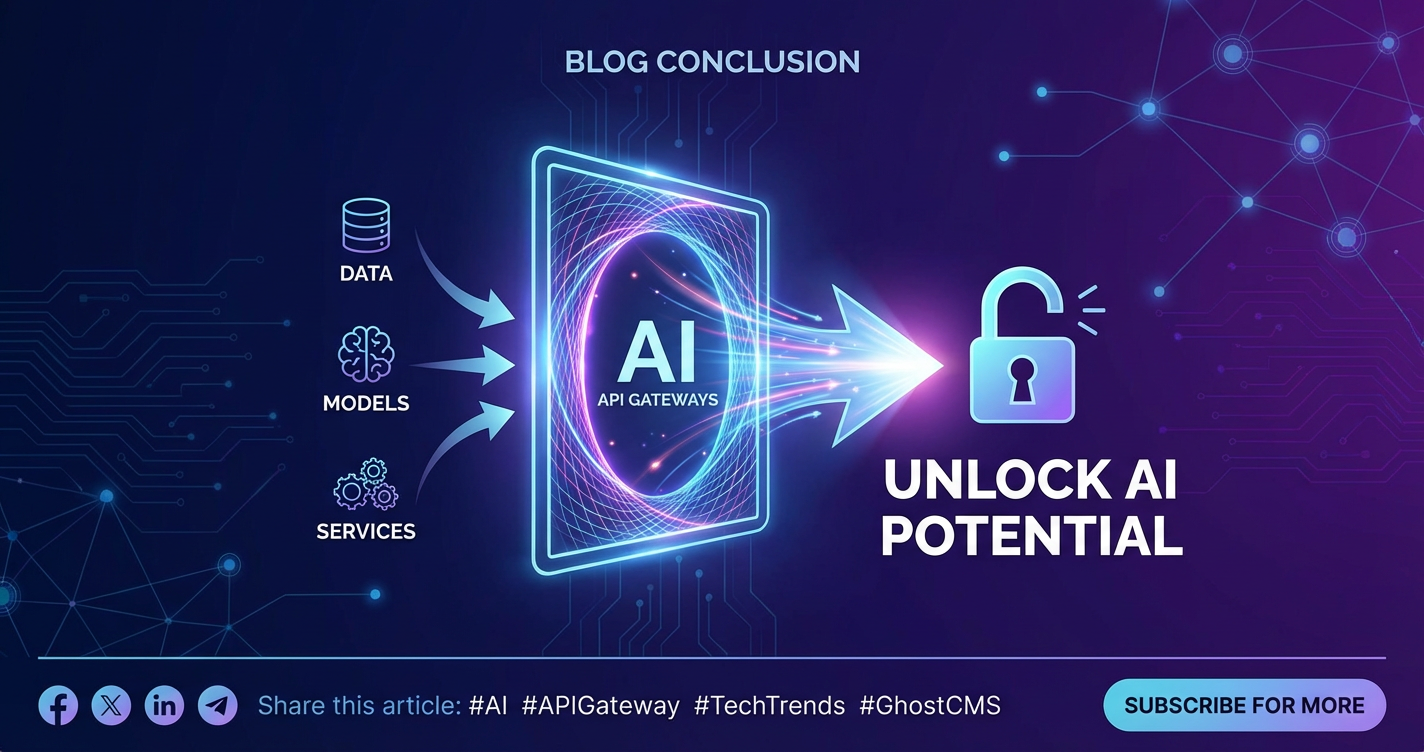
Unlock AI Potential: The Power of AI API Gateways


The digital landscape is undergoing a profound transformation, spearheaded by the unprecedented advancements in Artificial Intelligence. From automating mundane tasks to generating complex content, and from powering sophisticated analytics to enabling natural language understanding, AI's influence is pervasive and rapidly expanding. At the heart of this revolution lies the ability for applications and services to seamlessly communicate with and leverage the capabilities of diverse AI models. This imperative has brought forth a critical architectural component: the AI Gateway, an evolution of the traditional API Gateway, specifically designed to navigate the unique complexities and unleash the full potential of AI, particularly Large Language Models (LLMs).
For enterprises and developers alike, the proliferation of AI models, each with its own specific interface, authentication mechanisms, and operational nuances, presents a formidable challenge. Integrating these varied services directly into applications can lead to brittle architectures, escalating costs, significant security vulnerabilities, and a sluggish development lifecycle. The vision of a truly AI-driven future, one where intelligent capabilities are effortlessly embedded into every facet of an organization, hinges upon a robust, scalable, and secure intermediary. This article delves deep into the foundational concepts of API Gateways, illuminates the distinct challenges posed by the AI paradigm, and rigorously explores how the sophisticated functionalities of an AI Gateway—often referred to as an LLM Gateway in the context of generative AI—serve as the indispensable keystone for building resilient, efficient, and future-proof AI infrastructures. We will uncover how these gateways not only streamline operations but also act as strategic enablers, allowing organizations to innovate faster, control costs, and safeguard their most valuable digital assets in an increasingly intelligent world.
The Foundation: Understanding the Ubiquitous API Gateway
Before we delve into the specialized realm of AI and LLM Gateways, it is crucial to establish a solid understanding of their precursor: the traditional API Gateway. This architectural component has become an undisputed cornerstone in modern software development, particularly with the widespread adoption of microservices architectures.
What is an API? The Language of Digital Interaction
An Application Programming Interface (API) serves as the fundamental contract that allows different software systems to communicate and interact with each other. In essence, it defines the methods and data formats that applications can use to request services or exchange information. Imagine a restaurant menu: it lists the dishes you can order (the services) and specifies how you need to order them (the data format). You don't need to know how the chef prepares the food; you just need to know how to use the menu. Similarly, an API abstracts away the internal complexities of a system, presenting a clean, standardized interface for external consumption.
The evolution of APIs has mirrored the progression of software architecture. In earlier days, monolithic applications often communicated through shared databases or tightly coupled RPC (Remote Procedure Call) mechanisms. The advent of web services introduced SOAP (Simple Object Access Protocol), a more standardized, XML-based protocol for exchanging structured information. While powerful, SOAP was often perceived as complex and verbose. This paved the way for REST (Representational State Transfer) APIs, which gained immense popularity due to their simplicity, statelessness, and use of standard HTTP methods (GET, POST, PUT, DELETE). RESTful APIs became the de facto standard for web and mobile applications, enabling a highly decoupled and scalable approach to service interaction. More recently, GraphQL has emerged as an alternative, offering clients greater flexibility to request precisely the data they need, thereby reducing over-fetching and under-fetching issues common with REST.
The Genesis of the API Gateway: Taming Microservices Complexity
As organizations embraced microservices—an architectural style that structures an application as a collection of loosely coupled services—the benefits of independent deployment, scalability, and technological diversity became apparent. However, this modularity also introduced new challenges. A single client application might need to interact with dozens, or even hundreds, of distinct microservices to fulfill a single user request. This direct client-to-microservices communication pattern led to several critical problems:
- Increased Complexity for Clients: Client applications had to know the individual endpoints, authentication mechanisms, and data formats for each microservice. This made client-side code bloated and difficult to maintain.
- Network Overhead: Multiple requests from the client to various microservices could lead to higher latency and increased network traffic.
- Security Concerns: Exposing all microservice endpoints directly to the internet created a larger attack surface and made centralized security management challenging.
- Cross-Cutting Concerns Duplication: Common functionalities like authentication, authorization, rate limiting, logging, and caching had to be implemented repetitively in each microservice or client, leading to inconsistencies and maintenance nightmares.
The API Gateway emerged as a robust solution to these problems. Positioned as the single entry point for all client requests, it acts as a facade, abstracting the internal microservices architecture from the external consumers. Instead of interacting with individual microservices, clients communicate solely with the API Gateway.
Core Functions and Benefits of a Traditional API Gateway
A well-implemented API Gateway provides a rich set of functionalities that significantly enhance the security, performance, and manageability of an API ecosystem:
- Request Routing and Composition: The gateway intelligently routes incoming requests to the appropriate backend microservice(s). It can also aggregate responses from multiple services, composing them into a single, unified response for the client, reducing client-side complexity and network calls.
- Authentication and Authorization: It centralizes security enforcement. Before any request reaches a backend service, the gateway can authenticate the client (e.g., via API keys, OAuth tokens) and authorize access based on defined policies. This prevents unauthorized access to internal services.
- Rate Limiting and Throttling: To protect backend services from overload and prevent abuse, the gateway can enforce limits on the number of requests a client can make within a specified timeframe.
- Logging and Monitoring: All incoming and outgoing API traffic passes through the gateway, making it an ideal point to capture detailed logs for auditing, troubleshooting, and performance monitoring.
- Traffic Management: Features like load balancing, circuit breaking, and retry mechanisms can be implemented at the gateway level to improve the resilience and availability of the microservices.
- Request/Response Transformation: The gateway can modify request payloads before forwarding them to backend services or transform responses before sending them back to clients, ensuring compatibility across different API versions or client requirements.
- Caching: Frequently accessed data can be cached at the gateway, reducing the load on backend services and improving response times for clients.
- Security Policies: Beyond authentication, gateways can enforce more advanced security policies, such as IP whitelisting/blacklisting, WAF (Web Application Firewall) functionalities, and encryption management.
In essence, a traditional API Gateway acts as a powerful central nervous system for API traffic, streamlining communication, enhancing security, and providing a scalable foundation for complex distributed systems. This robust foundation is what the AI Gateway builds upon, adapting and extending these capabilities to meet the unprecedented demands of the AI era.
The AI Revolution and Its Unique Challenges
The dawn of generative AI, epitomized by the rise of Large Language Models (LLMs), has ushered in a new era of possibilities, transforming everything from software development to creative content generation, and from scientific research to customer service. These sophisticated models, capable of understanding, generating, and manipulating human language with remarkable fluency, promise unparalleled efficiency and innovation. However, integrating and managing these powerful AI services, particularly LLMs, introduces a novel set of challenges that go beyond the scope of traditional API management.
Overview of AI's Impact: Beyond Simple Automation
Artificial Intelligence has moved far beyond rudimentary rule-based systems. Modern AI, encompassing machine learning, deep learning, and now generative AI, leverages vast datasets and complex algorithms to discern patterns, make predictions, and even create original content. From computer vision systems recognizing objects in real-time, to recommendation engines personalizing user experiences, and natural language processing (NLP) models translating languages or summarizing documents, AI's applications are diverse and transformative. The recent explosion of generative AI, particularly LLMs like GPT-4, Llama, and Gemini, has pushed the boundaries further, demonstrating capabilities in code generation, complex reasoning, creative writing, and sophisticated conversational AI. Enterprises are eager to embed these "superpowers" into their products and internal workflows to gain a competitive edge and unlock new value streams.
The Specific Challenges in Integrating and Managing AI/LLM Services
While the promise of AI is immense, its practical implementation comes with a unique set of hurdles. Directly integrating multiple AI models into an application quickly becomes an intractable problem without a specialized intermediary.
- Diversity of Models and Providers: The AI landscape is incredibly fragmented. There isn't a single, monolithic AI provider; instead, organizations often leverage a mix of commercial offerings (e.g., OpenAI, Anthropic, Google AI), open-source models (e.g., Llama, Mistral, Falcon), and even proprietary models developed in-house. Each provider, and often each model within a provider, exposes its services through a distinct API. These APIs can vary significantly in their request formats, response structures, authentication mechanisms, error codes, and rate limits. A developer attempting to switch from one LLM to another for performance, cost, or ethical reasons would typically face substantial refactoring of their application code, leading to vendor lock-in and stifled innovation.
- Cost Management and Optimization: AI services, especially LLMs, can be remarkably expensive, with pricing often based on token usage (input and output tokens), model size, and specific capabilities. Without granular visibility and control, costs can quickly spiral out of control. It becomes challenging to:
- Track token consumption across different applications, teams, or even individual users.
- Allocate costs accurately to specific projects or business units.
- Implement spend limits or budget caps.
- Dynamically route requests to the most cost-effective model available for a given task, which might change based on real-time pricing or demand. Optimizing cost requires sophisticated logic that goes beyond simple API call counting.
- Performance and Latency Requirements: Many AI applications, particularly those involving real-time interactions like chatbots or autonomous systems, are highly sensitive to latency. The inference time for complex AI models can vary significantly based on model size, current load on the provider's infrastructure, and network conditions. Managing these performance variations and ensuring low-latency responses requires:
- Intelligent load balancing across multiple instances of a model or even different providers.
- Efficient caching strategies for repeated queries.
- Monitoring of response times and proactive issue detection.
- Fallback mechanisms to switch to alternative models if a primary one becomes slow or unresponsive.
- Security and Data Privacy Concerns: Interacting with AI models, especially LLMs, often involves sending sensitive or proprietary data (e.g., customer queries, internal documents, personal identifiable information - PII) to external services. This raises significant security and privacy concerns:
- Data Leakage: Ensuring that sensitive data doesn't persist beyond the necessary inference, or is not used for model training by third-party providers.
- Prompt Injection: Malicious users attempting to manipulate the LLM's behavior by crafting adversarial prompts to elicit harmful, biased, or unauthorized information.
- Model Poisoning: In scenarios where models are fine-tuned, ensuring the input data isn't manipulated to degrade model performance or introduce biases.
- Access Control: Granularly managing who can access which AI models and with what permissions, especially in a multi-team enterprise environment.
- Compliance: Adhering to strict data protection regulations (e.g., GDPR, HIPAA, CCPA) when processing and transmitting data to AI services.
- Scalability and Reliability: The demand for AI inferences can fluctuate wildly. A sudden surge in user activity could overwhelm a single AI model instance or a specific provider's capacity. Building resilient AI applications requires:
- Automatic scaling of AI resources.
- Load distribution across multiple models or providers.
- Circuit breakers and retries to handle temporary outages or slowdowns.
- A robust fallback strategy if a primary AI service becomes unavailable.
- Observability and Monitoring Tailored for AI: Traditional API monitoring focuses on basic metrics like latency, error rates, and request counts. For AI services, a deeper level of observability is required:
- Token Usage Tracking: Crucial for cost management.
- Model-Specific Metrics: Monitoring the health and performance of individual models.
- Output Quality Monitoring: Detecting model drift, bias, or degraded performance over time.
- Prompt/Response Logging: For debugging, auditing, and understanding AI behavior.
- Usage Pattern Analysis: Identifying peak usage times, popular models, and potential bottlenecks.
- Prompt Engineering, Management, and Versioning: The performance and behavior of LLMs are heavily influenced by the prompts they receive. Crafting effective prompts ("prompt engineering") is an iterative, experimental process. Organizations need a way to:
- Store and manage a library of prompts, categorized by use case.
- Version prompts, allowing for rollbacks and A/B testing of different prompt variations.
- Encapsulate complex prompt logic so developers don't have to embed it directly in their applications.
- Dynamically select prompts based on context or user input.
- Ethical AI and Compliance: Beyond technical challenges, the ethical implications of AI, such as fairness, transparency, and accountability, are paramount. Ensuring that AI models are used responsibly and comply with emerging AI regulations requires:
- Policy enforcement at the API layer.
- Auditing of AI interactions.
- Mechanisms to detect and mitigate biased or harmful outputs.
These multifaceted challenges underscore the need for a specialized architectural component that can abstract away the complexity of interacting with diverse AI models, providing a unified, secure, performant, and cost-effective interface. This is precisely the role of the AI Gateway.
Introducing the AI Gateway / LLM Gateway: The Intelligent Orchestrator
The complexity inherent in the modern AI landscape necessitates a sophisticated solution capable of managing, securing, and optimizing interactions with a multitude of AI models. This is where the AI Gateway, also frequently referred to as an LLM Gateway when specifically dealing with Large Language Models, steps in as a critical architectural component. It represents a significant evolution from the traditional API Gateway, extending its core functionalities with AI-specific capabilities to address the unique challenges we've outlined.
Definition: What is an AI Gateway?
An AI Gateway is a specialized type of API Gateway that acts as a central intermediary between client applications and various Artificial Intelligence (AI) and Machine Learning (ML) models, particularly Large Language Models (LLMs). Its primary purpose is to simplify the integration, management, security, and optimization of diverse AI services within an enterprise infrastructure. While it inherits the foundational responsibilities of a traditional API Gateway—such as routing, authentication, and rate limiting—it augments these with intelligent, AI-centric functionalities designed to handle the specific nuances of interacting with complex, often costly, and continuously evolving AI models.
Essentially, an AI Gateway creates a unified, consistent, and controlled access layer for all AI capabilities, abstracting away the underlying complexities of different AI providers, model APIs, pricing structures, and security considerations. For developers, it transforms a fragmented AI ecosystem into a single, cohesive interface, making AI integration simpler, safer, and more scalable.
Core Functionalities of an AI Gateway
The true power of an AI Gateway lies in its comprehensive set of AI-specific features, which extend far beyond the capabilities of a standard API Gateway:
- Unified API Abstraction and Normalization: This is perhaps the most fundamental and impactful feature. As discussed, different AI providers (e.g., OpenAI, Google AI, Anthropic, Hugging Face) expose their models through distinct APIs, each with varying request and response formats. An AI Gateway normalizes these disparate interfaces. It presents a single, standardized API endpoint to client applications, regardless of which underlying AI model is being invoked. When a request comes in, the gateway translates it into the specific format required by the chosen AI model and then transforms the model's response back into the unified format before sending it to the client. This dramatically reduces integration effort, eliminates vendor lock-in, and allows applications to seamlessly swap out or combine different AI models without requiring any code changes on the client side. For instance, a single prompt might be sent to different LLMs, and the application receives a consistent response structure, simplifying downstream processing.
- Intelligent Routing and Orchestration: An AI Gateway doesn't just route requests; it routes them intelligently. Based on predefined policies, real-time performance metrics, cost considerations, model capabilities, or even semantic analysis of the input prompt, the gateway can dynamically direct a request to the most appropriate AI model or provider. This intelligent routing can be based on several factors:
- Cost Optimization: Directing requests to the cheapest available model that meets the required performance and quality criteria.
- Performance Optimization: Sending requests to the fastest responding model or load-balancing across multiple instances/providers.
- Capability Matching: Routing a summarization request to a specialized summarization model, and a code generation request to a code-focused LLM.
- Fallback Logic: Automatically switching to an alternative model or provider if the primary one is unavailable, overloaded, or returns an error.
- A/B Testing: Routing a percentage of requests to a new model or prompt variation to evaluate its performance. This dynamic orchestration ensures optimal resource utilization, cost efficiency, and enhanced reliability.
- Cost Optimization and Tracking: Given the usage-based pricing models of most AI services (especially token usage for LLMs), granular cost management is paramount. An AI Gateway provides sophisticated mechanisms for tracking, analyzing, and controlling AI spending:
- Detailed Usage Logging: Recording every token sent and received for each request, along with the associated cost, provider, and model.
- Budgeting and Quotas: Setting spend limits at the application, team, or user level, and automatically blocking requests or switching to cheaper models once limits are approached or exceeded.
- Cost Analytics: Providing dashboards and reports that break down AI spending by model, application, user, and time period, offering invaluable insights for financial planning and resource allocation.
- Proactive Alerts: Notifying administrators when spending approaches predefined thresholds. This level of financial oversight is crucial for making informed decisions about AI resource allocation and preventing budget overruns.
- Enhanced Security Features for AI Interactions: Security in the AI context extends beyond traditional API security. An AI Gateway implements specialized measures to protect sensitive data and mitigate AI-specific threats:
- Prompt Sanitization and Validation: Analyzing incoming prompts to detect and neutralize malicious inputs, such as prompt injection attacks designed to bypass safety filters or extract unauthorized information. It can filter out suspicious keywords, enforce structural rules, or integrate with dedicated threat intelligence feeds.
- Data Masking and Redaction: Automatically identifying and obscuring sensitive information (e.g., PII, credit card numbers, confidential project names) within prompts or model responses before they reach the AI model or the client. This helps maintain data privacy and compliance.
- Advanced Access Control: Implementing fine-grained authorization policies for AI models, allowing specific teams or users access only to the models and functionalities they are permitted to use. This can include restricting access to certain models based on their sensitivity or cost.
- Threat Detection and Prevention: Integrating with security systems to detect unusual patterns of AI usage, potential abuses, or attempts to exploit model vulnerabilities.
- Auditing and Compliance Logging: Comprehensive logging of all AI interactions, including prompts, responses, and any modifications made by the gateway, which is essential for regulatory compliance and forensic analysis.
- Observability and Analytics Tailored for AI: Understanding the performance, health, and usage patterns of AI models is critical for operational stability and continuous improvement. An AI Gateway offers deep insights:
- Model-Specific Metrics: Tracking latency, error rates, throughput, and token usage for each individual AI model and provider.
- Usage Pattern Analysis: Identifying peak usage times, popular models, frequently used prompts, and potential bottlenecks.
- Response Quality Monitoring: While more advanced, some gateways can integrate with external tools or employ heuristics to monitor the quality of AI model outputs, detecting "model drift" or unexpected behavior.
- Comprehensive Logging: Capturing detailed logs of prompts, responses, routing decisions, and any transformations applied, which is invaluable for debugging and understanding AI behavior. This rich telemetry empowers operations teams to proactively manage their AI infrastructure and diagnose issues swiftly.
- Prompt Management and Experimentation: Effective prompt engineering is central to maximizing the utility of LLMs. An AI Gateway centralizes the management of prompts, turning them into reusable assets:
- Prompt Library: Storing, versioning, and categorizing prompts, making them discoverable and reusable across different applications and teams.
- Prompt Templating: Allowing developers to define parameterized prompts, injecting dynamic data at runtime while maintaining a consistent prompt structure.
- A/B Testing and Experimentation: Facilitating the simultaneous deployment of multiple prompt versions or different models for a given task, routing a percentage of traffic to each, and comparing their performance metrics (e.g., response quality, latency, cost) to identify the optimal configuration.
- Fallback Prompts: Defining alternative prompts or models to use if the primary one fails or yields unsatisfactory results. This functionality transforms prompt engineering from an ad-hoc process into a structured, manageable, and optimizable discipline.
- Caching AI Responses (and Semantic Caching): For idempotent AI queries (those that produce the same output for the same input), caching responses can significantly reduce costs and improve latency.
- Standard Caching: Storing the exact response for a given prompt and returning it directly for subsequent identical requests, avoiding unnecessary calls to the AI model.
- Semantic Caching (Advanced): Leveraging embedding models or other techniques to determine if a new query is semantically similar to a previously cached query. If so, it returns the cached response, even if the exact wording is different. This is particularly powerful for LLMs, where slight variations in phrasing should ideally yield the same conceptual answer.
- Rate Limiting and Quotas for AI Endpoints: While traditional API Gateways offer rate limiting, AI Gateways apply this specifically to AI model usage. This includes:
- Provider-Specific Limits: Adhering to the rate limits imposed by external AI service providers to avoid being throttled.
- Internal Quotas: Enforcing usage quotas at the application, team, or user level to manage internal resource consumption and prevent any single entity from monopolizing AI resources or exceeding budgets.
- API Service Sharing and Management: Within an enterprise, different teams or departments may require access to various AI capabilities. An AI Gateway, especially one integrated with a comprehensive API management platform like ApiPark, centralizes the display and management of all API services—both traditional REST APIs and AI-powered endpoints. This allows for:
- Centralized API Catalog: A single place for developers to discover, understand, and subscribe to available AI services.
- Team-Specific Access: Defining independent API and access permissions for different tenants (teams or departments), ensuring secure and controlled sharing of AI resources while maintaining independent configurations.
- Subscription Approval Workflows: Implementing a process where callers must subscribe to an API and await administrator approval before they can invoke it, preventing unauthorized API calls and potential data breaches.
These extended functionalities elevate the AI Gateway from a mere traffic controller to an intelligent orchestrator, strategic enabler, and guardian of an organization's AI investments. It is the crucial layer that translates the raw power of AI models into manageable, secure, and cost-effective enterprise solutions.
The Strategic Importance and Benefits of Implementing an AI Gateway
The decision to implement an AI Gateway is not merely a technical choice; it is a strategic imperative for any organization serious about leveraging Artificial Intelligence at scale. By addressing the unique challenges of integrating and managing AI services, an AI Gateway unlocks a multitude of benefits that profoundly impact development velocity, operational efficiency, security posture, and financial health.
1. Accelerated Development and Innovation Velocity
One of the most immediate and tangible benefits of an AI Gateway is the dramatic simplification it brings to the developer experience. Instead of grappling with the disparate APIs, authentication methods, and data formats of numerous AI models, developers interact with a single, unified, and consistent API exposed by the gateway. * Reduced Complexity: Developers can focus on building core application logic rather than intricate AI integration details. This abstraction layer means they don't need to understand the specifics of OpenAI's API versus Google's, or how to handle their respective error codes. * Faster Prototyping and Iteration: The ability to easily swap between different AI models (e.g., trying a new LLM for summarization) or experiment with various prompt templates, without changing application code, significantly speeds up the development cycle. Teams can rapidly test hypotheses, iterate on AI-powered features, and bring innovative solutions to market more quickly. * Elimination of Vendor Lock-in: By abstracting the underlying AI providers, the gateway ensures that applications are decoupled from specific vendors. If a better, cheaper, or more ethical model emerges, or if a current provider faces issues, the organization can switch seamlessly with minimal disruption to dependent applications. This flexibility is crucial for long-term AI strategy.
2. Significant Cost Savings and Optimization
AI services, especially LLMs, can be expensive. An AI Gateway offers powerful mechanisms to control and optimize these costs, transforming potential liabilities into predictable expenditures. * Intelligent Cost-Based Routing: The gateway can dynamically route requests to the most cost-effective model available for a given task, factoring in real-time pricing and performance. For example, less critical tasks might be routed to a cheaper, slightly slower model, while high-priority tasks go to a premium, faster one. * Efficient Caching: For frequently asked, idempotent queries, caching responses at the gateway level eliminates redundant calls to expensive AI models, leading to substantial cost reductions over time. Semantic caching further enhances this by recognizing semantically similar queries. * Granular Usage Tracking and Budget Enforcement: Detailed logging of token usage, model consumption, and associated costs across teams and projects provides unprecedented visibility. This allows organizations to set and enforce budgets, receive alerts on spending thresholds, and accurately attribute costs to specific business units, fostering financial accountability. * Reduced Development Overhead: By simplifying integration and accelerating development, the gateway indirectly reduces the labor costs associated with building and maintaining AI-powered applications.
3. Fortified Security Posture and Data Privacy
AI interactions introduce new security risks, particularly concerning data privacy and adversarial attacks. The AI Gateway acts as a formidable security bulwark. * Centralized Security Enforcement: All AI traffic passes through a single control point, making it the ideal location to enforce robust authentication, authorization, and audit policies consistently across all AI services. * Protection Against Prompt Injection: Advanced prompt sanitization and validation features actively detect and neutralize malicious inputs designed to manipulate LLM behavior, safeguarding against data leakage or unauthorized actions. * Sensitive Data Masking/Redaction: Automatically redacting or masking PII and other sensitive information before it leaves the organization's network (or even before it reaches the AI model) ensures compliance with privacy regulations like GDPR, HIPAA, and CCPA. * API Service Sharing with Approval: Features like API subscription approval ensure that access to valuable AI APIs is strictly controlled and only granted after administrative review, preventing unauthorized usage and potential breaches. * Comprehensive Auditing: Detailed logging of all AI inputs, outputs, and gateway actions provides an immutable audit trail, critical for compliance, incident response, and forensic analysis.
4. Enhanced Reliability and Resilience
Downtime or degraded performance of critical AI services can have significant business impacts. An AI Gateway significantly improves the resilience and reliability of AI applications. * Automatic Failover and Load Balancing: The gateway can automatically detect unresponsive or slow AI models/providers and seamlessly reroute traffic to healthy alternatives, ensuring continuous service availability. * Circuit Breaking and Retries: It can implement patterns like circuit breakers to prevent cascading failures in case of repeated errors from a backend AI service, and intelligent retry mechanisms to overcome transient network issues. * Traffic Management: Dynamic load balancing distributes requests efficiently across multiple model instances or providers, preventing any single point of failure or bottleneck. * Consistent Experience: By absorbing fluctuations and outages at the backend, the gateway provides a more consistent and reliable experience for client applications and end-users.
5. Future-Proofing AI Investments and Strategic Agility
The AI landscape is evolving at a breakneck pace. An AI Gateway ensures that an organization's AI investments remain adaptable and agile. * Technology Agnostic Architecture: The abstraction layer allows organizations to adopt new AI models or technologies as they emerge, without needing to re-architect existing applications. This protects past investments and enables rapid adoption of future innovations. * Simplified Model Updates: Upgrading to newer versions of an LLM or switching to an entirely different model becomes a configuration change at the gateway level, rather than a potentially disruptive code deployment across multiple applications. * Empowering Experimentation: With easy A/B testing of models and prompts, organizations can continuously experiment and optimize their AI solutions, staying ahead of the curve. This fosters a culture of innovation and continuous improvement.
6. Better Governance, Observability, and Compliance
Managing a complex AI ecosystem requires strong governance and clear visibility into operations. * Centralized Policy Enforcement: All AI-related policies, from security to usage quotas, are enforced at a single point, ensuring consistency and ease of management. * Comprehensive Observability: Detailed logs, metrics, and analytics specifically tailored for AI provide deep insights into model performance, usage patterns, and cost drivers. This allows for proactive maintenance and informed decision-making. * Compliance: The ability to log every AI interaction, enforce data privacy rules, and manage access permissions helps organizations meet increasingly stringent regulatory and ethical AI requirements. The detailed audit trails are invaluable for demonstrating compliance.
7. Scalability and Performance Optimization
An AI Gateway is designed to handle high volumes of AI traffic efficiently. * High Throughput: Optimized for performance, many gateways can handle thousands of transactions per second (TPS), especially when deployed in a cluster. For example, platforms like ApiPark boast performance rivaling Nginx, achieving over 20,000 TPS with modest hardware, supporting large-scale traffic. * Efficient Resource Utilization: By centralizing common concerns like caching and rate limiting, it offloads these tasks from individual microservices, allowing them to focus on their core business logic and scale more effectively. * Reduced Latency: Intelligent routing, caching, and optimized network pathways contribute to lower overall latency for AI inferences.
In summation, an AI Gateway transcends its technical role to become a strategic asset. It not only addresses the immediate complexities of AI integration but also lays a robust foundation for future AI expansion, ensuring that organizations can confidently and efficiently harness the transformative power of artificial intelligence in a secure, cost-effective, and agile manner.
APIPark is a high-performance AI gateway that allows you to securely access the most comprehensive LLM APIs globally on the APIPark platform, including OpenAI, Anthropic, Mistral, Llama2, Google Gemini, and more.Try APIPark now! 👇👇👇
Use Cases and Real-World Applications of AI Gateways
The versatility and robust capabilities of an AI Gateway make it indispensable across a wide spectrum of industries and application types. By simplifying integration, bolstering security, and optimizing performance and cost, AI Gateways enable organizations to deploy and manage AI solutions that were previously challenging or impractical. Let's explore some compelling real-world use cases where an AI Gateway shines.
1. Enhancing Customer Service with Intelligent Chatbots and Virtual Assistants
One of the most immediate and impactful applications of AI, particularly LLMs, is in customer service. Organizations are rapidly deploying intelligent chatbots and virtual assistants to handle customer inquiries, provide instant support, and automate routine tasks. An AI Gateway is crucial here for several reasons:
- Intelligent Query Routing: A customer's query might range from a simple FAQ to a complex technical issue or a request for a personalized recommendation. The AI Gateway can analyze the incoming query's intent and dynamically route it to the most appropriate AI model. For instance, basic informational questions might go to a cost-effective, fine-tuned LLM for rapid response, while sensitive or complex queries requiring deeper understanding could be directed to a more powerful, albeit potentially more expensive, specialized LLM or even a human agent escalation API.
- Contextual Conversation Management: As conversations progress, the gateway can help maintain context, ensuring that subsequent prompts sent to different AI models remain coherent with the ongoing dialogue.
- Unified Response Generation: Even if multiple AI models contribute to an answer (e.g., one model retrieves product info, another summarizes it, a third adds a personal touch), the gateway can aggregate and format these responses into a single, seamless interaction for the customer.
- Data Masking for PII: When customers provide sensitive personal information (e.g., account numbers, addresses), the AI Gateway can automatically detect and mask this data before it reaches the external LLM, protecting privacy and ensuring compliance.
- Cost Optimization: By routing simpler queries to cheaper models, the gateway significantly reduces the overall operational cost of customer support, making AI-powered service economically viable at scale.
2. Powering Content Generation and Creative Platforms
Generative AI is revolutionizing content creation, from marketing copy and product descriptions to code snippets and artistic imagery. Platforms that leverage multiple generative models benefit immensely from an AI Gateway:
- Diverse Model Access: A content platform might offer features like "generate blog post," "summarize article," "create social media captions," or "generate image concepts." Each feature might optimally be served by a different LLM or generative AI model (e.g., one LLM excels at creative writing, another at factual summarization, an image generation model like DALL-E or Midjourney for visuals). The AI Gateway provides a single access point for all these capabilities.
- Prompt Management and Versioning: Content creators and developers often experiment with different prompts to achieve desired outputs. The gateway can manage a library of optimized prompts, allow for A/B testing of prompt variations, and ensure that the most effective prompts are consistently used.
- Cost Control: For platforms with high content generation volumes, the gateway can route requests based on cost, performance, and specific content requirements, ensuring that expensive, high-fidelity models are only used when absolutely necessary.
- Workflow Orchestration: Complex content creation might involve multiple steps (e.g., outline generation -> draft creation -> refinement -> translation). The gateway can orchestrate calls to a sequence of AI models to automate these workflows.
3. Enabling Advanced Data Analysis and Business Insights
AI models are powerful tools for extracting insights from vast datasets, performing complex analytics, and identifying trends. AI Gateways facilitate this by:
- Orchestrating Analytical Workflows: For instance, a business intelligence tool might use an LLM to interpret natural language queries from users ("Show me sales trends for Q3 in Europe") and then convert these into structured queries for a data analysis AI model, which then processes the data and sends back results, potentially summarized by another LLM. The gateway orchestrates these multi-model interactions.
- Secure Data Handling: When internal business data is sent to analytical AI models (which could be hosted externally), the gateway ensures that data is handled securely, potentially masking sensitive fields or enforcing access policies.
- Model Selection for Specific Tasks: Different analytical models might be better suited for different types of data or analytical tasks (e.g., time-series forecasting, sentiment analysis, anomaly detection). The gateway can intelligently route requests to the most appropriate model.
- Performance and Scalability: Ensuring that intensive data analysis requests are processed efficiently and that the underlying AI infrastructure can scale to meet demand.
4. Empowering Developer Platforms and Ecosystems
Companies building platforms that offer AI capabilities to their own developers or external partners can leverage an AI Gateway to create a robust and manageable ecosystem:
- Unified AI API for Developers: The gateway presents a single, stable, and well-documented API for accessing all AI features, simplifying integration for internal and external developers. This is particularly valuable for B2B platforms or API-first companies.
- Access Control and Billing: For external partners, the gateway can enforce granular access permissions, track usage per partner/application, and facilitate accurate billing based on their consumption of AI resources.
- API Lifecycle Management: Beyond just AI models, a platform like APIPark supports end-to-end API lifecycle management, enabling the design, publication, invocation, and decommission of both AI-powered and traditional REST APIs. This comprehensive approach is essential for large-scale API ecosystems.
- Prompt Encapsulation into REST APIs: With an AI Gateway, internal teams can quickly combine AI models with custom prompts to create new, specialized APIs (e.g., a "summarize medical text" API, a "generate marketing headline" API). These tailored APIs can then be shared within teams, streamlining development for others.
5. Internal Enterprise AI Applications and Automation
Beyond public-facing products, enterprises are increasingly using AI for internal automation, process optimization, and decision support:
- Knowledge Management: LLMs can summarize internal documents, answer questions from internal knowledge bases, or help employees find relevant information. An AI Gateway ensures secure access to these models and prevents sensitive internal data from being inadvertently exposed.
- Code Generation and Review: Developers can use LLMs to generate boilerplate code, suggest improvements, or perform code reviews. The gateway manages access to these powerful coding assistants and ensures that internal code is handled securely.
- Automated Report Generation: Combining data from various sources with LLMs to generate complex business reports or executive summaries automatically.
- Employee Onboarding/Training: Virtual assistants powered by LLMs can guide new employees through onboarding processes, answer HR questions, and provide access to training materials.
In all these scenarios, the AI Gateway acts as the intelligent backbone, providing the necessary abstraction, security, cost control, and performance optimization to turn ambitious AI visions into practical, scalable, and secure realities. It empowers organizations to move beyond isolated AI experiments and fully integrate artificial intelligence into their core operations and product offerings.
Choosing the Right AI Gateway Solution
Selecting the appropriate AI Gateway is a pivotal decision that will profoundly impact an organization's AI strategy, operational efficiency, and future adaptability. The market offers a growing array of solutions, from open-source projects to commercial enterprise platforms, each with its own strengths and focus. A careful evaluation based on specific organizational needs, technical requirements, and long-term vision is essential.
Key Considerations When Evaluating an AI Gateway
Before committing to a particular solution, it's crucial to assess several critical aspects:
- Core Feature Set:
- Unified API Abstraction: How effectively does it standardize requests and responses across diverse AI models (LLMs, vision models, etc.)? Can it handle different data formats and authentication schemes?
- Intelligent Routing: What routing strategies does it support (cost-based, latency-based, model capability, geographic)? Is dynamic failover and load balancing robust?
- Cost Management and Tracking: Does it offer granular token usage tracking, budget enforcement, and detailed analytics for cost optimization?
- Security Features: How comprehensive are its prompt sanitization, data masking, and access control capabilities? Does it integrate with existing enterprise security systems?
- Prompt Management: Does it provide a prompt library, versioning, and templating features? How robust are its A/B testing and experimentation capabilities?
- Observability and Analytics: What kind of metrics, logs, and dashboards are available? Are they AI-specific and actionable?
- Caching: Does it support standard and, ideally, semantic caching to reduce latency and cost?
- Scalability and Performance:
- Can the gateway handle your anticipated peak traffic loads? What are its throughput benchmarks (Transactions Per Second - TPS)?
- Does it support horizontal scaling (cluster deployment) to accommodate growing demand?
- What kind of latency does it introduce?
- Is it built on a high-performance architecture?
- Ease of Deployment and Management:
- How complex is the installation process? Is it containerized (Docker, Kubernetes-ready)?
- Is there a user-friendly interface for configuration and monitoring?
- What are the operational overheads for maintenance, updates, and troubleshooting?
- Does it provide clear documentation and support resources?
- Open-Source vs. Commercial Offerings:
- Open-Source: Offers flexibility, community support, full transparency, and no licensing costs for the core product. However, it may require more internal expertise for deployment, customization, and advanced support.
- Commercial: Typically provides professional support, SLAs, enterprise-grade features (e.g., advanced security, sophisticated analytics, compliance tools), and often a more polished user experience. This comes with licensing costs.
- Ecosystem and Community Support:
- How active is the community (for open-source)? Are there forums, public documentation, and contributors?
- What kind of integrations does it offer with other tools in your stack (e.g., CI/CD, observability platforms, identity providers)?
- For commercial products, what is the vendor's reputation, responsiveness of support, and long-term vision?
- Vendor Lock-in Concerns:
- Does the solution tie you too closely to a specific vendor's ecosystem, making it difficult to switch in the future? Open-source solutions often offer greater flexibility here.
- How easy is it to migrate data or configurations if you decide to change gateways later?
APIPark: An Open-Source AI Gateway & API Management Platform
For organizations actively seeking a robust, flexible, and feature-rich solution to manage their AI and REST API ecosystems, ApiPark stands out as a compelling choice. APIPark is an all-in-one AI gateway and API developer portal, proudly open-sourced under the Apache 2.0 license, making it an accessible and transparent option for startups and established enterprises alike.
APIPark directly addresses many of the critical considerations outlined above, offering a comprehensive suite of features designed to unlock the full potential of AI integration:
- Quick Integration of 100+ AI Models: APIPark excels in bridging the gap between diverse AI models. It provides a unified management system that streamlines authentication and enables detailed cost tracking across a wide array of AI services. This means developers can integrate a multitude of models without getting bogged down in individual API intricacies.
- Unified API Format for AI Invocation: A cornerstone of its design, APIPark standardizes the request data format across all integrated AI models. This crucial feature ensures that any changes to underlying AI models or prompts do not necessitate alterations in the application or microservices consuming them. This significantly simplifies AI usage, reduces maintenance costs, and eliminates vendor lock-in.
- Prompt Encapsulation into REST API: APIPark empowers users to transform complex AI model interactions with custom prompts into simple, consumable REST APIs. This allows teams to quickly create specialized services, such as a sentiment analysis API, a translation API, or a data analysis API, tailored to their specific business needs, and then share these as reusable components.
- End-to-End API Lifecycle Management: Beyond AI, APIPark offers comprehensive lifecycle management for all APIs—from initial design and publication to invocation, versioning, and eventual decommissioning. It helps regulate API management processes, manage traffic forwarding, and ensures load balancing for published APIs, providing a holistic platform for API governance.
- API Service Sharing within Teams: The platform centralizes the display of all API services, making it remarkably easy for different departments and teams to discover, understand, and utilize the required API services. This fosters collaboration and efficiency across the organization.
- Independent API and Access Permissions for Each Tenant: APIPark supports multi-tenancy, allowing for the creation of multiple teams (tenants), each with independent applications, data, user configurations, and security policies. This provides necessary isolation while sharing underlying infrastructure, improving resource utilization and reducing operational costs.
- API Resource Access Requires Approval: For enhanced security and control, APIPark allows the activation of subscription approval features. This ensures that callers must formally subscribe to an API and await administrator approval before they can invoke it, preventing unauthorized access and potential data breaches.
- Performance Rivaling Nginx: Performance is paramount for AI gateways, and APIPark is engineered for high throughput. With just an 8-core CPU and 8GB of memory, it can achieve over 20,000 TPS, and supports cluster deployment to handle massive traffic loads, demonstrating its capability for enterprise-grade applications.
- Detailed API Call Logging: Comprehensive logging is vital for debugging, auditing, and compliance. APIPark records every detail of each API call, enabling businesses to quickly trace and troubleshoot issues, ensuring system stability and data security.
- Powerful Data Analysis: Leveraging historical call data, APIPark provides powerful analytics to display long-term trends and performance changes. This helps businesses identify potential issues before they occur and make data-driven decisions for optimization and preventive maintenance.
Deployment and Support: APIPark emphasizes ease of use, with quick deployment typically achievable in just 5 minutes using a single command line. While its open-source version meets the foundational API resource needs of many, APIPark also offers a commercial version with advanced features and professional technical support, catering to the sophisticated requirements of leading enterprises. Developed by Eolink, a leader in API lifecycle governance solutions, APIPark benefits from extensive industry expertise and a commitment to serving millions of professional developers globally.
Choosing APIPark means investing in a solution that not only meets current AI integration demands but also provides a scalable, secure, and future-proof foundation for evolving AI strategies. Its combination of open-source transparency, robust features, and enterprise-grade performance makes it a strong contender for unlocking the full potential of AI within any organization.
Implementation Best Practices for AI Gateways
Deploying an AI Gateway effectively is more than just installing software; it's about integrating it thoughtfully into your existing architecture and operational workflows. To maximize the benefits and avoid common pitfalls, adhering to a set of best practices is crucial. These practices ensure not only the technical success of the gateway but also its strategic value to the organization.
- Start Small, Iterate and Expand: Resist the urge to re-route all AI traffic through the gateway on day one. Begin with a single, non-critical application or a specific AI model. This allows your team to gain familiarity with the gateway's features, refine configurations, and establish monitoring without disrupting core services. Once confidence is built and processes are optimized, gradually expand its adoption to more critical applications and a wider array of AI models. This iterative approach minimizes risk and ensures a smoother transition.
- Define Clear Access Policies and Role-Based Access Control (RBAC): Security is paramount. Before deploying, meticulously define who can access which AI models, under what conditions, and with what level of permission. Implement robust RBAC within your AI Gateway, aligning it with your organization's existing identity and access management (IAM) systems. Ensure that different teams, applications, or individual users have only the necessary permissions, adhering to the principle of least privilege. This prevents unauthorized usage, potential data breaches, and ensures compliance.
- Monitor Relentlessly and Establish Alerts: An AI Gateway becomes a critical control point; therefore, its health and the traffic flowing through it must be continuously monitored. Leverage the gateway's built-in observability features (e.g., detailed API call logging, performance metrics, token usage tracking) and integrate them with your existing monitoring and alerting tools (e.g., Prometheus, Grafana, ELK stack). Set up proactive alerts for anomalies such as high error rates from specific models, unexpected spikes in token usage, latency degradation, or potential security threats like prompt injection attempts. Timely alerts enable swift issue resolution and prevent larger problems.
- Version Your Prompts and Models Consistently: Just as you version your code, treat your AI prompts and models as first-class citizens requiring version control. The AI Gateway should ideally support prompt versioning, allowing you to iterate on and roll back to previous prompt configurations effortlessly. Similarly, establish clear strategies for managing different versions of AI models, enabling seamless A/B testing or graceful transitions to newer, improved models. Consistent versioning ensures reproducibility, facilitates experimentation, and simplifies debugging when issues arise with AI outputs.
- Educate Your Developers and Foster Adoption: The full potential of an AI Gateway is realized when developers actively use and understand its capabilities. Provide comprehensive documentation, training sessions, and clear examples of how to interact with the gateway. Highlight the benefits to developers—simpler integration, reduced boilerplate code, cost savings, and access to a standardized AI API. Encourage them to leverage features like prompt libraries and intelligent routing, transforming the gateway from a mandatory hurdle into an empowering tool.
- Prioritize Security Features from Day One: Given the sensitive nature of data often processed by AI, security cannot be an afterthought. Activate and configure advanced security features like data masking/redaction, prompt sanitization, and API subscription approvals from the outset. Regularly review and update these security policies as new threats emerge or as AI models evolve. Conduct regular security audits of the gateway configuration and its interaction with upstream AI services to identify and address vulnerabilities proactively.
- Plan for Scalability and High Availability: As AI adoption grows, the demand on your gateway will increase. Design your AI Gateway deployment with scalability and high availability in mind. Utilize clustering capabilities, configure load balancing, and ensure redundancy across multiple availability zones or data centers. This planning ensures that the gateway itself doesn't become a single point of failure and can gracefully handle increasing traffic volumes without performance degradation. Platforms like APIPark, with its Nginx-rivaling performance and cluster deployment support, are built with these considerations in mind.
- Regularly Review and Optimize Configurations: The AI landscape is dynamic. AI models are updated, pricing structures change, and new best practices emerge. Periodically review your AI Gateway's configurations—routing rules, rate limits, caching policies, and security settings—to ensure they remain optimal. Analyze usage data and cost reports to identify areas for efficiency improvements, such as routing more traffic to cheaper models or optimizing prompt structures for reduced token usage. This continuous optimization ensures the gateway remains an efficient and cost-effective component of your AI infrastructure.
By adhering to these best practices, organizations can confidently deploy and manage their AI Gateways, transforming them into strategic assets that accelerate innovation, secure their AI investments, and drive measurable business value in the age of artificial intelligence.
Conclusion
The era of Artificial Intelligence is not merely on the horizon; it is profoundly here, reshaping industries and redefining the boundaries of what's possible. From sophisticated data analytics to the groundbreaking capabilities of Large Language Models, AI is transforming how businesses operate, innovate, and interact with the world. However, the path to fully harnessing this potential is paved with complexities: a fragmented landscape of diverse AI models, escalating operational costs, paramount security and privacy concerns, and the ever-present challenge of scalability and reliability.
This is precisely where the AI Gateway emerges as an indispensable architectural cornerstone. Evolving from the foundational principles of the traditional API Gateway, it extends its capabilities to specifically address the nuanced demands of AI integration. By providing a unified API abstraction, intelligent routing, comprehensive cost optimization, and fortified security features, the AI Gateway — often referred to as an LLM Gateway when focused on generative AI — transforms a chaotic mosaic of AI services into a cohesive, manageable, and performant ecosystem.
The strategic benefits are undeniable: accelerated development cycles, significant cost savings, an unyielding security posture, enhanced system reliability, and the crucial agility to future-proof AI investments against an accelerating technological landscape. Organizations leveraging an AI Gateway empower their developers to innovate faster, their operations teams to maintain stability with greater insight, and their business leaders to make informed, data-driven decisions that propel growth.
Platforms like ApiPark, an open-source AI gateway and API developer portal, exemplify this evolution, offering robust features for integrating over 100 AI models, unifying API formats, managing prompts, and providing enterprise-grade performance and security. Such solutions are not just tools; they are strategic enablers that unlock the true power of AI, allowing enterprises to seamlessly integrate intelligence into every facet of their digital infrastructure.
In a world increasingly driven by artificial intelligence, an AI Gateway is no longer a luxury but a fundamental requirement for any organization aspiring to build scalable, secure, and efficient AI-powered solutions. It is the intelligent orchestrator that ensures the promise of AI translates into tangible business value, empowering enterprises to navigate the complexities, seize the opportunities, and truly unlock the transformative potential of artificial intelligence.
Frequently Asked Questions (FAQs)
Q1: What is the fundamental difference between a traditional API Gateway and an AI Gateway (or LLM Gateway)?
A1: A traditional API Gateway primarily acts as a central entry point for microservices, handling common concerns like routing, authentication, rate limiting, and caching for standard RESTful APIs. An AI Gateway, while encompassing these foundational functionalities, specializes in managing interactions with diverse AI/ML models, particularly Large Language Models (LLMs). Its unique features include unified API abstraction for disparate AI model APIs, intelligent routing based on cost or performance, AI-specific security like prompt sanitization and data masking, detailed token usage tracking for cost optimization, and advanced prompt management and experimentation capabilities. In essence, an AI Gateway is an "intelligent orchestrator" specifically designed for the complexities of the AI ecosystem.
Q2: How does an AI Gateway help in managing the costs associated with using Large Language Models (LLMs)?
A2: LLM usage is typically billed per token, which can lead to rapidly escalating costs. An AI Gateway provides several mechanisms for cost management: 1. Intelligent Routing: It can dynamically route requests to the most cost-effective LLM provider or model that meets the required quality and latency for a given query. 2. Granular Usage Tracking: It logs every token consumed per request, allowing for precise cost allocation and usage analysis across teams or applications. 3. Budget Enforcement & Quotas: Administrators can set spend limits or token quotas, with the gateway automatically blocking requests or switching to cheaper alternatives once thresholds are met. 4. Caching: By caching responses for repeated or semantically similar queries, the gateway reduces unnecessary calls to expensive LLMs, significantly cutting down on token consumption.
Q3: What security benefits does an AI Gateway offer, especially concerning sensitive data and prompt injection attacks?
A3: An AI Gateway significantly enhances the security posture for AI interactions. It can: 1. Data Masking/Redaction: Automatically identify and obscure Personally Identifiable Information (PII) or other sensitive data within prompts or responses before they reach the AI model or client, ensuring data privacy and compliance. 2. Prompt Sanitization & Validation: Analyze incoming prompts to detect and neutralize malicious inputs, such as "prompt injection" attacks designed to bypass safety filters or extract unauthorized information. 3. Centralized Access Control: Enforce granular authentication and authorization policies for AI models, ensuring only authorized users or applications can access specific AI capabilities. 4. Auditing and Logging: Provide detailed logs of all AI interactions, including modifications, which is crucial for compliance, incident response, and forensic analysis.
Q4: Can an AI Gateway help an organization avoid vendor lock-in with AI model providers?
A4: Absolutely. One of the core functionalities of an AI Gateway is Unified API Abstraction. It presents a single, standardized API interface to client applications, regardless of which underlying AI model or provider is being used (e.g., OpenAI, Google AI, Anthropic, or an open-source model). This abstraction layer decouples your applications from the specific APIs of individual AI vendors. If you decide to switch from one LLM provider to another, or adopt a new open-source model, you primarily update the configuration within the AI Gateway, rather than rewriting significant portions of your application code. This dramatically reduces integration effort and safeguards against vendor lock-in.
Q5: How does a platform like APIPark contribute to the efficient management of both traditional and AI APIs?
A5: ApiPark offers a comprehensive, all-in-one solution that integrates both traditional API Gateway functionalities and specialized AI Gateway features. For traditional APIs, it provides end-to-end lifecycle management, traffic forwarding, load balancing, and API service sharing within teams. For AI APIs, it adds unified AI model integration (100+ models), standardized invocation formats to prevent breaking changes, prompt encapsulation into new REST APIs, and AI-specific cost tracking and security. This holistic approach means organizations can manage their entire digital service ecosystem—both legacy and cutting-edge AI-powered APIs—from a single, high-performance platform, streamlining operations, enhancing security, and accelerating innovation.
🚀You can securely and efficiently call the OpenAI API on APIPark in just two steps:
Step 1: Deploy the APIPark AI gateway in 5 minutes.
APIPark is developed based on Golang, offering strong product performance and low development and maintenance costs. You can deploy APIPark with a single command line.
curl -sSO https://download.apipark.com/install/quick-start.sh; bash quick-start.sh

In my experience, you can see the successful deployment interface within 5 to 10 minutes. Then, you can log in to APIPark using your account.

Step 2: Call the OpenAI API.