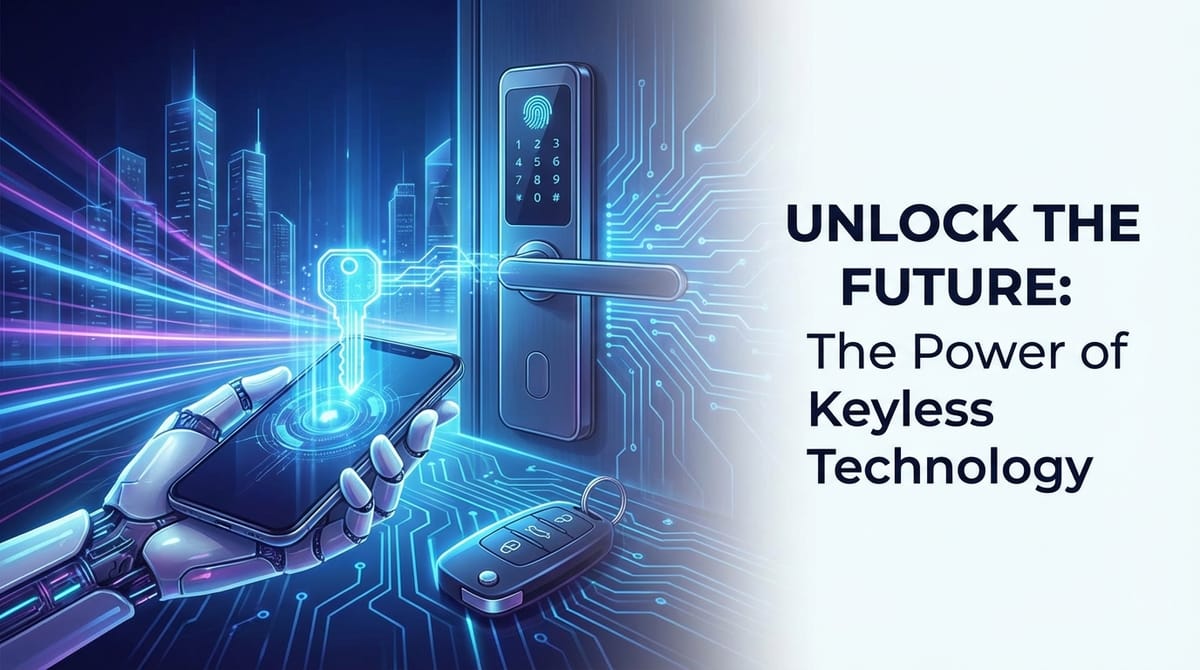
Unlock the Future: The Power of Keyless Technology


In an era defined by rapid technological advancement and an insatiable quest for convenience and security, the humble key – a symbol of access and possession for millennia – is gracefully receding into the annals of history. Its successor, the sophisticated and multifaceted realm of keyless technology, is not merely an incremental upgrade but a profound paradigm shift, redefining our interactions with spaces, vehicles, and even our most sensitive data. This transformation is far more intricate than simply swapping a metal object for a digital code; it represents the culmination of complex engineering, advanced cryptography, and increasingly, the intelligent capabilities of artificial intelligence. From the ancient Egyptians' rudimentary pin tumbler locks to the intricate biometric scanners and ubiquitous smartphone integrations of today, humanity's pursuit of secure and effortless access has been an enduring saga. Keyless technology, at its core, promises not only to eliminate the perennial frustration of lost keys but to weave a tapestry of interconnectedness, control, and unprecedented security that underpins the very fabric of our smart future. This article delves deep into the multifaceted power of keyless technology, exploring its evolution, defining its diverse forms, dissecting its security architecture, and envisioning its transformative impact across industries and daily life, all while acknowledging the crucial digital infrastructure that makes it possible.
1. The Evolutionary Journey of Access Control: From Mechanical Ingenuity to Digital Dominance
The concept of restricting access to valuables or private spaces is as old as civilization itself. For thousands of years, the physical key reigned supreme, a testament to human ingenuity in mechanical engineering. Early locks, dating back to ancient Egypt and Assyria, were often large, cumbersome wooden mechanisms operated by equally substantial metal keys, employing simple pin tumbler or warded designs. These initial iterations, while effective for their time, were primarily about deterrence rather than impregnable security, often susceptible to brute force or rudimentary lock-picking techniques.
The Roman Empire saw advancements, with smaller, more intricate metal locks and keys becoming commonplace, signifying personal wealth and the increasing need for portable security. Yet, for nearly two millennia, the fundamental principle remained unchanged: a uniquely shaped physical object precisely aligning with a corresponding mechanism to grant or deny entry. The Industrial Revolution, a period of unparalleled innovation, brought about mass production techniques, making locks and keys more accessible and standardized, but still inherently mechanical. Locksmithing evolved into a highly specialized craft, constantly adapting to counter new methods of circumvention.
The latter half of the 20th century marked the dawn of the electronic age, gradually ushering in the first wave of what we now recognize as keyless systems. Magnetic strip cards, initially used for financial transactions, found their way into hotel rooms and office buildings, offering a simple electronic alternative to traditional keys. These were followed by proximity cards leveraging RFID (Radio-Frequency Identification) technology, allowing users to simply wave a card near a reader without physical contact, a significant leap in convenience. PIN (Personal Identification Number) keypads provided another layer of electronic access, requiring memorized codes rather than physical tokens.
The true digital transformation, however, gained irreversible momentum with the proliferation of the internet, mobile computing, and the Internet of Things (IoT). Suddenly, access control was no longer a standalone mechanical or electronic function but an integrated component of a larger, connected ecosystem. Biometric authentication, once the stuff of science fiction, became a tangible reality with fingerprint scanners, then facial recognition, and even iris scans, offering a highly personalized and arguably more secure method of identity verification. Smartphones, once mere communication devices, evolved into sophisticated virtual keys, capable of interacting with smart locks via Bluetooth, Wi-Fi, or NFC, and managed through intuitive mobile applications. This convergence transformed access control from a static, physical barrier into a dynamic, intelligent, and often cloud-managed service, laying the groundwork for the comprehensive keyless future we are now rapidly approaching.
2. Defining Keyless Technology: Beyond the Mere Absence of a Key
At its most fundamental level, keyless technology refers to any system that grants or denies access without the use of a traditional, physical key. However, this definition barely scratches the surface of its intricate reality. It encompasses a vast spectrum of sophisticated mechanisms, each leveraging different underlying technologies and offering distinct advantages in terms of convenience, security, and integration. Understanding these diverse forms is crucial to appreciating the breadth and depth of the keyless revolution.
One of the most rapidly advancing categories is Biometric Keyless Systems. These systems rely on unique physiological or behavioral characteristics of an individual for identification. Fingerprint recognition, long a staple in high-security applications and now ubiquitous on smartphones, analyzes the unique ridge patterns on a person's finger. Facial recognition technology maps facial features and contours, often enhanced by AI algorithms to distinguish between live subjects and photographs or masks. Iris and retina scans, while less common in consumer products due to their cost and complexity, offer even higher levels of uniqueness and security, analyzing the intricate patterns of the human eye. Voice recognition, though still facing challenges with accuracy in noisy environments or against sophisticated spoofing attempts, is another emerging biometric modality. The strength of biometrics lies in the "something you are" factor, making it inherently harder to lose, forget, or share than a physical key or code.
Another significant category is Proximity-Based Keyless Systems. These systems grant access when an authorized token or device is brought within a certain range of a reader. RFID (Radio-Frequency Identification) tags, commonly found in key fobs, access cards, or even implanted chips, communicate with readers wirelessly. NFC (Near Field Communication), a subset of RFID, offers a shorter, more secure communication range, making it ideal for mobile payments and increasingly for smartphone-based access where a tap or close proximity is required. Bluetooth Low Energy (BLE) systems allow smartphones or other Bluetooth-enabled devices to communicate with smart locks, enabling hands-free unlocking as a user approaches a door or vehicle. The convenience here is paramount: often, the user doesn't even need to remove their device from their pocket or bag.
Code-Based Keyless Systems are perhaps the most recognizable form after traditional keys. These include electronic keypads requiring a numeric PIN, often seen on garage doors, entry gates, and increasingly on residential smart locks. Advanced versions incorporate features like "scramble code" to prevent shoulder surfing or temporary codes for guests and service providers. While reliant on memory rather than a physical token, the security of code-based systems hinges on the strength and secrecy of the chosen code, making it susceptible to guessing or sharing.
Smartphone-Based Keyless Systems represent a convergence of many technologies, leveraging the power and ubiquitous nature of mobile devices. Smartphones, through dedicated apps, can act as virtual keys, communicating with smart locks via Bluetooth, Wi-Fi, or NFC. This offers unparalleled flexibility, allowing users to lock/unlock from anywhere with an internet connection (via Wi-Fi/cloud integration), share digital keys with others, monitor access logs, and integrate with other smart home devices. The digital car key, an emerging technology, allows smartphones to completely replace traditional car keys, offering seamless entry and start functionality.
Finally, Remote and Cloud-Based Keyless Systems provide centralized management and control, often integrated with the aforementioned access methods. These systems allow administrators or homeowners to manage access permissions, monitor activity logs, and remotely operate locks through web interfaces or mobile applications, often leveraging cloud infrastructure for data storage and processing. This is particularly vital for commercial properties, rental management, and enterprise-level access control, offering scalability and real-time oversight.
Underpinning all these diverse manifestations are sophisticated technological frameworks: robust encryption and cryptography to protect data during transmission and storage, ensuring that access credentials remain secure; secure communication protocols (like TLS/SSL for internet-based systems, or advanced encryption for Bluetooth/NFC) to prevent eavesdropping and tampering; and increasingly, advanced cloud computing platforms that provide the backbone for remote management, data analytics, and seamless integration with other services. The true power of keyless technology lies not just in its individual components but in this intricate web of interconnected systems working harmoniously to provide secure, convenient, and intelligent access.
Table: Comparison of Common Keyless Authentication Methods
| Authentication Method | Description | Key Advantages | Key Challenges | Typical Applications |
|---|---|---|---|---|
| Biometric | Uses unique biological (fingerprint, face, iris) or behavioral (voice, gait) traits. | High security (hard to spoof/share), personalized, convenient (no items to carry). | Privacy concerns (data storage), potential for false positives/negatives, cost. | Smartphones, high-security facilities, time & attendance, border control. |
| Proximity-Based | Grants access when an authorized token/device is near a reader (RFID, NFC, BLE). | Extreme convenience (hands-free possible), fast, suitable for high-traffic areas. | Tokens can be lost/stolen, reader range can be exploited, battery dependency (BLE). | Smart locks, car entry, public transport, corporate access cards, hotel rooms. |
| Code-Based | Requires a memorized PIN or password entered via a keypad or digital interface. | Simple, low-cost implementation, easy to share/revoke temporary access. | Prone to forgetting, "shoulder surfing," brute-force attacks, weak codes. | Garage doors, secure key boxes, residential smart locks, gate access. |
| Smartphone-Based | Utilizes a mobile device as a virtual key via app communication (Bluetooth, Wi-Fi). | Remote control, digital key sharing, activity logging, integration with IoT. | Phone battery dependency, app security, potential for device loss/theft, network issues. | Smart homes, rental properties, automotive (digital car keys), offices. |
| Remote/Cloud-Based | Centralized management and control via web platforms, often integrated with others. | Scalability, real-time monitoring, granular access control, data analytics. | Internet dependency, cybersecurity risks (cloud breaches), vendor lock-in. | Commercial buildings, fleet management, shared workspace, large-scale residential. |
3. The Pillars of Keyless Security: A Multi-Layered Approach to Digital Fortification
While the convenience factor of keyless technology is undeniably appealing, its true power lies in its potential to offer enhanced security, often surpassing the vulnerabilities of traditional mechanical locks. However, achieving this superior security is not trivial; it necessitates a sophisticated, multi-layered approach that addresses threats across the physical, digital, and network domains. The integrity of any keyless system hinges on the strength of these interlocking security pillars.
The foundational layer of digital security in keyless systems is Encryption and Cryptography. When you unlock a door with your smartphone, tap a card, or even use a biometric scanner that communicates with a central system, data is being transmitted. This data – your credentials, authorization requests, and system responses – must be protected from interception and tampering. Robust encryption algorithms, such as AES-256, are employed to scramble this information, rendering it unreadable to unauthorized parties. Cryptographic hashes ensure data integrity, verifying that the information has not been altered during transmission. Public Key Infrastructure (PKI) often plays a role in establishing trusted communication channels, ensuring that both the access device and the lock system are legitimate and not imposters. Without strong encryption, keyless systems would be alarmingly susceptible to eavesdropping and replay attacks, where malicious actors could capture and re-transmit valid unlock signals.
Authentication Mechanisms are the gatekeepers of keyless access, verifying the identity of the user. In the keyless world, this often involves multi-factor authentication (MFA), a critical practice that significantly elevates security. Instead of relying on a single piece of evidence, MFA requires two or more distinct types of verification: something you know (like a PIN), something you have (like a smartphone or RFID card), and something you are (like a fingerprint). For instance, a smart lock might require a user to enter a PIN and scan their fingerprint, or to unlock via a smartphone app after authenticating to the app with a password or facial recognition. While biometrics offer a high degree of uniqueness, they are not foolproof; challenges like "liveness detection" are crucial to prevent spoofing with photos or prosthetic fingerprints. Secure PIN entry mechanisms, such as on-screen keypads that randomize number positions or multi-digit codes that expire, are designed to thwart shoulder surfing and brute-force attacks.
Network Security is paramount for keyless systems that rely on wireless communication. Wi-Fi, Bluetooth, Zigbee, Z-Wave, and cellular networks are the arteries through which access commands flow. These networks must be secured against unauthorized access, data injection, and denial-of-service (DoS) attacks. Strong network encryption (e.g., WPA3 for Wi-Fi), secure pairing protocols for Bluetooth devices, and robust firewall configurations are essential. An insecure network environment can expose keyless systems to vulnerabilities, allowing hackers to potentially intercept credentials or even take control of access points.
Beyond the digital realm, Physical Tamper Protection remains a vital component. Even the most sophisticated software security is useless if the underlying hardware can be easily bypassed. This involves designing locks and access readers with robust physical casings, anti-drill plates, and tamper-detection mechanisms that alert authorities or disable the system if physical attack is detected. Secure mounting, protected wiring, and anti-pry designs are all critical considerations.
Finally, Regular Software Updates and Patch Management form a continuous layer of security. No software is entirely immune to vulnerabilities, and new threats constantly emerge. Manufacturers of keyless devices and their associated apps must provide timely updates to patch discovered weaknesses, improve algorithms, and enhance security features. Users, in turn, must be diligent in applying these updates. Neglecting software maintenance is akin to leaving a digital back door wide open for potential exploitation.
Crucially, in this interconnected ecosystem, the role of an API Gateway cannot be overstated. An API Gateway acts as a central proxy and enforcement point for all API calls between the keyless devices, cloud services, and user applications. It is the first line of defense, handling authentication, authorization, traffic management, and security policies before requests reach the core systems. For example, when a user's smartphone app sends an unlock command to a smart lock manufacturer's cloud server, an API Gateway intercepts this request. It verifies the user's identity, checks their permissions for that specific lock, enforces rate limits to prevent DoS attacks, and can even inspect the content of the request for malicious patterns. This unified management point is essential for scalability and robust security in complex keyless architectures.
For organizations managing a vast array of APIs, including those powering keyless and smart infrastructure, platforms like APIPark become indispensable. As an open-source AI Gateway and API Management Platform, APIPark offers end-to-end API lifecycle management, ensuring that all APIs, whether for smart locks, biometric systems, or integrated IoT devices, are designed, published, invoked, and decommissioned securely and efficiently. Its ability to regulate API management processes, manage traffic forwarding, and control access permissions ensures a robust and secure foundation for any keyless ecosystem, preventing unauthorized API calls and potential data breaches, which is critical for maintaining trust in digital access solutions.
4. Convenience Redefined: The User Experience of Keyless Living
While security is paramount, the widespread adoption and compelling appeal of keyless technology are intrinsically linked to the unparalleled convenience it offers. It represents a fundamental shift from a tedious, often frustrating ritual to a seamless, intuitive, and often invisible interaction that enhances daily life. This redefined convenience permeates every facet of the user experience, from personal homes to complex commercial operations.
One of the most immediate and appreciated benefits is Seamless Access. Gone is the frantic fumbling for keys in pockets or bags, especially when laden with groceries or children. With proximity-based systems, a car might unlock as you approach, or a smart lock might disengage simply by detecting your authorized smartphone within range. Biometric systems allow entry with a touch or a glance, eliminating the need to remember codes or carry physical tokens altogether. This frictionless entry creates a sense of effortless flow, reducing stress and saving precious seconds in our fast-paced lives. For homes, it means a warmer welcome; for offices, a smoother start to the workday.
The power of Remote Management extends access control beyond physical proximity. Imagine needing to let a plumber into your home while you're at work, or granting temporary access to a delivery driver for a secure package drop-off. Keyless systems, often managed through intuitive smartphone apps or web portals, make this not only possible but incredibly simple. Users can grant temporary, time-bound, or recurring digital keys to guests, family members, or service providers, and just as easily revoke them. This flexibility is a game-changer for rental properties, vacation homes, and even busy families coordinating schedules. It eliminates the need for physical key hand-offs, hidden spare keys, or worrying about lost duplicates.
Keyless technology also unlocks the potential for Automated Scenarios when integrated with broader smart home or smart building ecosystems. Upon detecting your authorized entry, the system can trigger a cascade of actions: lights illuminate, the thermostat adjusts to your preferred temperature, music begins to play, and security alarms disarm. Conversely, when the system detects you've left and locked the door, it can automatically turn off lights, adjust climate control for energy savings, and arm the security system. These automated sequences move beyond mere convenience to truly intelligent living, anticipating needs and proactively managing the environment.
The ease of Shared Access is another significant advantage, particularly for multi-user environments. For families, sharing digital keys with children or spouses is instantaneous and revocable. For businesses, managing access for employees, contractors, and visitors becomes a centralized, auditable process. No more tracking physical keys, managing costly rekeying operations, or worrying about unauthorized duplication. Each user can be assigned specific access privileges, only for certain doors and during certain times, offering granular control that physical keys simply cannot match.
Furthermore, keyless systems fundamentally Reduce the Risk of Loss and Theft associated with physical keys. A lost smartphone, while inconvenient, can often be remotely locked or wiped, and digital keys can be immediately revoked and reissued. A lost physical key, however, can necessitate expensive lock changes and leave a property vulnerable until the change is made. The intangible nature of digital access provides a layer of security that transcends the physical world.
For businesses, the logistical and efficiency gains are transformative. Fleet management companies can track vehicle usage, grant specific drivers access to specific vehicles, and monitor their operational hours. Rental property managers can automate guest check-ins and check-outs, generating unique access codes that expire automatically. Shared workspaces can offer flexible access for members without a cumbersome key distribution process. Delivery services can gain secure, one-time access to residential or commercial properties for in-home or secure container deliveries. These operational efficiencies translate directly into cost savings, improved customer satisfaction, and streamlined processes, driving economic benefits across various sectors. The convenience provided by keyless technology isn't just a luxury; it's a strategic asset for modern living and business.
5. Keyless Technology in Diverse Sectors: A Ubiquitous Transformation
The pervasive appeal of keyless technology transcends individual convenience, manifesting as a transformative force across a multitude of sectors. Its adaptability and inherent advantages in security, efficiency, and data insights make it an indispensable tool for modern infrastructure and service delivery.
In the Residential Sector, keyless entry has evolved from a niche luxury to a mainstream expectation. Smart locks, integrated into comprehensive smart home ecosystems, allow homeowners to control access remotely, monitor entry/exit logs, and grant temporary access to visitors or service personnel via their smartphones. For rental properties and vacation rentals, this technology is a game-changer, automating guest check-ins and check-outs, eliminating the need for physical key exchanges, and drastically simplifying property management. Tenants can receive digital keys upon booking confirmation, and these keys automatically expire at the end of their stay, enhancing security and operational efficiency.
The Automotive Industry has been at the forefront of keyless innovation for decades. Keyless entry systems, allowing drivers to unlock doors with a remote fob or simply by approaching the vehicle, have become standard. Push-button start engines have replaced traditional ignition keys, adding convenience and a touch of modernity. The latest frontier is the digital car key, where smartphones completely replace physical car keys, enabling locking, unlocking, and starting the vehicle, along with remote functionalities like pre-conditioning the cabin or sharing access with family members, all through a mobile app. This is particularly relevant for car-sharing services, where seamless, on-demand access is critical.
Commercial and Enterprise environments benefit immensely from sophisticated keyless access control systems. Office buildings, corporate campuses, data centers, and research facilities require robust security, granular access permissions, and comprehensive auditing capabilities. Biometric scanners, RFID badges, and smartphone-based systems ensure that only authorized personnel can access restricted areas, specific rooms, or sensitive equipment. Centralized management platforms allow security teams to instantly revoke access for departing employees, adjust permissions in real-time, and analyze access patterns for potential security breaches, all while providing a detailed audit trail for compliance purposes.
The Hospitality Sector has embraced keyless solutions to enhance guest experience and operational efficiency. Many modern hotels now offer smartphone-based room entry, allowing guests to bypass the front desk and unlock their rooms directly using their mobile devices. This not only streamlines the check-in process but also reduces the environmental impact of plastic key cards and simplifies staff management of lost or unreturned keys.
In Healthcare Facilities, keyless access is critical for both security and operational flow. It ensures secure access to medication storage, patient records, and sensitive treatment areas, restricting entry to authorized medical personnel. At the same time, it facilitates quick, unencumbered access for emergency responders and staff during critical situations, allowing for efficient movement within complex hospital environments without compromising security.
Even Public Transport systems are integrating keyless principles. Digital ticketing on smartphones, using QR codes or NFC, allows for seamless entry onto buses, trains, and subways, replacing paper tickets or physical cards. This not only improves efficiency but also provides valuable data for urban planners to optimize routes and schedules.
The Industrial Sector utilizes keyless technology for plant access, machinery operation, and inventory control. Robust access control systems regulate who can enter manufacturing zones, operate heavy machinery, or access secure warehouses, enhancing safety, preventing theft, and ensuring compliance with operational protocols.
Across all these sectors, the common thread is the pursuit of greater control, efficiency, and security, driven by the adaptable and interconnected nature of keyless technology. Its ability to integrate with existing infrastructure, provide real-time data, and offer flexible management options ensures its continued expansion and innovation, making it a cornerstone of modern operational strategies.
APIPark is a high-performance AI gateway that allows you to securely access the most comprehensive LLM APIs globally on the APIPark platform, including OpenAI, Anthropic, Mistral, Llama2, Google Gemini, and more.Try APIPark now! 👇👇👇
6. The AI Revolution and Keyless Systems: Towards Intelligent Access
The true zenith of keyless technology is realized when it integrates with the transformative power of Artificial Intelligence. AI is not just an additive feature but a fundamental enabler that elevates keyless systems from merely electronic to truly intelligent, adaptive, and proactive. The synergy between AI and keyless access is creating a future where access control is predictive, personalized, and profoundly secure.
One of AI's most impactful contributions is Predictive Access. By analyzing vast datasets of access patterns, user behaviors, time-of-day trends, and even external factors like weather or scheduled events, AI algorithms can anticipate access needs. For instance, an AI-powered smart home system might learn that you typically arrive home at 6 PM on weekdays and proactively prepare to unlock the door as you approach. In a commercial setting, AI can predict peak entry times for different departments, dynamically adjusting resource allocation or pre-authorizing certain groups for quicker entry during high-traffic periods, all while maintaining stringent security protocols. This anticipatory capability transforms access from a reactive action into a seamless, almost invisible experience.
AI significantly enhances Adaptive Biometrics. Traditional biometric systems can sometimes be fooled by high-quality spoofs or struggle with changes in a user's appearance (e.g., facial hair, aging). AI, particularly through machine learning and deep learning, can continuously learn and adapt, improving the accuracy and robustness of biometric authentication over time. It can differentiate between a live human and a photograph with greater precision, even recognizing individuals under varying conditions like different lighting or angles. Furthermore, AI is advancing Behavioral Biometrics, analyzing unique patterns in how a person walks (gait analysis), types on a keypad, or interacts with a touch screen. These subtle, unconscious behaviors add another, often harder-to-spoof, layer of authentication.
For security, AI is a powerful tool for Anomaly Detection. By establishing a baseline of normal access patterns, AI algorithms can swiftly identify deviations that might indicate a security threat. An attempt to access a server room at 3 AM by an employee who never works late, or a sudden burst of failed access attempts from an unusual IP address, would immediately flag an alert. AI can correlate data from various sources – access logs, video surveillance, network traffic – to build a comprehensive picture of potential threats, moving beyond simple rule-based alerts to truly intelligent threat identification.
Beyond security, AI enables profound Personalization. Keyless systems can learn individual preferences, not just for access times but also for environmental settings upon entry. This could extend to automatically adjusting lighting, temperature, or even music based on who has just entered a space, creating a truly tailored and intuitive environment. This level of personalization transforms a utilitarian access point into an intelligent gateway to a comfortable and productive experience.
The integration of such sophisticated AI models into keyless systems relies heavily on robust digital infrastructure, specifically AI Gateway and LLM Gateway technologies. Modern keyless solutions might incorporate various AI services: a computer vision model for facial recognition, a natural language processing (NLP) model for voice commands, or a machine learning model for anomaly detection. An AI Gateway acts as a centralized management point for these diverse AI services. It authenticates and authorizes requests to AI models, manages traffic, routes requests to the correct model, and often provides a unified API interface, abstracting the complexity of different AI service providers and model versions. This is crucial for maintaining security, scalability, and observability of AI interactions within a keyless system.
Moreover, as keyless systems become more advanced, incorporating natural language interfaces for voice control or requiring complex decision-making processes, the need for an LLM Gateway emerges. An LLM Gateway specifically manages interactions with Large Language Models, which might be used for generating dynamic access instructions, providing conversational interfaces for security inquiries, or processing unstructured data for advanced threat intelligence. It ensures secure, efficient, and cost-effective access to these powerful AI models, handling prompt engineering, rate limiting, and output moderation.
This is precisely where products like APIPark shine. As an open-source AI Gateway and API Management Platform, APIPark is specifically designed to facilitate the seamless integration and management of diverse AI models and APIs that power the next generation of intelligent keyless solutions. Its key features, such as the ability to quickly integrate 100+ AI models, provide a unified API format for AI invocation, and encapsulate prompts into REST APIs, make it an invaluable tool for developers building AI-powered keyless systems. By standardizing the request data format across different AI models, APIPark ensures that even as AI models evolve or change, the core application or microservices of the keyless system remain unaffected, significantly simplifying maintenance and reducing costs. This robust AI Gateway capability is foundational for transforming keyless entry into intelligent, predictive access.
7. Challenges and Considerations in the Keyless Landscape: Navigating the Digital Frontier
Despite its immense promise and rapidly expanding adoption, keyless technology is not without its intricate challenges and critical considerations. As we move from physical keys to digital credentials, the nature of the vulnerabilities shifts, demanding a proactive and holistic approach to security, privacy, and user experience. Navigating this digital frontier requires careful attention to both technological and societal implications.
One of the most significant concerns revolves around Privacy. Biometric data, such as fingerprints or facial scans, is inherently unique and sensitive. The collection, storage, and processing of this data raise critical questions about who owns it, how it's secured, and for what purposes it might be used. A breach of biometric data is far more severe than a password leak, as biometrics cannot be easily changed. Regulations like GDPR and CCPA aim to provide frameworks for data protection, but the implementation and enforcement across diverse keyless systems remain a complex undertaking. Users must be assured that their personal data is not only secure but also used transparently and ethically.
Closely related are the multifaceted Cybersecurity Risks. Keyless systems, being interconnected digital entities, are susceptible to a wide array of cyber threats. Hacking attempts can target the underlying software, cloud servers, or communication protocols. Data breaches can expose user credentials, access logs, and other sensitive information. Denial-of-Service (DoS) attacks could incapacitate access systems, leading to frustrating lockouts or security vulnerabilities. Wireless communication channels (Wi-Fi, Bluetooth) can be vulnerable to eavesdropping, jamming, or replay attacks if not properly secured with strong encryption and authentication. The sophisticated nature of these attacks requires continuous vigilance, robust incident response plans, and a commitment to perpetual security updates from manufacturers.
Another practical challenge is Power Dependency. Most electronic keyless systems require power to operate, whether from internal batteries or external electrical sources. While smart locks are designed for long battery life, a dead battery can render a system inoperable, locking users out or, conversely, leaving a property unsecured. Power outages can similarly disrupt externally powered systems. Manufacturers must provide reliable backup power options, mechanical overrides, or clear low-battery warnings to mitigate these risks. Users, too, must be educated on battery maintenance and emergency access procedures.
The nascent and rapidly evolving nature of keyless technology also presents Interoperability Standards as a significant hurdle. The market is fragmented with various manufacturers, communication protocols (Zigbee, Z-Wave, Thread, Matter, Bluetooth, Wi-Fi), and proprietary ecosystems. This lack of universal standards can make it challenging for consumers and businesses to integrate different keyless devices from various brands into a cohesive, interoperable system. The emergence of initiatives like the Matter standard aims to address this by providing a unified protocol for smart home devices, but widespread adoption and implementation will take time.
The Cost of Implementation for advanced keyless systems can be another barrier. While basic keypad locks are relatively affordable, sophisticated biometric systems, enterprise-level access control, or comprehensive smart home integrations often involve substantial upfront investment in hardware, software, installation, and ongoing maintenance. For smaller businesses or individual homeowners, this cost can be prohibitive, even if the long-term benefits in security and efficiency are clear. Balancing cost with desired features and security levels is a constant negotiation.
Finally, User Adoption and Trust are crucial for the widespread success of keyless technology. Overcoming skepticism and resistance to new technologies, particularly those touching personal security and privacy, requires careful communication and demonstrated reliability. Users need to trust that these systems are secure, easy to use, and that their data is protected. A single high-profile security breach or system failure can severely erode public confidence and slow adoption rates. Education, transparent privacy policies, and robust customer support are vital to building and maintaining this trust. Navigating these challenges effectively is essential for keyless technology to truly fulfill its promise as a secure and seamless access solution for the future.
8. The Economic and Societal Impact: Reshaping Industries and Daily Life
The transition to keyless technology is far more than a mere convenience; it's a profound economic and societal force that is reshaping industries, creating new opportunities, and fundamentally altering our daily interactions with the built environment. Its ripple effects are being felt across global markets, urban planning, employment landscapes, and even considerations of accessibility and sustainability.
Economically, the Market Growth for smart locks and advanced access control systems is projected to be exponential. Analysts foresee a multi-billion dollar industry driven by increasing demand from residential, commercial, automotive, and hospitality sectors. This growth fuels innovation in hardware design, software development, AI algorithms, and cybersecurity solutions. Investment in research and development is soaring as companies vie to offer the most secure, integrated, and user-friendly keyless solutions. This healthy competition benefits consumers with better products and drives down costs over time.
This burgeoning industry also leads to significant Job Creation and Transformation. While traditional locksmithing skills may evolve, new roles are emerging rapidly in cybersecurity engineering, IoT development, AI and machine learning, cloud architecture, data analytics, and integration services. Existing roles in property management, security services, and automotive engineering are transforming to incorporate digital access solutions. A workforce skilled in digital security, network protocols, and smart system integration is becoming increasingly vital, prompting new educational programs and training initiatives.
The societal Impact on Urban Planning is becoming increasingly evident. As cities strive to become "smarter," integrated keyless access plays a crucial role. Smart buildings can manage energy consumption more efficiently by knowing who is present and when. Public spaces can deploy smart access for shared resources like bike rentals or community facilities. Parking systems can be optimized with keyless entry and payment. This integration contributes to more efficient, sustainable, and user-friendly urban environments, enabling seamless movement and interaction within a connected city.
Keyless technology also offers significant advancements in Accessibility for People with Disabilities. For individuals with limited mobility or dexterity, fumbling with traditional keys can be a significant challenge. Keyless systems, particularly those activated by voice, facial recognition, or automatic proximity detection, can provide independence and ease of access that was previously unattainable. Smart homes equipped with keyless entry can be tailored to meet specific accessibility needs, improving quality of life and fostering greater inclusion.
Furthermore, there are subtle but tangible Environmental Benefits. The widespread adoption of digital keys reduces the need for physical key production, minimizing the use of metals and plastics. While seemingly minor on an individual scale, collectively, this contributes to a reduction in material consumption and manufacturing waste. The energy efficiency gained from integrated smart home systems, where lighting and climate control are optimized based on occupancy detected by access systems, further adds to the environmental upside.
The keyless revolution fosters a greater sense of control and empowerment for individuals and organizations alike. Homeowners gain peace of mind through remote monitoring and instant access revocation. Businesses achieve unprecedented levels of granular control over their physical spaces, enhancing security and operational efficiency. The convenience it offers translates into more personal time and reduced daily friction. However, with this power comes the responsibility to ensure that these technologies are developed and deployed ethically, protecting individual privacy and safeguarding against potential abuses. The economic and societal implications are profound and multifaceted, solidifying keyless technology's position not just as a futuristic gadget, but as a foundational element of our interconnected and intelligent world.
9. The Road Ahead: Future Trends in Keyless Technology
The journey of keyless technology is far from over; indeed, it is poised for an even more explosive period of innovation, driven by advancements in AI, blockchain, quantum computing, and an ever-increasing demand for seamless connectivity. The future promises access solutions that are not only more secure and convenient but also profoundly intelligent, predictive, and integrated into the very fabric of our environment.
One of the most exciting trends is the move towards Ubiquitous and Continuous Biometrics. Imagine a future where access isn't a one-time verification at the door but a continuous, passive authentication process. Advanced AI-powered systems could monitor gait, posture, even subtle physiological signs to continuously verify identity as someone moves through a secure area. This would eliminate the need for repeated authentication steps, offering unparalleled security without user intervention. Biometric sensors could become embedded not just in dedicated readers but in flooring, cameras, and even furniture, creating an intelligent environment that knows who you are and where you're authorized to be.
Blockchain for Access Management is another disruptive technology on the horizon. Blockchain's decentralized, immutable ledger system offers a novel approach to identity management and access permissions. Instead of relying on a central authority to store and verify access credentials, blockchain could allow for self-sovereign identities where individuals control their own access rights, granting and revoking permissions directly on a secure, transparent ledger. This could significantly enhance security, reduce the risk of centralized data breaches, and foster greater trust in digital access systems. Smart contracts on blockchain could automatically execute access permissions based on predefined conditions, revolutionizing everything from rental agreements to shared vehicle access.
As quantum computing advances, the threat to current encryption standards grows. This necessitates the development of Quantum-Resistant Cryptography for keyless systems. Future keyless solutions will need to implement cryptographic algorithms designed to withstand attacks from quantum computers, ensuring the long-term security of digital access credentials and communication channels. This is a proactive measure to safeguard against future threats to our digital infrastructure.
The vision of Seamless Integration will move beyond the smart home to truly interconnected smart cities and smart infrastructure. Keyless access will become part of a holistic ecosystem where your identity and permissions fluidly enable access to your home, office, public transport, shared vehicles, and even personalized services, all without conscious effort. This level of integration will require robust, standardized communication protocols and a sophisticated underlying digital infrastructure that can manage vast amounts of data and interactions.
Furthermore, AI will empower Predictive Maintenance for keyless systems. By continuously monitoring performance, battery health, sensor data, and usage patterns, AI algorithms can predict potential hardware failures or software glitches before they occur. This allows for proactive maintenance, preventing frustrating lockouts or security vulnerabilities, and ensuring the uninterrupted operation of critical access points.
Finally, Hyper-Personalization will take the user experience to unprecedented levels. AI will not only recognize who you are but anticipate your needs and preferences. Access to your home could trigger specific lighting scenes, music playlists, and even brewing your coffee, all tailored to the individual entering the space at that particular time. For commercial spaces, meeting rooms could automatically configure themselves based on the attendees, adjusting displays, climate, and even network access.
To realize these ambitious future visions, the role of advanced API Management and robust AI/LLM Gateways will only grow in importance. As systems become more distributed, intelligent, and interconnected, managing the thousands of APIs and AI model interactions will be a monumental task. Platforms like APIPark will be indispensable. Its capabilities as an open-source AI Gateway and API Management Platform – including unified API formats, quick integration of diverse AI models, and end-to-end API lifecycle management – are precisely what will enable developers and enterprises to build and scale these complex, intelligent keyless systems securely and efficiently. By providing a secure and managed conduit for all these digital interactions, APIPark ensures that the future of keyless technology is not just innovative but also resilient, scalable, and trustworthy. The road ahead promises a world where access is not just keyless, but truly intelligent, intuitive, and an integral part of our ambient digital existence.
Conclusion
The journey from the cumbersome mechanical key to the sophisticated digital access systems of today marks one of humanity's most enduring quests: the pursuit of convenience, security, and control over our physical and digital domains. Keyless technology, far from being a mere novelty, stands as a testament to this relentless innovation, offering a profound redefinition of how we interact with spaces, vehicles, and information. We have explored its rich evolution, from ancient tumblers to modern transistors, and dissected its diverse forms, from biometric precision to the seamless integration with our smartphones and cloud infrastructure.
The true power of keyless systems lies in their multi-layered security architecture, employing advanced encryption, multi-factor authentication, robust network safeguards, and continuous software vigilance to create a digital fortification far superior to its mechanical predecessors. This security, coupled with unparalleled convenience—ranging from seamless access and remote management to automated scenarios and personalized experiences—has made keyless living an increasingly appealing and practical reality across residential, automotive, commercial, and even healthcare sectors.
Furthermore, the integration of Artificial Intelligence is elevating keyless technology to an entirely new plane, enabling predictive access, adaptive biometrics, anomaly detection, and hyper-personalization. This AI-driven evolution transforms static access points into intelligent, anticipatory gateways that learn, adapt, and proactively enhance security and user experience. Crucially, the backbone of this intelligent transformation relies heavily on sophisticated digital infrastructure, particularly robust API Gateways, AI Gateways, and LLM Gateways. These platforms are indispensable for securely managing the complex interactions between diverse devices, cloud services, and the myriad AI models that empower modern keyless solutions. Products like APIPark, an open-source AI Gateway and API Management Platform, are foundational in enabling this intricate ecosystem, providing the tools for quick AI model integration, unified API formats, and end-to-end API lifecycle management, ensuring that the future of intelligent access is not only innovative but also secure and scalable.
While challenges remain—concerning privacy, cybersecurity, power dependency, and interoperability—the continuous innovation and commitment to robust solutions are paving the way for a truly ubiquitous and intelligent keyless future. Its economic and societal impacts are already profound, reshaping industries, creating new jobs, and contributing to smarter, more accessible urban environments. The road ahead promises even more transformative advancements, from quantum-resistant cryptography to blockchain-driven access and pervasive, continuous biometrics.
In essence, keyless technology is more than just about unlocking a door; it's about unlocking a future of seamless connectivity, granular control, and unprecedented confidence in a hyper-connected world. It represents a paradigm shift from simple access to intelligent, personalized, and deeply integrated interaction with our environment, fundamentally enhancing convenience, security, and efficiency for individuals and enterprises alike.
5 Frequently Asked Questions (FAQs) about Keyless Technology
1. Is keyless technology truly more secure than traditional physical keys? Yes, generally keyless technology can offer superior security compared to traditional physical keys, but its effectiveness depends heavily on the system's design and implementation. While physical keys can be lost, stolen, or duplicated, well-designed keyless systems leverage strong encryption, multi-factor authentication (MFA), and robust network security. They also provide audit trails and remote management capabilities, allowing users to track access events, revoke permissions instantly, and receive alerts for suspicious activity. However, vulnerabilities can arise from poor security practices (e.g., weak PINs), software bugs, or unsecured network connections, emphasizing the need for reputable products and regular updates.
2. What happens if the power goes out or the battery dies on a keyless lock? This is a common and valid concern. Most reputable keyless systems are designed with backup solutions. Many smart locks include a traditional key override, allowing you to use a physical key as a failsafe. Others incorporate external terminals where you can temporarily connect a 9V battery to provide enough power for an emergency unlock. For systems reliant on external power, built-in backup batteries or integration with uninterruptible power supplies (UPS) are common in commercial or high-security applications. Manufacturers usually provide clear instructions for such scenarios, and it's essential for users to be aware of and test these backup options.
3. Can keyless systems be hacked, and how are manufacturers addressing this? Yes, like any internet-connected or electronic device, keyless systems are susceptible to various hacking attempts, including data breaches, denial-of-service attacks, and exploitation of software vulnerabilities. Manufacturers address this through continuous efforts in several key areas: * Strong Encryption: Implementing industry-standard encryption protocols (e.g., AES-256) for all data transmission and storage. * Secure API Gateways: Utilizing platforms like APIPark to manage and secure all API interactions between devices, cloud services, and user applications, acting as a crucial security layer. * Regular Software Updates: Releasing frequent firmware and software updates to patch discovered vulnerabilities and enhance security features. * Multi-Factor Authentication (MFA): Encouraging or requiring MFA for user accounts to add layers of verification. * Penetration Testing: Regularly conducting security audits and penetration testing to identify and rectify weaknesses. * Bug Bounty Programs: Engaging ethical hackers to find and report vulnerabilities for a reward.
4. How does AI enhance the security and convenience of keyless technology? AI significantly elevates keyless technology in several ways: * Enhanced Biometrics: AI improves the accuracy and anti-spoofing capabilities of facial, fingerprint, and voice recognition, making them more reliable and secure. * Anomaly Detection: By learning normal access patterns, AI can detect unusual behavior or unauthorized attempts in real-time, flagging potential security breaches faster than human monitoring. * Predictive Access: AI can anticipate user needs based on learned routines and external factors, proactively preparing systems for entry, thereby enhancing convenience. * Personalization: AI enables systems to adapt to individual preferences, adjusting environmental settings upon entry (e.g., lighting, temperature). * Efficient Management: AI can optimize resource allocation and traffic management for large-scale access control systems, improving operational efficiency. The integration and management of these diverse AI models are often facilitated by specialized AI Gateway platforms.
5. What is the role of an API Gateway in a keyless access system, and why is it important? An API Gateway plays a crucial and multifaceted role in keyless access systems. It acts as a single entry point for all API calls between keyless devices (like smart locks or biometric scanners), cloud services (for remote management and data storage), and user applications (like smartphone apps). Its importance stems from several functions: * Security: It enforces authentication, authorization, and security policies, protecting backend systems from direct exposure and filtering out malicious requests. * Traffic Management: It handles request routing, load balancing, and rate limiting, ensuring system stability and preventing denial-of-service attacks. * Protocol Translation: It can standardize API requests, allowing different devices and services to communicate seamlessly, even if they use varying underlying protocols. * Monitoring and Logging: It provides centralized logging and monitoring of all API traffic, crucial for auditing, troubleshooting, and identifying security threats. * Scalability: By abstracting backend services, an API Gateway makes it easier to scale the entire keyless infrastructure to accommodate growth in users and devices. For complex systems integrating AI models, an AI Gateway or LLM Gateway specifically extends these capabilities to manage AI-specific API calls.
🚀You can securely and efficiently call the OpenAI API on APIPark in just two steps:
Step 1: Deploy the APIPark AI gateway in 5 minutes.
APIPark is developed based on Golang, offering strong product performance and low development and maintenance costs. You can deploy APIPark with a single command line.
curl -sSO https://download.apipark.com/install/quick-start.sh; bash quick-start.sh

In my experience, you can see the successful deployment interface within 5 to 10 minutes. Then, you can log in to APIPark using your account.

Step 2: Call the OpenAI API.