Unlock the Power of LLM Proxy: Boost Your AI Applications


In an era increasingly defined by artificial intelligence, Large Language Models (LLMs) have emerged as revolutionary tools, reshaping industries from healthcare to finance, and from customer service to creative content generation. These sophisticated models, capable of understanding, generating, and manipulating human language with uncanny proficiency, are no longer confined to academic research; they are rapidly becoming the bedrock of innovative applications across the enterprise landscape. However, integrating and managing these powerful yet complex AI assets effectively within real-world applications presents a unique set of challenges. Developers and organizations grappling with diverse LLM providers, fluctuating costs, stringent security requirements, performance bottlenecks, and the sheer complexity of orchestrating multiple AI services often find themselves at a crossroads. The promise of AI is immense, but its practical deployment often encounters significant friction.
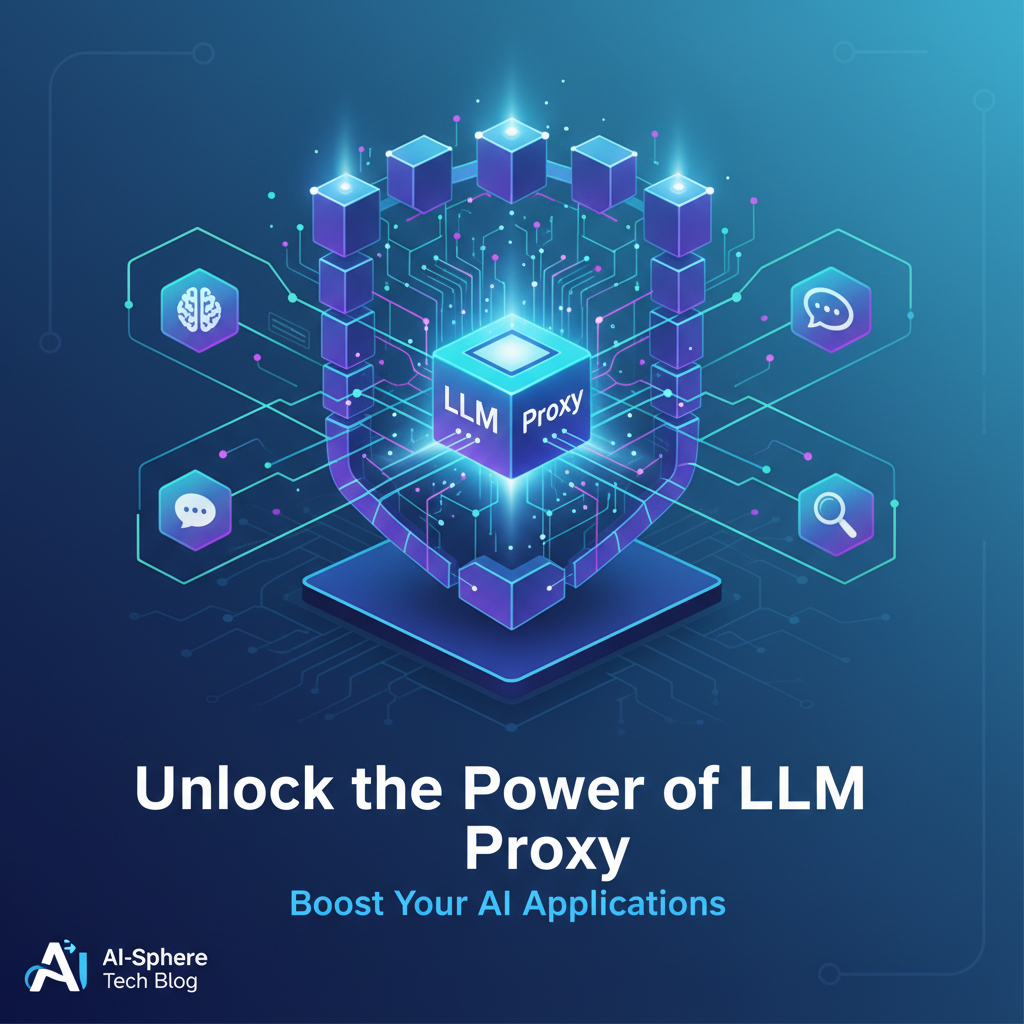
This comprehensive guide delves into the transformative solution that addresses these very challenges: the LLM Proxy, often interchangeably referred to as an LLM Gateway or a broader AI Gateway. More than just a simple pass-through mechanism, an LLM Proxy acts as an intelligent, robust middleware layer designed to abstract away the inherent complexities of interacting with various LLM providers. It serves as the strategic control point for all AI-related traffic, offering a centralized platform to manage, secure, optimize, and observe your AI applications. By strategically implementing an LLM Proxy, organizations can unlock unprecedented levels of scalability, enhance security postures, achieve significant cost efficiencies, and empower their development teams to build more resilient and performant AI-driven products. It is the indispensable architectural component that bridges the gap between raw LLM power and seamless, production-ready AI integration, ensuring that your journey into advanced AI is not just aspirational, but practical and sustainable.
What Exactly is an LLM Proxy? Demystifying the AI Gateway
To fully appreciate the impact of an LLM Proxy, it's crucial to understand its fundamental nature and purpose. At its core, an LLM Proxy is an intermediary server that sits between your application (or microservices) and one or more Large Language Model providers. Think of it as a sophisticated traffic controller and a universal translator for your AI interactions. Instead of your application directly sending requests to, say, OpenAI, Google Gemini, Anthropic Claude, or a self-hosted open-source model like Llama, it sends all its AI-related requests to the LLM Proxy. The proxy then intelligently routes these requests to the appropriate LLM provider, handles the specific API calls, processes the responses, and returns them to your application in a standardized, consistent format.
This concept isn't entirely new; it draws parallels from the well-established domain of API Gateways used for traditional RESTful services. Just as an API Gateway centralizes authentication, rate limiting, logging, and routing for diverse microservices, an AI Gateway specializing in LLMs extends these capabilities to the unique nuances of AI models. However, an LLM Proxy goes significantly beyond a generic reverse proxy. While a reverse proxy might simply forward requests, an LLM Proxy is deeply aware of the semantics of LLM interactions. It understands prompts, responses, token counts, model capabilities, and the specific authentication mechanisms required by different providers. This specialized intelligence allows it to perform functions that are critical for modern AI deployments but are often overlooked or cumbersome to implement directly within each application.
Consider the diverse ecosystem of LLMs available today. Each provider might have slightly different API endpoints, authentication methods (API keys, OAuth tokens), rate limits, and even data formats for prompts and responses. Integrating even two or three different LLMs directly into an application can quickly lead to a tangled web of conditional logic, redundant code, and significant maintenance overhead. The LLM Gateway acts as an abstraction layer, normalizing these disparate interfaces into a single, cohesive API that your application can interact with. This dramatically simplifies the development process, reducing the burden on your engineering team and accelerating time-to-market for AI-powered features.
Moreover, an LLM Proxy is not merely a passive conduit. It actively enhances the AI workflow by embedding crucial functionalities directly into the request-response cycle. This includes, but is not limited to, caching frequent requests to reduce latency and cost, load balancing requests across multiple instances or even different providers to ensure high availability, implementing robust security measures like data masking and centralized authentication, and providing granular logging and analytics for unparalleled observability. In essence, it transforms raw LLM access into a managed, optimized, and secure service, thereby becoming an indispensable component in any serious AI infrastructure. Without such an intelligent intermediary, organizations risk fragmented AI deployments, spiraling costs, security vulnerabilities, and a severe hindrance to innovation.
The Multifaceted Benefits of an LLM Proxy: Revolutionizing AI Application Management
The strategic implementation of an LLM Proxy fundamentally transforms how organizations interact with and leverage artificial intelligence. It's not merely an optional addition; it's an essential architectural component that unlocks a cascade of benefits, addressing critical pain points and paving the way for more robust, scalable, and cost-efficient AI applications. Let's delve into the myriad advantages that an LLM Gateway brings to the table.
A. Enhanced Performance and Reliability: Building Resilient AI Systems
Performance and reliability are paramount for any production-grade application, and AI services are no exception. The inherent nature of LLM interactions – often involving network latency, potential provider downtimes, and varying response times – makes these aspects particularly challenging. An LLM Proxy acts as a crucial layer to mitigate these issues, significantly boosting the responsiveness and stability of your AI-powered applications.
One of the most immediate benefits is caching mechanisms. Many LLM requests, especially those involving common prompts or frequently asked questions, yield identical or very similar responses over time. An intelligent LLM Proxy can cache these responses, serving subsequent identical requests directly from its cache rather than forwarding them to the LLM provider. This drastically reduces latency, often cutting response times from hundreds of milliseconds or even seconds down to single-digit milliseconds. Furthermore, caching translates directly into cost savings, as you only pay for the initial LLM inference, not for every subsequent identical request. This is particularly valuable for applications with high query volumes for static or slowly changing information, such as knowledge base lookups or fixed summarization tasks.
Beyond caching, an LLM Proxy enables sophisticated load balancing across multiple models or providers. Imagine a scenario where your primary LLM provider experiences a temporary outage or performance degradation. Without a proxy, your application would simply fail. With an LLM Gateway, you can configure it to automatically detect such issues and intelligently route traffic to an alternative provider or another instance of the same model. This ensures high availability and resilience, making your AI applications much more robust against external disruptions. For instance, if OpenAI's API is slow, the proxy could temporarily divert requests to Google Gemini or Anthropic Claude, or even a local open-source model, based on predefined rules or real-time performance metrics. This failover capability is indispensable for mission-critical AI applications where uninterrupted service is a requirement.
Furthermore, request batching and optimization can significantly improve throughput. Rather than sending individual requests one by one, an LLM Proxy can aggregate multiple smaller requests into a single, larger request to the underlying LLM if the provider supports it, or optimize the way requests are sent. This can reduce the overhead of multiple network round trips and potentially lead to better resource utilization on the LLM provider's side, thereby improving overall system throughput and reducing the total time required to process a batch of AI tasks.
Finally, an LLM Proxy introduces retries and circuit breakers, essential patterns for building fault-tolerant systems. If an LLM call fails due to a transient network error or a temporary service issue, the proxy can be configured to automatically retry the request after a short delay, potentially several times, before failing definitively. This prevents many intermittent issues from impacting the end-user experience. A circuit breaker pattern, on the other hand, monitors for a high rate of failures to a particular LLM service. If the failure rate exceeds a certain threshold, the circuit "trips," and the proxy temporarily stops sending requests to that service, instead failing fast or routing to an alternative. This prevents an unhealthy upstream service from overwhelming the entire system with cascading failures, allowing it time to recover before traffic is reintroduced. Together, these features make your AI applications significantly more reliable and capable of handling real-world network and service fluctuations.
B. Cost Optimization and Control: Managing Your AI Budget Intelligently
The operational costs associated with consuming LLM services can quickly become substantial, especially with increasing usage and the pay-per-token or pay-per-call models prevalent among providers. An LLM Proxy provides granular control and sophisticated mechanisms to actively manage and reduce these expenditures, transforming AI usage from a potential cost center into a predictable, optimized investment.
One of the most powerful cost-saving features is intelligent routing based on cost and capability. Not all LLM tasks require the most advanced, and consequently most expensive, models. For example, a simple sentiment analysis might be perfectly handled by a smaller, cheaper model, while a complex summarization of a lengthy document might necessitate a more powerful (and costly) LLM. An LLM Proxy can be configured with rules that route requests based on their complexity, required accuracy, prompt length, or other metadata to the most cost-effective model that meets the application's needs. This dynamic routing ensures that you only pay for the computational power you truly require, avoiding the common pitfall of over-provisioning for simpler tasks. It allows organizations to experiment with different models from various providers, finding the optimal balance between performance and price.
Usage tracking and detailed analytics are critical components for cost control. An LLM Gateway logs every request, its associated cost (based on tokens used or API calls), and attributes like the originating application or user. This rich dataset allows for real-time monitoring of LLM spend across different departments, projects, or features. Businesses can identify usage patterns, detect anomalies (e.g., sudden spikes in calls), pinpoint areas of high consumption, and attribute costs accurately. This visibility is invaluable for budget forecasting, internal chargebacks, and identifying opportunities for optimization. Without a centralized proxy, gathering such comprehensive cost data across multiple LLM providers would be a monumental and often inaccurate task.
Furthermore, rate limiting and quota management are essential tools to prevent unexpected cost spikes due to excessive or erroneous calls. An LLM Proxy allows administrators to set specific limits on the number of requests an application, user, or API key can make within a given timeframe. For instance, a development environment might have a much lower rate limit than a production application. This not only safeguards against runaway costs but also protects against potential abuse or misconfigurations that could inadvertently trigger thousands of expensive LLM calls. Quotas can be assigned to different teams or projects, ensuring that each adheres to its allocated budget and preventing one team's high usage from impacting others or depleting the overall organizational budget. This granular control over API consumption ensures predictable spending and aligns AI usage with financial objectives.
C. Robust Security and Access Management: Fortifying Your AI Perimeter
Security is paramount when dealing with sensitive data, intellectual property, and critical business operations, all of which are increasingly intertwined with AI applications. An LLM Proxy serves as a vital security enforcer, providing a centralized and robust layer of protection for your AI interactions, significantly enhancing your security posture compared to direct LLM access.
The proxy offers centralized authentication and authorization, acting as a single point of control for all API keys, access tokens, and user credentials required to interact with LLM providers. Instead of embedding sensitive API keys directly within each application (a common security anti-pattern), applications authenticate with the proxy, and the proxy then manages the secure transmission of credentials to the respective LLM. This allows for easier key rotation, revocation, and management, drastically reducing the attack surface. Furthermore, authorization rules can be enforced at the proxy level, ensuring that only authorized applications or users can access specific LLM models or perform certain types of requests, even if they possess a valid proxy token. This multi-layered access control is crucial for maintaining data integrity and preventing unauthorized usage.
A critical security feature unique to AI interactions is data anonymization and redaction. Many LLM prompts might inadvertently contain sensitive identifiable information (PII), confidential business data, or protected health information (PHI). Sending this raw data directly to third-party LLM providers can lead to severe privacy violations and compliance issues. An intelligent LLM Proxy can be configured to automatically detect and redact, mask, or anonymize sensitive data within prompts before they are forwarded to the LLM. For instance, it could identify credit card numbers, email addresses, or patient names and replace them with generic placeholders or hashed values. This proactive data sanitization ensures that your sensitive information remains within your control, significantly mitigating the risks of data breaches and ensuring compliance with regulations like GDPR, HIPAA, or CCPA.
API key management and rotation are simplified and made more secure. Instead of individual applications managing their own API keys for different providers, the proxy centralizes this function. It can automatically rotate provider API keys at predefined intervals, ensuring that even if a key is compromised, its validity period is limited. This reduces the window of vulnerability and enhances the overall security hygiene of your AI infrastructure.
Comprehensive logging and audit trails are another cornerstone of security and compliance. Every interaction with the LLM through the proxy – every prompt, response, user, application, and timestamp – is meticulously logged. This provides an immutable audit trail that is invaluable for forensic analysis in case of a security incident, proving compliance with regulatory requirements, and understanding exactly how AI is being used across the organization. This level of granular visibility is exceedingly difficult to achieve without a centralized AI Gateway.
Finally, an advanced AI Gateway can offer threat detection and prevention mechanisms, specifically tailored for LLM interactions. This includes capabilities to identify and potentially block malicious prompt injection attempts, where attackers try to manipulate the LLM's behavior by inserting harmful instructions into the prompt. The proxy can analyze incoming prompts for suspicious patterns or known attack vectors, adding an extra layer of defense against AI-specific security threats. This proactive protection ensures that your LLMs are used as intended and are not vulnerable to manipulation that could lead to data leakage, unauthorized actions, or undesirable outputs.
D. Simplified Integration and Development: Streamlining AI Adoption
The complexity of integrating diverse LLM providers into applications can be a significant hurdle for developers. Each provider often comes with its own unique API specifications, client libraries, authentication schemes, and data models. This fragmentation creates considerable overhead and slows down the development cycle. An LLM Proxy acts as a powerful abstraction layer, dramatically simplifying the integration process and empowering developers to build AI applications more efficiently.
The most profound benefit here is a unified API interface. Regardless of whether your application intends to use OpenAI, Google, Anthropic, or a custom open-source model, the application only ever interacts with a single, consistent API exposed by the LLM Proxy. The proxy translates your standardized request into the specific format required by the chosen underlying LLM provider. This means developers don't need to learn and maintain different client libraries or understand the subtle differences in each provider's API. A single integration point for all AI capabilities vastly reduces code complexity, minimizes boilerplate, and accelerates feature development. For instance, if you decide to switch from OpenAI's GPT-4 to Google's Gemini Pro for a particular task, your application code remains unchanged; only the proxy's routing configuration needs to be updated. This level of abstraction is a game-changer for developer productivity and agility.
Prompt templating and management are also significantly enhanced by an LLM Proxy. Prompts are the core of LLM interactions, and their effectiveness often depends on careful crafting and iterative refinement. An LLM Gateway can store, version, and manage a library of prompts as templates. Developers can simply reference a prompt template by name and provide the necessary variables, rather than embedding raw, complex prompts directly into their application code. This facilitates A/B testing of different prompt versions, ensures consistency across applications, and allows prompt engineers to update or refine prompts centrally without requiring application code deployments. Such centralized prompt management is crucial for maintaining prompt quality, experimenting with different strategies, and rapidly adapting to new LLM capabilities or application requirements.
Furthermore, an LLM Proxy facilitates seamless model versioning and migration. LLM providers frequently release new model versions (e.g., GPT-3.5 to GPT-4, Llama 2 to Llama 3). These updates can introduce breaking changes or offer significant performance improvements. Without a proxy, upgrading to a new model version would require updating every application that uses it. With an LLM Gateway, you can configure it to route specific applications or even individual requests to different model versions. This allows for controlled rollouts, gradual migrations, and the ability to easily revert to an older version if issues arise, all without impacting the application's codebase. This flexibility ensures that your applications can leverage the latest AI advancements with minimal disruption and maximum control.
To further simplify integration, many robust AI Gateway solutions, like APIPark, also offer prompt encapsulation into REST APIs. This powerful feature allows users to combine a specific AI model with a custom, pre-defined prompt to create a new, dedicated REST API endpoint. For example, you could define a prompt for "sentiment analysis of a given text" and expose it as a simple /sentiment API endpoint. Your application then just sends the text to this API, and the gateway handles the prompt construction, LLM invocation, and response parsing. This significantly simplifies AI usage, making complex AI functionalities accessible through straightforward API calls that even non-AI specialists can easily integrate, reducing maintenance costs and accelerating the development of specialized AI services. APIPark specifically highlights its capability to integrate over 100 AI models with a unified management system and standardize the request data format across all AI models, ensuring that changes in AI models or prompts do not affect the application or microservices. This embodies the core principles of simplified integration and reduced maintenance.
E. Advanced Observability and Analytics: Gaining Insights into AI Usage
Understanding how your AI applications are performing, what they are costing, and how users are interacting with them is crucial for continuous improvement and strategic decision-making. An LLM Proxy provides a consolidated platform for capturing, processing, and visualizing this vital data, offering unparalleled observability and analytics capabilities.
Detailed request/response logging is a foundational element. Every interaction passing through the LLM Gateway – the exact prompt sent, the complete response received, the tokens consumed, the latency, the specific LLM model used, the originating application, and the timestamp – is meticulously recorded. This wealth of data is invaluable for debugging issues, conducting post-mortem analysis of failures, ensuring compliance with data governance policies, and providing a comprehensive audit trail. If a user complains about an unexpected LLM output, developers can easily trace the exact prompt that was sent and the response that was received, identifying whether the issue lies with the prompt itself, the model, or the application's interpretation.
Beyond raw logs, an LLM Proxy processes this data to generate actionable performance metrics. This includes aggregate data on latency (average, p90, p99), error rates (per model, per application), and throughput (requests per second). These metrics provide a real-time pulse on the health and efficiency of your AI services, allowing operations teams to quickly identify performance degradations, anticipate potential bottlenecks, and proactively address issues before they impact end-users. Dashboards can visualize these trends, offering a clear overview of system health at a glance.
Equally important are cost metrics, which the proxy can provide with fine-grained detail. Organizations can track LLM costs per user, per application, per team, or per specific LLM model. This granular breakdown enables accurate cost allocation, budget tracking against specific projects, and identification of areas where cost optimization strategies (like intelligent routing or caching) are having the most impact. This financial transparency is critical for effective resource management and demonstrating the ROI of AI investments.
Finally, user behavior analytics derived from proxy logs can offer deeper insights into how LLMs are being utilized. By analyzing the types of prompts being sent, the frequency of certain requests, and the models preferred by different user segments, businesses can gain a better understanding of user needs, identify new opportunities for AI features, and refine existing ones. For example, if a particular AI-powered feature sees unusually high usage for a specific type of query, it might indicate a strong user demand that could be further developed. This data-driven approach ensures that AI development remains aligned with user value and business objectives. The extensive logging capabilities and powerful data analysis features of platforms like APIPark exemplify this, providing businesses with the tools to trace and troubleshoot issues, monitor long-term trends, and perform preventive maintenance.
F. Mitigating Vendor Lock-in: Ensuring Flexibility and Strategic Agility
In the rapidly evolving landscape of Large Language Models, relying heavily on a single provider can introduce significant risks, including unpredictable pricing changes, shifts in service terms, or even the deprecation of favored models. Vendor lock-in can stifle innovation and limit strategic options. An LLM Proxy offers a powerful defense against this by providing a critical layer of abstraction that promotes flexibility and strategic agility.
The core mechanism for mitigating vendor lock-in is the ability to switch LLM providers with minimal application changes. Because your application interacts only with the standardized API exposed by the proxy, the underlying LLM provider becomes an implementation detail. If a new, more cost-effective, or higher-performing model emerges from a different vendor, or if your current provider significantly increases prices or alters their API, you can update the proxy's configuration to route traffic to the new provider without modifying a single line of code in your core application. This ensures business continuity and protects your investments in application development from external changes beyond your control. It grants organizations the freedom to continuously evaluate and choose the best-of-breed LLM for each specific task based on real-time performance, cost, and feature availability.
An AI Gateway also enables easy experimentation with different models, whether proprietary (like GPT-4) or open-source (like Llama 3, Falcon). Developers can easily configure the proxy to A/B test different models for a given use case, comparing their performance, accuracy, and cost in real-world scenarios. This iterative experimentation is crucial for finding the optimal model fit and pushing the boundaries of what's possible with AI. It democratizes access to a broader range of AI capabilities, allowing organizations to leverage the strengths of various models rather than being confined to the limitations of one. For instance, a small, fine-tuned open-source model might be sufficient and more cost-effective for a very specific task, while a powerful general-purpose model is reserved for more complex, diverse requests.
Ultimately, an LLM Proxy future-proofs your AI strategy against the dynamic nature of the LLM market. As new models emerge, existing ones evolve, and pricing structures shift, the proxy ensures that your core applications remain decoupled from these fluctuations. This strategic independence allows you to adapt quickly to market changes, maintain competitive advantage, and ensure that your AI infrastructure is resilient and capable of evolving with the technology itself. It transforms the challenge of choosing an LLM into an opportunity for continuous optimization and innovation, rather than a commitment that locks you into a single path.
G. Compliance and Governance: Ensuring Ethical and Legal AI Usage
In an increasingly regulated world, especially concerning data privacy and ethical AI use, compliance and robust governance frameworks are non-negotiable. Deploying LLMs, which often handle vast amounts of data and can generate content with significant implications, requires careful attention to these areas. An LLM Proxy provides a centralized control point that greatly simplifies the enforcement of compliance policies and governance rules.
One of the primary contributions is enabling strict data residency and privacy controls. For many industries and geographies, there are legal requirements that dictate where data must be processed and stored. If your LLM provider operates in a region that doesn't meet these requirements, sending raw data directly can be a compliance breach. An AI Gateway can be configured to enforce data residency rules by routing requests only to LLM providers or specific data centers that comply with your geographic and regulatory mandates. Coupled with data anonymization features, this ensures that sensitive information is never processed in unauthorized jurisdictions, helping organizations adhere to regulations such as GDPR, CCPA, or industry-specific privacy laws.
Furthermore, an LLM Proxy facilitates adherence to industry-specific regulations. Whether it's HIPAA for healthcare data, PCI DSS for financial transactions, or various national security standards, AI applications must often conform to complex regulatory landscapes. The proxy can enforce specific data handling policies, access controls, and auditing requirements that are mandated by these regulations. For example, it can ensure that only encrypted data is sent to LLMs, or that responses are vetted for specific types of prohibited content before being returned to the application. This centralized enforcement mechanism is far more reliable and auditable than trying to implement compliance checks within each individual application.
Finally, the proxy provides a platform for centralized policy enforcement across all AI interactions. This encompasses not only data privacy and security but also responsible AI usage guidelines. Organizations can define policies for acceptable prompt content (e.g., preventing hate speech, illegal content), response vetting (e.g., identifying and blocking biased outputs), and usage limitations. The LLM Gateway acts as the gatekeeper, ensuring that all AI interactions align with the organization's ethical guidelines and legal obligations. This proactive governance layer is crucial for building trust in AI systems and mitigating potential reputational or legal risks associated with their misuse or unintended behavior. The detailed logging and audit capabilities mentioned earlier further support compliance by providing irrefutable evidence of adherence to these policies.
Key Features to Look for in an LLM Proxy / AI Gateway
When evaluating solutions for an LLM Proxy or AI Gateway, certain features stand out as critical for achieving the full spectrum of benefits discussed. A robust and effective gateway should be more than a simple pass-through; it should be an intelligent, flexible, and secure control plane for all your AI interactions. Understanding these key capabilities will empower organizations to make informed decisions and select a platform that truly unlocks the potential of their AI applications.
1. Unified API Abstraction: This is arguably the most crucial feature for mitigating vendor lock-in and simplifying development. The proxy should present a single, consistent API interface to your applications, regardless of the underlying LLM provider. It should handle the translation of standardized requests and responses to and from provider-specific formats (e.g., different JSON structures, authentication headers). This includes support for various LLM types (chat models, embedding models, image generation models if applicable) under a single umbrella. A platform like APIPark excels here by offering a unified API format for AI invocation across 100+ models, ensuring application logic remains unaffected by underlying model changes.
2. Advanced Routing Capabilities: A sophisticated LLM Proxy needs intelligent routing logic. This means the ability to direct requests to specific LLM models or providers based on a variety of criteria, such as: * Cost: Route to the cheapest model that meets quality requirements. * Performance: Route to the fastest responding model. * Model Availability: Failover to alternative models/providers during outages. * Specific Request Parameters: Route based on prompt complexity, user role, or application ID. * Load Balancing: Distribute requests evenly or weighted across multiple instances or models. * Latency-based Routing: Direct requests to models with the lowest observed latency.
3. Caching and Persistency Layers: To enhance performance and reduce costs, the proxy must support configurable caching. This includes: * Response Caching: Store and retrieve identical LLM responses to avoid redundant calls. * Semantic Caching: Potentially leverage embeddings to identify semantically similar requests and serve cached responses, even if the prompt isn't an exact match. * Configurable TTLs (Time-To-Live): Control how long responses are cached.
4. Robust Security Features: Security should be baked into the core of the proxy: * Centralized Authentication & Authorization: Manage API keys, OAuth tokens, and user access roles for all LLMs from a single point. * Data Masking/Redaction: Automatically identify and remove sensitive information from prompts before sending them to LLMs. * API Key Rotation & Management: Securely manage provider API keys, including automated rotation. * Prompt Injection Mitigation: Techniques to detect and prevent malicious prompt injection attacks. * Role-Based Access Control (RBAC): Granular permissions for who can access which models or features of the proxy itself.
5. Comprehensive Observability and Analytics: Visibility into AI usage is non-negotiable: * Detailed Request Logging: Capture every prompt, response, latency, token count, and cost. * Real-time Monitoring: Dashboards showing performance metrics (latency, error rates, throughput) and cost breakdowns. * Customizable Alerting: Notify administrators of performance degradations, cost overruns, or security incidents. * Audit Trails: Maintain immutable records for compliance and troubleshooting. As highlighted by APIPark, detailed API call logging and powerful data analysis are crucial for system stability and proactive maintenance.
6. Prompt Engineering Tools: Managing the effectiveness of prompts is vital: * Prompt Templating: Store and manage reusable prompt templates. * Prompt Versioning: Track changes to prompts and allow easy rollback. * A/B Testing Framework: Experiment with different prompts or models to optimize outputs. * Prompt Encapsulation into REST API: The ability to combine an AI model with a custom prompt to create a new, dedicated API endpoint, simplifying integration for specific use cases, a standout feature of APIPark.
7. Granular Rate Limiting and Quota Management: To prevent abuse and manage costs: * Per-Application/Per-User Rate Limits: Control API call frequency at various levels. * Usage Quotas: Define monthly or daily token/call limits for different teams or projects. * Burst Limiting: Allow temporary spikes in traffic while maintaining overall limits.
8. Scalability and Resilience: The proxy itself must be highly available: * Cluster Deployment Support: Ability to run multiple instances for high availability and load distribution. * Automatic Failover: The proxy should be resilient to its own internal failures. * High Performance: Capable of handling significant traffic volumes with low latency, with platforms like APIPark boasting over 20,000 TPS with modest resources.
9. Extensibility and Integration: The ability to adapt and integrate with existing systems: * Webhooks: Trigger external services on specific events (e.g., billing alerts, security incidents). * Custom Plugins/Middleware: Extend functionality with custom logic. * Integration with Identity Providers (IdP): Connect with existing authentication systems.
10. Deployment Options: Flexibility in deployment models: * On-Premise: For organizations with strict data sovereignty requirements. * Cloud-Agnostic: Deployable on major cloud platforms (AWS, Azure, GCP). * Managed Service: A vendor-managed solution for ease of operation.
For organizations seeking an open-source solution that embodies many of these essential features, APIPark stands out as a compelling choice. As an open-source AI gateway and API management platform, it offers quick integration of over 100 AI models, a unified API format for AI invocation, and the powerful capability to encapsulate prompts into REST APIs. Furthermore, APIPark provides comprehensive end-to-end API lifecycle management, robust performance rivaling high-throughput systems, and detailed logging and data analysis, making it an excellent example of a platform designed to simplify AI usage and drastically reduce maintenance costs while ensuring security and scalability. Its independent API and access permissions for each tenant, along with API resource access requiring approval, further bolster its security and governance capabilities.
APIPark is a high-performance AI gateway that allows you to securely access the most comprehensive LLM APIs globally on the APIPark platform, including OpenAI, Anthropic, Mistral, Llama2, Google Gemini, and more.Try APIPark now! 👇👇👇
Real-World Use Cases and Implementations: Where LLM Proxies Shine
The theoretical benefits of an LLM Proxy translate into tangible advantages across a diverse array of real-world applications and industries. By acting as the central nervous system for AI interactions, the AI Gateway empowers organizations to build more sophisticated, efficient, and secure AI solutions. Let's explore some compelling use cases where an LLM Proxy proves indispensable.
Customer Support Chatbots and Virtual Assistants
Consider a large enterprise running multiple customer support chatbots, each potentially handling different product lines or regions. These chatbots need to query LLMs for knowledge base lookups, summarization of chat histories, sentiment analysis of user queries, or even drafting responses. * Intelligent Routing: An LLM Proxy can route simple, common queries to a smaller, cheaper LLM (e.g., for greeting or basic FAQs) to save costs. More complex, nuanced inquiries, or those requiring deeper understanding, can be automatically routed to a more powerful, albeit more expensive, LLM. If a specific LLM is overloaded or down, the proxy can seamlessly failover to an alternative, ensuring uninterrupted customer service. * Caching: Frequently asked questions and their corresponding LLM-generated answers can be cached by the proxy, dramatically reducing response times for common queries and saving costs on redundant LLM calls. * Data Masking: Before sending sensitive customer information (e.g., account numbers, personal details) from a chat transcript to the LLM for summarization or analysis, the proxy can automatically redact or mask this data, ensuring privacy compliance and protecting sensitive information from third-party exposure. * Prompt Templating: The proxy can manage various prompt templates for different customer service scenarios (e.g., "summarize this conversation for agent handoff," "draft a polite decline for this request"), ensuring consistent and effective communication across all support interactions.
Content Generation Platforms and Marketing Automation
Media companies, marketing agencies, and content platforms heavily rely on generative AI for drafting articles, creating ad copy, generating social media posts, or personalizing email campaigns. * Cost Optimization & Multi-Model Access: A content platform might need to generate short, punchy headlines (cheaper LLM) and long-form, creative articles (more expensive LLM). The proxy allows them to dynamically switch between different generative AI models (e.g., OpenAI's DALL-E/GPT-4, Google's Gemini, or an open-source fine-tuned model) based on the specific content type and quality required, optimizing costs. If a particular model is excelling at a certain type of content, the proxy can prioritize its use. * Prompt Management & Versioning: Marketing teams can iterate on prompt variations for ad copy, storing and versioning these prompts within the proxy. This allows for A/B testing of different creative directions, ensuring that the most effective prompts are identified and consistently used. * Rate Limiting & Quotas: To prevent unexpected costs from runaway content generation or to enforce internal budgets, the proxy can set quotas for different teams or campaigns, ensuring that AI resources are utilized within defined financial parameters.
Data Analysis and Summarization for Enterprise Workflows
Enterprises often deal with vast amounts of unstructured text data – legal documents, research papers, internal reports, meeting transcripts. LLMs are invaluable for summarizing these documents, extracting key information, or identifying trends. * Security & Compliance: When analyzing confidential financial reports or legal contracts, data privacy is paramount. An LLM Proxy can ensure that only anonymized or heavily redacted versions of these documents are sent to the LLM for summarization, complying with strict data governance rules. Furthermore, it can enforce data residency, ensuring that the LLM processing occurs within specific geographic boundaries. * Performance: For large volumes of data, the proxy can manage concurrent requests, load balance across multiple LLM instances, or utilize caching for repeated analyses of stable datasets, significantly speeding up the data processing pipeline. * Unified Access: Data scientists and analysts can interact with a single API exposed by the proxy, abstracting away the complexities of integrating with various LLMs, allowing them to focus on data insights rather than API management.
Developer Platforms and SaaS Products Integrating AI Features
Any SaaS product that offers AI-powered features to its end-users (e.g., an email client with AI-powered draft assistance, a CRM with AI-driven lead scoring, a code editor with AI complete features) can leverage an LLM Proxy. * Standardized API for Users: The SaaS platform can expose a consistent, well-documented API to its developers, allowing them to easily integrate AI features without needing to understand the underlying LLM complexities. The proxy handles all the intricate details. * Tenant Isolation & Quotas: For multi-tenant SaaS applications, an AI Gateway can provide independent API keys, usage quotas, and cost tracking for each tenant (customer), ensuring fair resource allocation and accurate billing. This is a crucial feature offered by platforms like APIPark, which allows for the creation of multiple teams (tenants) each with independent applications, data, user configurations, and security policies. * Model Agility: If the SaaS provider decides to switch from one LLM backend to another (e.g., from GPT-3.5 to Llama 3) to improve performance or reduce costs, the proxy enables this transition seamlessly without requiring any changes from the end-users or their integrated applications.
Internal Enterprise Applications and R&D
Large organizations often develop internal tools and R&D projects that leverage AI for various tasks, from internal knowledge retrieval to code generation for developers. * Centralized Governance & Security: All internal AI usage can be funneled through the proxy, ensuring consistent security policies, audit trails, and adherence to internal responsible AI guidelines. This prevents shadow IT and unmanaged AI access. * Cost Allocation: The proxy can accurately attribute LLM costs to specific departments, projects, or teams, facilitating internal chargebacks and better budget management. * Experimentation: R&D teams can easily experiment with different LLMs (including self-hosted open-source models) through the proxy's unified interface, accelerating their exploration of new AI capabilities without having to manage individual provider integrations.
In each of these scenarios, the LLM Proxy elevates AI integration from a complex, ad-hoc task to a managed, secure, and optimized service, becoming an indispensable layer in the modern AI-driven enterprise architecture.
Comparison: Direct LLM Integration vs. LLM Proxy Integration
To fully grasp the advantages, let's compare the traditional approach of direct LLM integration with the more strategic implementation of an LLM Proxy. This comparison highlights why an AI Gateway is becoming an essential component for any serious AI initiative.
| Feature / Aspect | Direct LLM Integration | LLM Proxy / LLM Gateway Integration |
|---|---|---|
| Integration Complexity | High. Each application must implement logic for different LLM providers (APIs, auth, data formats). Requires maintaining multiple SDKs/clients. | Low. Applications interact with a single, unified API from the proxy. Proxy handles provider-specific translations. Simplifies codebase and reduces development time. |
| Vendor Lock-in | High. Switching providers requires significant code changes across all applications. | Low. Proxy abstracts providers. Switching or adding new providers primarily involves updating proxy configuration, not application code. Enables dynamic model selection. |
| Cost Management | Difficult. Manual tracking across providers. No centralized control over usage, leading to potential overspending. | Excellent. Centralized usage tracking, intelligent routing to cheapest/most effective model, rate limiting, and quotas. Enables granular cost allocation and significant savings. |
| Performance | Dependent on provider's network and latency. No native caching or load balancing. | Enhanced. Caching reduces latency and cost. Load balancing across models/providers, automatic retries, and circuit breakers ensure high availability and responsiveness. |
| Security | Challenging. API keys embedded in applications (risk). Ad-hoc data masking. No centralized audit trail. | Robust. Centralized authentication, API key management, data masking/redaction (e.g., PII), prompt injection mitigation, and comprehensive audit logging. A single point of control for security policies. |
| Observability | Fragmented. Logs spread across applications and providers. Difficult to get a holistic view of usage and performance. | Comprehensive. Centralized logging of all prompts, responses, costs, and performance metrics. Provides detailed dashboards, alerts, and analytics for a unified view of AI operations. |
| Prompt Management | Ad-hoc, embedded in application code. Difficult to version, A/B test, or update centrally. | Centralized. Prompt templating, versioning, and A/B testing managed by the proxy. Enables rapid iteration and ensures consistency. APIPark offers prompt encapsulation into REST APIs, further streamlining this. |
| Scalability & Resilience | Dependent on individual applications and providers. Manual failover. | High. Proxy supports clustering, automatic failover, and intelligent load distribution, making the entire AI system more robust and scalable. |
| Compliance & Governance | Difficult to enforce consistently across disparate applications and providers. | Simplified. Centralized policy enforcement for data residency, usage guidelines, and content filtering. Provides auditable evidence of compliance across all AI interactions. APIPark's independent tenant management and access approval features enhance governance. |
| Maintenance Overhead | High. Updates to provider APIs, new models, or security patches require changes in multiple places. | Lower. Most changes handled at the proxy level. Application code remains stable. Reduces operational burden. |
This table clearly illustrates that while direct LLM integration might suffice for very simple, single-model, proof-of-concept projects, it quickly becomes unmanageable, costly, and insecure in any production environment. An LLM Proxy or AI Gateway emerges as the strategic and practical choice for robust, scalable, and efficient AI application development and deployment.
Future Trends and Evolution of LLM Proxies
The landscape of artificial intelligence is in a constant state of flux, and the tools that facilitate its integration must evolve alongside it. The LLM Proxy is not a static solution; it is a dynamic component that will continue to adapt and expand its capabilities to meet the demands of future AI innovations. Understanding these emerging trends is crucial for organizations looking to future-proof their AI infrastructure.
One significant area of evolution for AI Gateways is the development of more intelligent routing based on semantic understanding of prompts. Currently, many routing decisions are based on simple keywords, metadata, or explicit tags. Future proxies will leverage AI capabilities themselves to analyze the semantic content and intent of a prompt in real-time. For instance, a proxy might automatically detect that a prompt requires complex reasoning or precise mathematical calculations and route it to a specialized model optimized for such tasks, even if the prompt doesn't explicitly state it. This "AI-powered AI routing" will further optimize cost, performance, and accuracy without requiring explicit configuration for every nuance.
Another critical trend is the deeper integration with vector databases and Retrieval-Augmented Generation (RAG) architectures. RAG systems are becoming increasingly popular for grounding LLMs with up-to-date, domain-specific information, mitigating hallucinations, and providing traceable answers. Future LLM Proxies will seamlessly integrate with vector databases, managing the process of retrieving relevant context before forwarding the augmented prompt to the LLM. This could involve managing embedding generation, vector search, and even the orchestration of multiple RAG stages, all transparently to the application. The proxy could also cache vector embeddings and search results, further boosting performance and reducing costs in RAG workflows.
Enhanced security features against new AI-specific threats will also be a major focus. As LLMs become more sophisticated, so do the attack vectors. Beyond current prompt injection mitigation, future proxies will likely incorporate advanced techniques for detecting and defending against more subtle forms of model manipulation, data exfiltration through LLM responses, and even denial-of-service attacks targeting token consumption. This might involve more sophisticated anomaly detection, adversarial attack detection, and behavioral analysis of LLM interactions.
The evolution of automated prompt optimization within the proxy itself is another exciting prospect. Instead of merely managing templates, future proxies could employ machine learning to dynamically refine prompts based on observed LLM performance and desired outcomes. For example, if a certain prompt consistently yields suboptimal results, the proxy could suggest or even automatically apply subtle modifications to improve the output, effectively becoming a "meta-LLM" for prompt engineering. This would reduce the manual effort involved in prompt tuning and ensure continuous improvement of AI outputs.
Finally, we can expect tighter integration with MLOps pipelines and broader enterprise ecosystems. LLM Proxies will become a more integrated part of the machine learning operations lifecycle, working seamlessly with model registries, feature stores, and experiment tracking platforms. They will also offer more robust integrations with existing enterprise identity management systems, billing platforms, and monitoring tools, further embedding them as a foundational layer of modern IT infrastructure. The goal is to make the management of LLM resources as seamless and automated as traditional compute resources. These advancements will solidify the LLM Gateway as an indispensable, intelligent orchestration layer that continues to adapt and empower the next generation of AI applications.
Conclusion: The Indispensable Role of the LLM Proxy in Modern AI
The rapid ascent of Large Language Models has undeniably ushered in a new era of innovation, offering unprecedented capabilities to transform businesses and redefine user experiences. However, harnessing this immense power in a scalable, secure, and cost-efficient manner is not without its complexities. The fragmented nature of the LLM ecosystem, coupled with inherent challenges in performance, security, and governance, often presents significant hurdles to widespread adoption and successful deployment. It is precisely at this juncture that the LLM Proxy, also known as an LLM Gateway or the more encompassing AI Gateway, emerges not merely as a convenience, but as an indispensable architectural imperative.
Throughout this comprehensive exploration, we have delved into the multifaceted advantages that an LLM Proxy brings to the table. From enhancing performance and reliability through intelligent caching, load balancing, and fault tolerance mechanisms, to enabling meticulous cost optimization and control via smart routing and granular usage analytics, its impact is profound. We've seen how it constructs a robust security perimeter with centralized authentication, data masking, and comprehensive audit trails, safeguarding sensitive information and ensuring compliance. Furthermore, it drastically simplifies integration and development, offering a unified API, streamlined prompt management, and seamless model versioning, thereby empowering developers and accelerating time-to-market for AI-powered features. Platforms like APIPark exemplify these benefits, offering a robust, open-source AI gateway solution that abstracts complexity and enhances management across diverse AI models and services. The detailed observability, the strategic mitigation of vendor lock-in, and the robust frameworks for compliance and governance all underscore the critical role this intermediary layer plays in bringing AI applications from conceptual brilliance to production-grade resilience.
In essence, an LLM Proxy transforms a disparate collection of powerful AI models into a cohesive, manageable, and highly optimized service. It is the crucial layer that ensures your AI applications are not only powerful but also practical, secure, and financially responsible. As the AI landscape continues to evolve at an astonishing pace, the adaptability and strategic control offered by an LLM Gateway will become even more vital.
For any organization serious about integrating AI into its core operations, investing in a well-chosen LLM Proxy is no longer a luxury but a strategic necessity. It's the foundational piece of infrastructure that will empower your teams to innovate faster, build more securely, manage costs effectively, and ultimately, unlock the full, transformative power of Large Language Models to drive meaningful business outcomes. Embrace this critical layer, and empower your AI journey to reach its fullest potential.
Frequently Asked Questions (FAQ)
1. What is the primary difference between an LLM Proxy and a standard API Gateway?
While both an LLM Proxy and a standard API Gateway act as intermediaries between clients and services, an LLM Proxy is specifically optimized for Large Language Model (LLM) interactions. A standard API Gateway primarily focuses on routing, authentication, and rate limiting for generic RESTful APIs. An LLM Proxy extends these capabilities with specialized features for LLMs, such as intelligent routing based on model cost/capability, token-aware rate limiting, prompt templating, data masking/redaction of sensitive PII in prompts, caching of LLM responses, and specific analytics for token usage and model performance. It understands the nuances of LLM APIs from different providers and normalizes them into a unified interface, which a generic API Gateway typically does not.
2. How does an LLM Proxy help in reducing costs associated with LLM usage?
An LLM Proxy contributes to cost reduction in several key ways: 1. Intelligent Routing: It can route requests to the most cost-effective LLM provider or model that meets the required quality and performance criteria for a specific task. 2. Caching: By caching responses to identical or semantically similar prompts, it prevents redundant calls to expensive LLM APIs. 3. Rate Limiting & Quotas: It enforces usage limits per application, user, or team, preventing accidental overspending due to runaway calls. 4. Detailed Usage Analytics: It provides granular visibility into token consumption and costs, allowing organizations to identify wasteful patterns and optimize resource allocation.
3. Can an LLM Proxy enhance the security of my AI applications?
Absolutely. An LLM Proxy significantly enhances security by: 1. Centralized Authentication: It manages all LLM API keys and authentication tokens in one secure place, abstracting them from individual applications. 2. Data Masking/Redaction: It can automatically identify and remove sensitive personal or confidential information from prompts before they are sent to third-party LLM providers, ensuring data privacy and compliance. 3. Prompt Injection Mitigation: Some advanced proxies can detect and block malicious prompt injection attempts. 4. Audit Trails: It provides comprehensive logs of all LLM interactions, crucial for security audits, compliance, and incident response. 5. Role-Based Access Control: It allows for granular control over who can access which LLM models or features.
4. What is prompt encapsulation into REST API, and why is it useful?
Prompt encapsulation into a REST API is a feature where an LLM Proxy allows you to combine a specific LLM model with a predefined prompt template (e.g., "Summarize the following text:") and expose this combined functionality as a new, simple REST API endpoint. For example, you could create a /summarize endpoint. Instead of your application constructing the full LLM prompt, it simply sends the text to be summarized to the /summarize endpoint. The proxy then handles the internal prompt construction, LLM invocation, and response parsing. This is incredibly useful because it: * Simplifies AI integration for developers, making LLM features accessible via standard API calls. * Encapsulates complex prompt engineering logic within the proxy, allowing prompt experts to update prompts without requiring application code changes. * Reduces maintenance overhead and ensures consistency across different applications consuming the same AI functionality. APIPark notably offers this capability.
5. Is an LLM Proxy only for large enterprises, or can smaller teams benefit from it?
While large enterprises with complex AI infrastructures certainly benefit immensely, an LLM Proxy is highly beneficial for teams of all sizes. Even small teams and startups integrating just one or two LLM providers can quickly encounter challenges related to cost control, security, and developer overhead. An LLM Proxy provides a standardized, scalable foundation from day one, allowing even smaller teams to: * Control costs effectively. * Maintain a strong security posture. * Future-proof their applications against vendor lock-in. * Accelerate development by abstracting LLM complexities. * Gain valuable insights into AI usage.
For example, an open-source solution like APIPark makes these powerful features accessible to startups and smaller teams, offering enterprise-grade AI management capabilities without significant initial investment.
🚀You can securely and efficiently call the OpenAI API on APIPark in just two steps:
Step 1: Deploy the APIPark AI gateway in 5 minutes.
APIPark is developed based on Golang, offering strong product performance and low development and maintenance costs. You can deploy APIPark with a single command line.
curl -sSO https://download.apipark.com/install/quick-start.sh; bash quick-start.sh

In my experience, you can see the successful deployment interface within 5 to 10 minutes. Then, you can log in to APIPark using your account.

Step 2: Call the OpenAI API.