Easy Provider Flow Login: Your Step-by-Step Guide
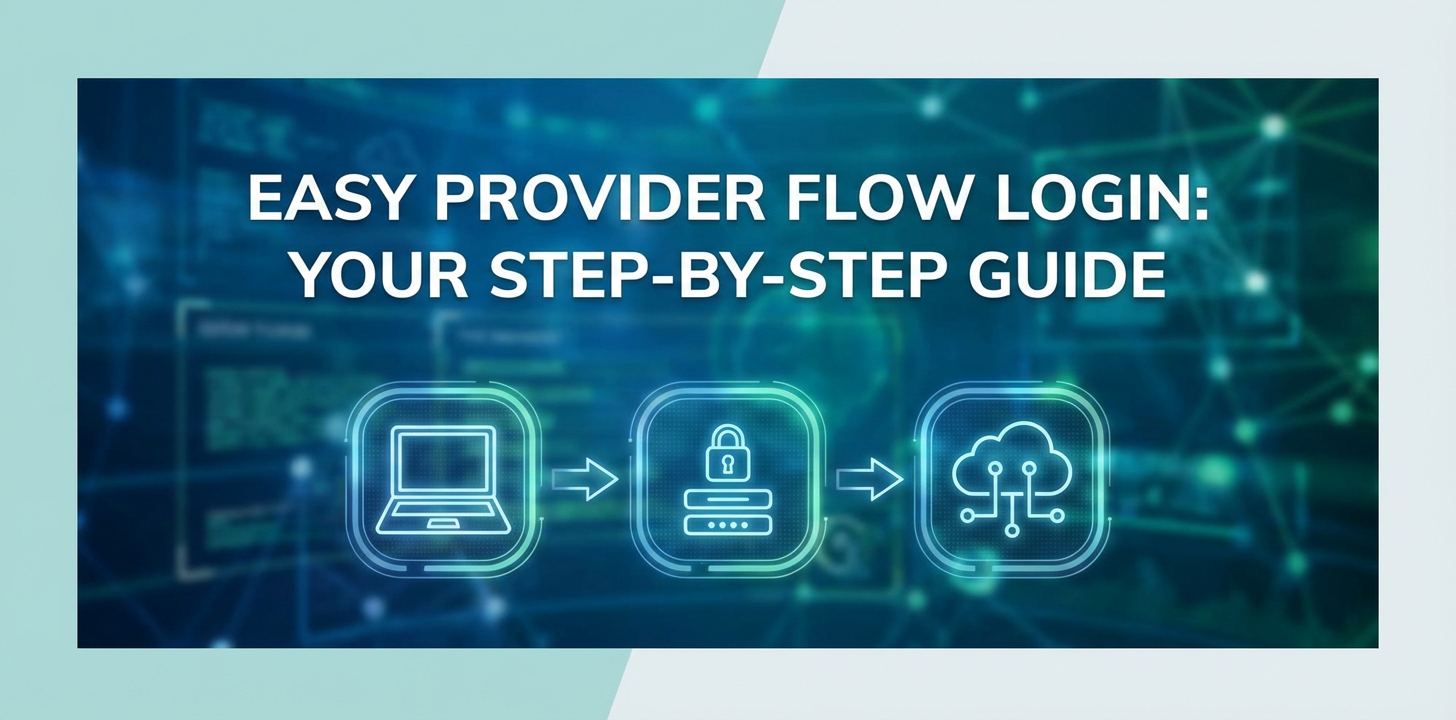


In today's interconnected digital landscape, where applications constantly communicate with a multitude of services and data sources, the concept of "Provider Flow Login" has become a cornerstone of secure and efficient interaction. This isn't just about a user typing a username and password into a web form; it represents a sophisticated dance between client applications, identity providers, and resource servers, all orchestrated through a robust API gateway to ensure seamless, secure, and controlled access to valuable resources. Whether you're building a new service, integrating with third-party platforms, or trying to understand how your enterprise systems authenticate, mastering the nuances of provider flow login is paramount. This comprehensive guide will demystify the complex world of modern authentication and authorization, providing a step-by-step roadmap to understanding, implementing, and securing these critical processes, emphasizing the integral role of the underlying api infrastructure and the strategic importance of an api gateway.
The digital ecosystem is an intricate web of services, applications, and data points, each requiring precise mechanisms for identity verification and access control. A "provider flow login" refers to the process by which a client application, on behalf of a user or itself, authenticates with a service provider (the "provider") to gain access to protected resources. This often involves redirecting the user to an independent identity provider, which handles the actual authentication process, before redirecting them back to the client application with the necessary credentials or tokens. This separation of concerns enhances security, improves user experience through features like Single Sign-On (SSO), and allows service providers to delegate the complexities of identity management to specialized systems.
The scope of this article extends far beyond basic login forms. We will delve into the architectures, protocols, and best practices that underpin secure provider flows, exploring how modern standards like OAuth 2.0 and OpenID Connect facilitate robust authentication and authorization. We will uncover the critical functions performed by an API gateway in managing these flows, from token validation and access control to rate limiting and traffic management, all while maintaining the integrity and availability of your api ecosystem. Our journey will equip you with the knowledge to build resilient, secure, and scalable solutions that stand the test of time, ensuring that every interaction within your digital infrastructure is both trusted and efficient.
The Indispensable Role of Secure Authentication in the API Economy
In an era defined by microservices, cloud computing, and ubiquitous apis, the mechanisms for verifying identity and controlling access are no longer mere features; they are foundational pillars of security, trust, and operational integrity. Every interaction, from a mobile app retrieving user data to a backend system exchanging financial information, relies on a robust authentication and authorization framework. Without a meticulously designed provider flow login, sensitive data would be exposed, systems would be vulnerable to unauthorized access, and the very fabric of digital trust would unravel. The repercussions of a compromised login flow can range from data breaches and financial losses to reputational damage and regulatory penalties, underscoring why this is not merely a technical detail but a strategic business imperative.
Modern applications are rarely monolithic; instead, they are compositions of numerous services, often distributed across different environments and managed by various teams. This distributed nature necessitates a centralized, yet flexible, approach to identity management. Traditional methods of authenticating each service independently quickly become unmanageable and create numerous security weak points. This is where standardized provider login flows, coupled with the power of an API gateway, become essential. They allow applications to delegate authentication to trusted identity providers, receive verifiable tokens, and then use these tokens to access various apis and resources, all while the API gateway acts as the enforcement point, validating every request before it reaches the backend services.
The benefits of a well-implemented secure authentication framework are manifold. Firstly, it significantly enhances security by centralizing authentication logic, reducing the attack surface, and enforcing strong identity verification measures. Secondly, it improves the developer experience by providing standardized methods for integrating with identity systems, reducing the burden of implementing complex security protocols from scratch. Thirdly, it fosters greater user convenience through features like Single Sign-On (SSO), allowing users to access multiple services with a single set of credentials. Finally, it enables scalability and flexibility, allowing organizations to easily add new services, integrate third-party applications, and adapt to evolving security threats without overhauling their entire identity infrastructure. The effective management of these flows is therefore critical, forming the bedrock upon which the entire digital economy operates, safeguarded by sophisticated api and api gateway architectures.
Deconstructing the Core Concepts: Authentication, Authorization, and Tokens
Before diving into the intricate steps of a provider flow login, it’s crucial to establish a solid understanding of the fundamental concepts that underpin all secure api interactions. These building blocks – authentication, authorization, and the various tokens used to represent them – are the language of modern digital identity and access management. Misunderstanding these distinctions can lead to critical security vulnerabilities and inefficient system designs.
Authentication: Who Are You?
Authentication is the process of verifying the identity of a user or a system. It answers the fundamental question: "Are you who you claim to be?" In the context of provider flow login, this typically involves a user providing credentials (like a username and password, a biometric scan, or a multi-factor authentication code) to an identity provider. The identity provider then verifies these credentials against its stored records. Successful authentication confirms the identity, but it doesn't automatically grant access to resources. Think of it like showing your ID at the entrance of a building: it confirms your identity, but not necessarily which rooms you're allowed to enter. For apis, authentication might also involve client credentials (client ID and secret) for machine-to-machine communication, or digital certificates.
Authorization: What Are You Allowed to Do?
Authorization, on the other hand, is the process of determining what an authenticated user or system is permitted to do or access. It answers the question: "What resources or actions are you allowed to perform?" Once an identity has been authenticated, the system consults its authorization policies to determine the level of access. For instance, an authenticated user might be authorized to view their own profile but not to modify another user's profile. In api scenarios, authorization decisions are often granular, defining permissions for specific api endpoints or even specific fields within an api response. This is where the API gateway plays a critical role, enforcing these authorization policies before requests ever reach the backend services, acting as the first line of defense against unauthorized data access or manipulation.
Tokens: The Keys to the Kingdom
Tokens are cryptographic artifacts that represent the outcome of authentication and authorization processes. Instead of repeatedly sending credentials with every request, which is insecure and inefficient, applications obtain tokens after a successful login flow and then present these tokens to prove their identity and permissions. There are several types of tokens, each serving a distinct purpose in the provider login journey:
- Authorization Code: This is a short-lived, single-use code issued by the authorization server to the client application after a user successfully authenticates and grants consent. It is exchanged directly for an access token and optionally a refresh token. Its short lifespan and direct exchange make it secure, as it is never directly exposed in the browser.
- Access Token: This is the primary credential used to access protected resources (e.g., api endpoints). Access tokens are typically opaque strings or JSON Web Tokens (JWTs). They have a limited lifespan and are included in the
Authorizationheader of api requests. The API gateway is responsible for validating these access tokens to ensure they are legitimate, unexpired, and possess the necessary scopes or claims for the requested resource. - Refresh Token: Unlike access tokens, refresh tokens are long-lived and are used to obtain new access tokens once the current one expires, without requiring the user to re-authenticate. They are typically stored securely by the client and sent to the authorization server only when a new access token is needed. Because of their longevity and power, refresh tokens must be treated with extreme care and often require stronger security measures, such as client authentication.
- ID Token (OpenID Connect): Specific to OpenID Connect, an ID Token is a JWT that contains claims about the authentication event and the user's identity (e.g., user ID, name, email). It is intended for the client application to verify the user's identity and is signed by the identity provider, ensuring its authenticity and integrity.
The sophisticated interplay of these tokens, managed through robust protocols like OAuth 2.0 and OpenID Connect, allows for secure delegation of authority and granular access control, all while an intelligent API gateway serves as the central enforcer and coordinator of these crucial identity transactions.
The Foundation of Secure Flows: OAuth 2.0 and OpenID Connect
At the heart of most modern provider flow logins lie two interconnected and widely adopted standards: OAuth 2.0 and OpenID Connect (OIDC). Understanding their principles and how they work together is essential for anyone designing or implementing secure api interactions. While often used interchangeably by beginners, they serve distinct, though complementary, purposes.
OAuth 2.0: Delegated Authorization
OAuth 2.0 is an industry-standard protocol for delegated authorization. Its primary goal is to allow a user to grant a third-party application limited access to their resources on another service provider without sharing their credentials. It’s not an authentication protocol itself; rather, it's about granting permissions. Think of when you log into a third-party app using "Sign in with Google" or "Sign in with Facebook." You are not giving the third-party app your Google or Facebook password; instead, you are authorizing Google or Facebook to issue an access token to the third-party app, which can then use that token to access specific data (like your profile picture or contact list) on your behalf.
The core roles in an OAuth 2.0 flow are:
- Resource Owner: The user who owns the protected resources (e.g., their photos on a social media site).
- Client Application: The third-party application requesting access to the resource owner's resources.
- Authorization Server: The server responsible for authenticating the resource owner and issuing access tokens.
- Resource Server: The server hosting the protected resources, which accepts access tokens to grant access to its apis.
OAuth 2.0 defines various "grant types" or "flows" designed for different client types and scenarios. Each grant type specifies how a client obtains an authorization grant and exchanges it for an access token.
OpenID Connect (OIDC): Identity Layer on top of OAuth 2.0
OpenID Connect is a simple identity layer built on top of the OAuth 2.0 framework. While OAuth 2.0 provides delegated authorization, OIDC adds the critical component of identity verification. It allows client applications to verify the identity of an end-user based on the authentication performed by an authorization server, as well as to obtain basic profile information about the end-user in an interoperable and REST-like manner.
In essence, OIDC uses OAuth 2.0 to perform authentication. When a user logs in via an OIDC provider, they receive not only an OAuth 2.0 access token (for authorization) but also an ID Token (for authentication). The ID Token is a JSON Web Token (JWT) that contains claims about the user and the authentication event, such as their unique identifier, name, email, and when they last logged in. The client application can then cryptographically verify the ID Token to confirm the user's identity.
This combination makes OIDC the go-to protocol for secure user login flows in modern web and mobile applications, as it provides both identity verification and delegated access to resources, all while leveraging the robust security features of OAuth 2.0. The interaction between the client, identity provider, and ultimately the API gateway (which validates the tokens issued) forms the backbone of secure provider access.
Common OAuth 2.0 Grant Types for Provider Flow Login
Understanding the different grant types defined by OAuth 2.0 is crucial, as each is suited for specific client types and security considerations within a provider flow login. The choice of grant type directly impacts the security and complexity of your api integration. Here, we delve into the most prevalent types, often orchestrated and secured by an API gateway.
1. Authorization Code Flow (with PKCE)
This is the most secure and recommended grant type for confidential clients (server-side web applications) and public clients (single-page applications, mobile apps) when combined with PKCE (Proof Key for Code Exchange). It involves a series of redirects and server-to-server communication, ensuring that sensitive tokens are never exposed in the user's browser or device.
Steps:
- Client initiates request: The client application redirects the user's browser to the Authorization Server's authorization endpoint, including parameters like
client_id,redirect_uri,scope, and crucially, acode_challenge(for PKCE). - User authenticates and consents: The user interacts with the Authorization Server (the "provider"), logs in, and grants permission to the client application to access specified resources.
- Authorization Code issued: Upon successful authentication and consent, the Authorization Server redirects the user back to the client's
redirect_uriwith a short-livedauthorization_code. - Client exchanges code for tokens: The client application, from its backend server (for confidential clients) or directly from the application (for public clients with PKCE), sends a direct request to the Authorization Server's token endpoint. This request includes the
authorization_code,client_id,redirect_uri, and for confidential clients,client_secret, or for public clients,code_verifier(the secret used to generate thecode_challenge). - Tokens issued: The Authorization Server validates the request (including matching
code_challengeandcode_verifierfor PKCE) and issuesaccess_token,refresh_token, and optionally anid_token(if OIDC is used). - Client accesses resources: The client uses the
access_tokento make requests to protected apis on the Resource Server. The API gateway intercepts these requests, validates theaccess_token, and enforces authorization policies before forwarding them to the backend apis.
Why it's secure: The authorization_code is exchanged server-to-server, bypassing the browser, and PKCE prevents interception attacks where a malicious application could steal the authorization code.
2. Client Credentials Flow
This flow is designed for machine-to-machine (M2M) communication, where a client application needs to access resources directly on behalf of itself, rather than a user. There is no user involvement or UI redirect.
Steps:
- Client requests token: The client application (e.g., a background service, daemon, or another api) directly sends its
client_idandclient_secretto the Authorization Server's token endpoint. - Access Token issued: The Authorization Server authenticates the client and, if valid, issues an
access_token. Norefresh_tokenorid_tokenis typically provided, as there's no user context. - Client accesses resources: The client uses the
access_tokento make requests to protected apis. Again, the API gateway is the crucial layer that validates thisaccess_tokenand applies appropriate access policies for the requesting service.
Use Case: A backend service needing to fetch data from another api without user interaction, or an API gateway itself needing to authenticate with an internal service.
3. Implicit Flow (Deprecated for most use cases)
Historically used for single-page applications (SPAs) where backend code wasn't feasible, the Implicit Flow directly returned the access_token in the browser's URL fragment after user authentication.
Why it's discouraged: It's highly vulnerable to token interception and injection attacks because the access_token is exposed in the URL and can persist in browser history. The Authorization Code Flow with PKCE is now the recommended alternative for public clients.
4. Resource Owner Password Credentials Flow (Highly Discouraged)
This flow allows the client application to directly collect the user's username and password and send them to the Authorization Server to obtain an access_token.
Why it's highly discouraged: It completely bypasses the security benefits of OAuth 2.0 by requiring the client to handle the user's credentials, increasing the risk of phishing and credential compromise. It should only be used in very specific, highly trusted legacy scenarios where other flows are not viable (e.g., migrating existing users).
The choice of grant type is a critical security decision. Always opt for the most secure flow suitable for your client type, with the Authorization Code Flow (especially with PKCE) being the gold standard for user-facing applications. The API gateway then acts as the crucial enforcement point, ensuring that only tokens obtained through legitimate flows can grant access to your valuable api resources.
Here’s a summary table of the common OAuth 2.0 Grant Types:
| Grant Type | Client Type | User Interaction | Security Considerations | Typical Use Cases | Best Practice Recommendation |
|---|---|---|---|---|---|
| Authorization Code Flow (with PKCE) | Confidential & Public Clients | Yes | Most secure, tokens exchanged server-to-server, PKCE protects against code interception. | Web applications, single-page applications (SPAs), mobile apps. | Recommended for all user-facing applications. |
| Client Credentials Flow | Confidential Clients | No | Secure for M2M, relies on client_secret confidentiality. |
Backend services, daemons, inter-service communication. | Recommended for machine-to-machine interactions. |
| Implicit Flow | Public Clients | Yes | Less secure, access_token directly in URL. |
Historically for SPAs. | Deprecated; use Auth Code Flow with PKCE instead. |
| Resource Owner Password Credentials Flow | Confidential Clients | Yes | Least secure, client handles user credentials directly. | Highly trusted legacy applications only. | Highly discouraged; avoid unless absolutely necessary. |
The Step-by-Step Provider Flow Login Journey: A Deep Dive into Authorization Code Flow with PKCE
Let's walk through the most common and secure provider flow login, the Authorization Code Flow with PKCE, which is widely adopted for web and mobile applications. This process involves multiple redirects and communications between distinct entities, all of which are managed and secured by an efficient API gateway at various stages.
Phase 1: Initiation and Requesting Authorization
- User Initiates Login: The user clicks a "Login" or "Sign In with X" button in the client application (e.g., a web app, mobile app, or desktop application).
- Client Application Prepares Request: The client application constructs an authorization request. This request includes:
response_type=code: Indicating that the client expects an authorization code.client_id: A unique identifier for the client application, registered with the Authorization Server.redirect_uri: The URI where the Authorization Server should redirect the user after authentication. This must be pre-registered and strictly validated by the Authorization Server to prevent phishing attacks.scope: A space-separated list of permissions (e.g.,openid profile email) the client is requesting to access.state: A randomly generated, cryptographically secure string used to maintain state between the request and the callback, protecting against Cross-Site Request Forgery (CSRF) attacks. The client stores thisstatevalue for later validation.code_challenge: A PKCE parameter, derived from a cryptographically randomcode_verifiergenerated by the client. Thecode_challengeis sent, but thecode_verifieris kept secret by the client until the token exchange phase.code_challenge_method: Specifies the method used to generate thecode_challenge(e.g., S256 for SHA-256).
- Client Redirects User to Authorization Server: The client application redirects the user's browser to the Authorization Server's authorization endpoint with all the prepared parameters. This redirect happens as an HTTP 302 response, typically.
Phase 2: User Authentication and Consent
- User Interacts with Authorization Server (The "Provider"): The Authorization Server receives the request and presents a login interface to the user. This is where the user enters their credentials (username, password, MFA code, biometrics, etc.). If the user is already logged in (e.g., via SSO), this step might be skipped or simplified.
- User Grants/Denies Consent: After successful authentication, the Authorization Server displays a consent screen, detailing the
scope(permissions) the client application is requesting. The user must explicitly approve these permissions. This is a critical step in delegated authorization, ensuring the user is aware of what data or actions they are granting access to. - Authorization Server Issues Authorization Code: If the user successfully authenticates and grants consent, the Authorization Server generates a single-use, short-lived
authorization_code.
Phase 3: Token Exchange
- Authorization Server Redirects User Back to Client: The Authorization Server redirects the user's browser back to the
redirect_urispecified by the client, appending theauthorization_codeand the originalstateparameter to the URL. - Client Application Receives Authorization Code: The client application receives the
authorization_codeand thestateparameter. It immediately validates thestateparameter against the one it stored earlier to prevent CSRF. - Client Exchanges Code for Tokens (Server-to-Server): This is a crucial, server-side step for security. The client application makes a direct, backend HTTP POST request to the Authorization Server's token endpoint. This request includes:
grant_type=authorization_code: Indicating the type of grant being exchanged.code: Theauthorization_codereceived in the previous step.redirect_uri: The sameredirect_uriused in the initial authorization request.client_id: The client's identifier.client_secret(for confidential clients): Used to authenticate the client application itself.code_verifier(for public clients with PKCE): The secret generated by the client in step 2, which the Authorization Server uses to verify against thecode_challenge.
- Authorization Server Issues Tokens: The Authorization Server validates this direct request, including
client_id,client_secret(if present),redirect_uri, and especially thecodeandcode_verifier(for PKCE). If valid, it issues:- An
access_token: Used for accessing protected resources. - A
refresh_token: Used to obtain new access tokens after the current one expires, without re-authenticating the user. - An
id_token(if OpenID Connectopenidscope was requested): A JWT containing user identity information.
- An
Phase 4: Resource Access and Lifecycle Management
- Client Stores and Uses Tokens: The client application securely stores the
access_tokenandrefresh_token. Theid_token(if present) is parsed and validated to establish the user's identity within the application. - Client Accesses Protected Resources: When the client needs to access a protected api (e.g., fetch user profile data), it includes the
access_tokenin theAuthorizationheader of its HTTP requests (typically as a Bearer token:Authorization: Bearer [access_token]). - API Gateway Validates Tokens: This is where the API gateway becomes paramount. It intercepts every request to protected apis. Its responsibilities include:
- Token Validation: Verifying the
access_token's signature, expiration, issuer, audience, and scope. - Authorization Enforcement: Based on the claims within the
access_token(e.g., user roles, permissions), the API gateway determines if the client is authorized to access the specific api endpoint and perform the requested action. - Rate Limiting & Throttling: Applying policies to prevent abuse and ensure fair usage.
- Traffic Routing: Forwarding valid and authorized requests to the appropriate backend service.
- Logging & Monitoring: Recording details of the request for auditing and performance analysis.
- Token Validation: Verifying the
- Backend Service Responds: If the API gateway validates and authorizes the request, the backend service processes it and returns the requested data or performs the action. The backend service itself might perform further granular authorization based on its internal logic, but the initial gateway validation is a crucial first line of defense.
- Token Refresh (Optional, but common): When the
access_tokenexpires, the client can use therefresh_tokento request a newaccess_tokenfrom the Authorization Server, typically without user interaction. This prevents users from having to repeatedly log in. The API gateway might even handle automatic token refreshing for certain client types. - Session Termination/Logout: When the user logs out, the client invalidates its stored tokens. Ideally, the Authorization Server should also invalidate the
refresh_tokenand any active sessions, though this depends on the specific logout mechanisms implemented (e.g., OpenID Connect Session Management, Front-Channel Logout, Back-Channel Logout).
This multi-step flow, while seemingly complex, is designed for maximum security and flexibility. Each step serves a specific purpose in delegating identity, granting permissions, and protecting sensitive information, all within an ecosystem heavily reliant on robust apis and a vigilant API gateway.
APIPark is a high-performance AI gateway that allows you to securely access the most comprehensive LLM APIs globally on the APIPark platform, including OpenAI, Anthropic, Mistral, Llama2, Google Gemini, and more.Try APIPark now! 👇👇👇
The Pivotal Role of an API Gateway in Securing Provider Flow Login
In the intricate dance of provider flow login, the API gateway is not merely a passive conduit; it is an active and indispensable orchestrator and enforcer of security, reliability, and performance. As the single entry point for all client requests to your backend apis, an API gateway acts as the primary guardian of your digital assets, playing a critical role in every phase of the login and resource access lifecycle. Its strategic positioning allows it to implement centralized policies that would be difficult or impossible to manage at the individual service level, making it fundamental to any robust api ecosystem. Without a sophisticated API gateway, the complexities of securing and managing diverse api interactions would quickly overwhelm developers and compromise system integrity.
Centralized Authentication and Authorization Enforcement
One of the most critical functions of an API gateway in provider flow login is to centralize authentication and authorization. After a client has successfully completed the OAuth/OIDC flow and obtained an access_token, every subsequent request to a protected api will include this token. The API gateway intercepts these requests and performs a series of validations:
- Token Validation: It verifies the
access_token's authenticity (e.g., by checking its signature if it's a JWT), ensuring it hasn't been tampered with. It also checks for expiration, ensuring the token is still valid. Furthermore, it verifies the token's issuer (who issued it) and audience (who it was issued for), ensuring it's intended for your services. - Scope and Claim Verification: The API gateway can inspect the
scopeorclaimswithin theaccess_token(e.g., user roles, specific permissions) to determine if the client is authorized to access the specific api endpoint. For example, a token withread:profilescope might allow access to/user/profilebut deny access to/user/settings. - Policy Enforcement: Based on pre-defined policies, the API gateway can allow or deny requests. This might involve checking IP whitelists, enforcing specific user roles, or ensuring that requests originate from trusted clients.
By handling these crucial security checks at the edge, the API gateway offloads this responsibility from individual backend services, simplifying their development and ensuring consistent security across your entire api landscape. It means that backend services can trust that any request they receive has already passed initial authentication and authorization hurdles.
Traffic Management and Security Layer
Beyond token validation, an API gateway provides a host of other critical traffic management and security features that are vital for provider flow login and subsequent api access:
- Rate Limiting and Throttling: Prevents abuse, brute-force attacks on login endpoints (if the gateway proxies them), and ensures fair usage of your apis. This is crucial for maintaining the availability and stability of your services.
- Load Balancing: Distributes incoming api traffic across multiple instances of your backend services, enhancing performance and resilience.
- DDoS Protection: Can identify and mitigate Distributed Denial of Service attacks, protecting your api infrastructure from being overwhelmed.
- Firewall Capabilities (WAF): A Web Application Firewall (WAF) integrated into or alongside the API gateway can protect against common web vulnerabilities like SQL injection and cross-site scripting (XSS), further securing api endpoints that might be part of the login process or accessed thereafter.
- Traffic Routing and Transformation: Routes requests to the correct backend services based on defined rules and can transform requests or responses (e.g., adding headers, converting data formats), providing a layer of abstraction between clients and backend apis. This allows for seamless api versioning and evolution without impacting existing clients.
- Auditing and Logging: The API gateway can log every api request, including details about the client, the
access_tokenused, the requested resource, and the outcome. This comprehensive logging is invaluable for security auditing, troubleshooting, and understanding api usage patterns.
Introducing APIPark: An Open Source Solution for AI & API Management
In the realm of robust API gateway solutions that simplify the complexities of managing secure api and AI service interactions, platforms like APIPark stand out. APIPark is an open-source AI gateway and API management platform designed to help developers and enterprises manage, integrate, and deploy AI and REST services with remarkable ease. It provides a unified management system for authentication and cost tracking across a multitude of AI models, effectively standardizing the request data format and simplifying api usage.
APIPark directly addresses many of the challenges associated with provider flow login and api management. Its features, such as end-to-end API lifecycle management, assist in regulating api management processes, including traffic forwarding, load balancing, and versioning of published apis – all critical functions that ensure a smooth and secure provider flow. Furthermore, its independent API and access permissions for each tenant feature allows for creating multiple isolated teams, each with their own applications and security policies, while sharing the underlying infrastructure, which is crucial for multi-tenant api providers.
For organizations that handle sensitive data or require strict access control, APIPark's capability for API resource access requiring approval means callers must subscribe to an api and await administrator approval before invocation, preventing unauthorized api calls and potential data breaches. Its detailed API call logging and powerful data analysis capabilities provide invaluable insights into api usage and security events, which is essential for monitoring provider login flows and resource access patterns, enabling businesses to quickly trace and troubleshoot issues, ensuring system stability and data security. With performance rivaling Nginx and support for cluster deployment, APIPark is built to handle large-scale traffic, making it a scalable solution for managing complex api ecosystems and securing high-volume provider flow logins. Such platforms underscore the evolution of API gateway technology into comprehensive management solutions that streamline api operations and enhance security at every layer.
Implementing Secure Provider Flow Login: Best Practices
Successful implementation of a secure provider flow login requires adherence to best practices across all components of your system – the client, the Authorization Server, and critically, the API gateway. Overlooking any detail can introduce vulnerabilities, compromise data, and erode user trust.
For the Client Application
- Use Authorization Code Flow with PKCE: As previously emphasized, this is the most secure flow for both confidential and public clients. Never use the Implicit Flow or Resource Owner Password Credentials Flow for new development.
- Securely Store Tokens:
- Access Tokens: For web applications, avoid storing
access_tokens inlocalStoragedue to XSS vulnerabilities. Instead, considerHttpOnly, Securecookies (foraccess_tokens that are short-lived and exchanged for a session token at the backend) or in-memory storage. For mobile apps, use platform-specific secure storage (e.g., iOS Keychain, Android Keystore). - Refresh Tokens: Even more critical to secure. Store them only in
HttpOnly, Securecookies (for web) or highly encrypted, platform-specific secure storage (for mobile). Consider rotation strategies for refresh tokens.
- Access Tokens: For web applications, avoid storing
- Validate
stateParameter: Always generate a unique, cryptographically randomstateparameter for each authorization request and validate it upon callback to prevent CSRF attacks. - Validate
redirect_uri: Ensure yourredirect_uris are strictly validated by the Authorization Server and match exactly. Wildcards should be avoided or used with extreme caution in development environments only. - Handle Errors Gracefully: Implement robust error handling for failed authentication or authorization attempts, providing clear, user-friendly messages without leaking sensitive information.
- Implement Token Expiry Handling: Your client application must be capable of detecting
access_tokenexpiration and gracefully usingrefresh_tokens to obtain new ones, or redirecting the user for re-authentication if therefresh_tokenis also invalid or expired. - Follow Principle of Least Privilege: Request only the
scopestruly necessary for your application's functionality. Over-requesting permissions can deter users and increase your security exposure.
For the Authorization Server / Identity Provider
- Strong Authentication Mechanisms: Implement robust password policies, multi-factor authentication (MFA), and anomaly detection for login attempts.
- Strict
redirect_uriWhitelisting: Only allow pre-registered and exactredirect_uris. Any deviation should be rejected. - Secure
client_secretManagement: For confidential clients,client_secrets must be treated with the same security as user passwords. Store them securely (e.g., in a secrets manager), rotate them regularly, and never embed them in client-side code. - Token Revocation: Provide mechanisms for revoking
access_tokens andrefresh_tokens (e.g., during logout or compromise), and ensure your API gateway checks for revoked tokens. - Implement Consent Screen: Clearly inform users about the permissions being requested by the client application and require explicit consent.
- Rate Limit Token Endpoints: Protect your token endpoints from brute-force and denial-of-service attacks.
- Logging and Auditing: Maintain detailed logs of all authentication and token issuance events for security monitoring and compliance.
For the API Gateway and Resource Server
- Token Validation is Non-Negotiable: The API gateway must validate every
access_tokenon every request to protected apis. This includes checking signature, expiration, issuer, audience, and scope. - Enforce Authorization Policies: Translate the
claimswithin theaccess_tokeninto granular authorization decisions. This could involve mapping scopes to roles or specific api endpoint permissions. The API gateway is the ideal place to enforce these global policies. - Secure Communication: Ensure all communication between the client, API gateway, Authorization Server, and backend services is encrypted using TLS/SSL.
- Robust Error Handling: The API gateway should return clear, standardized error messages for unauthorized or invalid requests (e.g., HTTP 401 Unauthorized, 403 Forbidden) without revealing internal system details.
- Centralized Logging and Monitoring: Utilize the API gateway's comprehensive logging capabilities for real-time monitoring of api access, security events, and performance. Tools like APIPark provide detailed api call logging and powerful data analysis features to help identify anomalies and potential security incidents.
- Cache Token Validation Results (Carefully): For performance, the API gateway can cache token validation results for a short period. However, this caching must be carefully managed to respect token revocation and expiration.
- Separate Concerns: Ensure your backend services primarily focus on business logic, trusting the API gateway to handle initial authentication and authorization enforcement. They might perform further, more granular application-specific authorization, but the gateway acts as the first line of defense.
- Regular Security Audits: Conduct regular security audits and penetration testing of your entire api infrastructure, including your API gateway and authentication flows, to identify and remediate vulnerabilities.
By diligently adhering to these best practices, organizations can construct a highly secure and resilient provider flow login system that protects their valuable apis and instills confidence in their users and partners. The API gateway stands as the vigilant sentinel, upholding these standards at the crucial point of access.
Challenges and Solutions in Provider Flow Login Management
Despite the robustness of modern authentication protocols and the capabilities of API gateways, implementing and managing secure provider flow logins presents several challenges. Addressing these challenges proactively is key to building a resilient and user-friendly system.
Challenge 1: Complexity of Protocols
OAuth 2.0 and OpenID Connect, while powerful, are inherently complex. Understanding the various grant types, scopes, claims, token types, and security nuances requires significant expertise. Misconfigurations are a common source of vulnerabilities.
Solution: * Leverage Managed Services: Utilize cloud-based identity providers (IdPs) like Auth0, Okta, Amazon Cognito, or Google Identity Platform. These services abstract away much of the underlying complexity, providing SDKs and well-documented apis that simplify integration. * Specialized API Gateways: Employ API gateways with built-in support for OAuth/OIDC. These gateways can automatically handle token validation, introspection, and policy enforcement, reducing the burden on backend services. Platforms like APIPark are designed to streamline api management and security, providing comprehensive features that simplify the integration and deployment of AI and REST services, thus managing the inherent complexity effectively. * Education and Training: Invest in training for your development and security teams to ensure a deep understanding of the chosen protocols and best practices.
Challenge 2: Scalability and Performance
As the number of users, client applications, and api requests grows, the authentication system must scale to handle increased load without performance degradation. Each token validation request adds overhead.
Solution: * Distributed Authorization Servers: Deploy Authorization Servers in a highly available and scalable architecture, often across multiple regions, to handle concurrent authentication requests. * Efficient API Gateway: A high-performance API gateway is critical. It should be able to process thousands of requests per second with low latency. Features like local token caching (for valid JWTs) can significantly reduce calls back to the Authorization Server for every request. APIPark, for example, boasts performance rivaling Nginx, achieving over 20,000 TPS with an 8-core CPU and 8GB of memory, and supports cluster deployment, making it highly suitable for large-scale traffic. * Stateless Tokens (JWTs): Using JWTs for access_tokens allows the API gateway and resource servers to validate tokens without necessarily calling the Authorization Server for every request, as long as the public key for signature verification is available.
Challenge 3: Security Vulnerabilities
Despite robust protocols, implementation errors or misconfigurations can introduce vulnerabilities like token interception, replay attacks, CSRF, XSS, and open redirects.
Solution: * Strict Adherence to Best Practices: Always follow the latest security best practices for OAuth 2.0 and OIDC, including using PKCE, validating state parameters, and employing HttpOnly, Secure cookies for tokens. * Regular Security Audits and Penetration Testing: Continuously audit your authentication flows and api security with static analysis tools, dynamic analysis tools, and manual penetration tests. * Token Revocation Mechanisms: Implement robust token revocation that is promptly checked by the API gateway for all protected resources. * API Gateway Security Features: Utilize the API gateway's built-in security features like WAF, DDoS protection, and IP whitelisting to provide additional layers of defense for your apis and authentication endpoints. * Detailed Logging and Monitoring: Comprehensive logging of all authentication attempts and api access (as provided by solutions like APIPark) is crucial for detecting and responding to security incidents in real-time.
Challenge 4: User Experience (UX)
Balancing security with a smooth user experience can be tricky. Overly complex login processes or frequent re-authentication can frustrate users.
Solution: * Single Sign-On (SSO): Implement SSO to allow users to access multiple applications with a single login, reducing friction and enhancing convenience. OIDC is designed for this. * Session Management with Refresh Tokens: Judiciously use refresh_tokens to extend user sessions without requiring them to repeatedly re-enter credentials, while still respecting security policies. * Clear and Consistent UI/UX: Design intuitive login screens and consent dialogues that clearly communicate what permissions are being requested and why. * Biometric Authentication/Passwordless: Explore integrating modern authentication methods like FIDO2/WebAuthn or magic links to simplify the login experience while enhancing security.
By strategically addressing these challenges, organizations can build provider flow login systems that are not only highly secure and scalable but also provide an exceptional user experience, cementing trust and fostering engagement across their digital services. The API gateway remains a central tool in this endeavor, orchestrating security and performance at the critical juncture of client-service interaction.
Future Trends in Secure Provider Flow Login and API Security
The landscape of digital identity and api security is constantly evolving. As threats become more sophisticated and user expectations shift towards seamless, secure experiences, the mechanisms for provider flow login and api protection are undergoing continuous innovation. Understanding these emerging trends is crucial for future-proofing your api infrastructure and staying ahead of the curve.
Passwordless Authentication
The traditional username and password combination, despite its ubiquity, is a major source of security vulnerabilities (phishing, brute-force attacks) and user frustration. Passwordless authentication methods aim to eliminate or significantly reduce reliance on passwords.
- Magic Links/Codes: Users receive a one-time link or code via email or SMS to log in, bypassing the need for a password.
- Biometrics (Face ID, Fingerprint): Leveraging device-native biometrics, often backed by WebAuthn/FIDO2 standards, for secure and convenient authentication.
- Hardware Security Keys: Physical devices (like YubiKeys) that provide cryptographic proof of identity.
- Verifiable Credentials/Decentralized Identity: Emerging standards that allow users to manage their own digital identities and selectively present verified claims (e.g., age, qualifications) to services without revealing unnecessary personal data. This represents a significant paradigm shift, offering greater user control and privacy.
The adoption of passwordless methods will simplify the initial login step of the provider flow, shifting the security burden away from user-remembered secrets to device-bound credentials or cryptographically secure challenges. The API gateway will continue its role in validating the tokens issued after these passwordless authentications, ensuring their legitimacy and enforcing access.
AI-Driven Security and Threat Detection
Artificial intelligence and machine learning are increasingly being leveraged to enhance api security. * Anomaly Detection: AI algorithms can analyze api traffic and authentication logs to detect unusual patterns (e.g., multiple failed login attempts from a new location, sudden spikes in api calls from an unknown IP) that might indicate a sophisticated attack. * Behavioral Analytics: By learning normal user and application behavior, AI can flag deviations that suggest compromised accounts or malicious activity within the provider flow. * Automated Threat Response: In conjunction with an API gateway, AI systems can automatically trigger actions like blocking suspicious IP addresses, rate-limiting problematic clients, or forcing re-authentication for potentially compromised users. Platforms like APIPark, with their powerful data analysis capabilities and detailed api call logging, are well-positioned to integrate such AI-driven security insights, allowing businesses to perform preventive maintenance and quickly trace and troubleshoot issues before they escalate.
Fine-Grained Authorization (FGA) and Policy as Code
While API gateways already enforce coarse-grained authorization based on scopes and roles, there's a growing trend towards more granular authorization decisions. * Attribute-Based Access Control (ABAC): Instead of just roles, access is granted based on a combination of attributes of the user, resource, action, and environment. This allows for extremely flexible and dynamic authorization policies. * Policy as Code (PaC): Defining authorization policies in code, managed in version control systems, and deployed like any other application code. This brings consistency, auditability, and automation to policy enforcement. * Decoupled Authorization: Externalizing authorization decisions from applications into a dedicated authorization service or enforcement point (like an API gateway) that can be updated independently and applied globally.
These advancements will allow API gateways to make even more intelligent and precise authorization decisions, ensuring that access_tokens grant only the exact minimum privileges required, significantly enhancing the security posture of the entire api ecosystem.
Mesh Architectures and Sidecar Proxies
In highly distributed microservices environments, the concept of a "service mesh" is gaining traction. This involves deploying a proxy (often referred to as a "sidecar") alongside each service instance. * Decentralized Policy Enforcement: While an API gateway still handles edge traffic, sidecar proxies can enforce mTLS (mutual TLS) between services, provide granular request routing, and apply authorization policies at the service-to-service communication layer. * Enhanced Observability: Service meshes provide comprehensive telemetry, metrics, and tracing for inter-service communication, offering deep insights into api interactions and potential security anomalies.
This trend doesn't diminish the role of the API gateway but rather augments it. The API gateway remains crucial for ingress traffic, managing provider flow logins from external clients, and enforcing global policies, while the service mesh handles security and management for internal, service-to-service api calls. The future of secure provider flow login will undoubtedly involve a harmonious blend of these evolving technologies, all working in concert to create a more secure, efficient, and user-friendly digital world.
Conclusion: Mastering the Gateway to Secure Digital Interactions
The journey through the intricacies of "Easy Provider Flow Login" reveals a landscape far more sophisticated than a simple username and password prompt. It underscores the critical importance of secure, standardized protocols like OAuth 2.0 and OpenID Connect, which facilitate delegated authorization and identity verification across a sprawling digital ecosystem. We've explored the step-by-step dance between client applications, identity providers, and resource servers, each playing a vital role in establishing trust and controlling access to invaluable digital assets. This process, while seemingly complex, is engineered to provide both robust security and a streamlined user experience, forming the bedrock of modern interconnected applications.
At the heart of this entire architecture lies the API gateway, an indispensable component that serves as the vigilant sentinel for all incoming requests. Its role extends beyond mere traffic routing; it is the primary enforcer of authentication and authorization policies, meticulously validating tokens, applying rate limits, and shielding backend apis from myriad threats. By centralizing these critical security functions, the API gateway simplifies development, ensures consistent protection, and provides invaluable insights into api usage and potential anomalies through detailed logging and analysis. Solutions such as APIPark exemplify how a modern API gateway can empower organizations to manage, secure, and scale their apis, including AI services, with unparalleled efficiency and control, making the complex world of provider flow login not just manageable, but truly robust.
Mastering provider flow login is not merely a technical exercise; it's a strategic imperative for any organization operating in today's api-driven economy. By adhering to best practices, understanding the underlying protocols, and leveraging powerful tools like API gateways, developers and enterprises can build secure, scalable, and user-friendly systems that foster trust and accelerate innovation. The continuous evolution of identity standards and security technologies promises an even more secure and seamless future, but the foundational principles of strong authentication, granular authorization, and vigilant api management will remain the cornerstones of all trusted digital interactions. Embrace these principles, and you empower your digital presence with unparalleled security and efficiency.
Frequently Asked Questions (FAQs)
1. What is the primary difference between authentication and authorization in the context of provider flow login?
Authentication is the process of verifying who a user or client application claims to be. It answers "Who are you?" For example, when you enter your username and password on a login page, you are authenticating. Authorization, on the other hand, determines what an authenticated user or client is permitted to do or access. It answers "What are you allowed to do?" After successfully logging in, authorization dictates whether you can view, edit, or delete specific resources. In a provider flow login, the identity provider handles authentication, while the API gateway and resource servers enforce authorization based on the tokens issued.
2. Why is the Authorization Code Flow with PKCE considered the most secure OAuth 2.0 grant type for user-facing applications?
The Authorization Code Flow with PKCE (Proof Key for Code Exchange) is the most secure because it minimizes the exposure of sensitive tokens. Instead of sending the access_token directly through the user's browser (like the deprecated Implicit Flow), it first sends a short-lived authorization_code. This code is then exchanged for an access_token in a direct, server-to-server communication, which is much harder to intercept. PKCE further enhances security for public clients (like mobile apps or SPAs) by adding a cryptographic challenge-response mechanism, preventing an attacker from intercepting the authorization_code and exchanging it for a token themselves. This multi-step, backend-focused exchange protects against various token interception and injection attacks.
3. What role does an API Gateway play in securing provider flow logins and API access?
An API gateway acts as the central entry point and enforcement point for all API requests. In provider flow login, its primary roles include: * Token Validation: Verifying the authenticity, integrity, and expiration of access_tokens issued after a successful login. * Authorization Enforcement: Applying fine-grained access control policies based on the scopes and claims within the token, determining if a client is authorized to access specific resources. * Traffic Management: Implementing rate limiting, throttling, and load balancing to protect APIs from abuse and ensure availability. * Security Layer: Providing additional defenses like WAF, DDoS protection, and secure routing. * Logging and Monitoring: Recording detailed information about API calls for auditing, troubleshooting, and detecting anomalies. Essentially, the API gateway ensures that only legitimate and authorized requests reach your backend services, making it indispensable for a robust api security posture.
4. What are refresh tokens, and why are they important for user experience and security?
Refresh tokens are long-lived credentials issued alongside access_tokens during a successful authentication flow. Unlike access_tokens, which are short-lived and used for accessing protected resources, refresh_tokens are used to obtain new access_tokens once the current one expires, without requiring the user to re-authenticate. This is crucial for user experience as it allows users to maintain a session for longer periods without frequent logins. From a security perspective, if a short-lived access_token is compromised, its impact is limited. The long-lived refresh_token is typically stored more securely and is only used to communicate directly with the authorization server, making it harder for attackers to exploit. They can also be revoked by the authorization server if compromise is suspected, enhancing control.
5. How can organizations future-proof their provider flow login and API security?
To future-proof provider flow login and API security, organizations should focus on several key trends and best practices: * Embrace Passwordless Authentication: Adopt modern methods like FIDO2/WebAuthn, biometrics, or magic links to enhance security and user experience. * Leverage AI for Security: Utilize AI/ML for anomaly detection, behavioral analytics, and automated threat response in api traffic and authentication logs. * Implement Fine-Grained Authorization: Move beyond simple roles to attribute-based access control (ABAC) and policy-as-code paradigms, making authorization more dynamic and precise. * Invest in a Robust API Gateway: Utilize API gateways with advanced features for security, scalability, and api management, like APIPark, which provides comprehensive tools for AI and REST service management, detailed logging, and high performance. * Continuous Monitoring and Auditing: Regularly review logs, conduct security audits, and perform penetration testing to identify and address vulnerabilities proactively. * Stay Updated with Standards: Keep abreast of the latest versions and security recommendations for OAuth 2.0, OpenID Connect, and other relevant security protocols.
🚀You can securely and efficiently call the OpenAI API on APIPark in just two steps:
Step 1: Deploy the APIPark AI gateway in 5 minutes.
APIPark is developed based on Golang, offering strong product performance and low development and maintenance costs. You can deploy APIPark with a single command line.
curl -sSO https://download.apipark.com/install/quick-start.sh; bash quick-start.sh

In my experience, you can see the successful deployment interface within 5 to 10 minutes. Then, you can log in to APIPark using your account.

Step 2: Call the OpenAI API.