Mastering Kong API Gateway for Modern Microservices
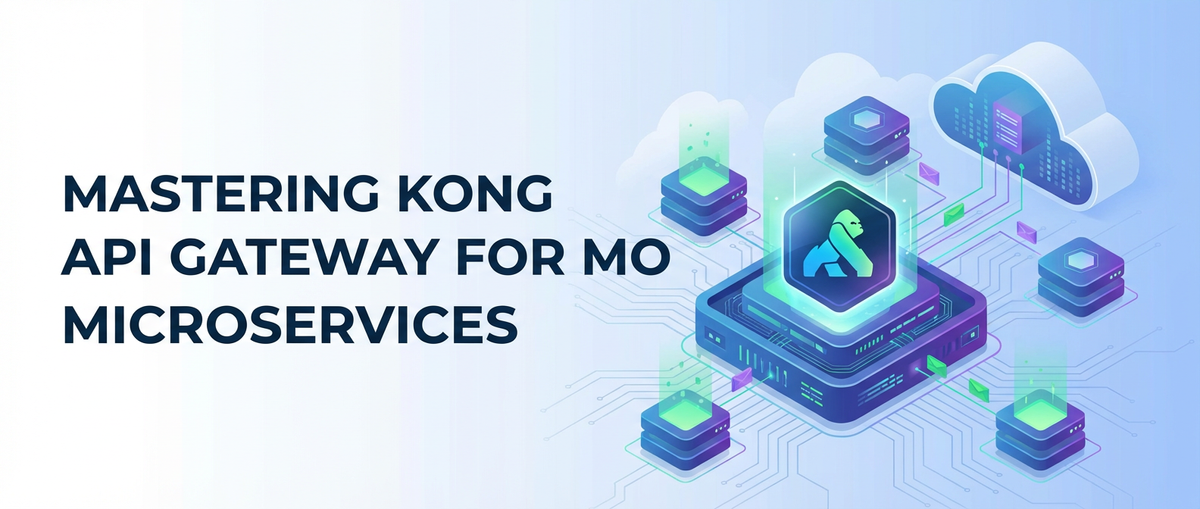


The landscape of software architecture has undergone a profound transformation over the past decade, shifting dramatically from monolithic applications to highly distributed microservices. This architectural paradigm promises enhanced agility, scalability, and resilience, empowering development teams to build, deploy, and scale independent services with unprecedented speed. However, this newfound flexibility introduces a host of complexities, particularly concerning inter-service communication, security, and traffic management. Navigating this intricate web of services requires a robust and intelligent orchestration layer – a role perfectly suited for an API Gateway. Among the plethora of options available, Kong API Gateway has emerged as a formidable and highly favored solution, designed specifically to address the unique challenges of modern microservices environments.
This comprehensive guide will delve deep into the world of Kong API Gateway, exploring its architecture, core functionalities, advanced capabilities, and best practices for deploying and managing it within a microservices ecosystem. We will uncover how Kong acts as the central nervous system for your apis, providing a single, unified entry point for all client requests, while simultaneously offloading critical concerns like authentication, rate limiting, and observability from individual microservices. By the end of this exploration, you will possess a profound understanding of how to leverage Kong to build, secure, and scale your microservices apis with confidence and efficiency.
The Microservices Revolution and the Indispensable Role of an API Gateway
Before we immerse ourselves in the specifics of Kong, it's crucial to understand the foundational shift that necessitates an API Gateway in the first place. The microservices architecture breaks down a large application into a collection of smaller, independently deployable services, each responsible for a specific business capability. While this modularity offers significant advantages, it also introduces several inherent challenges:
- Service Discovery: Clients need to know where to find individual services. In a dynamic microservices environment where services are constantly scaled up, down, or moved, hardcoding service locations is impractical and brittle.
- Request Routing: A single client request might need to be routed to multiple backend services to fulfill its purpose. Managing complex routing logic at the client level or within each service is inefficient.
- Security: Each microservice might require authentication and authorization. Implementing these security measures uniformly across dozens or hundreds of services is a colossal undertaking and prone to inconsistencies.
- Cross-Cutting Concerns: Operational aspects like logging, monitoring, rate limiting, and caching are essential for all services. Duplicating this logic in every service leads to code duplication, increased development time, and maintenance overhead.
- Protocol Translation: Different microservices might expose apis using varying protocols (e.g., REST, gRPC, SOAP). Clients, however, often expect a consistent interface.
- Client Management: Managing multiple clients (web, mobile, third-party) that might require different views or aggregations of data from various backend services adds another layer of complexity.
An API Gateway acts as a single point of entry for all client requests, effectively addressing these challenges. It sits at the edge of the microservices architecture, acting as a reverse proxy that routes requests to the appropriate backend services. More than just a router, an API Gateway is an intelligent intermediary that can apply policies, enforce security, transform requests, aggregate responses, and provide a wealth of operational insights. It acts as a shield, protecting your backend services from direct exposure, and a facilitator, simplifying client interactions with your complex service landscape. It is the crucial gateway through which all external interactions with your microservices must pass, ensuring order, security, and efficiency in a distributed world.
Introducing Kong API Gateway: A Powerhouse for API Management
Kong API Gateway is a leading open-source, cloud-native API Gateway and API management platform. Built on top of Nginx and LuaJIT, Kong is designed for high performance and extensibility, making it an ideal choice for managing the vast and dynamic apis in a microservices architecture. Its architecture allows it to handle a high volume of traffic with low latency, providing a robust and reliable gateway for both internal and external apis.
At its core, Kong functions as a programmable proxy. It intercepts client requests, applies a series of policies (called plugins), and then forwards the request to the appropriate upstream service. After the upstream service responds, Kong can apply additional policies to the response before sending it back to the client. This plugin-centric architecture is a cornerstone of Kong's flexibility and power, allowing users to extend its capabilities without modifying the core code. Whether you need sophisticated authentication, granular rate limiting, or advanced traffic management, Kong’s vast ecosystem of plugins provides the tools to achieve it. This modularity means that you only enable the functionalities you truly need, keeping your gateway lean and performant.
Key Architectural Components of Kong
Understanding Kong's internal structure is vital for effective deployment and management. The primary components include:
- Kong Proxy: This is the core engine, built on Nginx, responsible for intercepting and proxying API requests. It's the traffic cop, directing requests based on configured rules.
- Kong Plugins: These are modular pieces of code (written in Lua) that extend Kong's functionality. They can be applied globally, or to specific Services, Routes, or Consumers. Plugins handle everything from authentication and authorization to traffic control, transformations, and observability.
- Kong Data Store: Kong stores its configuration (Services, Routes, Consumers, Plugins) in a database. Historically, PostgreSQL and Cassandra were supported, with PostgreSQL being the most common choice for new deployments due to its simpler operational overhead. More recently, Kong introduced a "DB-less" mode, allowing configuration to be managed entirely via declarative configuration files, which is particularly beneficial for GitOps workflows and deployments in Kubernetes. This evolution reflects Kong's adaptability to modern infrastructure practices.
- Kong Admin API: This is a RESTful api used to configure and manage Kong. Developers and administrators interact with Kong primarily through this api to define services, routes, apply plugins, and manage consumers. It provides a programmatic interface for complete control over the gateway.
- Kong Manager (Optional): A powerful, intuitive graphical user interface (GUI) built on top of the Admin API. Kong Manager simplifies the configuration and monitoring of Kong, making it more accessible to users who prefer a visual interface over direct api calls. It provides a holistic view of your apis, services, and traffic, empowering teams to manage their apis with greater ease.
These components work in concert to provide a resilient, scalable, and highly configurable API Gateway. The separation of the proxy from the data store and the Admin API allows for flexible deployment models, from single instances to large, distributed clusters capable of handling extreme loads.
Core Concepts in Kong: Building Blocks of Your API Gateway
To effectively master Kong, it's essential to grasp its fundamental configuration entities. These entities allow you to define how Kong interacts with your upstream services and manages client requests.
1. Services
In Kong, a "Service" represents an upstream API or microservice that Kong will proxy requests to. It's a logical abstraction of your backend API. Instead of directly configuring Kong with backend URLs, you define a Service with a name and the URL (or host and port) of your target microservice. This abstraction is crucial because it allows you to decouple your routing logic from the actual backend implementation. If the backend service's location changes, you only need to update the Service definition in Kong, not all the routes that point to it.
A Service encapsulates properties like: * name: A unique identifier for the service. * protocol: http or https. * host: The hostname or IP address of the upstream service. * port: The port of the upstream service. * path: The base path for all requests to this service (optional). * retries: Number of retries when connection attempts fail. * connect_timeout, write_timeout, read_timeout: Timeout values for connecting to, writing to, and reading from the upstream service.
Example: If you have a user-service running at http://user-service:8080, you would define a Kong Service for it.
2. Routes
A "Route" defines how client requests are matched and then forwarded to a specific Service. Routes are the entry points into Kong, determining which incoming requests should be handled by which upstream Service. You can define various matching rules for Routes, allowing for sophisticated routing logic.
Route matching criteria can include: * paths: A list of URL paths (e.g., /users, /products). * hosts: A list of hostnames (e.g., api.example.com). * methods: HTTP methods (e.g., GET, POST). * headers: Specific request headers. * snis: Server Name Indication values (for SSL).
A single Service can have multiple Routes, allowing you to expose different endpoints of the same backend service under various paths, hostnames, or via different HTTP methods. This flexibility is vital for api versioning, A/B testing, and managing different client apis. For instance, /v1/users and /v2/users could both point to the same user-service but trigger different plugin behaviors (e.g., different authentication policies for different API versions).
Example: For the user-service, you might have a Route that matches requests to /api/v1/users on api.example.com and directs them to the user-service.
3. Consumers
A "Consumer" represents a client that consumes your apis. This could be an individual user, an application, or another service. Consumers are fundamental for applying granular security and access control policies. Instead of applying a policy to all incoming requests, you can associate policies (via plugins) directly with specific Consumers. This enables personalized access control, rate limits, and other behaviors based on who is making the request.
Consumers are typically identified by a unique ID or username. Once a Consumer is authenticated (e.g., via an API Key or OAuth token), Kong can link the request to that Consumer and apply any associated plugins.
Example: You might define a Consumer for your mobile-app and another for your web-app, each with different rate limiting policies.
4. Plugins
Plugins are the most powerful and flexible aspect of Kong. They are modular extensions that intercept requests and responses, allowing you to add various functionalities to your API Gateway without modifying your backend services. Kong offers a rich ecosystem of pre-built plugins, and you can also develop custom plugins if needed.
Plugins can be configured at different scopes: * Global: Applied to all incoming requests through Kong. * Per Service: Applied to all requests routed to a specific Service. * Per Route: Applied to requests matched by a specific Route. * Per Consumer: Applied to requests made by a specific Consumer. * Per Consumer and Plugin: Even more granular, applying a specific plugin configuration only when a particular Consumer interacts with a particular plugin (e.g., a specific rate limit for a specific consumer).
This hierarchical application of plugins provides immense control and allows for highly flexible and fine-grained policy enforcement.
Here's a table illustrating some common and highly valuable Kong plugins:
| Plugin Name | Category | Description The Kong API Gateway is a high-performance gateway built for microservices. It sits between your clients and your backend microservices, routing requests and applying various policies through its extensive plugin architecture. Kong can be deployed in various configurations, from standalone instances to large clusters, offering flexibility to suit diverse operational needs. Its open-source nature fosters a large community and a rich ecosystem of third-party plugins, making it a versatile choice for modern api management.
Installation and Basic Configuration: Getting Started with Kong
Deploying Kong can be straightforward, with several options catering to different environments. The most common deployment methods include Docker, Kubernetes, and direct installation on a virtual machine. For simplicity and rapid prototyping, Docker is an excellent starting point.
Prerequisites:
- Database: Kong requires a PostgreSQL database to store its configuration. You'll need access to a PostgreSQL instance or run one via Docker.
- Docker: If using Docker for deployment.
Docker-Compose Example (for quick setup):
A docker-compose.yml file provides an easy way to spin up Kong and its database:
version: '3.9'

services:
  kong-database:
    image: postgres:13
    restart: always
    hostname: kong-database
    container_name: kong-database
    ports:
      - "5432:5432"
    environment:
      POSTGRES_DB: kong
      POSTGRES_USER: kong
      POSTGRES_PASSWORD: kong
    volumes:
      - kong_data:/var/lib/postgresql/data

  kong-migrations:
    image: kong:3.4.1-alpine
    command: kong migrations bootstrap
    environment:
      KONG_DATABASE: postgres
      KONG_PG_HOST: kong-database
      KONG_PG_USER: kong
      KONG_PG_PASSWORD: kong
      KONG_ADMIN_LISTEN: 0.0.0.0:8001
    depends_on:
      - kong-database
    networks:
      - kong-net

  kong:
    image: kong:3.4.1-alpine
    restart: always
    environment:
      KONG_DATABASE: postgres
      KONG_PG_HOST: kong-database
      KONG_PG_USER: kong
      KONG_PG_PASSWORD: kong
      KONG_PROXY_ACCESS_LOG: /dev/stdout
      KONG_ADMIN_ACCESS_LOG: /dev/stdout
      KONG_PROXY_ERROR_LOG: /dev/stderr
      KONG_ADMIN_ERROR_LOG: /dev/stderr
      KONG_ADMIN_LISTEN: 0.0.0.0:8001, 0.0.0.0:8444 ssl
      KONG_PROXY_LISTEN: 0.0.0.0:8000, 0.0.0.0:8443 ssl
    ports:
      - "8000:8000" # Proxy HTTP
      - "8443:8443" # Proxy HTTPS
      - "8001:8001" # Admin API HTTP
      - "8444:8444" # Admin API HTTPS
    depends_on:
      - kong-migrations
    networks:
      - kong-net

volumes:
  kong_data:

networks:
  kong-net:
To deploy this setup:
- Save the content above as
docker-compose.yml. - Open your terminal in the same directory and run:
docker-compose up -d. - Verify Kong is running by checking the Admin API:
curl http://localhost:8001. You should receive a JSON response with Kong's version and configuration.
DB-less Mode (Declarative Configuration):
For production environments, especially those embracing GitOps, Kong's DB-less mode is highly recommended. Instead of a database, Kong reads its entire configuration from a declarative YAML or JSON file.
- Create a configuration file, e.g.,
kong.yml: ```yaml _format_version: "3.0" services:- name: my-mock-service url: http://mockbin.org/requests routes:
- name: my-mock-route paths:
- /mock ```
- Run Kong in DB-less mode:
bash docker run -d --name kong \ -e KONG_DATABASE=off \ -e KONG_DECLARATIVE_CONFIG=/etc/kong/kong.yml \ -e KONG_PROXY_LISTEN="0.0.0.0:8000" \ -e KONG_ADMIN_LISTEN="0.0.0.0:8001" \ -v "$(pwd)/kong.yml:/etc/kong/kong.yml" \ -p 8000:8000 \ -p 8001:8001 \ kong:3.4.1-alpine - Test the route:
curl http://localhost:8000/mock. You should see the response frommockbin.org.
DB-less mode simplifies deployment and version control of your api gateway configuration, treating it as code. This aligns perfectly with modern CI/CD practices and infrastructure as code principles, making it easier to manage and replicate your gateway setup across different environments.
APIPark is a high-performance AI gateway that allows you to securely access the most comprehensive LLM APIs globally on the APIPark platform, including OpenAI, Anthropic, Mistral, Llama2, Google Gemini, and more.Try APIPark now! 👇👇👇
Advanced Features and Use Cases: Unleashing Kong's Full Potential
Beyond basic routing, Kong shines with its extensive plugin ecosystem, enabling advanced api management capabilities essential for robust microservices architectures. These features empower you to build highly secure, scalable, and resilient apis without burdening your individual services with cross-cutting concerns.
1. Authentication and Authorization
Security is paramount for any api, especially in a microservices environment where sensitive data flows between numerous services. Kong provides a powerful authentication layer, offloading this critical responsibility from your backend services.
- API Key Authentication: One of the simplest methods, where clients provide a unique API key in each request. Kong validates the key against its configured Consumers. This is useful for public apis with basic access control.
- OAuth 2.0: For more sophisticated authorization flows, Kong supports OAuth 2.0. It can act as an OAuth provider or integrate with external OAuth providers (e.g., Auth0, Keycloak) to secure access to your apis. This allows clients to obtain access tokens through standard OAuth flows, which Kong then validates.
- JWT (JSON Web Token): Kong can validate JWTs, ensuring that tokens are signed correctly and haven't expired. This is a common pattern in microservices, where an authentication service issues a JWT, and subsequent requests include this token for stateless authentication.
- Basic Authentication: Traditional username/password authentication.
- LDAP Authentication: Integration with existing LDAP directories for enterprise environments.
By centralizing authentication at the gateway, you ensure consistent security policies across all your apis, simplify development for backend services, and gain a single point for auditing access. Each consumer can be tied to specific authentication credentials, and plugins can be layered on top to provide fine-grained authorization policies.
2. Traffic Control and Rate Limiting
Controlling the flow of traffic is crucial for preventing abuse, ensuring fair usage, and protecting your backend services from being overwhelmed. Kong offers powerful traffic management capabilities.
- Rate Limiting: Prevents clients from making too many requests within a given timeframe. You can configure rate limits per Service, per Route, per Consumer, or even per credential. This protects your services from DDoS attacks, ensures fair resource allocation, and can be used to enforce different service tiers (e.g., a free tier with lower limits vs. a premium tier with higher limits). Kong's rate limiting is highly configurable, allowing for various granularities (seconds, minutes, hours, days) and different counting mechanisms (fixed window, sliding log, sliding window).
- Request Size Limiting: Restricts the maximum size of incoming client requests, preventing large payloads that could consume excessive resources.
- Traffic Spiking: Allows for temporary bursts of traffic beyond normal rate limits, useful for handling sudden, legitimate spikes without rejecting all requests.
- Circuit Breakers: While not a native plugin in Kong itself in the same way as rate limiting, the principles of circuit breaking are often achieved via robust upstream load balancing and health checks. If a backend service is unhealthy, Kong can stop sending traffic to it, preventing cascading failures.
- Load Balancing: Kong natively supports load balancing across multiple instances of your upstream services. When you define a Service in Kong, you can associate it with multiple "Targets" (instances of your backend service). Kong will then distribute incoming requests among these targets using various algorithms (e.g., round-robin, least connections, consistent hashing), ensuring high availability and fault tolerance.
3. Caching and Performance Optimization
Optimizing performance is critical for delivering a fast and responsive user experience. Kong can significantly boost performance by caching responses for frequently requested data.
- Response Caching: The
response-transformeror custom caching plugins can cache responses from backend services. This reduces the load on your upstream services and dramatically decreases response times for clients, especially for static or semi-static content. Caching policies can be configured with TTLs (Time-To-Live) and cache invalidation strategies, ensuring data freshness. This offloads the caching logic from individual microservices, centralizing it at the gateway layer.
4. Request/Response Transformation
Microservices often evolve independently, leading to variations in apis or data formats. Kong can act as a powerful transformation engine, adapting requests and responses on the fly.
- Request Transformer: Modifies incoming client requests before they reach the backend service. This can include adding, removing, or changing headers, query parameters, or the request body. Useful for adding authentication tokens, standardizing headers, or adapting legacy clients to newer apis.
- Response Transformer: Modifies responses from backend services before they are sent back to the client. This allows you to normalize response formats, hide internal service details, or inject additional headers.
- Correlation ID: Automatically injects a unique correlation ID into request headers, which can be propagated through your microservices. This is invaluable for tracing requests across a distributed system, simplifying debugging and monitoring.
5. Observability and Monitoring
Understanding the health and performance of your apis and services is non-negotiable in a microservices architecture. Kong provides robust capabilities for observability, allowing you to monitor traffic, errors, and performance metrics.
- Logging Plugins: Kong integrates with various logging solutions (e.g., Splunk, Datadog, ELK stack, Syslog, HTTP Log) to stream detailed request and response logs. These logs are crucial for auditing, debugging, and security analysis.
- Metrics Plugins: Kong can export metrics in formats like Prometheus, Datadog, or StatsD. These metrics provide insights into request rates, latency, error rates, and resource utilization of the gateway itself and the proxied apis. This data can be visualized in dashboards (e.g., Grafana) to provide real-time operational awareness.
- OpenTracing/OpenTelemetry: Integration with distributed tracing systems allows you to trace a single request as it traverses through Kong and multiple microservices. This provides an end-to-end view of request flow, helping identify performance bottlenecks and service dependencies.
By centralizing observability at the gateway, you gain a comprehensive view of your entire api ecosystem from a single vantage point, significantly simplifying the challenges of monitoring distributed systems.
6. Service Mesh Integration
While Kong is an API Gateway, it can also complement a service mesh solution (like Istio or Linkerd) in a microservices environment. A service mesh typically handles inter-service communication within the cluster, whereas an API Gateway manages traffic into and out of the cluster. Kong can act as the "north-south" gateway for external traffic, applying policies before requests enter the mesh, which then handles "east-west" traffic between services. This layered approach provides comprehensive traffic management and security for both external and internal communication.
7. CI/CD Integration and GitOps
Kong's declarative configuration (DB-less mode) and powerful Admin API make it highly amenable to CI/CD pipelines and GitOps workflows. You can define your Kong configuration (Services, Routes, Plugins, Consumers) as code in a Git repository. Changes to this configuration can then be automatically applied to your Kong instances through your CI/CD pipeline, ensuring that your gateway configuration is version-controlled, auditable, and easily reproducible across environments. This approach promotes consistency, reduces manual errors, and speeds up the deployment of new apis and policy changes.
For enterprises looking to manage a vast array of APIs, including sophisticated AI models, a holistic API management platform can offer significant advantages. For example, platforms like ApiPark provide an open-source AI gateway and API developer portal that streamlines the integration and management of both AI and REST services. Such platforms often build upon the core principles of an API Gateway but extend them with features tailored for the unique challenges of AI model invocation, unified API formats, and comprehensive API lifecycle management, including sharing and access control within teams. This layered approach, combining the raw power of a gateway like Kong with higher-level management tools, can simplify complex API ecosystems.
Kong in a Microservices Ecosystem: Best Practices and Advanced Deployment Patterns
Successfully integrating Kong into a microservices ecosystem requires careful planning and adherence to best practices. Its role as the central entry point means its reliability and performance are critical to the overall system's health.
1. High Availability and Scalability
- Clustering: Kong is designed for horizontal scalability. You can run multiple Kong nodes connected to the same shared database (or in DB-less mode, configured identically) behind a load balancer. This distributes traffic and provides high availability, as requests can be routed to any healthy Kong instance.
- Database Considerations: For clustered deployments, ensure your PostgreSQL database is also highly available (e.g., using a managed database service like AWS RDS, Google Cloud SQL, or a self-managed Patroni cluster). Database performance is crucial, as Kong queries it for configuration on startup and for certain plugin behaviors.
- Container Orchestration: Deploying Kong in Kubernetes is a common and highly effective pattern. Kong provides official Helm charts and a Kubernetes Ingress Controller, which allows you to manage Kong Services and Routes directly using Kubernetes resources. This integrates Kong seamlessly into your cloud-native infrastructure, leveraging Kubernetes's scaling, self-healing, and service discovery capabilities.
2. Security Best Practices
- Restrict Admin API Access: The Kong Admin API is extremely powerful and should never be exposed publicly. It should only be accessible within your private network or via secure VPN/bastion hosts. Secure it further with authentication (e.g., Basic Auth, mTLS) if internal teams need access.
- Use HTTPS for Proxy and Admin APIs: Always enable SSL/TLS for both the proxy (client-facing) and Admin API endpoints to encrypt traffic.
- Implement Strong Authentication: Utilize robust authentication plugins like OAuth 2.0 or JWT for client-facing apis.
- Least Privilege Principle: Grant only the necessary permissions to Consumers and internal services.
- Regularly Update Kong: Stay current with Kong releases to benefit from security patches and performance improvements.
- Web Application Firewall (WAF): Consider placing a WAF in front of Kong for an additional layer of protection against common web vulnerabilities like SQL injection and cross-site scripting.
3. API Versioning Strategy
Managing api versions is a crucial aspect of evolving microservices without breaking existing client applications. Kong can facilitate various versioning strategies:
- URI Versioning: Including the version number directly in the URL path (e.g.,
/v1/users,/v2/users). Kong Routes can easily distinguish these paths and direct them to different backend services or apply different policies. - Header Versioning: Including the version number in a custom HTTP header (e.g.,
X-API-Version: 1). Kong Routes can match on headers, providing a clean way to manage versions without cluttering URLs. - Query Parameter Versioning: Similar to header versioning but using a query parameter (e.g.,
/?api-version=1).
Kong's flexibility with Routes and Services allows you to manage multiple API versions concurrently, directing different versions to different backend services or even different versions of the same service. This enables a smooth transition for clients and minimizes disruption during API evolution.
4. Observability and Monitoring
- Centralized Logging: Configure Kong to send all access and error logs to a centralized logging system (ELK stack, Splunk, Datadog Logs). This allows for easy searching, analysis, and alerting on api traffic and errors.
- Metric Collection: Utilize Kong's Prometheus plugin (or other metric exporters) to collect detailed metrics. Integrate these metrics into a monitoring dashboard (e.g., Grafana) to visualize gateway performance, request rates, latency, error rates, and resource utilization. Set up alerts for anomalies.
- Distributed Tracing: Implement distributed tracing (e.g., with OpenTracing/OpenTelemetry plugins) to gain end-to-end visibility of requests across Kong and your microservices. This is indispensable for debugging performance issues and understanding service dependencies in a complex distributed system.
5. API Documentation
While not directly a Kong feature, good api documentation is vital for any api ecosystem. Kong plays a role by providing a stable and consistent interface that can be easily documented. Tools like Swagger/OpenAPI can generate interactive documentation for your apis, which can be published through a developer portal, allowing consumers to easily discover and understand how to use your services. Some API management platforms, like APIPark, specifically offer integrated developer portals to streamline API sharing and consumption within and between teams.
6. Edge Caching and CDN Integration
For public-facing apis, consider integrating Kong with a Content Delivery Network (CDN) at the very edge. While Kong can perform some caching, a CDN is optimized for global distribution and can offload a significant amount of traffic from your gateway, reducing latency for geographically dispersed users and protecting against large-scale traffic surges. Kong can then act as the origin for the CDN, handling the more complex api logic and dynamic content.
Challenges and Considerations
While Kong offers immense power and flexibility, it's essential to be aware of potential challenges and considerations:
- Operational Overhead: Deploying and managing a highly available Kong cluster, especially with a separate database, requires operational expertise. DB-less mode can simplify this, but proper configuration management is still key.
- Plugin Management: While plugins are powerful, relying heavily on many custom or third-party plugins can introduce complexity and potential compatibility issues during upgrades.
- Performance Tuning: Optimal performance requires careful configuration of Nginx settings, database connections, and plugin usage.
- Single Point of Failure (if not highly available): If Kong is not deployed with high availability, it can become a single point of failure for your entire microservices architecture, making its resilience paramount.
- Complexity of Advanced Configurations: While basic routing is simple, implementing complex policies with multiple plugins, custom Lua logic, and intricate routing rules can become challenging to manage and debug without proper practices.
Conclusion: Empowering Your Microservices Journey with Kong
Kong API Gateway stands as a critical component in the architecture of modern microservices, acting as the intelligent intermediary that bridges the gap between diverse clients and an intricate network of backend services. Its powerful plugin architecture, high performance, and flexible deployment options make it an unparalleled choice for managing the complexities of apis in a distributed environment.
By centralizing cross-cutting concerns such as authentication, authorization, rate limiting, traffic management, and observability, Kong frees individual microservices to focus solely on their core business logic. This not only streamlines development and reduces technical debt but also enhances the overall security, scalability, and resilience of your entire system. From basic request routing to sophisticated api versioning and performance optimization, Kong provides the tools necessary to confidently expose, manage, and scale your apis, propelling your organization's microservices journey forward.
Mastering Kong API Gateway means more than just understanding its components; it involves adopting best practices for deployment, security, monitoring, and continuous integration. By leveraging its capabilities strategically, development teams can unlock the full potential of their microservices architecture, delivering robust, high-performance apis that meet the demands of today's dynamic digital landscape. As the api economy continues to expand, a well-implemented API Gateway like Kong will remain an indispensable asset, ensuring that your services are not only accessible but also secure, stable, and ready to evolve.
Frequently Asked Questions (FAQs)
1. What is the primary purpose of an API Gateway like Kong in a microservices architecture? The primary purpose of an API Gateway is to act as a single point of entry for all client requests, abstracting the complexity of the underlying microservices. It handles cross-cutting concerns like routing requests to appropriate services, authentication, authorization, rate limiting, logging, and transforming requests/responses. This offloads these responsibilities from individual microservices, simplifying their development and ensuring consistent policies across the entire api ecosystem.
2. How does Kong API Gateway ensure high availability and scalability for my APIs? Kong ensures high availability and scalability through several mechanisms. It can be deployed in a clustered configuration, with multiple Kong nodes running behind a load balancer, sharing a common PostgreSQL database. This allows for horizontal scaling, distributing incoming traffic across multiple instances and eliminating single points of failure. In Kubernetes environments, Kong can leverage the orchestration platform's native scaling and self-healing capabilities, further enhancing its resilience and ability to handle large traffic volumes. The DB-less mode also simplifies cluster management by removing the database as a single point of configuration.
3. What are "plugins" in Kong, and why are they so important? Plugins are modular pieces of code that extend Kong's functionality. They are crucial because they allow you to add various features (e.g., authentication, rate limiting, caching, logging, transformations) to your API Gateway without modifying the core Kong code or your backend microservices. This plugin-centric architecture makes Kong incredibly flexible and extensible. Plugins can be applied globally or to specific Services, Routes, or Consumers, enabling highly granular control over api behavior and policy enforcement.
4. What's the difference between Kong's "DB-backed" and "DB-less" deployment modes? In "DB-backed" mode, Kong stores its configuration (Services, Routes, Plugins, Consumers) in a PostgreSQL (or historically, Cassandra) database. This is a traditional setup where the database acts as the central source of truth for the gateway's configuration. In "DB-less" mode, Kong reads its entire configuration from a declarative YAML or JSON file at startup. This mode is increasingly popular for GitOps workflows and CI/CD pipelines, as it treats the gateway configuration as code, simplifying version control, automation, and reproducibility across environments, while removing the operational overhead of managing a separate database for Kong's configuration.
5. How does Kong contribute to the security of my microservices? Kong significantly enhances microservices security by acting as a central enforcement point. It offloads various security concerns from backend services: * Authentication: Kong supports multiple authentication methods (API Key, OAuth 2.0, JWT, Basic Auth), ensuring only authorized clients access your apis. * Authorization: Plugins can be configured to control access to specific apis or resources based on consumer identity or roles. * Rate Limiting: Protects backend services from abuse and DDoS attacks by restricting request rates. * IP Restriction: Blocks or allows requests from specific IP addresses. * SSL/TLS Termination: Encrypts traffic between clients and the gateway, and optionally between the gateway and backend services, ensuring data in transit is secure. By centralizing these security measures, Kong provides a consistent and robust security posture for your entire api ecosystem.
🚀You can securely and efficiently call the OpenAI API on APIPark in just two steps:
Step 1: Deploy the APIPark AI gateway in 5 minutes.
APIPark is developed based on Golang, offering strong product performance and low development and maintenance costs. You can deploy APIPark with a single command line.
curl -sSO https://download.apipark.com/install/quick-start.sh; bash quick-start.sh

In my experience, you can see the successful deployment interface within 5 to 10 minutes. Then, you can log in to APIPark using your account.

Step 2: Call the OpenAI API.