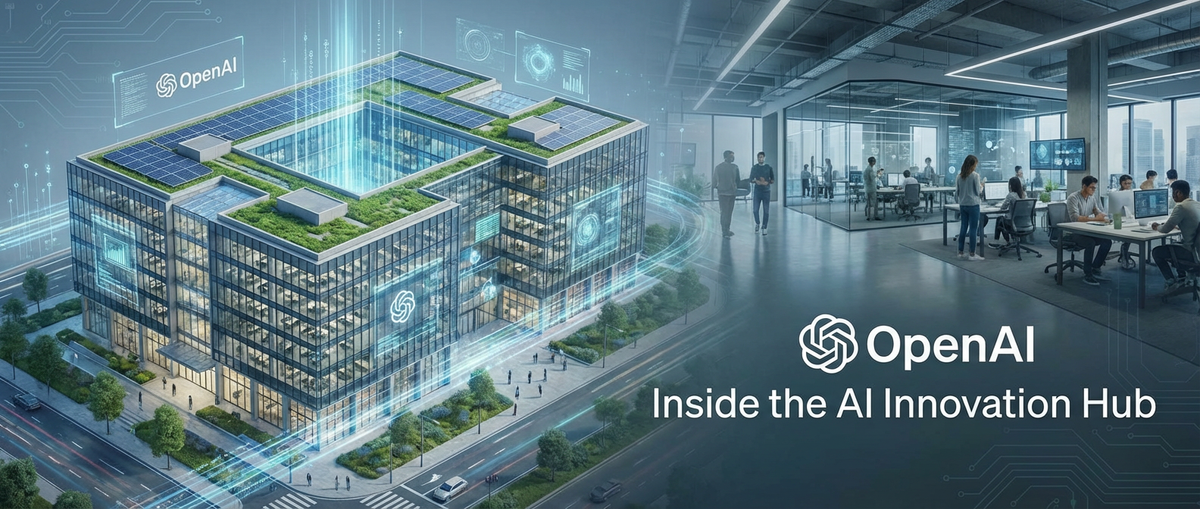
OpenAI HQ: Inside the AI Innovation Hub


Introduction: The Crucible of Cognitive Revolution
In the bustling heart of San Francisco, amidst the urban tapestry of innovation and technological ambition, stands a building that houses more than just offices; it is a crucible where the future of artificial intelligence is forged. This is the headquarters of OpenAI, a name that has become synonymous with groundbreaking advancements in the field, from generative art to conversational AI. Far from being a mere corporate campus, OpenAI HQ represents a vibrant ecosystem where some of the brightest minds in the world converge, driven by a singular, audacious mission: to ensure that artificial general intelligence (AGI) benefits all of humanity. This exploration delves deep into the physical and intellectual landscape of OpenAI's nerve center, peeling back the layers to reveal the intricate mechanisms, the profound philosophies, and the relentless pursuit of knowledge that define this unparalleled innovation hub.
The impact of OpenAI's creations, such as ChatGPT, DALL-E, and GPT-4, has reverberated across industries and societies globally, sparking both awe and intense debate. These tools have not only showcased the astounding capabilities of modern AI but have also ignited critical conversations about ethics, safety, and the very future of work and creativity. Understanding where these innovations originate, how they are conceived, developed, and refined, offers invaluable insight into the trajectory of AI itself. This article will journey inside the enigmatic walls of OpenAI HQ, examining its unique culture, its cutting-edge research, the architectural design fostering collaboration, and the sophisticated technological infrastructure that underpins its ambitious projects. We will also touch upon the critical role of managing access to these powerful models, particularly through solutions like an AI Gateway and LLM Gateway, and the broader implications of an api-driven AI ecosystem. This comprehensive look aims to capture the essence of what makes OpenAI HQ not just a workplace, but a true epicenter of the cognitive revolution, shaping our world in ways we are only just beginning to comprehend.
The Genesis of a Grand Vision: Founding Principles and Audacious Goals
The story of OpenAI is not merely one of technological triumph but also one rooted in profound philosophical considerations regarding the future of intelligence. Founded in December 2015 by a cohort of prominent figures including Elon Musk, Sam Altman, Ilya Sutskever, Greg Brockman, and others, OpenAI was initially conceived as a non-profit research company. Its foundational premise was strikingly ambitious: to advance digital intelligence in the way that is most likely to benefit humanity as a whole, unconstrained by the need to generate financial return. This mission statement underscored a deep awareness of the immense power AGI could wield and the corresponding responsibility to steer its development towards benevolent outcomes, preventing any single entity from monopolizing or misusing such transformative technology.
The founders recognized early on that the pursuit of AGI could lead to an unprecedented concentration of power, potentially exacerbating existing societal inequalities or even posing existential risks if left unchecked. Therefore, the open-source ethos was deeply embedded in their initial strategy, aiming to share research findings and code broadly to democratize access and scrutiny. This commitment was not merely about transparency; it was a strategic move to foster a global, collaborative effort in building AI safely and ethically. They envisioned a future where the benefits of advanced AI were widely distributed, empowering individuals and communities rather than consolidating control. This idealistic starting point imbued OpenAI with a distinctive character, setting it apart from other commercial AI ventures that, by their nature, are primarily driven by market forces and shareholder value.
Over time, as the computational requirements and scale of research intensified, OpenAI's structure evolved. In 2019, it transitioned into a "capped-profit" entity, allowing it to attract significant investment while still maintaining its core mission as paramount. This unique hybrid model aimed to strike a balance: enabling the company to compete for top talent and massive computing resources essential for cutting-edge AI research, without losing sight of its original philanthropic goal. The journey from a purely non-profit ideal to a more pragmatic, yet still mission-driven, corporate structure reflects the inherent challenges and gargantuan costs associated with developing frontier AI models. Despite these structural shifts, the underlying ethos — to develop AGI safely and ensure its broad societal benefit — remains the guiding star, illuminating the path forward for the brilliant minds working tirelessly within the headquarters, each day pushing the boundaries of what machines can learn, understand, and create. This blend of idealism and pragmatism defines not only its past but also its future trajectory as a pivotal force in the global AI landscape.
Architectural Symphony: Designing for Collaboration and Deep Work
The physical manifestation of OpenAI HQ is far more than just a collection of desks and meeting rooms; it is a meticulously designed environment crafted to foster the very essence of innovation: collaboration, deep concentration, and serendipitous discovery. Located in a prime urban setting, the headquarters reflects a conscious effort to blend high-tech functionality with human-centric design, creating a space that is both stimulating and comfortable for its diverse workforce of researchers, engineers, ethicists, and operational staff. The architectural philosophy prioritizes flexibility and adaptability, understanding that the nature of AI research is constantly evolving and requires spaces that can transform to meet emerging needs.
Upon entering, visitors and employees alike are greeted by a thoughtful arrangement of open-plan areas interspersed with numerous quiet zones and private offices. This dual approach acknowledges the different modes of work essential for complex problem-solving. Open spaces with configurable workstations encourage spontaneous interactions, cross-pollination of ideas, and a sense of shared purpose. Researchers from different teams might find themselves side-by-side, sparking conversations that bridge disciplines and lead to novel insights. Whiteboards are ubiquitous, inviting impromptu brainstorming sessions where complex algorithms or ethical dilemmas can be visualized and debated collaboratively. These communal areas are not just for work; they are also designed to facilitate social connections, recognizing that a strong sense of community can significantly enhance creativity and overall well-being.
Conversely, the need for intense, uninterrupted focus is equally paramount in AI research. Developing intricate neural networks, debugging colossal codebases, or wrestling with abstract mathematical proofs demands deep concentration. To address this, OpenAI HQ incorporates a generous number of soundproofed pods, focused study rooms, and quiet zones where individuals can retreat to immerse themselves in complex tasks without external distractions. These spaces are often equipped with ergonomic furniture, adjustable lighting, and advanced climate control to optimize comfort and productivity during extended periods of focused work. Furthermore, dedicated research labs are often specialized, housing specific hardware or experimental setups, providing the necessary infrastructure for cutting-edge investigations in areas such as robotics, reinforcement learning, or advanced natural language processing. The interplay between these vibrant collaborative hubs and tranquil contemplative havens creates a dynamic equilibrium, embodying the multifaceted demands of pioneering AI development and ensuring that every individual has the optimal environment to contribute their unique genius to OpenAI's ambitious endeavors.
The Brains Behind the Breakthroughs: OpenAI's Diverse Research Teams
At the core of OpenAI's unparalleled achievements lies an extraordinarily talented and diverse collection of research teams, each specializing in different facets of artificial intelligence but united by a common drive for discovery and responsible innovation. These teams are not siloed but rather operate with a high degree of interdisciplinary collaboration, recognizing that the most profound breakthroughs often emerge at the intersections of different fields. From the intricate mechanics of large language models to the subtle nuances of robotic control and the ethical quandaries of AI alignment, OpenAI's research spectrum is vast and continuously expanding, pushing the boundaries of what machines can learn, understand, and create.
One of the most prominent areas of research, and arguably the one that has garnered the most public attention, revolves around Large Language Models (LLMs). Teams dedicated to LLM research delve into the architecture, training methodologies, and scaling laws that enable models like GPT-4 to exhibit remarkable capabilities in understanding, generating, and reasoning with human language. Their work involves massive datasets, sophisticated neural network designs, and an iterative process of experimentation and refinement. This research isn't just about making models bigger; it's about making them more robust, more controllable, and more aligned with human intent, tackling challenges such as reducing hallucination, improving factual accuracy, and enhancing the ability to follow complex instructions. The output of these teams directly fuels applications like ChatGPT, which has transformed how millions interact with AI, demonstrating both the immense potential and the subtle complexities inherent in advanced language understanding.
Beyond language, other teams are exploring the frontiers of computer vision and generative AI for imagery, as exemplified by projects like DALL-E. These researchers work on models that can create photorealistic images and art from textual descriptions, understanding abstract concepts, styles, and compositions. Their efforts involve innovative approaches to diffusion models and transformer architectures, pushing the envelope in visual synthesis and creative AI. Concurrently, other groups focus on reinforcement learning, a paradigm where AI agents learn by trial and error through interactions with environments. This research is critical for developing AI that can learn to perform complex tasks, from playing games at superhuman levels to controlling robotic systems in the physical world. The application of reinforcement learning extends to robotics, where researchers are developing AI capable of manipulating objects, navigating spaces, and performing intricate tasks, bridging the gap between digital intelligence and physical embodiment.
Crucially, an entire segment of OpenAI's research is dedicated to AI safety and alignment. This team grapples with the profound ethical implications of advanced AI, working to ensure that future AGI systems are beneficial, safe, and aligned with human values. Their research includes areas such as interpretability (understanding how AI models make decisions), robustness (making AI resilient to adversarial attacks), and bias mitigation (addressing inherent biases in training data and model outputs). They also conduct extensive "red-teaming" exercises, actively probing models for vulnerabilities, harmful outputs, and potential misuse cases. The interdisciplinary nature of these teams is striking; researchers with backgrounds in computer science, neuroscience, philosophy, cognitive psychology, and ethics all contribute, bringing diverse perspectives to the monumental challenge of building superintelligent systems responsibly. This collaborative and multi-faceted approach, underpinned by an unwavering commitment to both innovation and safety, truly defines the intellectual engine driving OpenAI's continuous stream of breakthroughs.
Cultivating a Culture of Innovation: Blending Rigor with Agility
The unique atmosphere within OpenAI HQ is not merely a byproduct of its groundbreaking research; it is deliberately cultivated through a distinctive organizational culture that harmonizes academic rigor with the dynamic agility of a startup. This fusion is critical for a company operating at the bleeding edge of technology, where established paradigms are constantly being challenged and new discoveries emerge at a rapid pace. The culture prioritizes intellectual curiosity, radical transparency, collaborative spirit, and an unwavering commitment to the company's ambitious mission, fostering an environment where bold ideas are not just tolerated but actively encouraged.
One of the cornerstones of OpenAI's culture is its deep respect for foundational research and scientific methodology. Many of its leading researchers come from top academic institutions, bringing with them a discipline for structured experimentation, peer review, and a drive to publish groundbreaking work. This translates into a strong emphasis on understanding the underlying mechanisms of AI models, exploring theoretical limits, and meticulously documenting findings. There’s a pervasive sense that every project, whether directly leading to a product or contributing to theoretical understanding, is a vital step towards the ultimate goal of AGI. This academic ethos means that debates are often rigorous and data-driven, and decisions are informed by thorough experimentation and analysis, rather than purely by market trends or short-term gains.
Simultaneously, OpenAI operates with the speed and iterative approach characteristic of the most successful tech startups. Projects move quickly from conceptualization to prototyping, with a strong emphasis on rapid iteration and learning from failure. Engineers and researchers are empowered to take ownership of their work, make swift decisions, and deploy models for internal or public testing relatively quickly. This agility allows OpenAI to react to new research findings, technological advancements, or public feedback with remarkable speed, constantly refining its models and approaches. This blend of rigorous scientific inquiry with agile development cycles creates a highly dynamic environment where ideas can be rapidly tested, validated, or discarded, accelerating the pace of discovery. The ethos encourages a "build-and-learn" mentality, where theoretical breakthroughs are quickly translated into practical implementations, providing immediate feedback for further research.
Moreover, the culture fosters an exceptional degree of collaboration and cross-pollination of ideas. Teams are encouraged to share their progress, challenges, and insights openly, not just within their immediate groups but across the entire organization. Internal seminars, hackathons, and informal discussions are common, providing platforms for knowledge exchange and spontaneous collaboration. There is a palpable sense that everyone is working towards a shared grand vision, and individual successes contribute to the collective mission. This collaborative spirit extends to a strong emphasis on ethical considerations and responsible deployment. From the outset of any project, discussions about potential societal impact, safety protocols, and bias mitigation are integrated into the development lifecycle. Researchers are not just tasked with building powerful AI; they are equally responsible for considering its broader implications, ensuring that the innovations emerging from OpenAI HQ are not only technologically advanced but also ethically sound and universally beneficial. This unique cultural synthesis of academic depth, startup velocity, and profound ethical consideration makes OpenAI a truly exceptional hub of innovation.
The Technological Backbone: Infrastructure and Engineering Prowess
Behind every groundbreaking AI model and every astonishing demonstration of machine intelligence lies an unseen, colossal infrastructure of computing power and an intricate web of engineering systems. At OpenAI HQ, the technological backbone is nothing short of monumental, designed to support the voracious computational demands of frontier AI research. Developing models with billions, and now trillions, of parameters, training them on petabytes of data, and iterating through countless experiments requires resources that push the very limits of current technology. The engineering teams at OpenAI are thus not only building AI models but also constructing and managing the sophisticated machinery that brings those models to life.
The primary drivers of this infrastructure are Graphics Processing Units (GPUs) and increasingly, specialized AI accelerators (like Tensor Processing Units, TPUs). OpenAI leverages vast clusters of these high-performance processors, often numbering in the tens of thousands, distributed across various data centers. These clusters are custom-built or extensively optimized to handle the unique workloads of deep learning, which involve massive parallel computation for matrix multiplications and neural network operations. Managing such an enormous distributed system presents immense engineering challenges, from ensuring consistent power and cooling to orchestrating complex data flows and maintaining fault tolerance across thousands of interdependent nodes. The scale is so immense that even minor inefficiencies can translate into significant costs and delays, requiring continuous innovation in hardware utilization and software optimization.
A significant portion of OpenAI's computational power resides in cloud infrastructure, primarily through its strategic partnership with Microsoft Azure, which provides access to supercomputing-class hardware tailor-made for AI training. This cloud-based approach offers scalability and flexibility, allowing OpenAI to dynamically provision resources as research demands fluctuate, a crucial advantage when tackling projects that can consume computing time equivalent to thousands of human-years. However, managing this distributed infrastructure effectively requires sophisticated internal tooling. OpenAI's engineers develop custom software for workload scheduling, resource allocation, monitoring, and data management, ensuring that researchers can efficiently access and utilize these vast computational resources without getting bogged down by infrastructure complexities. This includes building robust data pipelines to ingest, preprocess, and store the enormous datasets necessary for training large models, often involving terabytes of text, images, and other modalities.
The engineering efforts extend beyond raw computing power to encompass the software frameworks and development environments that researchers use daily. OpenAI often contributes to or develops its own open-source tools and libraries, tailored to the specific needs of cutting-edge AI research. This includes frameworks for distributed training, model parallelism, and efficient inference. The entire workflow, from data collection and preprocessing to model training, evaluation, and deployment, is supported by a robust and continuously evolving set of internal systems. For instance, the sheer volume of experiments conducted means that robust logging, versioning, and reproducibility tools are essential. This meticulous engineering foundation allows researchers to focus on the scientific challenges of AI, abstracting away much of the underlying infrastructural complexity. It’s this seamless integration of state-of-the-art hardware, innovative software, and expert engineering that forms the unseen, yet utterly critical, backbone enabling OpenAI to consistently push the boundaries of AI capabilities. Without such a formidable technological edifice, the breakthroughs that captivate the world would simply not be possible.
APIPark is a high-performance AI gateway that allows you to securely access the most comprehensive LLM APIs globally on the APIPark platform, including OpenAI, Anthropic, Mistral, Llama2, Google Gemini, and more.Try APIPark now! 👇👇👇
From Lab to Product: Democratizing AI Through Accessible APIs
The journey of an AI breakthrough at OpenAI doesn't end in a research paper or a lab demonstration; it extends into the realm of practical application, democratizing access to powerful models for developers and enterprises worldwide. This transition from esoteric research to deployable product is primarily facilitated through accessible API services, allowing external users to integrate OpenAI's state-of-the-art AI into their own applications, products, and workflows. This strategic approach has transformed cutting-edge AI from an academic curiosity into a readily available utility, profoundly influencing the broader technology ecosystem and fostering a new wave of AI-driven innovation.
OpenAI's commitment to making its models widely available is evident in its suite of API offerings, which include access to its most advanced models like GPT-4, GPT-3.5, DALL-E, and Whisper. These APIs serve as the crucial interface, abstracting away the immense complexity of the underlying models and their vast computational requirements. Developers, regardless of their deep learning expertise, can send simple requests to these endpoints and receive sophisticated AI-generated responses. For instance, a developer building a customer service chatbot can leverage the GPT-4 API to generate human-like responses, while a creative agency might use the DALL-E API to automatically create images based on text descriptions. This accessibility has dramatically lowered the barrier to entry for integrating advanced AI, empowering countless startups and established companies to infuse their offerings with intelligence that was previously unattainable.
The widespread adoption of OpenAI's api services underscores a fundamental shift in how AI is consumed and integrated into the global digital economy. APIs are not just technical connectors; they are enablers of innovation, allowing specialized AI capabilities to be modularly incorporated into a vast array of applications. This modularity means that businesses can focus on their core competencies, relying on OpenAI to provide the AI intelligence, rather than having to invest massive resources in training their own foundational models. The API-first approach fosters a vibrant ecosystem where developers can build novel applications atop OpenAI's models, from content generation and code assistance to data analysis and personalized learning experiences. This ecosystem thrives on consistent performance, robust documentation, and reliable access to the underlying AI.
However, as organizations begin to integrate multiple AI models—whether from OpenAI, other providers, or their own internal developments—the complexity of managing these interactions grows exponentially. This is where an AI Gateway becomes indispensable. An AI Gateway acts as a centralized control point, offering a unified interface for various AI services. It handles crucial aspects like authentication, rate limiting, load balancing, security policies, and cost tracking across different models and providers. For organizations specifically working with the intricacies of large language models, an LLM Gateway provides tailored solutions, standardizing invocation formats, managing different model versions, and even encapsulating complex prompts into simple, reusable APIs. This level of management is critical for enterprise-grade deployments, ensuring scalability, security, and operational efficiency.
In this context, platforms like ApiPark emerge as powerful solutions. ApiPark is an open-source AI gateway and API management platform designed to help developers and enterprises manage, integrate, and deploy AI and REST services with ease. It offers the capability to integrate a variety of AI models with a unified management system for authentication and cost tracking, crucial for organizations leveraging diverse AI capabilities. What sets ApiPark apart is its ability to standardize the request data format across all AI models, ensuring that changes in AI models or prompts do not affect the application or microservices, thereby simplifying AI usage and maintenance costs. Furthermore, it allows users to quickly combine AI models with custom prompts to create new APIs, such as sentiment analysis or translation APIs, extending the utility of foundational models. With end-to-end API lifecycle management, performance rivaling high-throughput systems like Nginx, detailed API call logging, and powerful data analysis, ApiPark provides a comprehensive solution for organizations navigating the burgeoning AI API economy, ensuring that the integration of powerful AI models like those from OpenAI is seamless, secure, and scalable. This seamless integration from lab innovation to accessible product, managed efficiently through robust API platforms, truly democratizes AI's transformative potential.
Ethical AI and Safety Protocols: Navigating the Moral Labyrinth
The immense power of the AI models developed at OpenAI HQ comes with an equally immense responsibility, and this understanding deeply permeates the organization's approach to research and deployment. Far from being an afterthought, ethical AI and safety protocols are foundational pillars, integrated into every stage of the development lifecycle, from initial concept to public release. OpenAI recognizes that building increasingly capable AI systems, especially those trending towards Artificial General Intelligence (AGI, its ultimate goal), necessitates a proactive and rigorous commitment to addressing potential risks, biases, and societal impacts. This commitment is manifest through dedicated teams, specific research initiatives, and comprehensive review processes aimed at navigating the complex moral labyrinth of advanced AI.
A core component of OpenAI's safety strategy is its dedicated alignment research team. This group focuses on the crucial problem of ensuring that powerful AI systems act in accordance with human intentions and values. This is a formidable challenge, as human values are complex, often nuanced, and sometimes contradictory. The team explores various methodologies, including training AI through human feedback (Reinforcement Learning from Human Feedback, RLHF), developing interpretability tools to understand AI's internal reasoning, and exploring novel reward functions that can capture abstract societal goods. The goal is to build AI that is not only highly intelligent but also reliably beneficial, avoiding unintended consequences or "runaway" behaviors that could arise from misaligned objectives. Their work extends to understanding and mitigating "existential risks," the most severe and potentially catastrophic scenarios that could arise from superintelligent AI.
Bias mitigation and fairness are also paramount considerations. AI models, particularly large language models, are trained on vast datasets derived from the internet, which inherently contain historical, social, and cultural biases. Without careful intervention, these biases can be amplified by the models, leading to unfair, discriminatory, or harmful outputs. OpenAI actively researches and implements techniques to identify, measure, and reduce these biases. This involves developing sophisticated evaluation metrics, curating training data more carefully, and fine-tuning models with diversity and fairness as explicit objectives. The effort is ongoing, as completely eradicating bias is a continuous challenge requiring multidisciplinary approaches and societal input.
Before any significant model release or API deployment, OpenAI conducts extensive safety evaluations, including rigorous "red-teaming" exercises. Red-teaming involves intentionally probing models for vulnerabilities, potential misuse cases, and harmful capabilities. External experts, along with internal teams, are tasked with finding ways to make the AI generate inappropriate content, disseminate misinformation, assist in malicious activities, or exhibit dangerous behaviors. The insights gained from these exercises are invaluable, informing model refinements, API usage policies, and the development of robust guardrails and content filters. This proactive approach aims to anticipate and mitigate risks before they manifest in the real world, rather than reacting after a problem has occurred.
Furthermore, OpenAI engages in broad public and expert consultation on its safety work. This includes publishing research, collaborating with academic institutions, participating in policy discussions with governments, and soliciting feedback from a diverse range of stakeholders. The recognition that AI safety is a collective challenge, not one that can be solved in isolation, underpins this commitment to open dialogue and shared responsibility. By integrating these comprehensive ethical frameworks and safety protocols into its very operational DNA, OpenAI strives to not only push the boundaries of AI capability but also to ensure that these advancements contribute positively to humanity's future, guiding the development of intelligence with foresight and a deep sense of moral obligation.
OpenAI's Impact on the Global AI Landscape: A Tremor of Transformation
The ripples emanating from OpenAI HQ have transformed into powerful waves, reshaping the global AI landscape with unprecedented speed and impact. Its innovative models and accessible APIs have not only redefined the state-of-the-art in artificial intelligence but have also profoundly influenced research directions, spurred industry competition, provoked policy debates, and shifted public perception about the capabilities and future of AI. OpenAI has effectively catalyzed a new era of AI development, challenging previous assumptions and opening up vast new horizons for technological exploration and application.
In the realm of research, OpenAI has set new benchmarks for what is possible with large-scale neural networks. The seminal work on transformer architectures, scaling laws for language models, and the development of sophisticated techniques like Reinforcement Learning from Human Feedback (RLHF) have become foundational for much of the subsequent AI research globally. Academic institutions, industry labs, and individual researchers worldwide now routinely cite and build upon OpenAI's publications and open-source contributions. The sheer scale and empirical success of models like GPT-3, GPT-4, and DALL-E have redirected significant research efforts towards large generative models, prompting deeper investigations into emergent capabilities, model alignment, and efficient training methodologies. This has fostered a dynamic, albeit highly competitive, research environment where rapid progress is the norm.
Industrially, OpenAI's impact has been nothing short of revolutionary. By making its advanced models available through APIs, it ignited a Cambrian explosion of AI-powered applications across virtually every sector. Startups have emerged overnight, building innovative products on top of OpenAI's foundational models, while established tech giants have accelerated their own AI initiatives to compete or collaborate. The introduction of ChatGPT to the public consciousness demonstrated the immense commercial potential of conversational AI, triggering a fierce race among technology companies to develop and deploy their own large language models and generative AI tools. This competitive surge has led to massive investments in AI research and development, creating new job categories, and fundamentally altering business strategies across industries, from software development and marketing to healthcare and education.
Politically and societally, OpenAI has become a central figure in the global dialogue surrounding AI governance, ethics, and future regulation. The rapid progress of its models has brought issues like AI safety, job displacement, misinformation, and intellectual property rights to the forefront of national and international policy discussions. Governments around the world are grappling with how to regulate such powerful technology, balancing innovation with risk mitigation. OpenAI leadership actively participates in these discussions, advocating for responsible AI development and offering insights gleaned from their cutting-edge research. Public perception of AI has also undergone a dramatic shift; what was once considered science fiction is now becoming an everyday reality, sparking both widespread excitement about AI's potential to solve grand challenges and profound anxieties about its societal implications.
While OpenAI often leads the charge, its impact is also defined by a complex interplay of competition and collaboration. It competes vigorously with other major AI players like Google, Anthropic, and Meta, pushing each other to innovate faster and more effectively. Yet, it also engages in crucial collaborations, particularly with its strategic partner Microsoft, which provides significant computational resources and integrates OpenAI's models into its product ecosystem. Furthermore, through its publications and contributions to the broader AI community, OpenAI fosters an environment of shared knowledge that ultimately benefits the entire field. The overall effect is a tremendous acceleration of AI development and adoption, with OpenAI standing as a pivotal force, continuing to send tremors of transformation through the technological and societal foundations of the 21st century.
The Future Within OpenAI's Walls: Unveiling the Next Horizon
Looking into the future from within the innovative walls of OpenAI HQ reveals a landscape brimming with audacious aspirations and formidable challenges. While the public celebrates the latest iterations of GPT and DALL-E, the researchers and engineers inside are already envisioning and actively building the next generation of AI, pushing towards an ultimate goal that remains both profoundly inspiring and intensely debated: Artificial General Intelligence (AGI). The journey to AGI—an AI system capable of understanding, learning, and applying intelligence across a wide range of tasks at or beyond human levels—is not merely a technological quest but a deeply philosophical one, defining the long-term trajectory of the organization.
One of the key research directions internally is the continuous scaling of models, not just in size but in capability, efficiency, and robustness. This involves developing more sophisticated architectures, training techniques that can leverage even larger and more diverse datasets, and algorithms that enable models to reason more effectively and reliably. Future models are expected to exhibit enhanced multimodal capabilities, seamlessly integrating and generating information across text, images, audio, and potentially video, creating AI systems that can perceive and interact with the world in a more holistic manner. This push for broader cognitive abilities aims to move beyond mere pattern matching towards genuine understanding and complex problem-solving. Researchers are exploring novel ways to improve memory, long-term context retention, and personalized learning for AI, enabling models to adapt and evolve based on continuous interaction and new information, much like humans do.
Another significant area of focus is the deepening of AI alignment and safety research. As models become more powerful and approach AGI, the imperative to ensure they are beneficial and aligned with human values becomes exponentially critical. Future work will delve into more advanced methods for oversight, control, and interpretability, attempting to create AI systems that can explain their reasoning, are transparent in their decision-making processes, and are resilient to manipulation or unintended emergent behaviors. This includes developing robust ethical frameworks that can guide the design and deployment of future superintelligent systems, anticipating potential societal disruptions and developing mitigation strategies before they arise. The challenges are immense, ranging from defining universal human values to engineering AI systems that can reliably internalize and act upon those values in complex, unpredictable real-world scenarios.
The practical applications of these future AGI capabilities are also a constant consideration. Researchers and product teams are exploring how these advancements could revolutionize science, medicine, education, and creative industries, potentially accelerating discovery, personalizing learning on an unprecedented scale, and augmenting human creativity in profound ways. The vision extends to creating AI tools that can assist in solving humanity's grandest challenges, from climate change and disease to poverty and inequality. However, this future also necessitates navigating significant challenges, including the massive computational resources required for AGI training, the potential for societal upheaval and job displacement, and the complex geopolitical implications of advanced AI development.
Ultimately, the future within OpenAI's walls is characterized by an unwavering commitment to its founding mission: ensuring that AGI benefits all of humanity. Every line of code, every research paper, and every strategic decision is ultimately weighed against this overarching objective. It is a future being built with a blend of scientific ambition, engineering prowess, and profound ethical consideration, recognizing that the power being unleashed requires an equally powerful sense of responsibility. As OpenAI continues its relentless pursuit of AGI, its headquarters will remain a vibrant epicenter, continuously redefining the limits of artificial intelligence and shaping the destiny of our collective technological future.
Navigating the AI Ecosystem: The Indispensable Role of Gateways
As artificial intelligence rapidly evolves from niche research to ubiquitous utility, the ecosystem surrounding its deployment becomes increasingly complex. Organizations are no longer relying on a single AI model for a singular task; instead, they are integrating a diverse portfolio of AI services—some from leading providers like OpenAI, others from specialized vendors, and many developed in-house. This proliferation of models, each with its own API, authentication methods, rate limits, and data formats, creates significant operational challenges for developers and enterprises. This is precisely where solutions like an AI Gateway and an LLM Gateway become not just beneficial, but indispensable components of a robust AI infrastructure.
An AI Gateway serves as a unified entry point for accessing various artificial intelligence services. Imagine a scenario where an application needs to perform several AI tasks: sentiment analysis using one model, image recognition using another, and natural language generation via a third. Without a gateway, the application would need to manage separate connections, authentication tokens, and request/response formats for each individual service. This leads to fragmented codebases, increased development overhead, and a heightened risk of security vulnerabilities. An AI Gateway abstracts away this complexity. It acts as a central proxy, routing requests to the appropriate AI service, applying consistent security policies, rate limiting, and often providing unified logging and monitoring capabilities. This simplifies the developer experience, improves operational efficiency, and enhances the overall security posture of AI-driven applications by centralizing control over access to these powerful capabilities. It's a critical layer of abstraction that allows developers to focus on application logic rather than the intricate details of diverse AI model integrations.
For organizations heavily leveraging Large Language Models, the need for specialized management becomes even more pronounced, leading to the emergence of an LLM Gateway. Large Language Models, while incredibly powerful, often come with unique challenges: multiple versions of the same model (e.g., GPT-3.5 vs. GPT-4), varying prompt engineering strategies, token limits, and the constant evolution of model APIs. An LLM Gateway specifically addresses these complexities. It can standardize the invocation format across different LLMs, allowing applications to switch between models with minimal code changes. Furthermore, an LLM Gateway can encapsulate complex and optimized prompts into simple, reusable API endpoints. For example, a "summarize text" API could be created, which internally translates into a specific prompt for a chosen LLM, handles tokenization, and manages the model's output. This prevents prompt engineering details from cluttering application logic and enables consistent application of best practices for interacting with LLMs. Moreover, it facilitates A/B testing of different LLM versions or prompt strategies without disrupting client applications, ensuring optimal performance and cost-effectiveness.
The practical deployment of powerful AI models, especially those provided by OpenAI's api services, necessitates robust management. As an organization scales its use of AI, the complexity of managing multiple API keys, tracking usage costs, ensuring compliance, and maintaining consistent performance becomes a formidable task. This is where comprehensive API management platforms, particularly those designed with AI in mind, offer immense value. They transform a chaotic collection of individual AI service interactions into a streamlined, secure, and scalable system.
This is precisely where platforms like ApiPark offer a game-changing solution for enterprises and developers. ApiPark is an open-source AI gateway and API management platform that stands out for its comprehensive features tailored for the modern AI ecosystem. It enables the quick integration of over 100 AI models, providing a unified management system for crucial aspects like authentication and cost tracking across all of them. A key differentiator is its ability to enforce a unified API format for AI invocation, which means that applications remain stable even if the underlying AI models or their prompts change. This significantly reduces maintenance costs and development effort. Furthermore, ApiPark allows users to encapsulate specific prompts with AI models to create new, specialized REST APIs – for instance, transforming a general LLM into a dedicated sentiment analysis or translation service, customized to exact business needs.
Beyond AI-specific features, ApiPark delivers end-to-end API lifecycle management, assisting with design, publication, invocation, and decommissioning of APIs. It helps regulate traffic forwarding, load balancing, and versioning, essential for stable and scalable operations. Performance is another critical aspect where ApiPark excels, boasting capabilities rivaling high-throughput systems like Nginx, achieving over 20,000 TPS with modest hardware resources and supporting cluster deployment for massive traffic. For security, it includes features like API resource access requiring approval, preventing unauthorized calls. Finally, robust detailed API call logging and powerful data analysis tools offer deep insights into API usage, performance trends, and potential issues, ensuring system stability and enabling proactive maintenance. With its ease of deployment (a single command line can get it running in 5 minutes) and strong commercial support options, ApiPark provides an invaluable layer of governance, security, and efficiency over the complex tapestry of modern AI services, making the integration and management of powerful AI capabilities, like those offered by OpenAI, practical and scalable for any organization.
Conclusion: The Enduring Legacy of an AI Pioneer
The journey inside OpenAI HQ reveals much more than just a physical space; it uncovers the intricate layers of a pioneering institution at the forefront of the artificial intelligence revolution. From its audacious founding principles to its meticulously designed collaborative spaces, from the diverse research teams pushing the boundaries of machine cognition to the sophisticated technological infrastructure underpinning it all, OpenAI HQ stands as a testament to human ingenuity and an unwavering commitment to a transformative, yet challenging, future. The breakthroughs conceived and nurtured within these walls—be it in large language models, generative art, or sophisticated safety protocols—have not merely advanced the field of AI; they have fundamentally altered our perception of what intelligent machines can achieve and the profound impact they will have on every facet of human existence.
OpenAI's influence extends far beyond its direct innovations. It has instigated a global race in AI development, compelling industries, governments, and academic institutions worldwide to accelerate their own efforts. It has sparked critical conversations about ethics, safety, and the societal implications of increasingly powerful AI, forcing a collective re-evaluation of our responsibilities in shaping this future. The strategic decision to democratize access to its cutting-edge models through accessible api services has unleashed a wave of innovation, empowering countless developers and enterprises to integrate advanced AI into their products and services, creating a vibrant and rapidly expanding AI-driven economy.
As the complexity of this AI ecosystem grows, with organizations leveraging a multitude of models from various sources, the role of intelligent management solutions becomes increasingly vital. The necessity of an AI Gateway and specialized LLM Gateway to streamline interactions, ensure security, and optimize performance is clearer than ever. Platforms like ApiPark exemplify this critical need, providing comprehensive tools to manage, integrate, and deploy AI services efficiently and securely, bridging the gap between raw AI power and its practical, scalable application.
The future unfolding from within OpenAI HQ promises even more remarkable advancements, pushing closer to the ambitious goal of Artificial General Intelligence. This pursuit is not without its significant challenges, demanding continuous innovation in safety, alignment, and ethical governance. Yet, the enduring legacy of OpenAI will ultimately be defined not just by its technological prowess, but by its steadfast commitment to ensuring that this profound transformation benefits all of humanity. As the world continues to grapple with the implications of AI, the work done within this innovation hub will undoubtedly remain a guiding light, shaping the trajectory of intelligent machines and, by extension, the very fabric of our shared future.
Key OpenAI Models and Their Primary Functions
| Model Name | Primary Function | Input Type | Output Type | Key Applications |
|---|---|---|---|---|
| GPT-4 | Advanced natural language understanding and generation | Text, Image (beta) | Text | Content creation (articles, code, scripts), complex reasoning, summarization, translation, conversational AI, data analysis, problem-solving across diverse domains. |
| GPT-3.5 | Fast and capable natural language understanding and generation | Text | Text | Chatbots, customer service automation, content generation for blogs and social media, coding assistance, quick summarization, email drafting. |
| DALL-E 3 | Text-to-image generation | Text | Image | Digital art creation, conceptual design, marketing visuals, illustrations, personalized content generation, visual storytelling. |
| Whisper | Robust speech-to-text transcription | Audio | Text | Transcription services, voice commands, meeting notes, content moderation for audio, accessibility tools for spoken content. |
| Embeddings | Text embedding (converting text into numerical vectors) | Text | Vector (numerical) | Semantic search, recommendation systems, clustering, classification, anomaly detection, code similarity, understanding relationships between concepts. |
| Fine-tuning | Adapting a base model to specific tasks/data | Text (input/output examples) | Fine-tuned Model (for Text output) | Custom chatbots for specific domains, tailored content generation adhering to brand voice, specialized classification tasks, improving performance on niche topics where base models might struggle. |
| GPT-4o | Multimodal, faster, and more efficient (future-oriented) | Text, Audio, Image, Video (input/output) | Text, Audio, Image, Video (output) | Real-time conversational AI with expressive voice and visual understanding, enhanced creativity across modalities, advanced robotics control, interactive learning, complex multimodal reasoning, seamless human-AI interaction. (Note: capabilities are continually expanding) |
Frequently Asked Questions (FAQs)
1. What is the primary mission of OpenAI? OpenAI's primary mission is to ensure that artificial general intelligence (AGI)—AI systems that are generally smarter than humans—benefits all of humanity. This involves conducting cutting-edge research to develop safe and beneficial AGI, and then ensuring its wide and responsible distribution to prevent any single entity from monopolizing or misusing such transformative technology. They aim to advance AI in a way that is universally advantageous and addresses the profound ethical and societal implications of powerful AI.
2. How does OpenAI make its advanced AI models accessible to developers and businesses? OpenAI makes its advanced AI models accessible primarily through a suite of API (Application Programming Interface) services. Developers and businesses can integrate models like GPT-4, DALL-E, and Whisper into their own applications by sending requests to these APIs. This allows them to leverage OpenAI's powerful AI capabilities without needing to train their own foundational models, democratizing access to cutting-edge artificial intelligence and fostering widespread innovation across various industries.
3. What role do AI Gateways and LLM Gateways play in using OpenAI's models? AI Gateways and LLM Gateways are crucial for efficiently managing and scaling the use of OpenAI's models, especially in complex enterprise environments. An AI Gateway provides a unified entry point for diverse AI services, handling authentication, rate limiting, and security, simplifying integration and operations. An LLM Gateway specifically targets Large Language Models, standardizing invocation formats, managing model versions, and encapsulating prompts into reusable APIs, which is vital for maintaining consistency, security, and cost-effectiveness when dealing with multiple language models and applications. Solutions like ApiPark exemplify these functionalities.
4. How does OpenAI address the ethical and safety concerns associated with advanced AI? OpenAI addresses ethical and safety concerns through a multi-faceted approach. This includes a dedicated alignment research team focused on ensuring AI systems act in accordance with human values, rigorous bias mitigation efforts during training, and extensive "red-teaming" exercises to identify and prevent potential misuse or harmful outputs before deployment. They also engage in public and expert consultations, advocating for responsible AI development and participating in global policy discussions to guide the ethical trajectory of advanced AI.
5. What is the future outlook for OpenAI's research and development? OpenAI's future outlook is focused on continuous progress towards Artificial General Intelligence (AGI). This involves developing more sophisticated multimodal models that can seamlessly integrate text, images, and audio, enhancing reasoning capabilities, and improving AI's ability to learn and adapt over time. A critical aspect of this future is also the deepening of AI alignment and safety research, ensuring that as AI systems become more powerful, they remain beneficial, controllable, and aligned with humanity's best interests, while also exploring new applications to address global challenges.
🚀You can securely and efficiently call the OpenAI API on APIPark in just two steps:
Step 1: Deploy the APIPark AI gateway in 5 minutes.
APIPark is developed based on Golang, offering strong product performance and low development and maintenance costs. You can deploy APIPark with a single command line.
curl -sSO https://download.apipark.com/install/quick-start.sh; bash quick-start.sh

In my experience, you can see the successful deployment interface within 5 to 10 minutes. Then, you can log in to APIPark using your account.

Step 2: Call the OpenAI API.