What Does Production Operations in an Insurance Company Do?
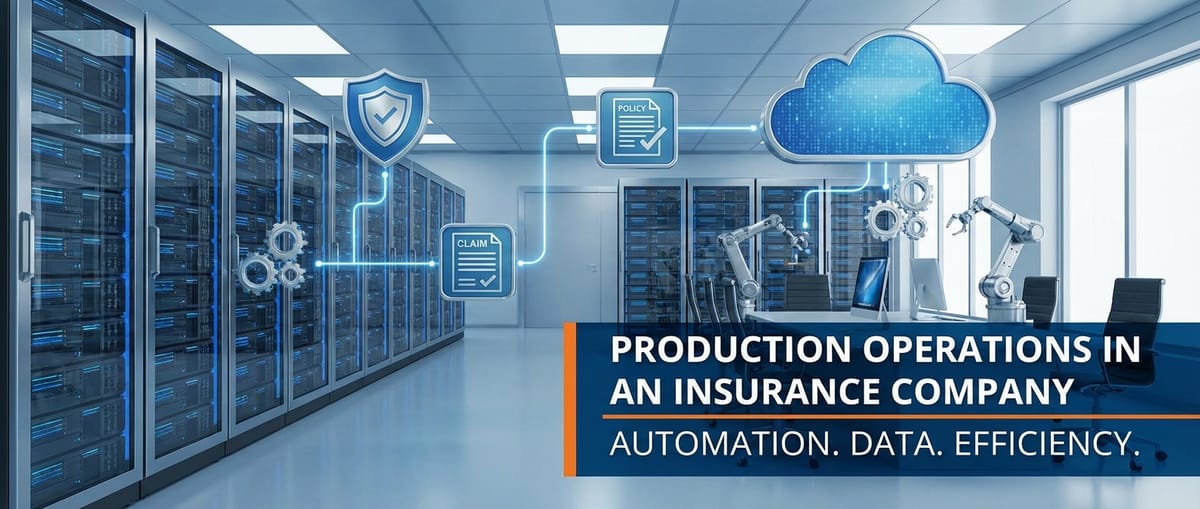


The insurance sector, an industry built on trust, risk assessment, and financial security, operates on a bedrock of complex, interconnected systems. Behind every policy issued, every claim processed, and every customer interaction, lies a sophisticated digital infrastructure. Ensuring the seamless, secure, and efficient functioning of this infrastructure is the paramount responsibility of Production Operations. Far from being a mere technical support function, Production Operations in an insurance company is a strategic imperative, a dedicated sentinel safeguarding the continuity, integrity, and performance of the entire business. It is the invisible force that allows underwriters to assess risk, agents to serve clients, and claimants to receive timely support, thereby upholding the very promise an insurance company makes to its policyholders.
In an era increasingly defined by digital transformation, hyper-connectivity, and an accelerating pace of technological change, the role of Production Operations has transcended traditional IT management. It is no longer just about keeping the lights on; it's about optimizing resilience, proactively managing risks, facilitating innovation, and ensuring compliance in a landscape fraught with cyber threats and stringent regulatory demands. This article will delve deeply into the multifaceted world of Production Operations within an insurance enterprise, exploring its core mandate, key functional areas, the profound impact of evolving technologies, prevalent challenges, and its critical role in shaping the future success and reputation of these indispensable financial institutions.
I. Understanding the Core Mandate of Production Operations
At its heart, Production Operations in an insurance company is tasked with translating strategic business objectives into reliable, continuously available, and high-performing digital services. This core mandate can be dissected into three foundational pillars: ensuring business continuity and stability, safeguarding data integrity and security, and optimizing performance and efficiency across all operational systems. Each pillar is interdependent, contributing to the overall resilience and trustworthiness of the insurance provider.
A. Ensuring Business Continuity and Stability
The insurance business is fundamentally about managing future uncertainties. Ironically, the operational backbone supporting this business cannot afford uncertainty. The primary mandate of Production Operations is to guarantee the uninterrupted availability and functionality of all critical systems that underpin the insurance value chain. This includes the intricate policy administration systems where customer details and coverage specifics reside, the sensitive claims processing platforms that dictate payout efficiency and customer satisfaction, and the multifaceted billing and collection systems crucial for financial solvency. Any disruption to these systems can have immediate and far-reaching consequences, ranging from significant financial losses and regulatory penalties to severe reputational damage and erosion of policyholder trust.
To achieve this unwavering stability, Production Operations teams meticulously implement and oversee comprehensive Disaster Recovery (DR) and Business Continuity Planning (BCP) strategies. DR plans are detailed blueprints for restoring IT services after a catastrophic event, outlining specific recovery time objectives (RTOs) and recovery point objectives (RPOs) for each critical system. This involves geographically dispersed data centers, redundant infrastructure, and regular failover testing to ensure that in the face of natural disasters, major power outages, or cyberattacks, the company can swiftly resume operations with minimal data loss. BCP, on the other hand, takes a broader organizational view, encompassing the non-IT aspects such as personnel relocation, communication strategies, and critical business process restoration. Together, DR and BCP ensure that the insurance company can continue to fulfill its obligations to policyholders, regardless of unforeseen circumstances.
Beyond catastrophic events, Production Operations is also the first line of defense against everyday operational glitches. Incident Management and Resolution is a continuous process. When systems falter, applications crash, or network connectivity drops, it is the Production Operations team that springs into action. They are responsible for detecting issues through sophisticated monitoring tools, accurately diagnosing the root cause, and executing swift remedies to restore service. This often involves a delicate balance of technical expertise, methodical troubleshooting, and calm decision-making under pressure, ensuring that the impact on business operations and customer experience is minimized. Their proactive vigilance and rapid response capability are what prevent minor hiccups from escalating into major business disruptions, safeguarding the continuous flow of insurance services.
B. Data Integrity and Security
In the insurance industry, data is not merely information; it is the currency of risk assessment, underwriting, claims adjudication, and personalized customer engagement. Policyholder demographics, medical histories, financial records, claims details, and actuarial models all represent highly sensitive and valuable data assets. Consequently, Production Operations bears a colossal responsibility for ensuring the absolute integrity, confidentiality, and availability of this data. A breach of data integrity—whether through corruption, unauthorized alteration, or accidental deletion—can lead to incorrect policy pricing, fraudulent claims, or erroneous payouts, directly impacting the company's profitability and regulatory standing.
The imperative for data security is further amplified by a labyrinthine web of regulatory compliance mandates. Laws such as the General Data Protection Regulation (GDPR) in Europe, the California Consumer Privacy Act (CCPA) in the United States, and industry-specific regulations like HIPAA for health information or various state-level insurance mandates, impose strict requirements on how personal and sensitive data is collected, stored, processed, and protected. Production Operations teams must implement robust security controls, access management protocols, encryption standards, and audit trails that are not only effective but also demonstrable to regulators during audits. This involves continuous vigilance, as regulatory landscapes are constantly evolving, demanding proactive adaptation of security frameworks and operational procedures.
Cybersecurity measures are therefore a cornerstone of their activities. This extends beyond basic firewalls and antivirus software to encompass sophisticated intrusion detection and prevention systems (IDPS), security information and event management (SIEM) solutions, vulnerability scanning, penetration testing, and multi-factor authentication. Production Operations teams collaborate closely with dedicated cybersecurity departments, but they are often the ones implementing and maintaining these controls within the production environment. They monitor for suspicious activities, respond to security alerts, and ensure that all systems are patched against known vulnerabilities. Furthermore, comprehensive data backup and archival strategies are meticulously maintained. This isn't just about disaster recovery; it's about long-term retention of historical data for actuarial analysis, regulatory compliance, and potential legal requirements, all while ensuring that this archived data remains secure and retrievable in its original, untainted form. The meticulous management of data—its security, integrity, and accessibility—is fundamental to an insurance company's operational viability and its ethical commitment to policyholders.
C. Performance and Efficiency Optimization
Beyond merely keeping systems operational and secure, Production Operations is also critically responsible for ensuring that all systems run optimally, delivering services with speed and efficiency. In a competitive market where customer experience is paramount, slow applications, delayed policy processing, or sluggish claims portals can directly translate into customer dissatisfaction, lost business, and reduced operational throughput. Therefore, performance and efficiency optimization become a continuous pursuit, directly impacting both the customer journey and internal productivity.
To uphold this commitment, Production Operations teams establish and rigorously monitor Service Level Agreements (SLAs). These are formal agreements, both internal (between IT and business units) and external (with vendors), that define the expected performance metrics, such as system uptime, response times for specific transactions, and batch processing completion windows. Monitoring adherence to these SLAs is a core activity, utilizing a suite of sophisticated tools that provide real-time visibility into the health and performance of every component of the IT infrastructure. This includes monitoring CPU utilization, memory consumption, disk I/O, network latency, application response times, and database query performance.
The proactive identification of bottlenecks is a key aspect of this optimization. Through continuous monitoring and analysis of performance trends, Production Operations can pinpoint areas where systems are struggling before they escalate into critical issues. This might involve identifying a database query that is taking too long, a network segment experiencing congestion, or an application server that is consistently running at peak capacity. Once identified, they collaborate with development teams, system architects, and vendors to propose and implement improvements, which could range from hardware upgrades and software tuning to code refactoring and database indexing.
Resource allocation and management also fall squarely within their purview. This involves ensuring that computing resources—servers, storage, network bandwidth—are appropriately allocated to meet the demands of various applications and services without over-provisioning (which leads to unnecessary costs) or under-provisioning (which leads to performance degradation). This requires a deep understanding of application requirements, anticipated transaction volumes, and future growth projections, enabling them to strategically scale resources to match evolving business needs. By constantly striving for optimal performance and efficiency, Production Operations not only enhances the user experience for both employees and customers but also directly contributes to the insurance company's bottom line by maximizing operational throughput and minimizing infrastructure costs.
II. Key Functional Areas and Responsibilities
The broad mandate of Production Operations in an insurance company translates into a diverse set of specialized functional areas, each with distinct responsibilities yet all interconnected and working towards the common goal of operational excellence. These areas encompass the entire lifecycle of an IT service in the production environment, from its daily monitoring and incident resolution to its planned evolution and capacity planning.
A. System Monitoring and Management
The foundation of effective Production Operations is a robust and comprehensive system monitoring capability. Without real-time visibility into the health and performance of the vast and complex IT landscape, proactive management becomes impossible. Production Operations teams deploy and manage sophisticated monitoring tools and dashboards that provide a holistic view of the entire infrastructure. These tools collect metrics from every conceivable component: operating systems (servers, virtual machines), databases (transaction rates, query performance, storage utilization), network infrastructure (routers, switches, firewalls, bandwidth utilization, latency), and critical business applications (response times, error rates, user load).
These monitoring systems are configured to generate real-time alerts when predefined thresholds are breached. For instance, an alert might trigger if a server's CPU utilization exceeds 90% for a sustained period, if a database transaction takes longer than acceptable, or if an application’s error rate spikes. This proactive identification of potential problems allows the team to intervene often before end-users or business processes are significantly impacted. They perform routine health checks, ensuring that all services are running as expected, logs are being generated correctly, and backups are completing successfully. Beyond automated alerts, experienced operators review trend data, looking for subtle anomalies or gradual degradations that might indicate an impending issue, moving beyond reactive firefighting to proactive problem avoidance. The goal is to detect, diagnose, and address issues before they manifest as outages, minimizing downtime and maintaining service quality.
B. Incident and Problem Management
Even with the most rigorous monitoring, incidents are inevitable. The Production Operations team is at the forefront of Incident and Problem Management, structured processes designed to restore service rapidly and prevent recurrence. An "incident" is defined as an unplanned interruption to an IT service or a reduction in the quality of an IT service. This could range from a minor application glitch affecting a few users to a complete system outage impacting core business functions. Production Operations personnel are responsible for incident triage, quickly assessing the severity and impact, and then following predefined escalation paths to engage the appropriate technical teams (e.g., database administrators, network engineers, application developers). Communication protocols are critical during an incident, ensuring that stakeholders, including business leaders and potentially customers, are kept informed of the status and expected resolution times. The immediate goal is always service restoration, employing temporary workarounds if a full resolution will take time.
"Problem Management" takes a more investigative approach. Once an incident is resolved, Production Operations, often in collaboration with other teams, initiates Root Cause Analysis (RCA). The objective of RCA is to identify the underlying cause of recurring incidents or significant disruptions, rather than just treating the symptoms. This involves forensic analysis of logs, system metrics, configuration changes, and historical data to pinpoint the exact failure point. Following a successful RCA, Post-Mortem Reviews are conducted. These reviews are vital learning opportunities, identifying what went wrong, why it went wrong, and what steps can be taken to prevent similar incidents in the future. This leads to the implementation of preventive actions, such as system enhancements, process improvements, or additional monitoring, thus continually strengthening the stability and resilience of the production environment.
C. Change and Release Management
In a dynamic business environment, IT systems are constantly evolving. New features are developed, existing functionalities are enhanced, security patches are applied, and underlying infrastructure is updated. Production Operations plays a critical role in Change and Release Management, ensuring that these modifications are introduced into the production environment in a controlled, predictable, and minimally disruptive manner. "Change Management" is the process of requesting, approving, implementing, and reviewing changes to the IT infrastructure. Every proposed change, no matter how small, undergoes a rigorous assessment of its potential impact, risks, and dependencies. This typically involves a Change Advisory Board (CAB) that reviews and approves changes, ensuring that all necessary prerequisites, testing, and rollback plans are in place.
"Release Management" focuses on the deployment of new software or system versions. This involves meticulously planning the release schedule, coordinating with development and quality assurance (QA) teams, and executing the deployment itself. Before any new release goes live, it undergoes various stages of testing, including User Acceptance Testing (UAT) by business stakeholders and rigorous performance testing to ensure it can handle production loads. Production Operations crafts detailed deployment plans, often automating as much of the process as possible to reduce human error. Critical considerations include minimizing downtime, especially for customer-facing applications, which may necessitate rolling deployments, blue/green deployments, or canary releases. Post-deployment, the team monitors the new release closely for any unforeseen issues, and ensures that robust version control mechanisms are in place, allowing for quick rollbacks to a previous stable version if problems arise. This structured approach prevents chaotic deployments and safeguards the stability of live services.
D. Configuration Management
Maintaining consistency, accuracy, and control over the vast array of hardware and software configurations within the production environment is the objective of Configuration Management. Insurance companies typically operate hundreds, if not thousands, of servers, network devices, and applications, each with specific settings, dependencies, and interconnections. Production Operations is responsible for standardizing environments, ensuring that development, testing, and production environments are as consistent as possible to minimize "it works on my machine" scenarios and facilitate predictable deployments.
Modern Configuration Management often embraces Infrastructure as Code (IaC) principles, where infrastructure provisioning and configuration are managed through code, using tools like Ansible, Terraform, or Puppet. This allows for automated, repeatable, and version-controlled infrastructure deployments, significantly reducing manual errors and increasing efficiency. By codifying infrastructure, changes can be reviewed, tested, and deployed just like application code. Production Operations maintains accurate records of all system configurations in a Configuration Management Database (CMDB), which serves as a definitive source of truth for all IT assets and their relationships. This repository is invaluable during incident resolution, change impact analysis, and compliance audits, providing instant access to critical configuration details. Without effective configuration management, environments can quickly drift, leading to instability, security vulnerabilities, and prolonged troubleshooting efforts.
E. Capacity Planning and Scalability
As an insurance company grows, so too do the demands on its IT infrastructure. New policyholders, increased transaction volumes, the introduction of new products, and seasonal peaks all contribute to fluctuating resource requirements. Production Operations is tasked with Capacity Planning, which involves forecasting future resource needs based on historical usage patterns, business growth projections, and anticipated strategic initiatives. This isn't just about adding more servers; it's a strategic exercise that considers server processing power, memory, storage capacity, network bandwidth, and database performance.
The goal is to ensure that the infrastructure can scale effectively to meet anticipated demand without performance degradation, while also avoiding excessive over-provisioning that leads to unnecessary capital expenditure. In modern cloud-native environments, this often involves dynamic scaling strategies, where resources can be automatically provisioned or de-provisioned based on real-time load, or adopting hybrid cloud strategies that leverage the elasticity of public clouds for burstable workloads while keeping sensitive core systems on-premise. Production Operations conducts rigorous performance testing, simulating peak loads and stress scenarios, to validate the system's ability to handle high volumes and to identify scalability bottlenecks before they impact live services. This proactive approach ensures that the insurance company's IT infrastructure can gracefully accommodate business expansion and fluctuating demands, maintaining a high quality of service throughout.
F. Vendor Management (for external systems/services)
Many insurance companies leverage a diverse ecosystem of third-party vendors for specialized software, cloud services, managed infrastructure, or specific business process outsourcing. Production Operations plays a critical role in Vendor Management, particularly concerning the operational aspects of these external services. This involves ensuring that vendors adhere to the agreed-upon Service Level Agreements (SLAs) regarding uptime, performance, and security. They monitor vendor performance closely, escalating issues when services fall below agreed standards.
Furthermore, Production Operations teams manage the integration points and dependencies between internal systems and external vendor services. This often involves collaborating with vendors on api specifications, ensuring secure and reliable data exchange, and troubleshooting integration challenges. Given the sensitive nature of insurance data, security audits of third-party providers are a regular and critical activity, often led or supported by Production Operations. They verify that vendors meet the company's security standards, comply with relevant regulations, and have robust incident response capabilities. Effective vendor management ensures that the external components of the IT landscape perform reliably and securely, seamlessly supporting the overarching insurance operations.
APIPark is a high-performance AI gateway that allows you to securely access the most comprehensive LLM APIs globally on the APIPark platform, including OpenAI, Anthropic, Mistral, Llama2, Google Gemini, and more.Try APIPark now! 👇👇👇
III. The Evolving Landscape: Technology's Impact on Production Operations
The digital revolution has profoundly reshaped every facet of the insurance industry, and Production Operations stands at the epicenter of this transformation. Rapid advancements in cloud computing, automation, artificial intelligence, and new operational methodologies have not only introduced new tools and capabilities but have also fundamentally altered the roles and responsibilities of operations teams, pushing them towards more strategic, engineering-focused endeavors.
A. Cloud Adoption
The migration to cloud computing platforms (such as AWS, Azure, Google Cloud) represents one of the most significant shifts for Production Operations. Cloud adoption offers compelling benefits: enhanced scalability to handle fluctuating workloads without massive upfront hardware investments, improved cost efficiency through pay-as-you-go models, and inherent resilience via geographically distributed data centers. For insurance companies, this means the ability to rapidly launch new digital products, scale underwriting platforms during peak seasons, and provide highly available customer portals.
However, cloud adoption also introduces new challenges that Production Operations must navigate. Security in the cloud, while often robustly managed by providers, shifts responsibility to the client for securing their applications, data, and configurations within the cloud environment. This requires new expertise in cloud-specific security tools and practices. The migration of legacy systems, often deeply intertwined with on-premise infrastructure, is a complex undertaking, necessitating careful planning, extensive testing, and phased approaches. Furthermore, the risk of vendor lock-in, where deep integration with one cloud provider makes switching difficult, requires careful strategic consideration. Many insurance companies adopt hybrid cloud strategies, maintaining sensitive core systems on-premises while leveraging the public cloud for less critical workloads, development environments, or disaster recovery, necessitating Production Operations to manage a complex, multi-cloud environment with a unified approach.
B. Automation and Orchestration
The sheer scale and complexity of modern insurance IT environments make manual operational tasks unsustainable. Automation and orchestration have become indispensable tools for Production Operations, moving towards a "lights-out" operations model where routine tasks are handled automatically. Automation involves scripting repetitive tasks, such as server provisioning, software deployments, backups, system health checks, and log analysis. This reduces human error, speeds up processes, and frees up operations staff to focus on more strategic problem-solving.
Robotic Process Automation (RPA) has also found its way into back-office insurance operations, automating repetitive, rule-based tasks traditionally performed by humans, such as data entry, policy validation, and claims processing steps, which then integrate with IT systems managed by Production Operations. Orchestration takes automation a step further, coordinating complex workflows across multiple systems and services. For example, deploying a new application might involve provisioning virtual machines, configuring network settings, installing software, setting up databases, and integrating with other services – all orchestrated automatically through tools like Kubernetes for containerized applications, or dedicated workflow automation platforms. This level of automation significantly improves efficiency, consistency, and the speed of service delivery, allowing insurance companies to respond more rapidly to market demands and maintain a competitive edge.
C. Data Analytics and AI/Machine Learning in Operations (AIOps)
The explosion of operational data – logs, metrics, alerts, traces – has created both a challenge and an opportunity for Production Operations. Manually sifting through this voluminous data to identify anomalies or predict failures is increasingly impossible. This is where Data Analytics and Artificial Intelligence for Operations (AIOps) come into play. AIOps platforms leverage machine learning algorithms to process vast streams of operational data, identify patterns, detect anomalies that human eyes might miss, and even predict potential system failures before they occur. For instance, an AIOps system might notice a subtle, yet statistically significant, degradation in network latency combined with an increase in database connection errors, predicting a looming outage hours before it would become critical.
This capability moves Production Operations from a purely reactive model to a highly proactive and even predictive one. AIOps can automate incident correlation, reducing alert fatigue by grouping related alerts into a single incident, and even suggest automated responses or remediation steps based on past successful resolutions. In the insurance industry, which relies heavily on data for underwriting, claims processing, and customer insights, the integrity and performance of data pipelines are paramount. To facilitate seamless data exchange between core systems, third-party partners (e.g., aggregators, adjusters, reinsurers), and customer-facing applications, robust api infrastructure is absolutely critical. These apis serve as the digital glue connecting disparate systems and enabling real-time interactions, from policy quotes and renewals to claims submissions and status updates. The efficient management and security of this complex web of integrations directly impact operational efficiency and customer experience.
Given the sheer volume of apis an insurance company might expose or consume, an api gateway becomes an indispensable tool. It acts as a single, centralized entry point for all API traffic, providing a crucial layer for access control, security policy enforcement (like authentication and authorization), rate limiting to prevent abuse, traffic routing, load balancing, and comprehensive analytics. This centralization significantly enhances security, simplifies management, and provides valuable insights into API usage patterns and performance, which are vital for Production Operations to maintain stability and efficiency.
Furthermore, as insurance companies increasingly embrace Artificial Intelligence (AI) for tasks ranging from sophisticated fraud detection in claims to personalized underwriting and AI-driven customer service chatbots, the integration of diverse AI models (often from multiple vendors or internal data science teams) presents new operational challenges. This is precisely where an AI Gateway steps in. An AI Gateway provides a unified management layer for accessing and managing various AI models, standardizing their invocation, ensuring consistent security, and tracking usage. For Production Operations, this simplifies the integration and maintenance of AI-powered features, ensuring that AI services are reliable, performant, and secure. Platforms like ApiPark, an open-source AI gateway and API management platform, provide a unified solution for quickly integrating over 100 AI models and managing the entire API lifecycle. By standardizing API formats and offering features like prompt encapsulation into REST APIs, APIPark significantly simplifies AI invocation and reduces maintenance costs. It serves as an excellent example of a valuable asset for production operations teams grappling with the complexities of modern, AI-driven insurance systems, enabling them to ensure high availability and performance of critical AI services. This technological integration ensures that the insurance company can leverage cutting-edge AI capabilities efficiently and securely, without adding undue operational burden.
D. DevOps and Site Reliability Engineering (SRE) Principles
The advent of DevOps and Site Reliability Engineering (SRE) represents a cultural and methodological shift that profoundly impacts Production Operations. DevOps, a portmanteau of "development" and "operations," advocates for breaking down the traditional silos between these two functions, fostering collaboration, shared responsibility, and continuous integration/continuous delivery (CI/CD) practices. This means operations teams are involved earlier in the development lifecycle, providing input on architectural decisions and operational requirements, while developers gain more insight into the production environment.
SRE, pioneered by Google, operationalizes DevOps principles by applying software engineering practices to operations tasks. SRE teams focus on system reliability, scalability, and efficiency through automation, measurement, and toil reduction. Key SRE concepts include defining Service Level Objectives (SLOs) and Service Level Indicators (SLIs) to quantitatively measure system performance and reliability, and the concept of an "error budget," which is the maximum acceptable downtime or performance degradation that a service can incur. If a service exceeds its error budget, development teams might be asked to prioritize reliability improvements over new feature development. Production Operations teams adopting SRE principles transform into highly skilled "reliability engineers," embedding engineering rigor into every aspect of operations, from monitoring and incident response to capacity planning and infrastructure design, cultivating a culture of continuous improvement and shared ownership for the reliability of insurance applications.
IV. Challenges and Future Directions
Despite the advancements and sophisticated tools at their disposal, Production Operations in an insurance company navigate a landscape riddled with persistent challenges, while simultaneously charting a course towards an increasingly complex yet promising future.
A. Legacy Systems Integration
One of the most formidable challenges facing Production Operations in the insurance sector is the pervasive presence of legacy systems. Many insurance companies operate on core policy administration, claims, and billing platforms developed decades ago, often in mainframe environments or using outdated programming languages. These systems are highly stable and reliable, having been proven over many years, but they are also monolithic, difficult to modify, expensive to maintain, and notoriously challenging to integrate with modern, cloud-native applications. This creates a "two-speed IT" problem: the need to maintain the stability of critical legacy systems while simultaneously innovating with agile, modern technologies.
Production Operations teams are often responsible for ensuring the seamless, reliable, and secure integration between these disparate environments. This requires specialized expertise in legacy technologies, robust integration middleware, and careful management of data synchronization. Strategies for modernization include incremental re-platforming, encapsulating legacy functionalities with modern API layers, or building new capabilities that coexist with the old. The future will see a continued effort to gradually decouple and modernize these legacy components, often leveraging microservices architectures and robust api frameworks to ensure that the core business logic remains accessible and functional while the underlying technology stack is updated.
B. Talent Gap
The evolving nature of Production Operations demands a new breed of IT professional, one equipped with a hybrid skill set that blends traditional operations knowledge with software engineering, cybersecurity, and cloud expertise. The talent gap in this area is significant. Traditional system administrators, while invaluable for managing on-premise infrastructure, often lack the coding skills for automation, the architectural understanding for cloud-native deployments, or the data science acumen required for AIOps. Simultaneously, pure software developers may lack a deep understanding of infrastructure reliability and operational best practices.
Insurance companies face a dual challenge: attracting new talent with these multidisciplinary skills and upskilling their existing operations workforce. This requires significant investment in continuous learning and development programs, fostering a culture where operations professionals are encouraged to learn coding, understand cloud platforms, and engage with security principles. The future success of Production Operations will heavily depend on cultivating a highly skilled, adaptable, and technologically adept team capable of managing increasingly complex and intelligent infrastructure.
C. Regulatory Scrutiny and Compliance
The insurance industry is one of the most heavily regulated sectors globally, and regulatory scrutiny on data protection, system availability, and operational resilience is constantly intensifying. Production Operations is directly responsible for ensuring that all IT systems and processes comply with a vast array of laws and standards, including data privacy regulations (GDPR, CCPA), financial services regulations, and industry-specific mandates. This requires meticulous adherence to prescribed security controls, data retention policies, and disaster recovery requirements.
The challenge lies in the ever-evolving nature of these laws and the need for demonstrable compliance. Production Operations must maintain comprehensive audit trails of all system activities, configuration changes, and incident responses, ready to provide evidence during regulatory examinations. This demands a proactive approach to understanding new regulations, adapting operational procedures, and continuously validating that systems meet current and future compliance obligations. The future will likely see even greater emphasis on operational resilience, requiring insurance companies to prove their ability to withstand and recover from significant disruptions, placing Production Operations at the forefront of regulatory assurance.
D. Cybersecurity Threats
The digital landscape is a battleground, and insurance companies, holding vast amounts of sensitive personal and financial data, are prime targets for sophisticated cyber threats. Production Operations teams are on the front lines of defense against ransomware attacks, data breaches, distributed denial-of-service (DDoS) attacks, and other malicious activities. The challenge is immense, as threat actors are constantly evolving their tactics, and a single successful breach can devastate an insurance company's reputation, financial standing, and regulatory compliance.
Responding to this threat requires a multi-layered approach. Production Operations collaborates closely with dedicated cybersecurity teams to implement and enforce robust security protocols, including zero-trust architectures, advanced threat detection systems, and continuous vulnerability management. They are responsible for implementing security patches promptly, monitoring for suspicious network traffic, and playing a critical role in the incident response preparedness plan, often being the first responders to security alerts. The future of Production Operations will be characterized by an even greater emphasis on security by design, proactive threat intelligence, and continuous security validation, making cybersecurity an integral and inseparable component of all operational activities.
E. Balancing Innovation with Stability
Insurance companies are under immense pressure to innovate – to offer new digital products, enhance customer experiences through mobile apps and AI-driven insights, and leverage big data for more precise risk assessment. Simultaneously, they must maintain an unwavering commitment to stability, ensuring that core systems are always available and reliable. Production Operations faces the continuous challenge of balancing these two often-conflicting objectives. Rapid innovation can introduce new risks and complexities into the production environment, while an overly cautious approach to stability can stifle business growth and competitiveness.
The future requires a delicate equilibrium. This involves adopting controlled experimentation methodologies, implementing robust CI/CD pipelines with automated testing, and employing progressive deployment strategies (e.g., canary releases) that allow new features to be rolled out to a small subset of users before a full launch. By fostering a culture of shared responsibility (DevOps/SRE), where both development and operations teams are accountable for the reliability of services, insurance companies can navigate this tension more effectively. The goal is to innovate at speed, but with the necessary guardrails and operational rigor to ensure that new technologies and features enhance, rather than compromise, the fundamental promise of security and reliability that defines the insurance industry.
V. A Day in the Life of Production Operations (Conceptual Walkthrough)
To truly grasp the dynamic and demanding nature of Production Operations in an insurance company, let's conceptualize a typical day, understanding that "typical" often involves unexpected twists and turns. The rhythm of the day is dictated by proactive monitoring, reactive problem-solving, and strategic planning, all underpinned by a continuous commitment to the company's operational integrity.
The day for a Production Operations team often begins before sunrise with automated health checks and dashboard reviews. Engineers arriving for the morning shift immediately dive into the monitoring systems, scanning comprehensive dashboards that display the real-time status of critical applications: the policy administration system, the claims processing engine, the agent portal, the customer self-service app, and various integration services. They look for any red flags from overnight batch jobs – were all data loads successful? Did backups complete without errors? Are there any performance anomalies in transaction processing that might have emerged during off-peak hours? Early detection of issues here can prevent them from impacting business users once the workday commences. For example, a slight increase in latency for a key api serving the agent portal might warrant investigation to prevent sluggish performance for agents later in the morning.
As the business day begins, the tempo picks up. Incidents, ranging from minor inconveniences to major disruptions, are triaged as they come in. A report from a regional office about intermittent access to the claims system might kick off an immediate investigation. The Production Operations team would leverage their monitoring tools to pinpoint the affected components – is it a network issue specific to that office? Is an application server experiencing high load? Is a particular database query deadlocking? Once the scope is understood, they initiate the incident management protocol: communicating the issue and its impact to relevant business stakeholders, escalating to specialized teams if necessary (e.g., the database team for a complex database issue), and working diligently to restore service, perhaps by restarting a service, rerouting traffic, or applying a temporary fix. Throughout this process, every action and observation is meticulously logged for future root cause analysis.
Mid-morning might be dedicated to managing scheduled changes and deployments. A new feature for the customer mobile app, which streamlines the quote process, might be scheduled for release. The Production Operations team would follow the pre-approved change plan, deploying the new code using automated CI/CD pipelines, carefully monitoring the performance and health of the application immediately post-deployment. This could involve A/B testing or canary deployments, gradually exposing the new feature to a small segment of users first, meticulously observing real-time performance metrics and error rates before rolling it out to the entire user base. They would be ready with rollback procedures should any unforeseen issues arise, ensuring the stability of the customer-facing experience.
Afternoons often involve more strategic tasks. This could include performance review meetings where the team analyzes long-term trends in system performance, identifies potential bottlenecks, and proposes infrastructure upgrades or software optimizations. Perhaps they're reviewing the results of a recent load test, assessing the system's ability to handle anticipated year-end policy renewals. Collaboration with development and business teams is frequent, discussing upcoming projects that will require new infrastructure, reviewing architectural designs for operational feasibility, or providing insights into current system limitations. They might be working on refining an api gateway configuration to improve security for external partner integrations, or designing a new AIOps alert rule to detect a specific type of anomaly based on recent incident patterns.
Finally, as the business day winds down, the team prepares for evening batch processes and overnight maintenance windows. They might review the status of an ongoing capacity planning project, updating forecasts for storage growth or CPU utilization based on new business forecasts. A critical security patch might be scheduled for deployment after hours, requiring careful coordination and preparation. The day concludes with a final sweep of the monitoring dashboards, ensuring all systems are stable and ready to handle the overnight operations and automated tasks, before handing over responsibility to an on-call team or a global operations center.
This "day in the life" illustrates the constant interplay between reactive problem-solving and proactive strategic management that defines Production Operations. It's a role that demands technical expertise, methodical problem-solving skills, strong communication, and an unwavering commitment to the operational excellence that is the bedrock of any successful insurance enterprise.
In conclusion, Production Operations in an insurance company is far more than a mere technical back-office function; it is a critical, strategic nerve center that underpins the entire business. Its mandate is expansive, encompassing the relentless pursuit of business continuity, the steadfast guardianship of data integrity and security, and the continuous optimization of system performance. From meticulously monitoring complex IT landscapes and expertly resolving incidents to strategically planning for future capacity and diligently managing change, these teams are the unsung heroes ensuring that the promise of insurance is consistently delivered.
The landscape for Production Operations is in a state of perpetual evolution, driven by the relentless pace of technological advancement. Cloud computing offers unprecedented scalability, automation streamlines mundane tasks, while AIOps and api gateway solutions inject intelligence and efficiency into operational processes. The adoption of DevOps and SRE principles signifies a profound cultural shift, fostering collaboration and engineering rigor in the quest for ultimate reliability. Yet, significant challenges persist, including the integration of legacy systems, a burgeoning talent gap, an ever-tightening regulatory framework, and the unrelenting threat of cyberattacks.
Looking ahead, the role of Production Operations will only grow in complexity and strategic importance. It will demand teams that are not only technically proficient but also highly adaptable, continuously learning, and deeply integrated with the business objectives. By expertly navigating these challenges and embracing the opportunities presented by emerging technologies, Production Operations will continue to be the indispensable architect of stability, the vigilant guardian of trust, and a powerful enabler of innovation, ensuring that insurance companies remain resilient, competitive, and capable of fulfilling their vital role in securing the financial well-being of individuals and businesses worldwide.
Frequently Asked Questions (FAQs)
1. What is the primary role of Production Operations in an insurance company? The primary role of Production Operations in an insurance company is to ensure the continuous availability, security, and optimal performance of all critical IT systems and applications that support the core business functions, such as policy administration, claims processing, and customer service. They are the frontline defenders against downtime and system failures, safeguarding data integrity and compliance.
2. How does Production Operations contribute to an insurance company's profitability? Production Operations contributes to profitability by minimizing costly downtime, preventing revenue loss from service interruptions, and optimizing system efficiency to reduce operational expenditures. By ensuring smooth, rapid processing of policies and claims, they enhance customer satisfaction, which in turn aids customer retention and business growth. Efficient resource management and proactive problem-solving also directly impact the company's financial health.
3. What specific technologies are crucial for modern Production Operations in insurance? Modern Production Operations in insurance relies heavily on technologies such as cloud computing platforms (for scalability and resilience), automation and orchestration tools (for efficiency), AIOps (for predictive analytics and incident correlation), apis for system integration, and robust api gateway solutions for managing and securing API traffic. An AI Gateway is also becoming crucial for integrating and managing diverse AI models used in underwriting and claims.
4. How does Production Operations deal with cybersecurity threats in a data-sensitive industry like insurance? Production Operations plays a critical role in dealing with cybersecurity threats by implementing and maintaining robust security controls, monitoring for suspicious activities, promptly applying security patches, and actively participating in incident response. They work closely with dedicated cybersecurity teams to ensure data encryption, access management, and compliance with data protection regulations, protecting highly sensitive policyholder information.
5. What is the difference between an API Gateway and an AI Gateway in the context of insurance operations? An API Gateway primarily manages and secures general API traffic, acting as a single entry point for all internal and external service integrations, handling authentication, routing, and rate limiting for any type of API (REST, SOAP, etc.). An AI Gateway, while often built on API gateway principles, specifically focuses on standardizing, managing, and securing access to diverse Artificial Intelligence (AI) models and services. For insurance, an AI Gateway simplifies the invocation of various AI models used for tasks like fraud detection or personalized underwriting, ensuring consistent performance, security, and usage tracking across all AI-driven applications.
🚀You can securely and efficiently call the OpenAI API on APIPark in just two steps:
Step 1: Deploy the APIPark AI gateway in 5 minutes.
APIPark is developed based on Golang, offering strong product performance and low development and maintenance costs. You can deploy APIPark with a single command line.
curl -sSO https://download.apipark.com/install/quick-start.sh; bash quick-start.sh

In my experience, you can see the successful deployment interface within 5 to 10 minutes. Then, you can log in to APIPark using your account.

Step 2: Call the OpenAI API.